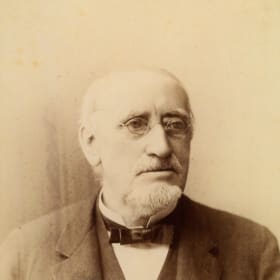
George I. Barnett
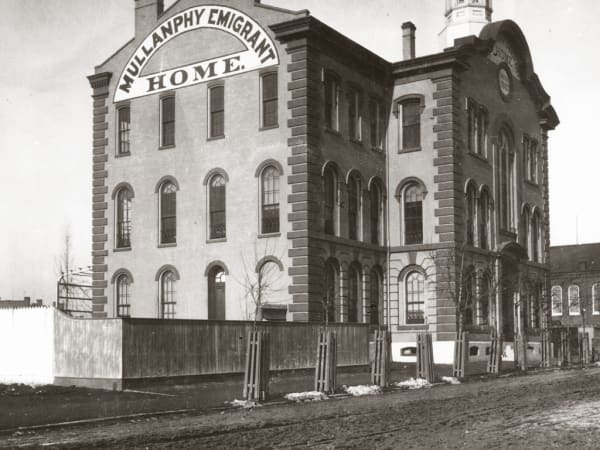
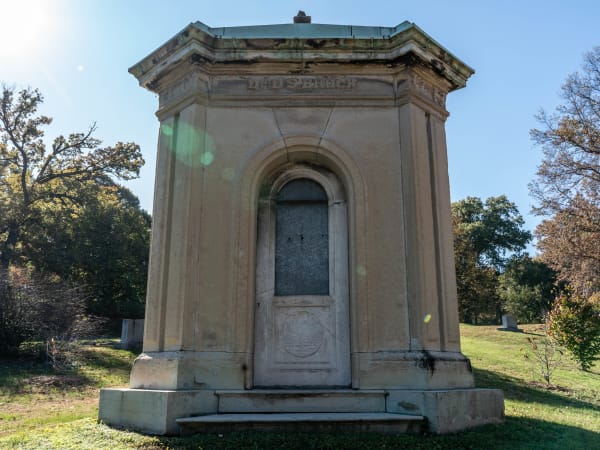
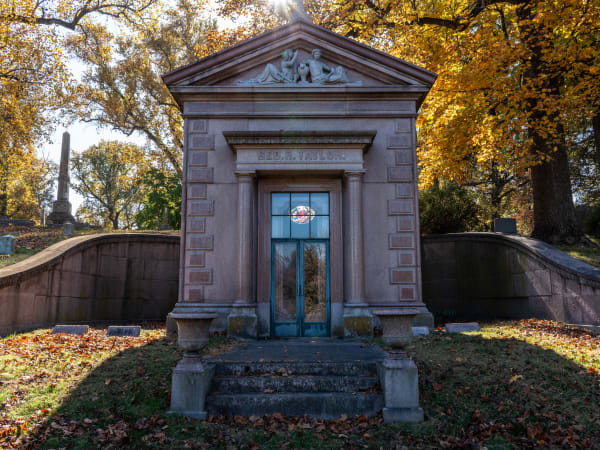
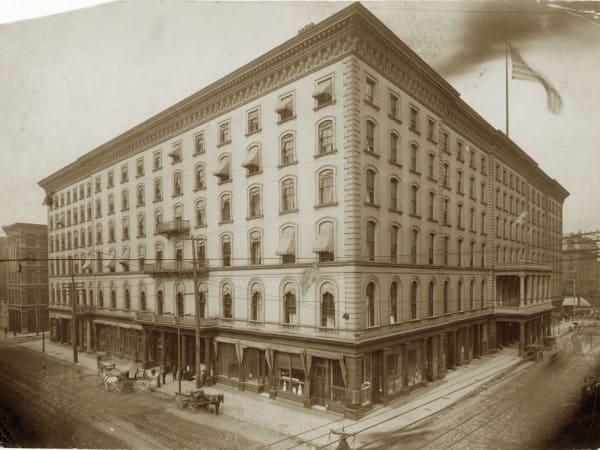
George I. Barnett (1815-1898) was called the dean of St. Louis architecture. Born in Nottingham, England, he trained under Thomas Chambers Hine and then in a London office, spent six months in New York, and settled in St. Louis in 1839. His work ran from the Greek Revival through the Italianate and Renaissance Revival, and much of it was for the city's wealthiest clients. His longest collaboration was with Henry Shaw, whose first two houses he designed while in partnership as Barnett and Peck. It began with Tower Grove House, Shaw's Italianate country villa of 1849, and Shaw's town house at Seventh and Locust of 1850, and it carried through Tower Grove Park, where Barnett designed the base of the Humboldt statue (1878) and, with his draftsman Isaac Taylor, the Palm House (1878) and the South Gate Lodge (1889). At the Garden he designed the Linnean House (1882), an orangery that is still in use. He also designed Shaw's mausoleum. Downtown he built the National Hotel (1847), the First Methodist Episcopal Church, South (1854), the Custom House and Post Office at Third and Olive (1854), and both Southern Hotels (1865 and 1881), and he completed the remodeling of the Old Courthouse in 1864. Later came the Mullanphy Emigrant Home (1867), the Grand Avenue Water Tower (1871), the Missouri Governor's Mansion in Jefferson City (1871) and the County Poor House (1873). His office trained a generation of St. Louis architects, among them Isaac S. Taylor, Alfred H. Piquenard, Charles F. May, H. William Kirchner, Henry G. Isaacs and George S. Mills. His sons Tom P. and George D. Barnett and his son-in-law John I. Haynes formed Barnett, Haynes and Barnett, and his eldest son, Absalom, practiced in San Francisco. Barnett died at his home in St. Louis on December 29, 1898.