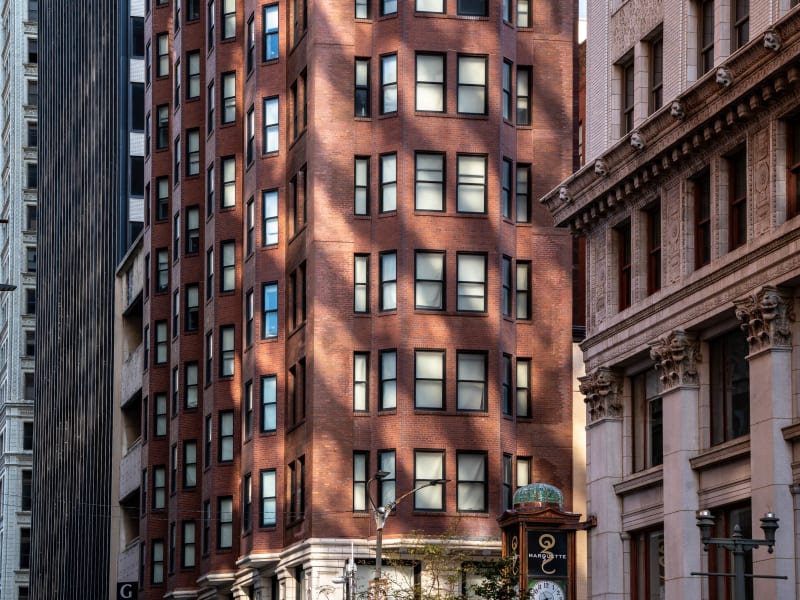
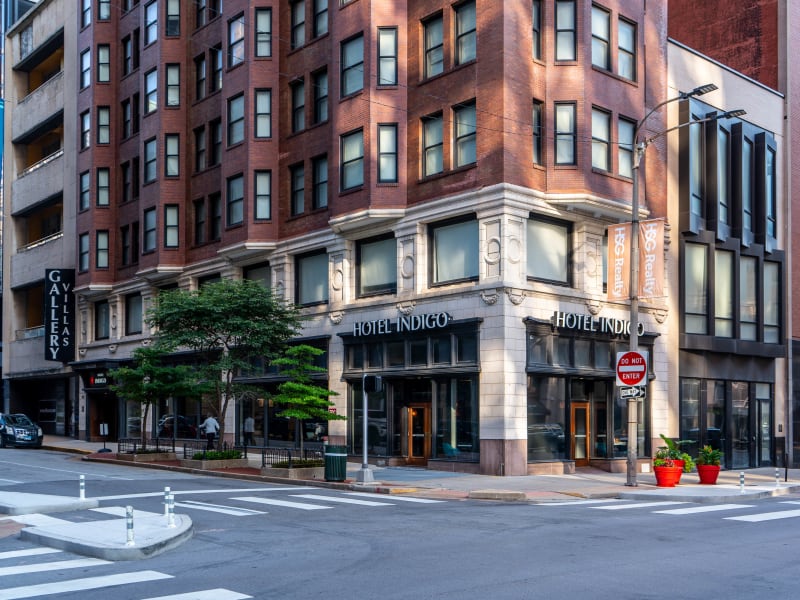
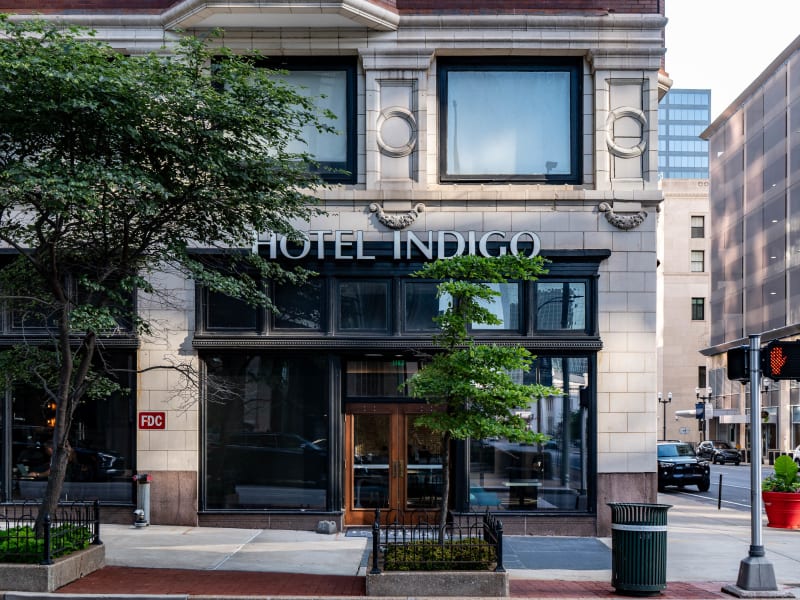
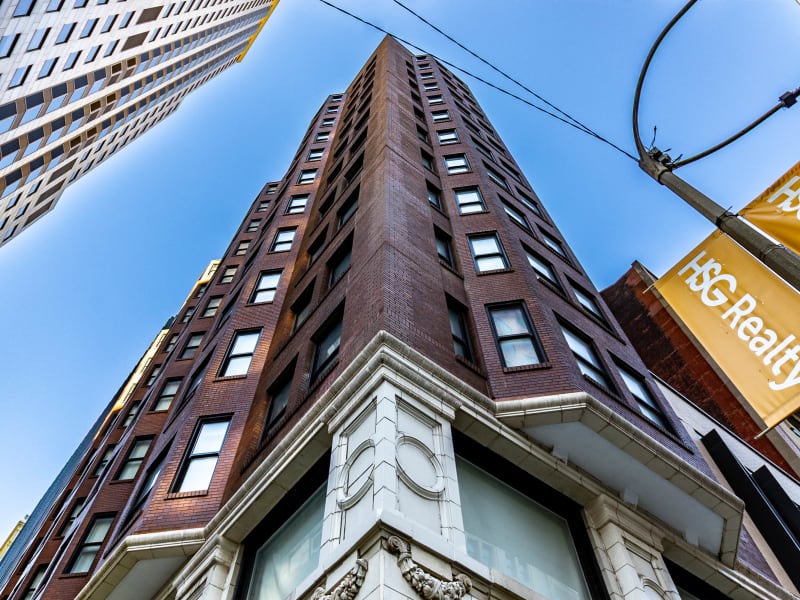
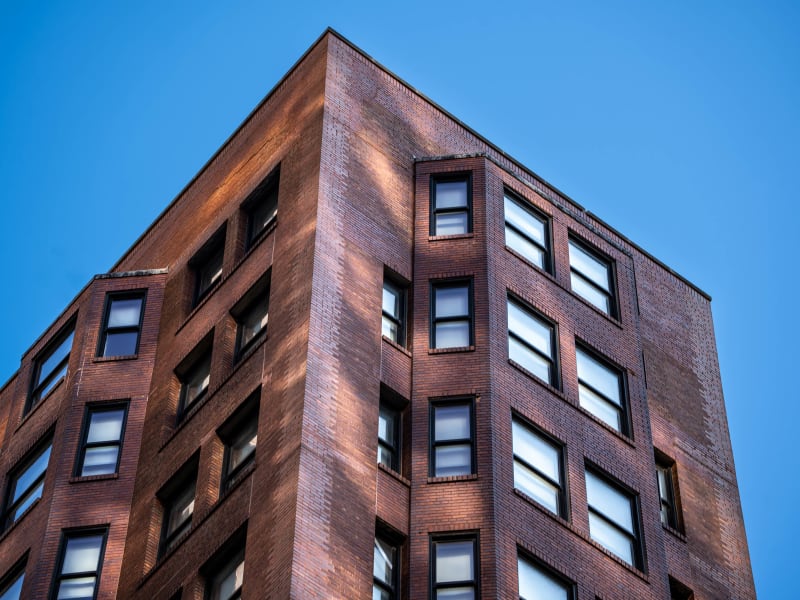
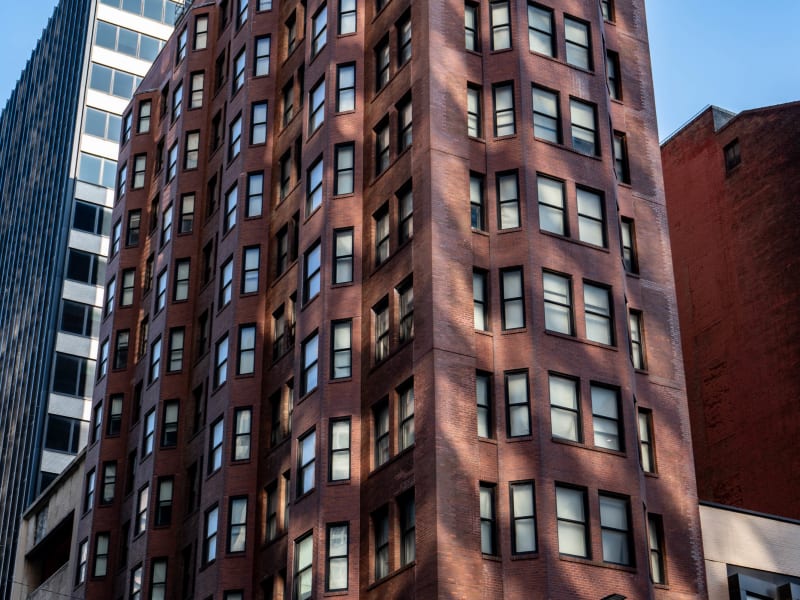
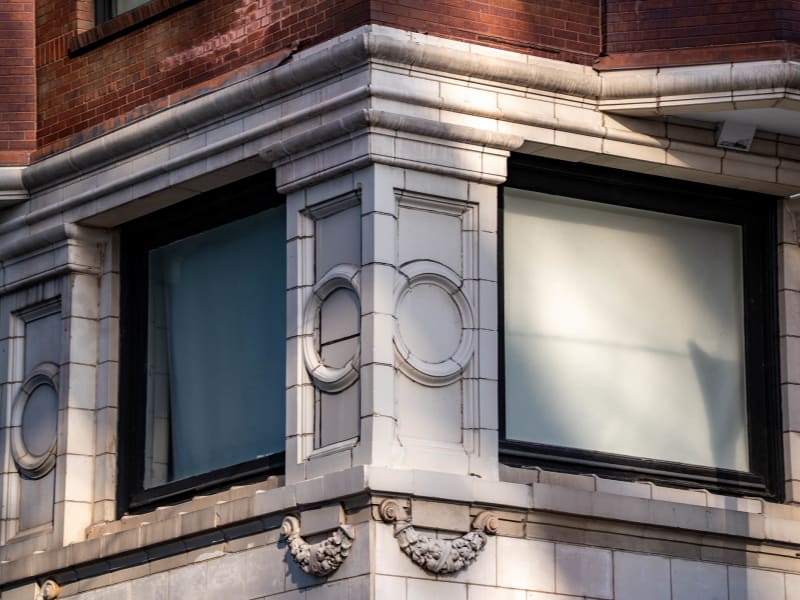
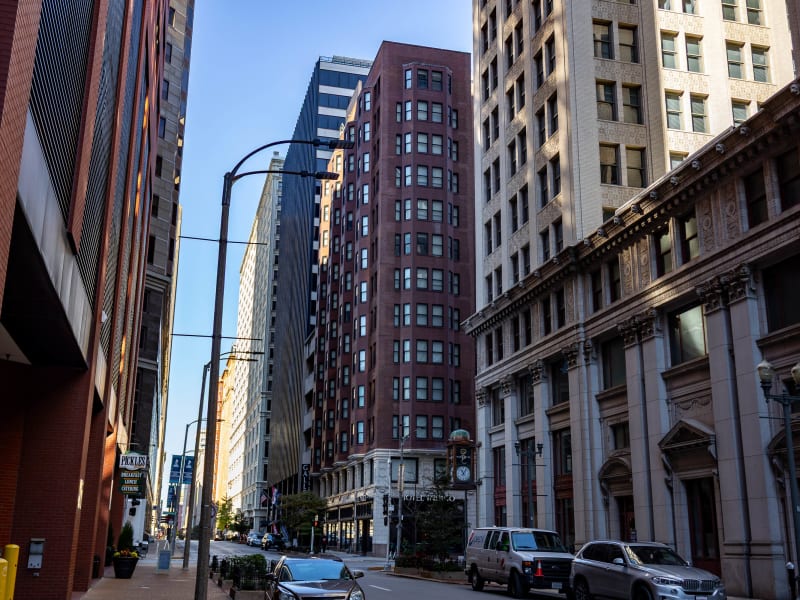
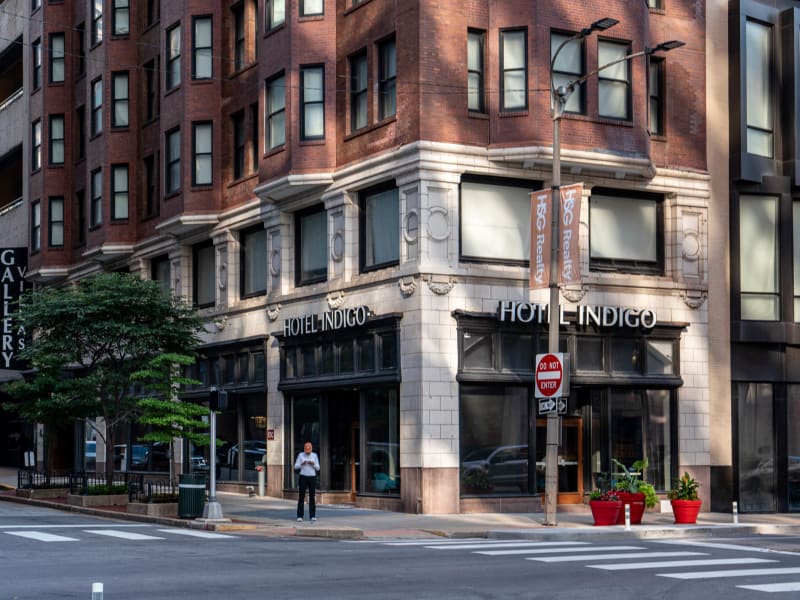
A 13-story sliver of a building — barely 28 feet wide and about 102 feet deep — on a corner lot at Olive Street and Broadway. Its defining feature is a run of projecting oriel windows: vertical piers of brick alternate with bays that rise almost the full height (three-sided along Olive, four-sided on the east front), giving the façade a faceted, corrugated profile. A 1939 renovation stripped the original terra cotta from the oriels and removed the belt course and cornice, replacing them with matching brick, so the tower reads today as unusually plain — closer to the stripped mass of Chicago's Monadnock Block than to its ornamented downtown neighbors.
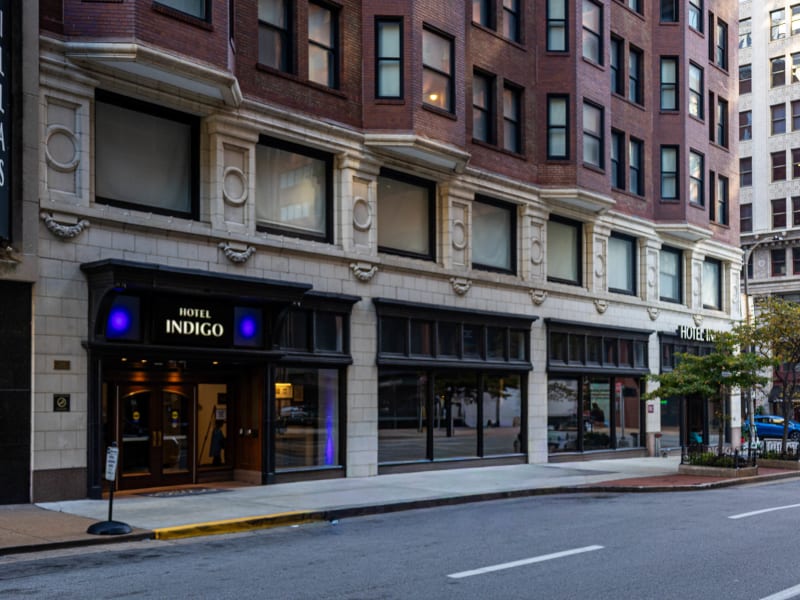
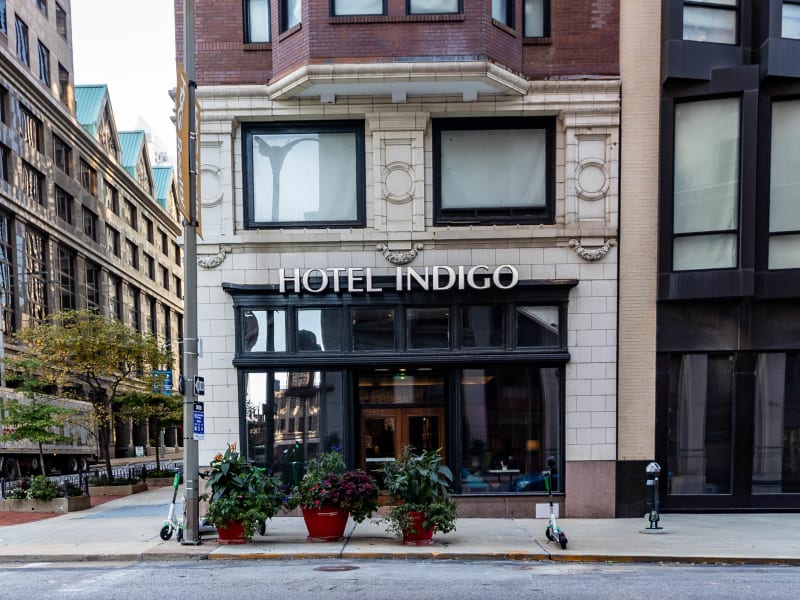
The LaSalle Building went up in 1909, reworked from a 1906 set of plans by Isaac Taylor. It was his first major commission after he served as Director of Works for the 1904 Louisiana Purchase Exposition. On a corner lot barely 28 feet wide, Taylor built upward — thirteen stories of variegated brick and terra cotta on a granite base, served by three elevators, the narrow frame wrapped in the projecting oriel windows that still define it. A 1939 renovation reshaped its appearance: the terra cotta was stripped from the orieled bays and replaced with matching brick, and the terra-cotta belt course below the top floor and the cornice above were removed. That stripping accounts for the plain profile the building carries now. The LaSalle was never abandoned, staying in use as offices through the decades. It was renovated again in 2019 and reopened in 2020 as a Hotel Indigo, in a project shared with its neighbor on Broadway. The building is listed on the National Register of Historic Places.