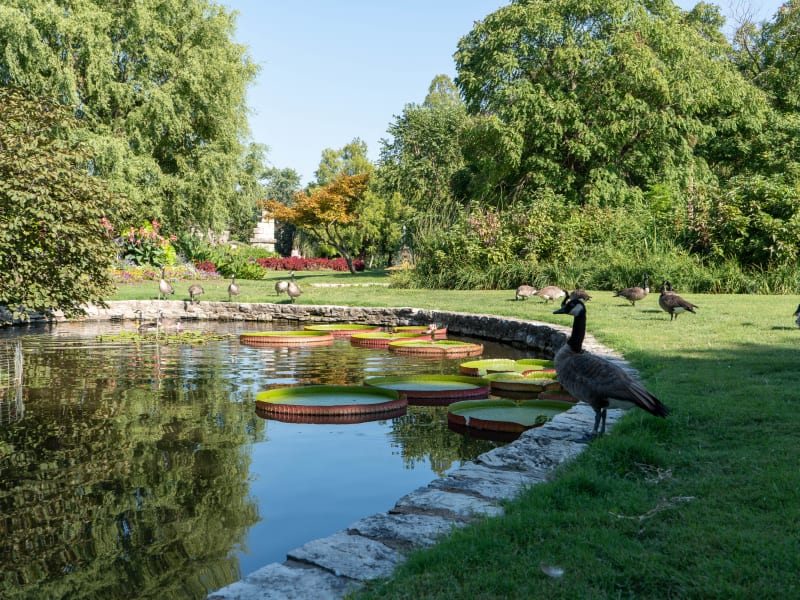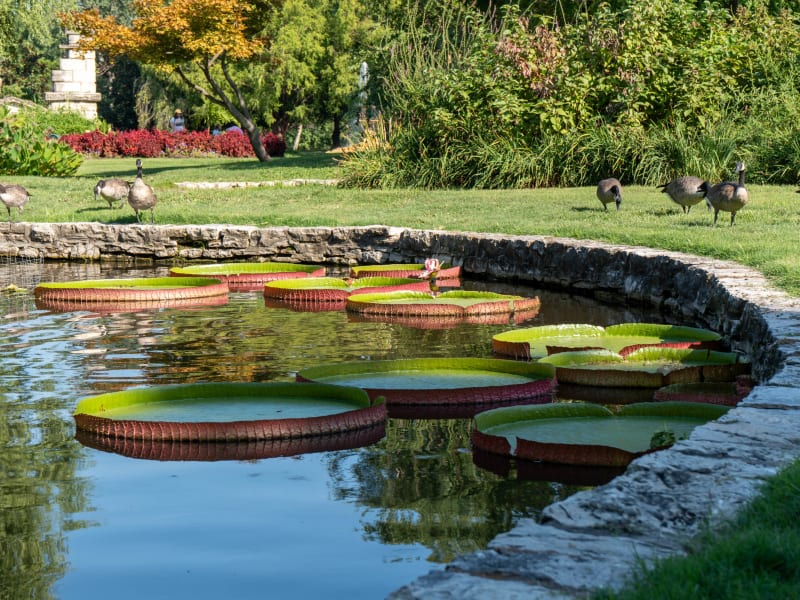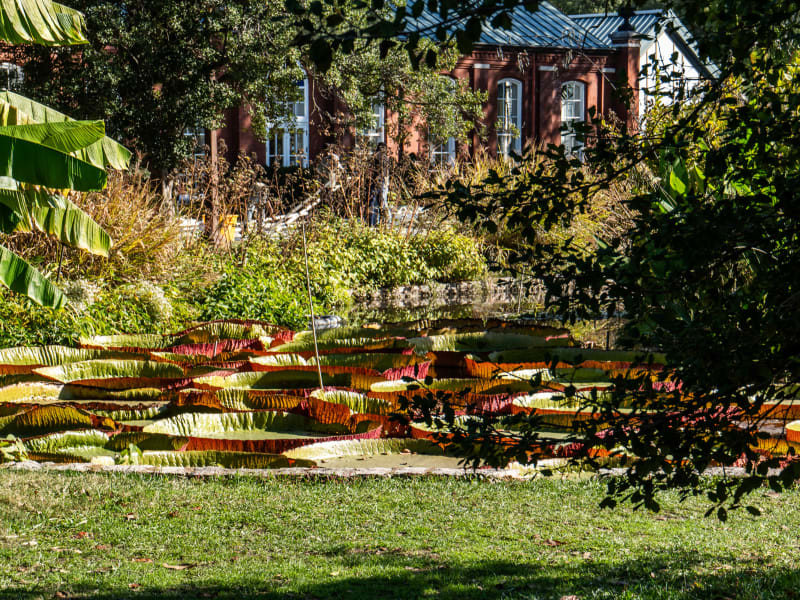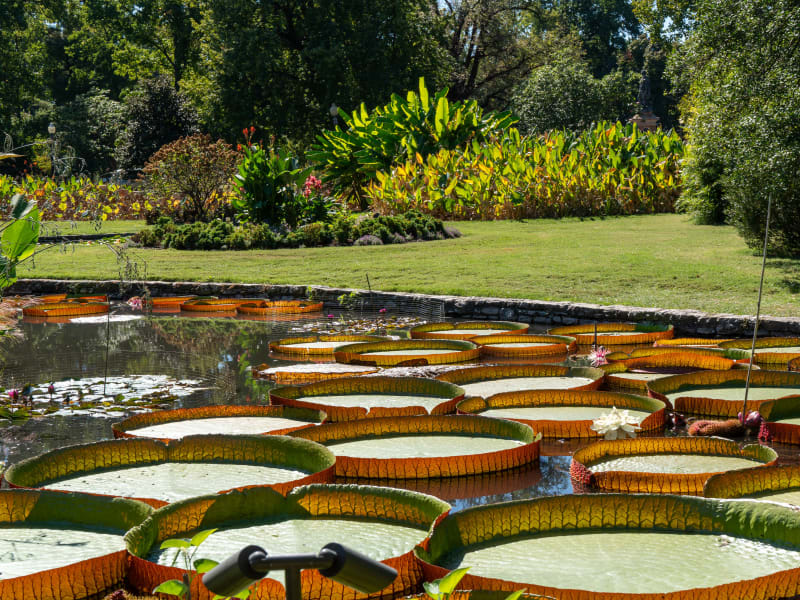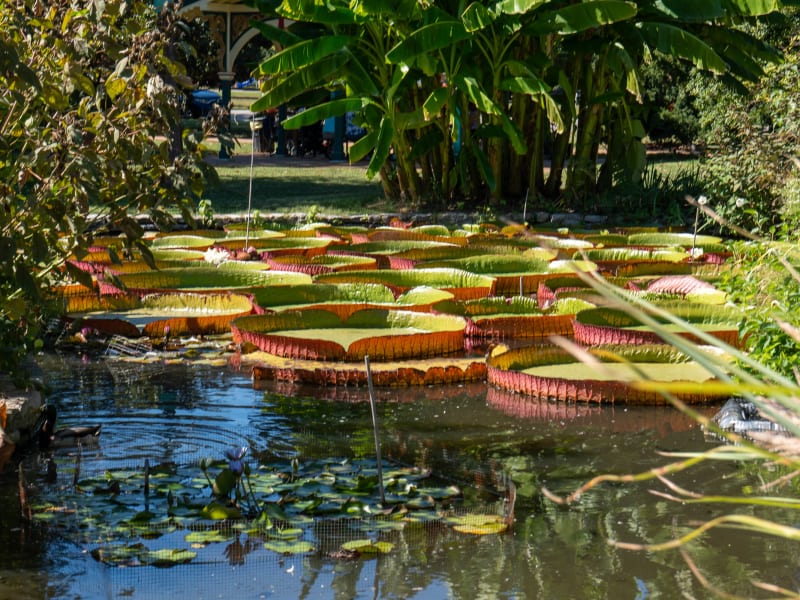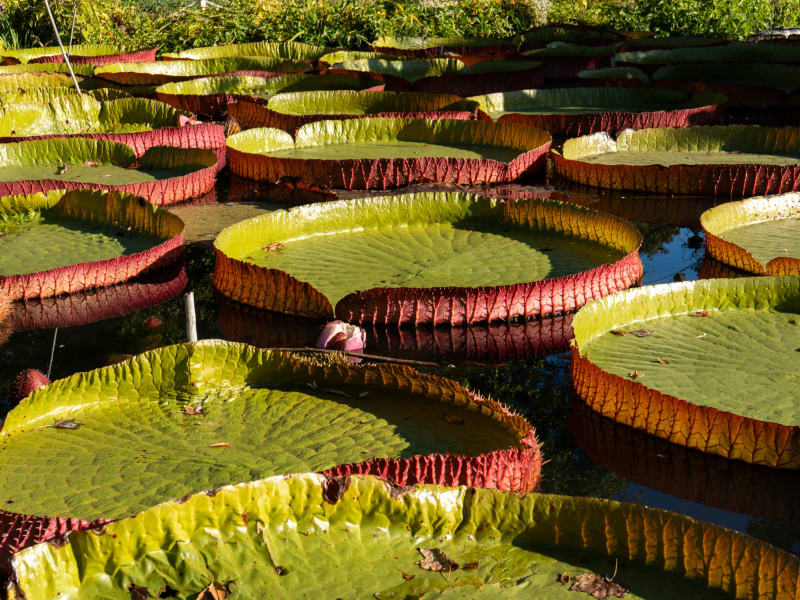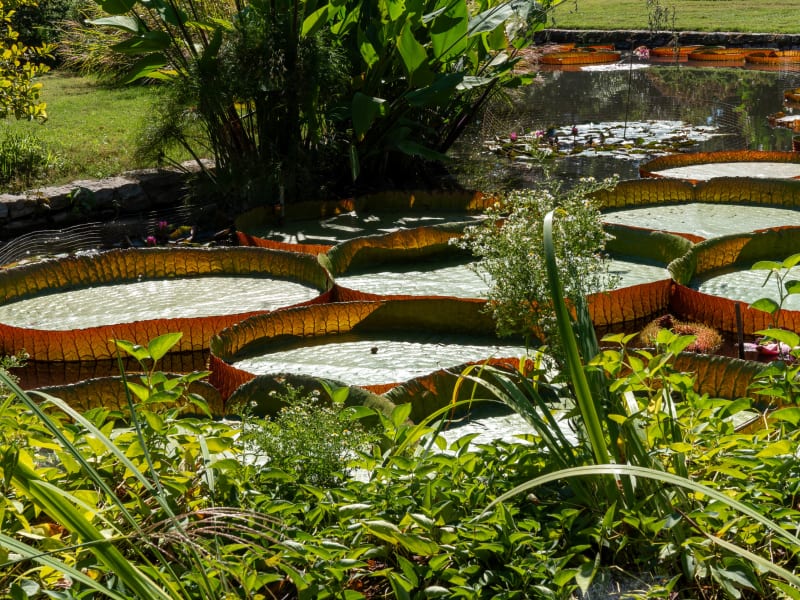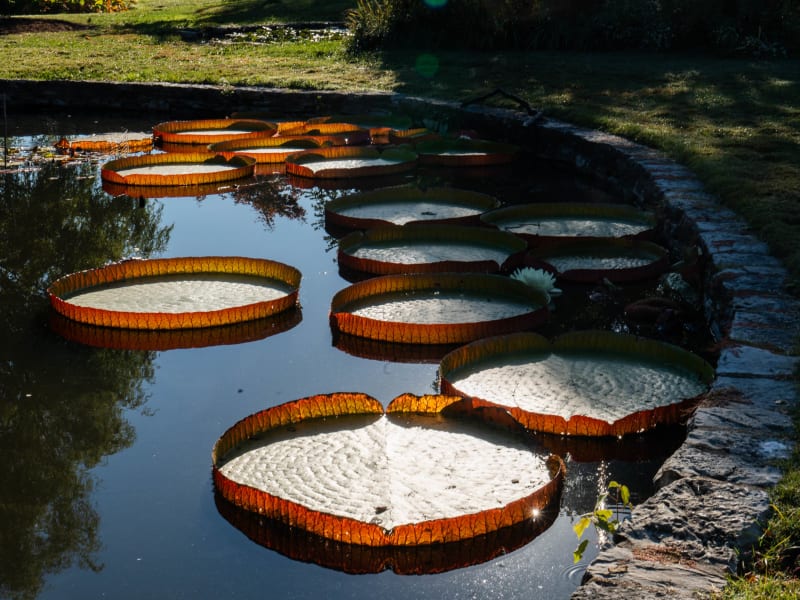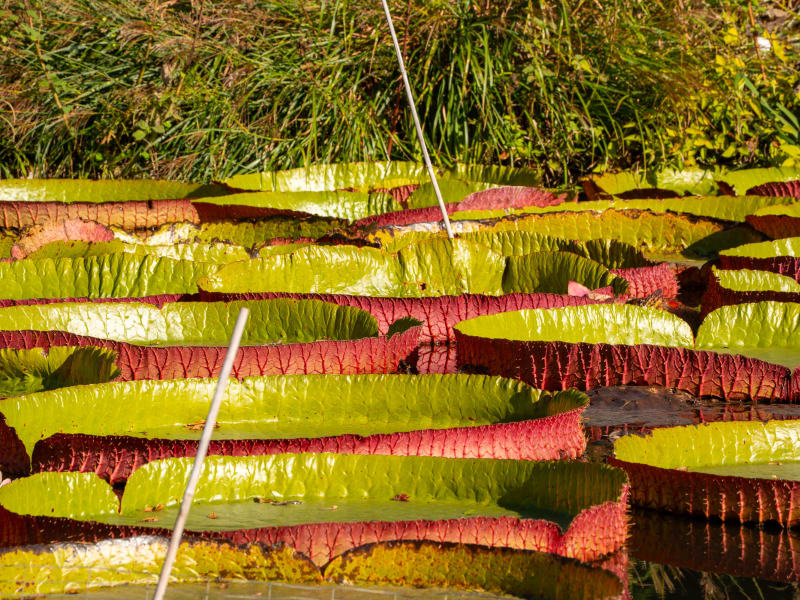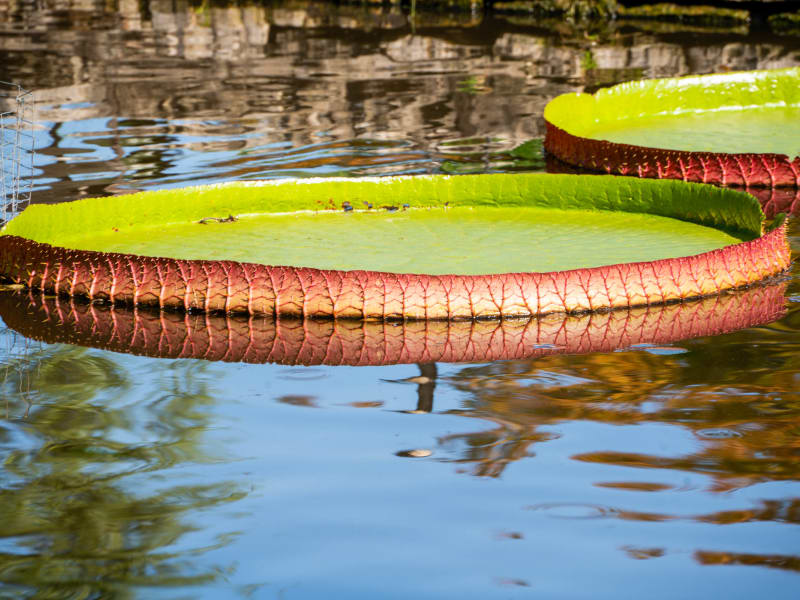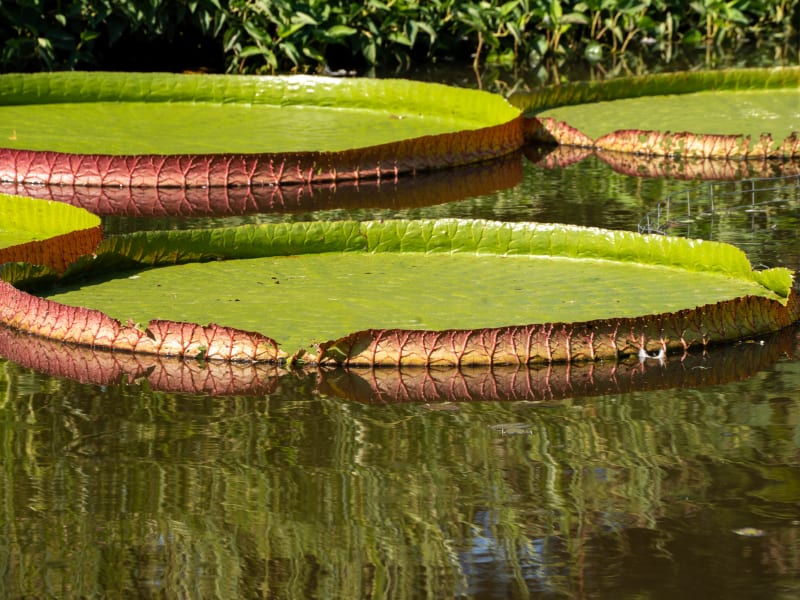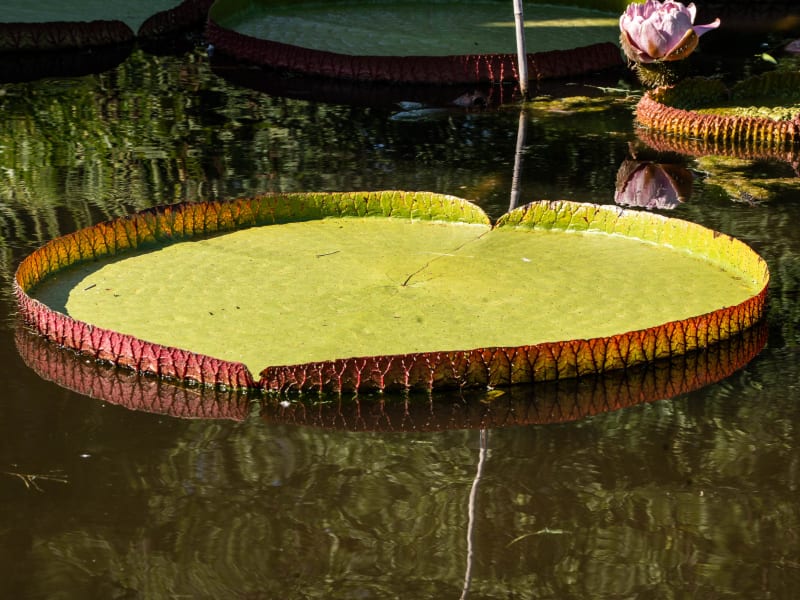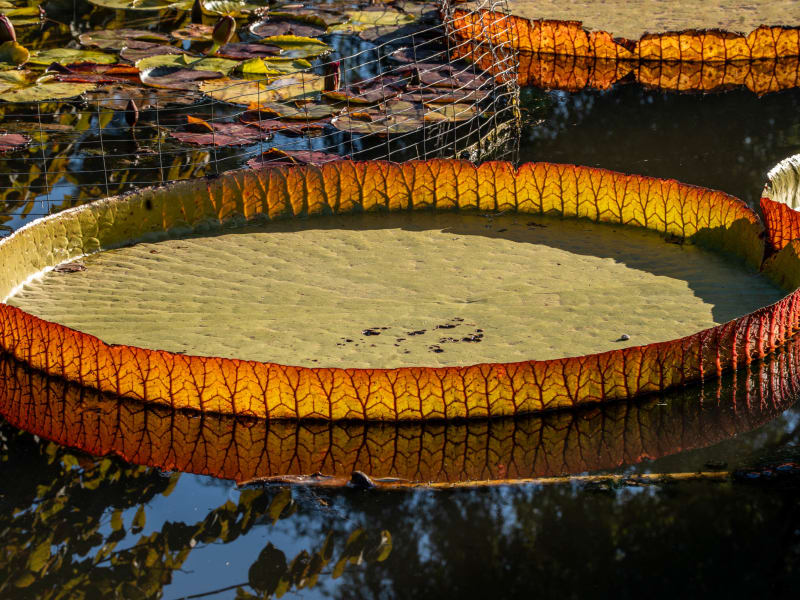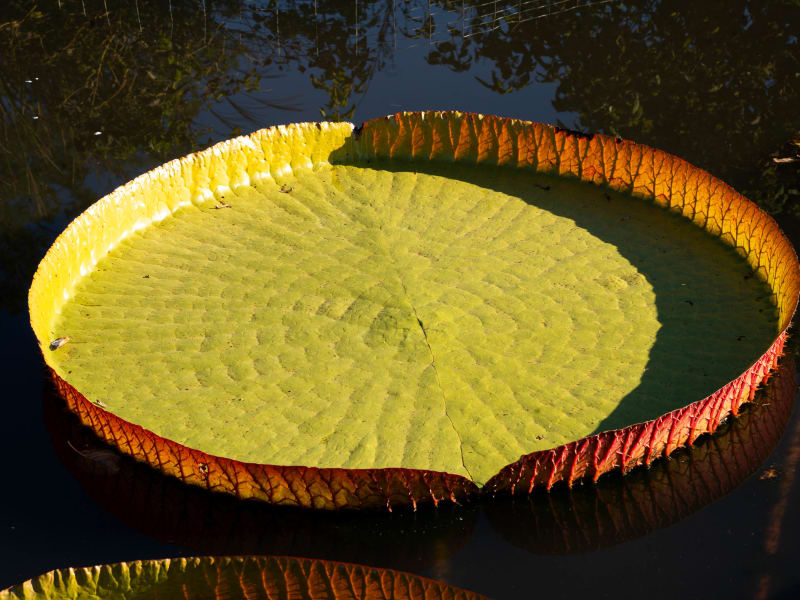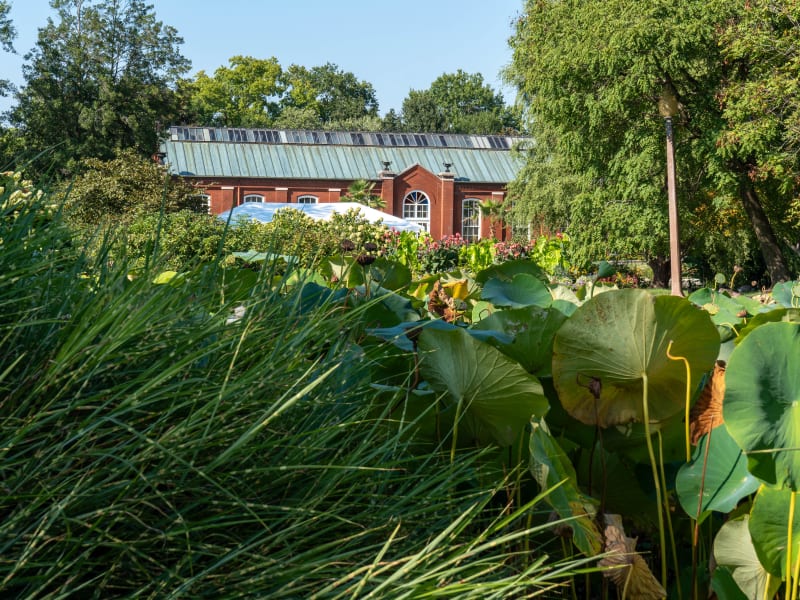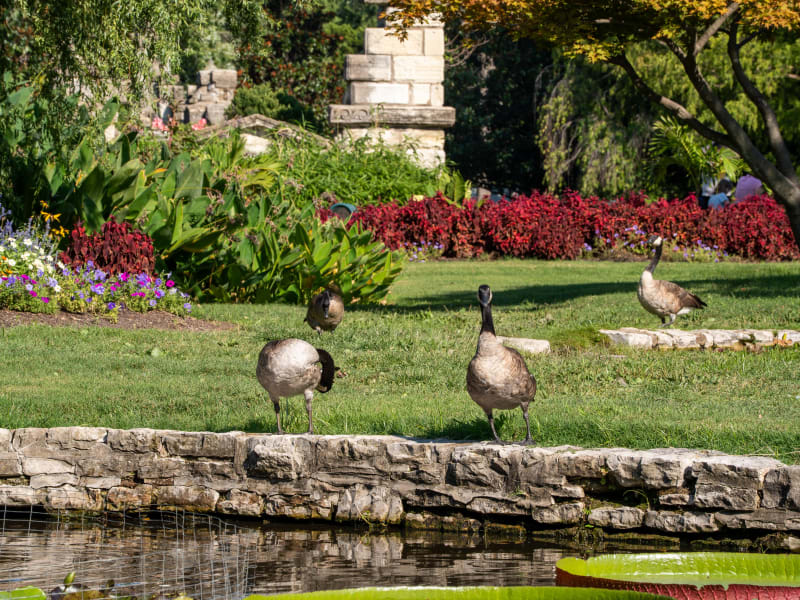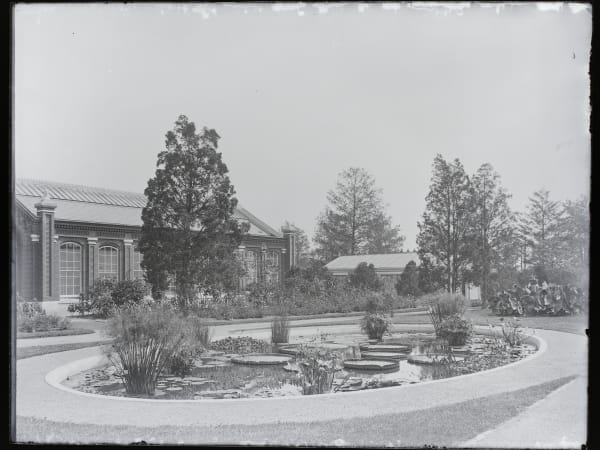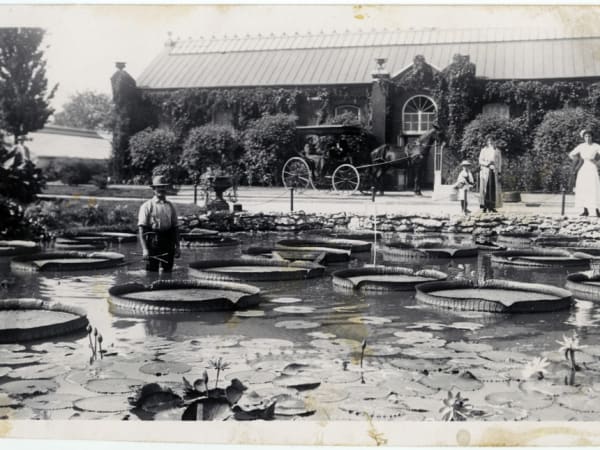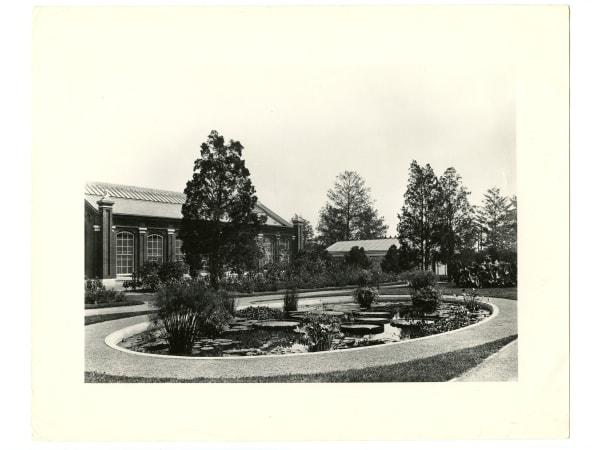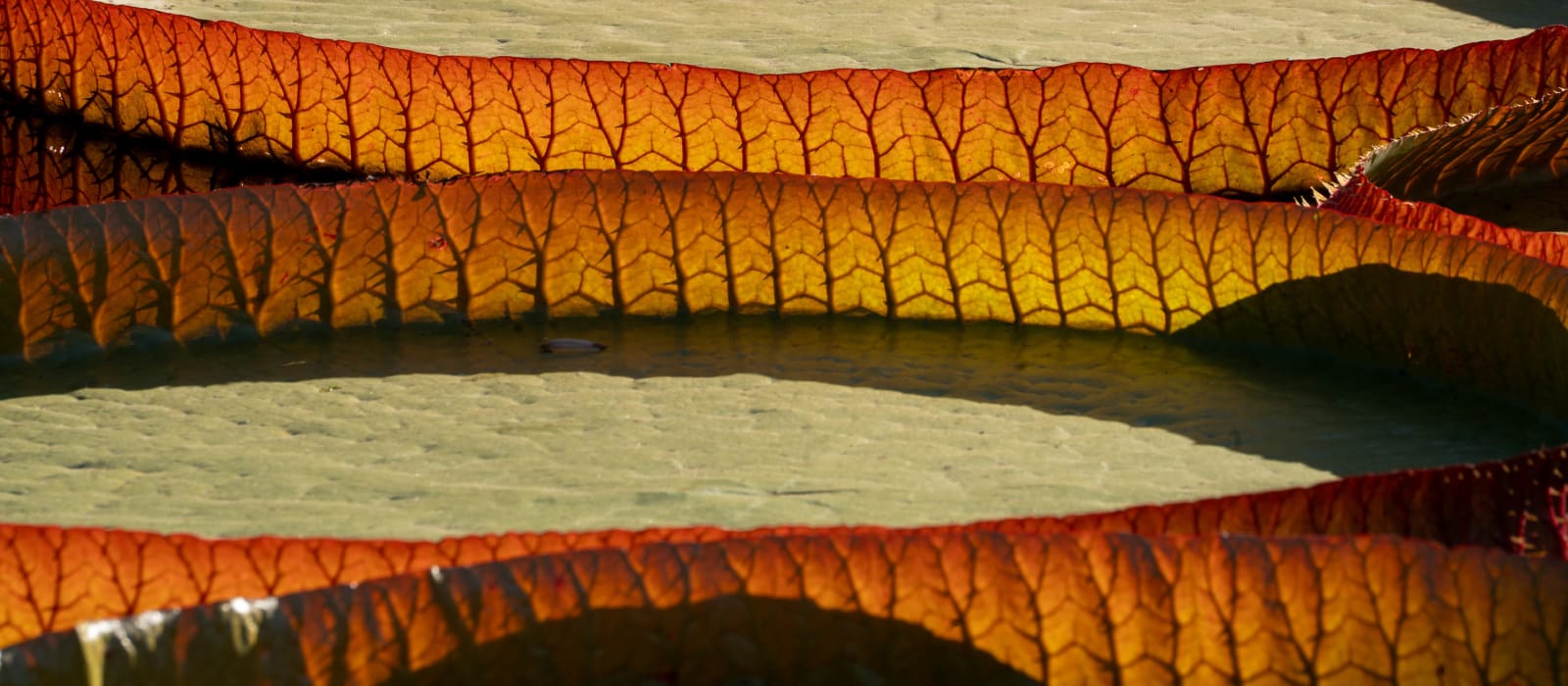
A group of shallow, curving ponds edged with rough-cut stone coping, set in lawn across the drive from the Palm House. In late summer the water is crowded with the pads of giant Victoria water lilies, some several feet across, flat green disks with upturned rims that blush red and are spined beneath. The spiny Victoria buds rise between them, and smaller tropical water lilies bloom white and pink among the pads. Tall grasses, elephant ears and other tropical plantings crowd the banks, with beds of red bedding plants beyond, and the brick front of the Palm House closes the view to the north.
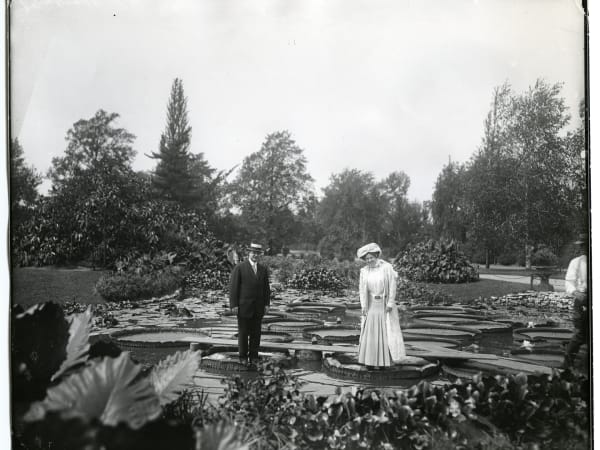
The lily ponds were not part of Henry Shaw’s original plan for the park. They were built by James Gurney Sr., the English gardener Shaw brought from the Royal Botanic Gardens at Kew, where Gurney had raised giant Amazonian water lilies, the Victoria among them. The park’s marker dates the ponds to the 1880s, but neither the 1883 plan of the park nor David MacAdam’s guidebook that accompanies it shows or mentions them, and the board’s annual report records small water-lily ponds built in 1902 near the Tower Grove Avenue entrance, where these lie. Superintendent’s reports from the 1960s and 1970s also mention north and west lily ponds; today these are the park’s only lily ponds. They lie in front of the 1878 Palm House, whose palms and tropical plants were set out around the water each summer. Under Gurney, who became the park’s superintendent after Shaw’s death in 1889, and two later generations of his family, the ponds became a showcase for water lilies bred with the Missouri Botanical Garden. Varieties first shown here, among them St. Louis Gold, Henry Shaw and Missouri, became standards of the trade. Visitors came by streetcar to see them, and early photographs show couples posing on the Victoria pads, standing on boards laid across them. Gurney also devised the water supply: water from Fountain Pond runs through a cattail marsh that filters and conditions it, then through the lily ponds, and today continues under Magnolia Avenue into the lake of the Botanical Garden’s Japanese Garden. The ponds were lit at night at least into the 1930s. By the 2000s the ponds leaked, their walls were failing and the soil had worn out. A restoration of more than $400,000, funded chiefly by Emerson ($250,000) and the Anheuser-Busch Foundation ($100,000), rebuilt them in 2007–08 with Victorian tropical plantings, sprinklers and new night lighting. The park’s 2017 master plan named the Lily Ponds Area and Facilities Core for further renewal, with LJC and Trivers preparing the schematic design.