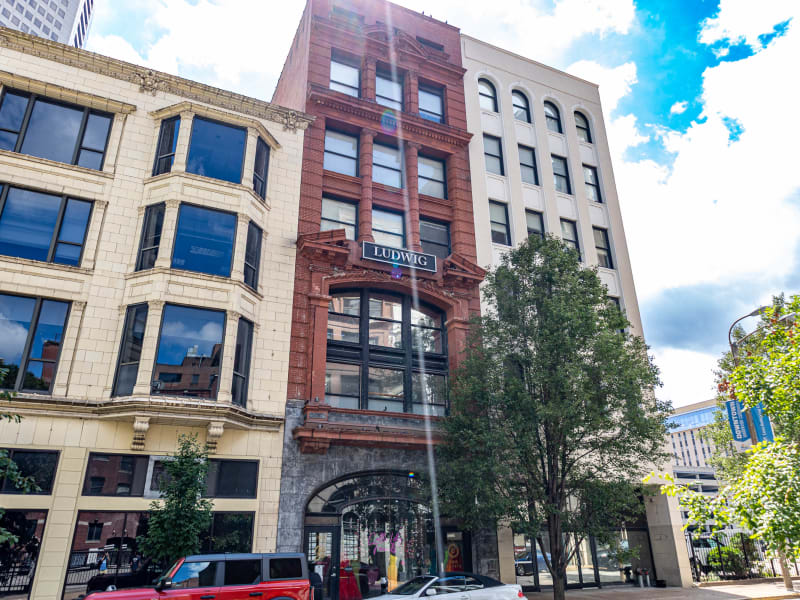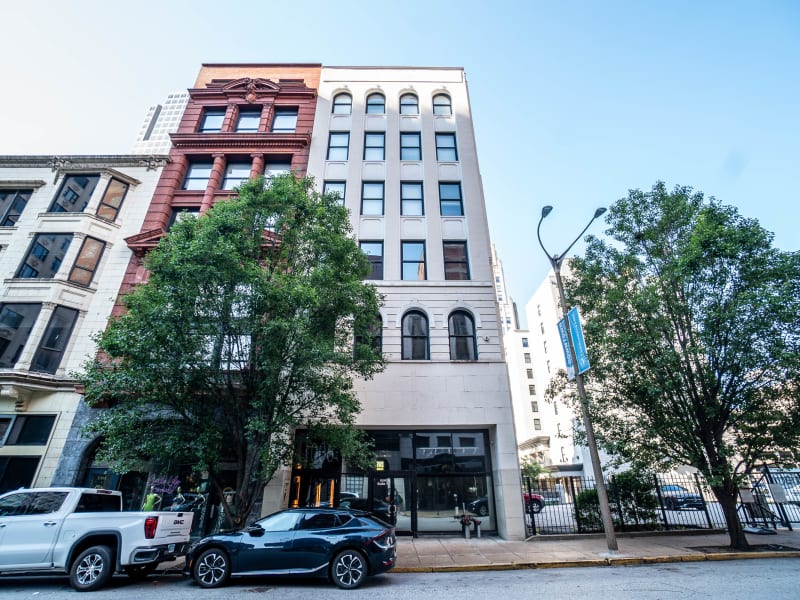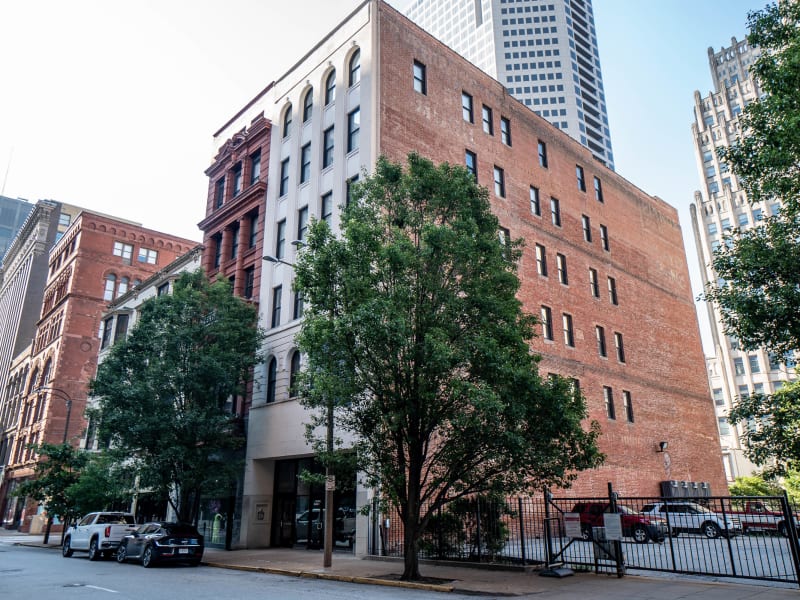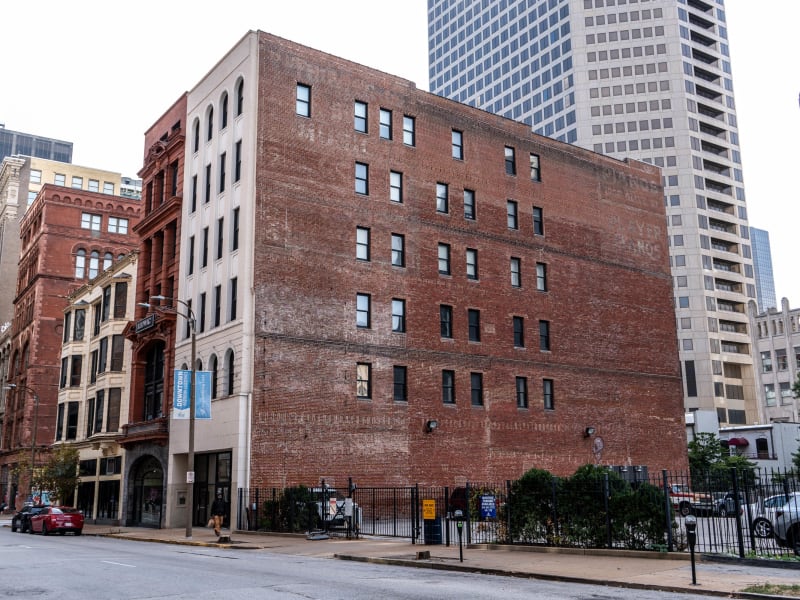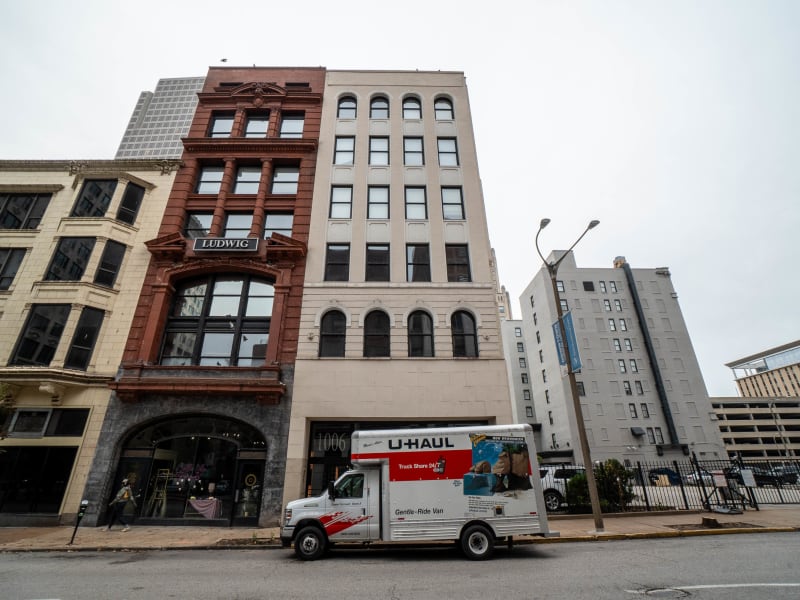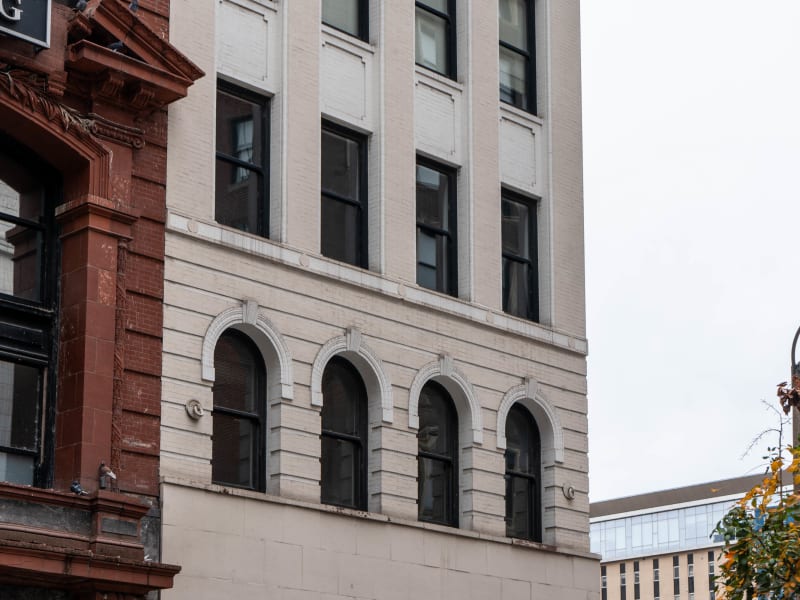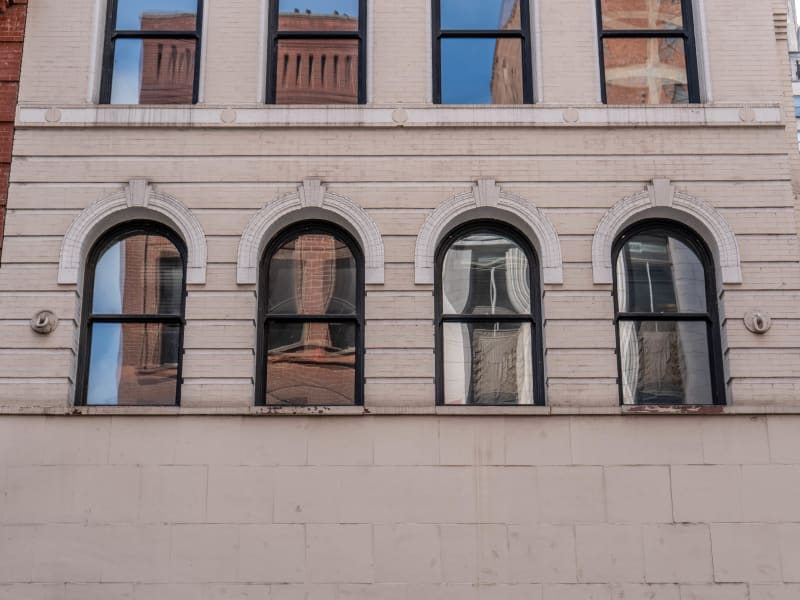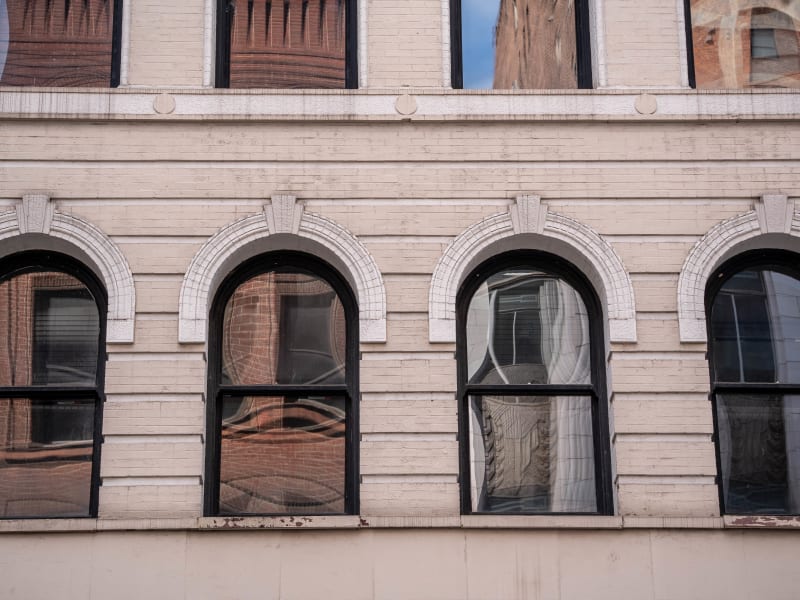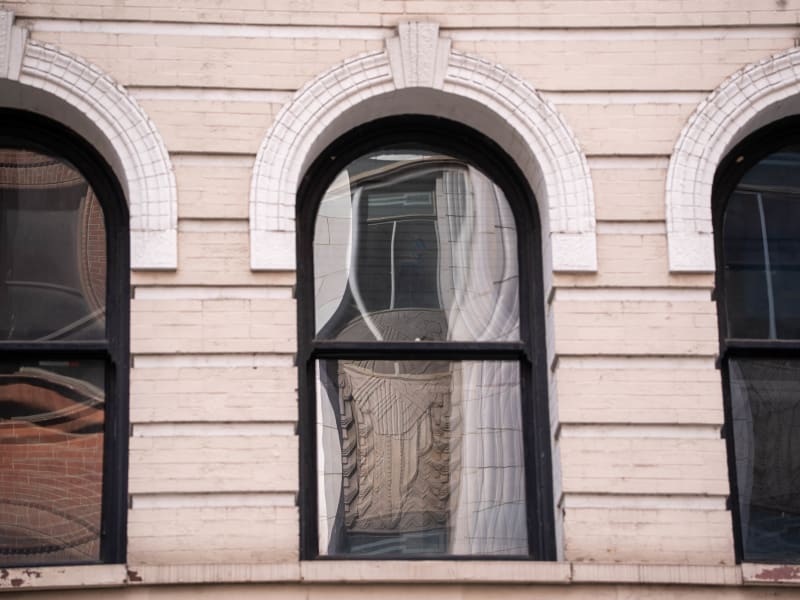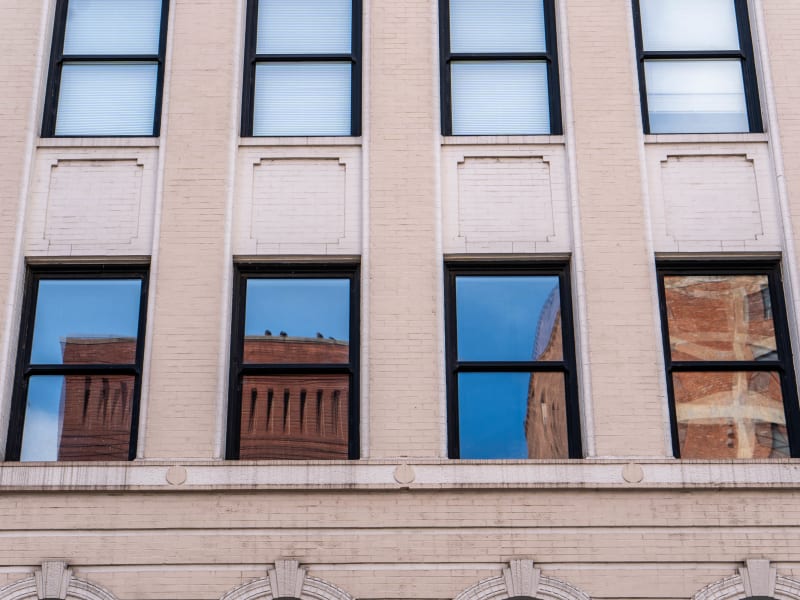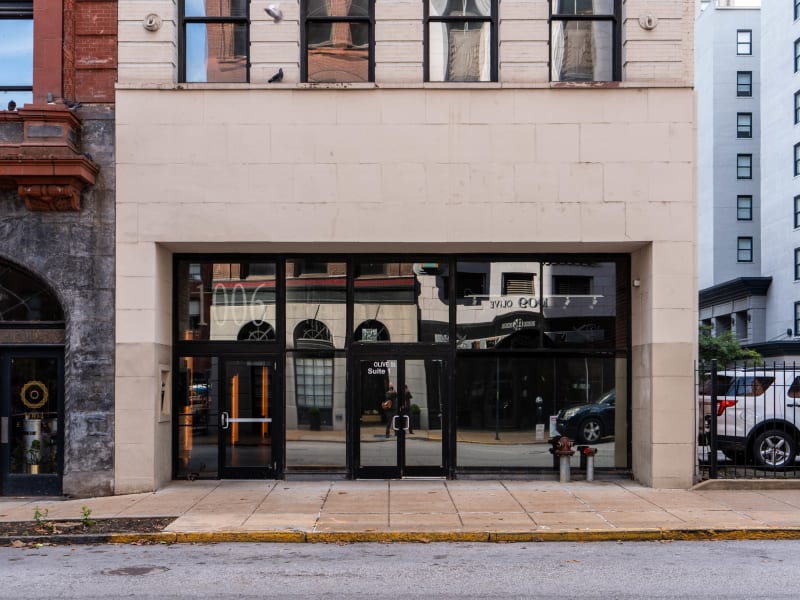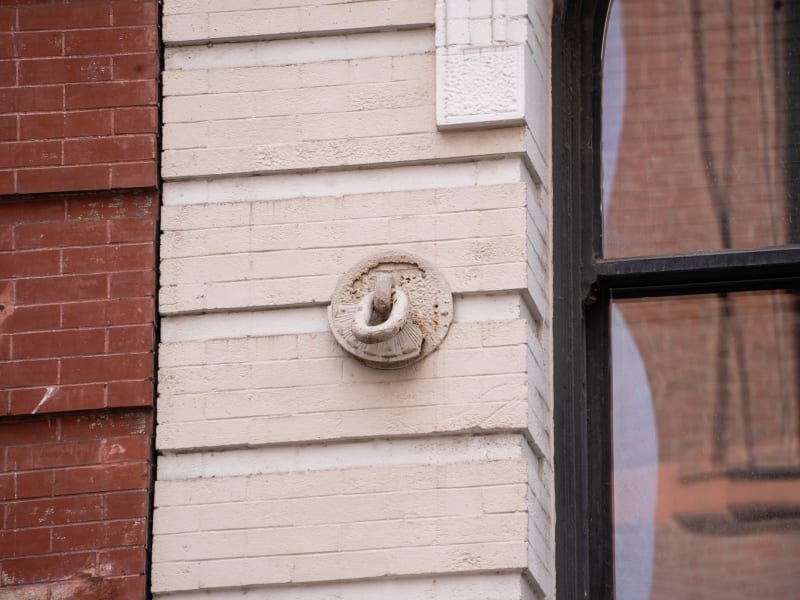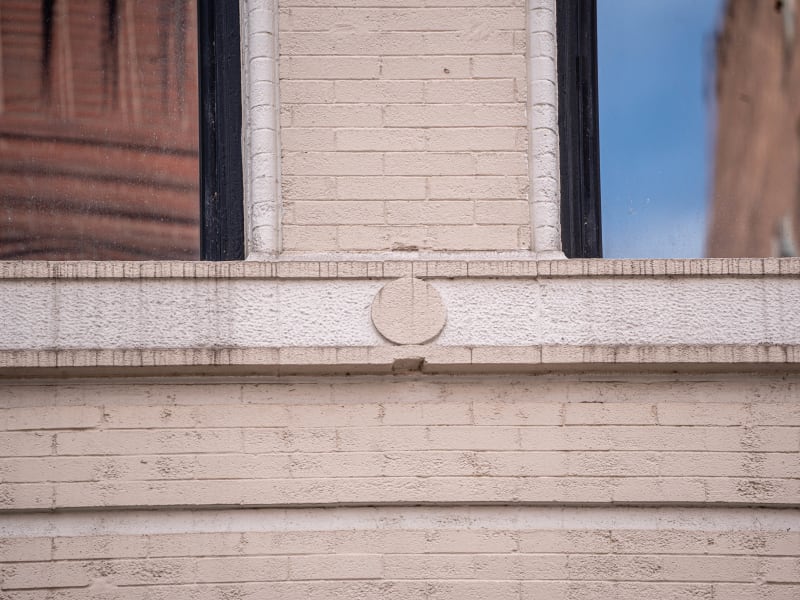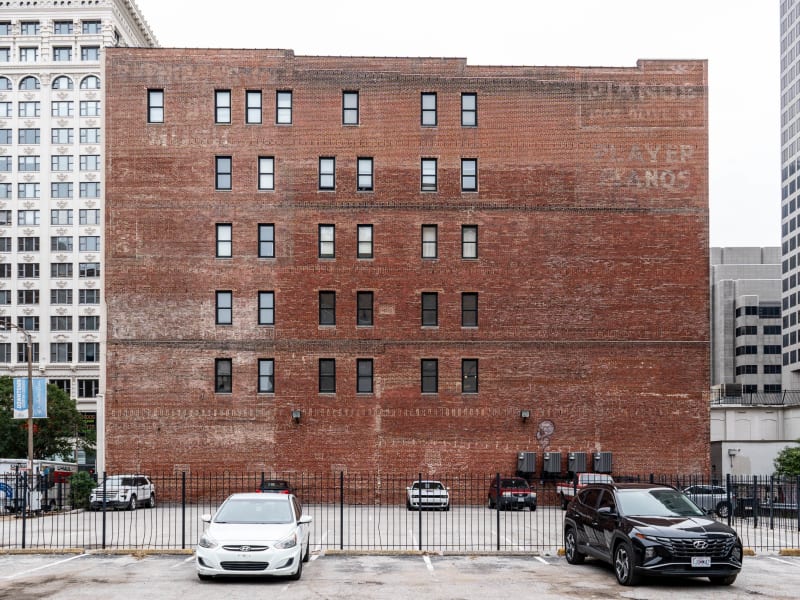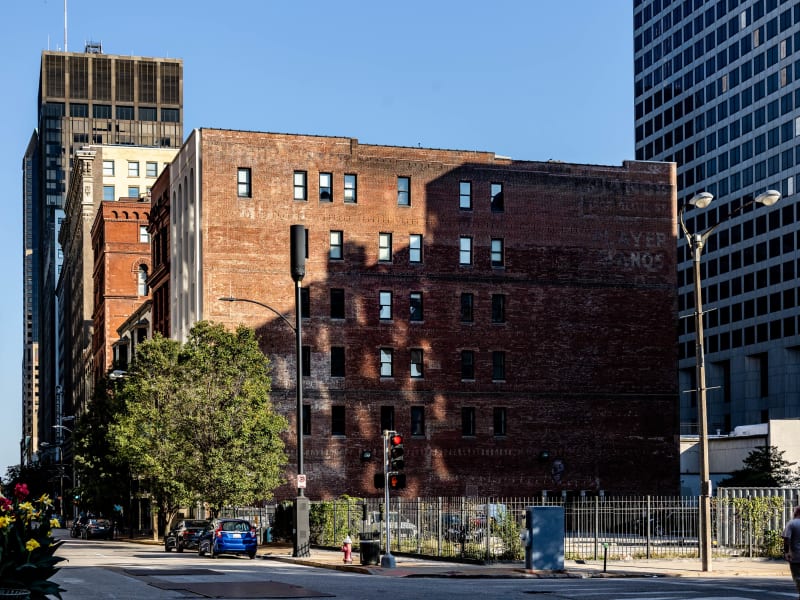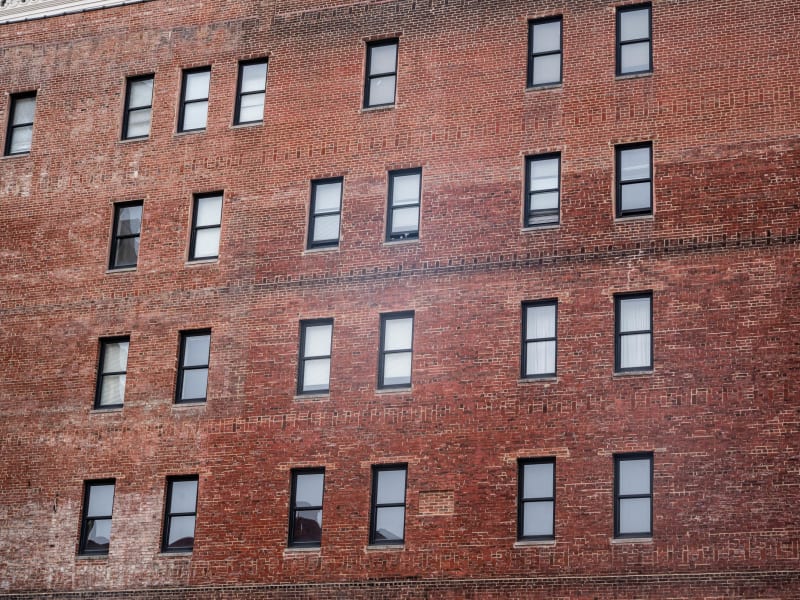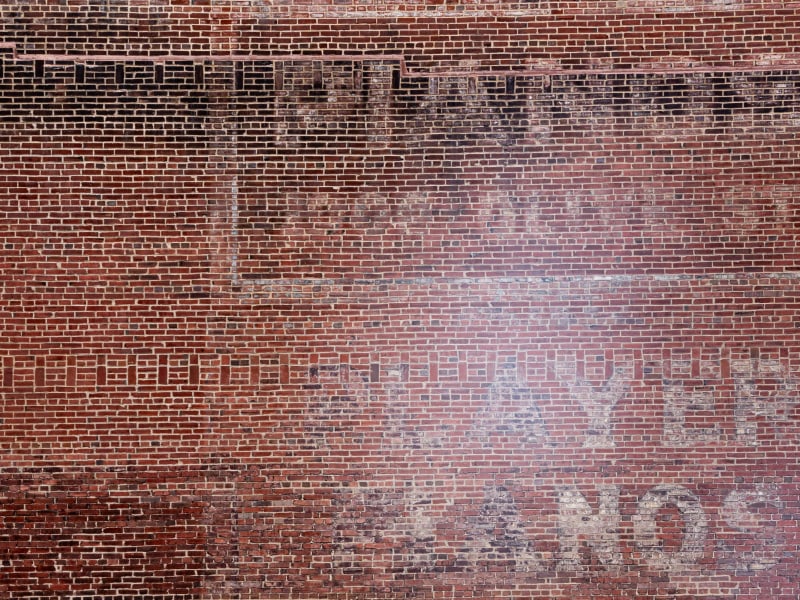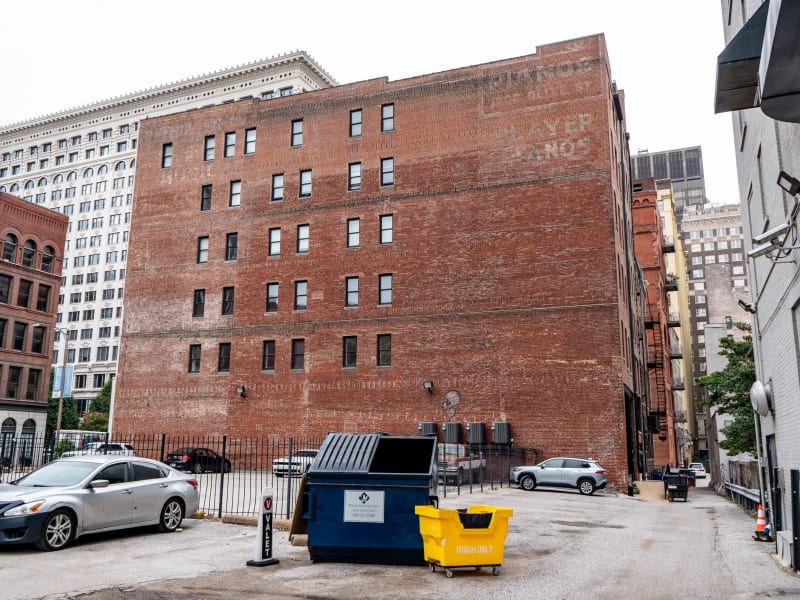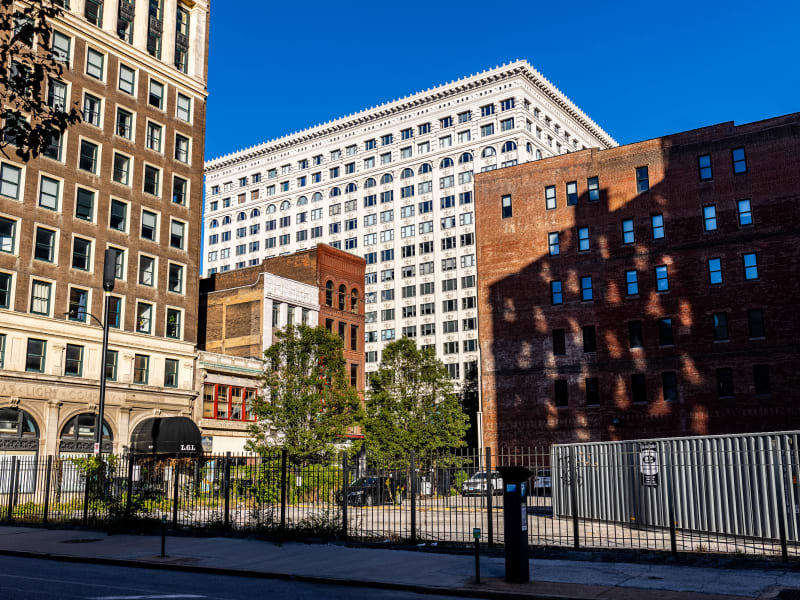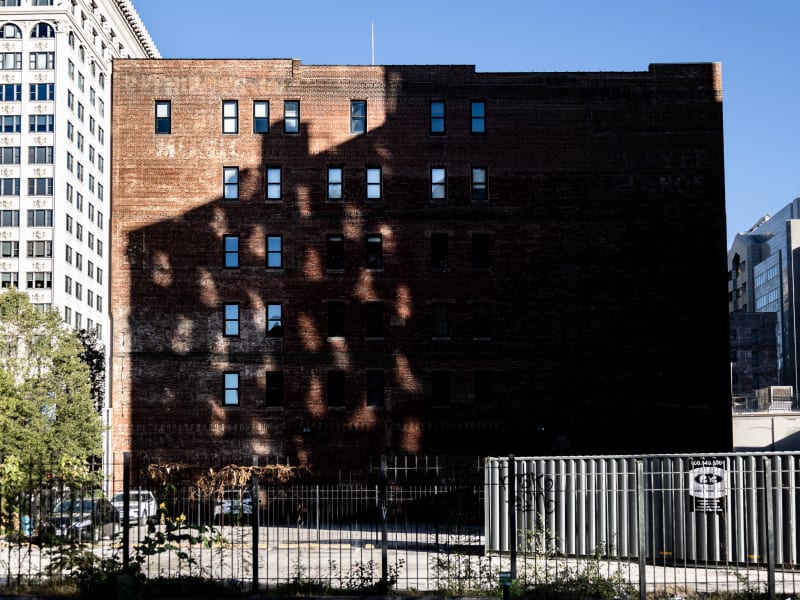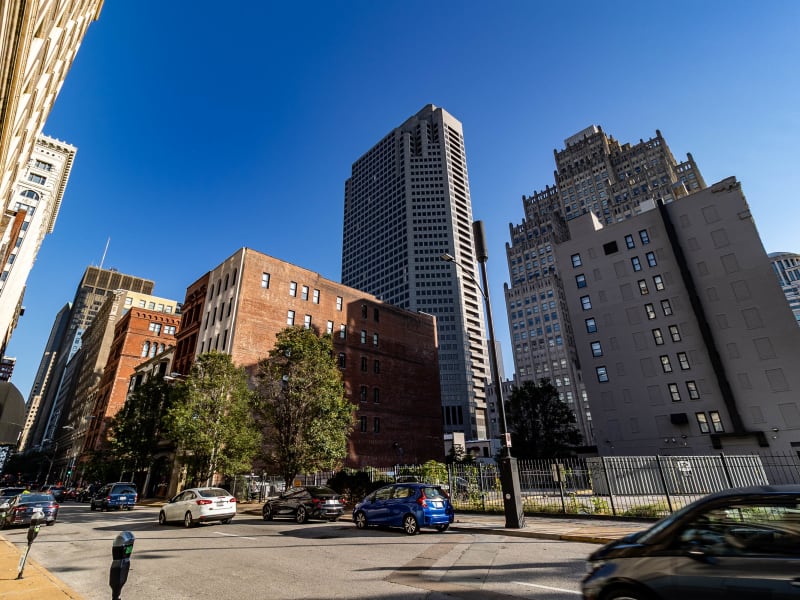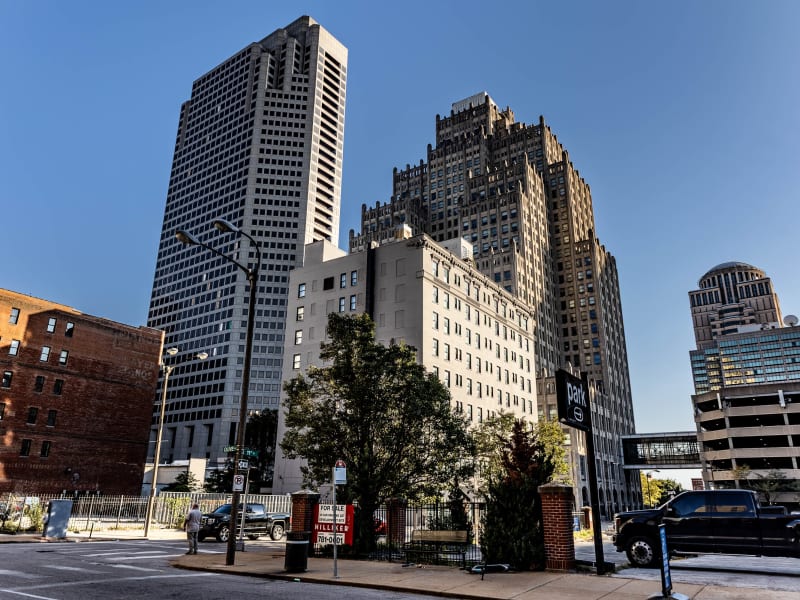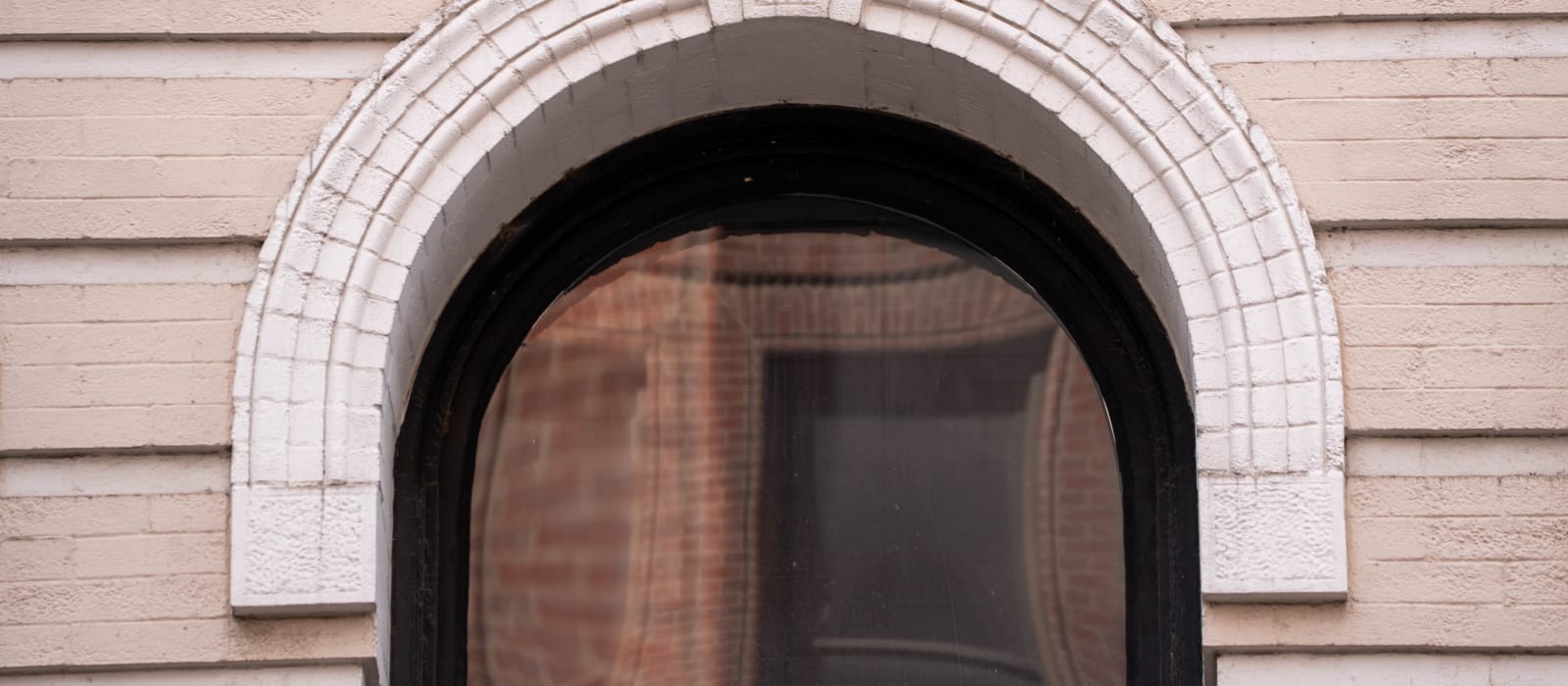
A six-story front, now painted a single cream color. A tall smooth base holds a wide glass storefront with the number 1006 on the glass. The second floor is rusticated, with four round-headed windows under raised keystones. The third through fifth floors each have four tall windows set between flat piers, with recessed panels between the floors, and the sixth floor returns to four round-headed windows. The pressed-metal cornice is gone, leaving a plain parapet. The long west wall is bare red brick over a parking lot, and faded white letters near its top still read PIANOS, 1006 OLIVE ST. and PLAYER PIANOS.
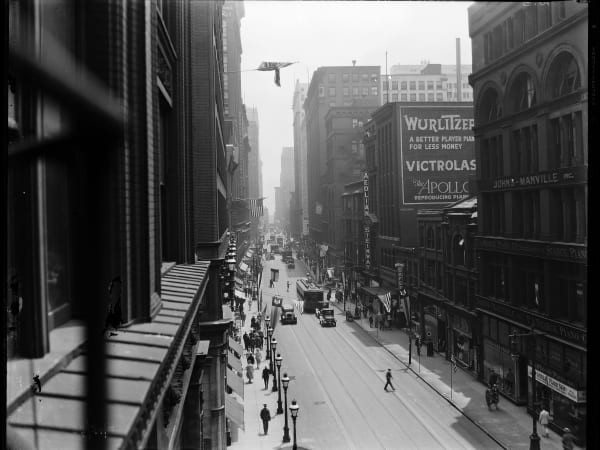
Arthur C. Thiebes and Frederick C. Stierlin incorporated the Thiebes-Stierlin Music Company in 1894 and first did business at 1111 Olive. In 1904 they commissioned this six-story building from Theodore C. Link, with William M. Sutherland as contractor, and moved in in 1905. Stierlin left in 1909 to start his own piano company, and Thiebes ran the firm until 1919, when the Rudolph Wurlitzer Company bought it and the building. Wurlitzer stayed through the Depression. In 1926 a huge painted WURLITZER sign on the building's west wall, above the two-story building next door, advertised player pianos, Victrolas and the Apollo reproducing piano. The storefront was remodeled in 1975 and the pressed-metal cornice removed. After years of vacancy and small tenants, the building was listed on the National Register of Historic Places in 2004 and planned for housing.