Shell Building
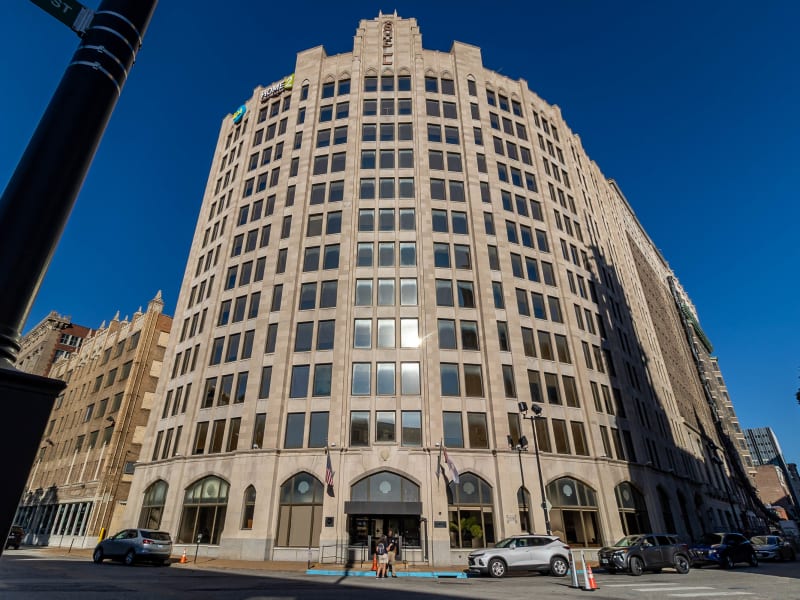
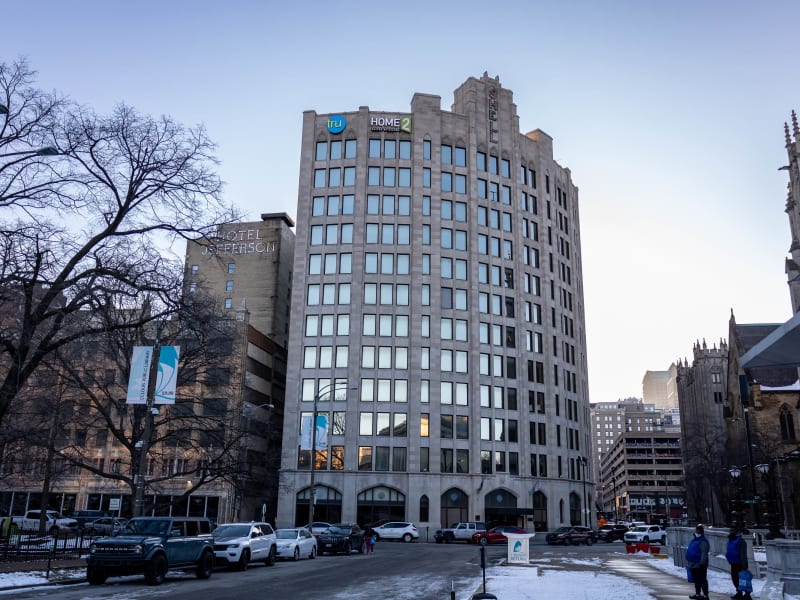
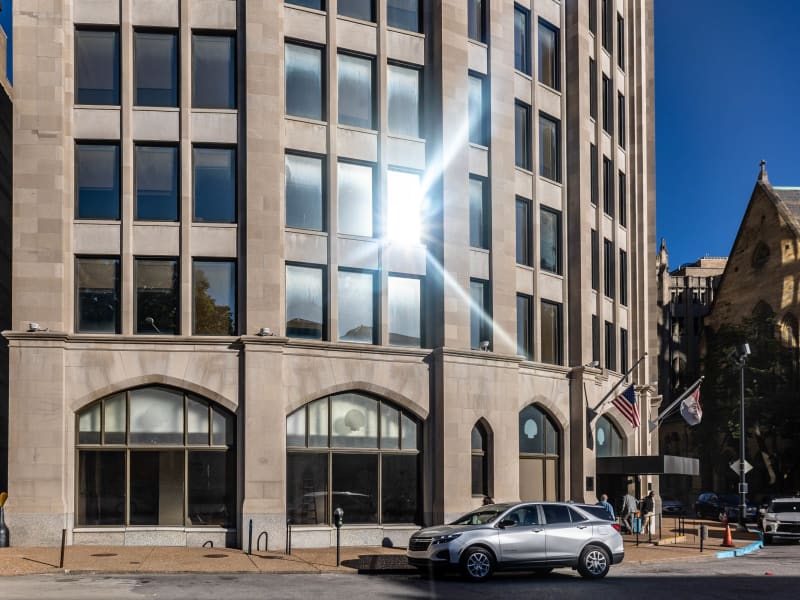
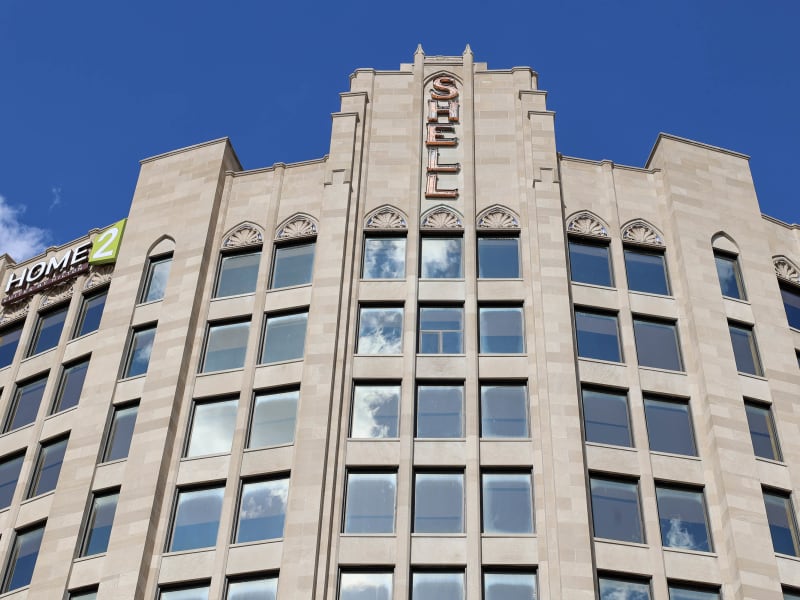
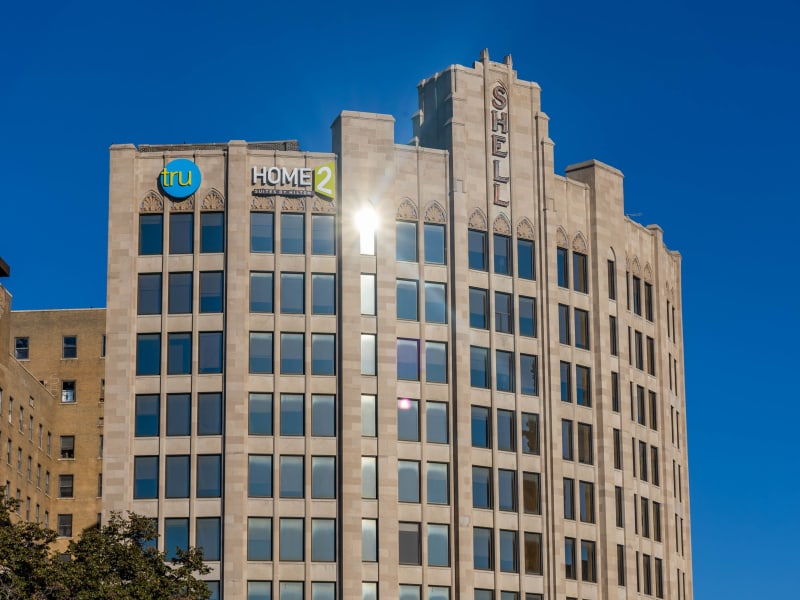
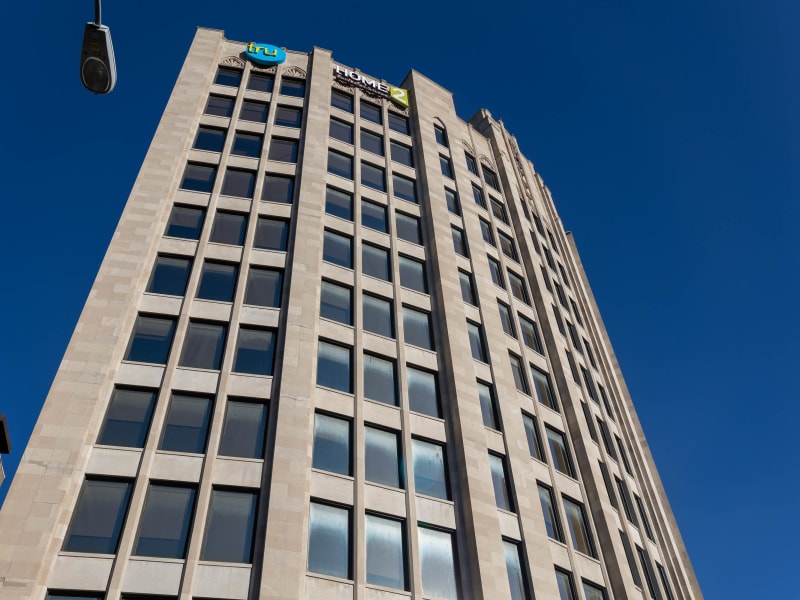
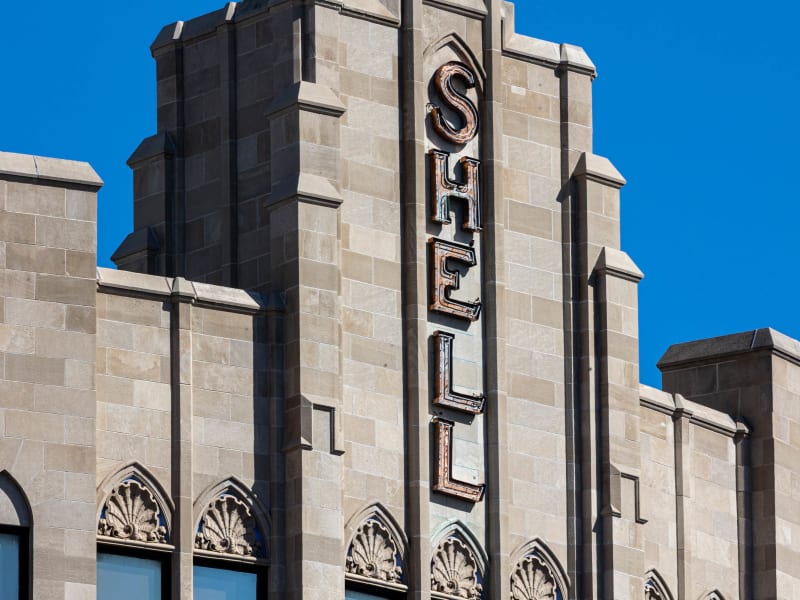
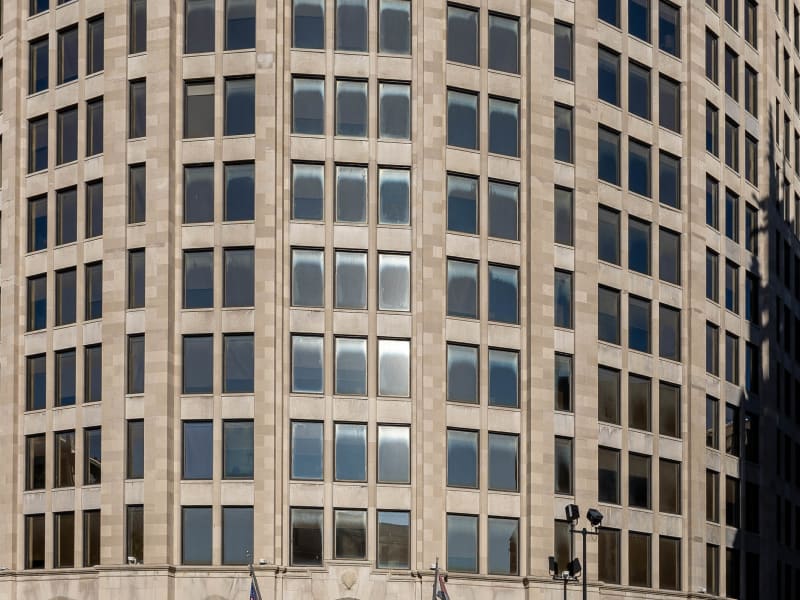
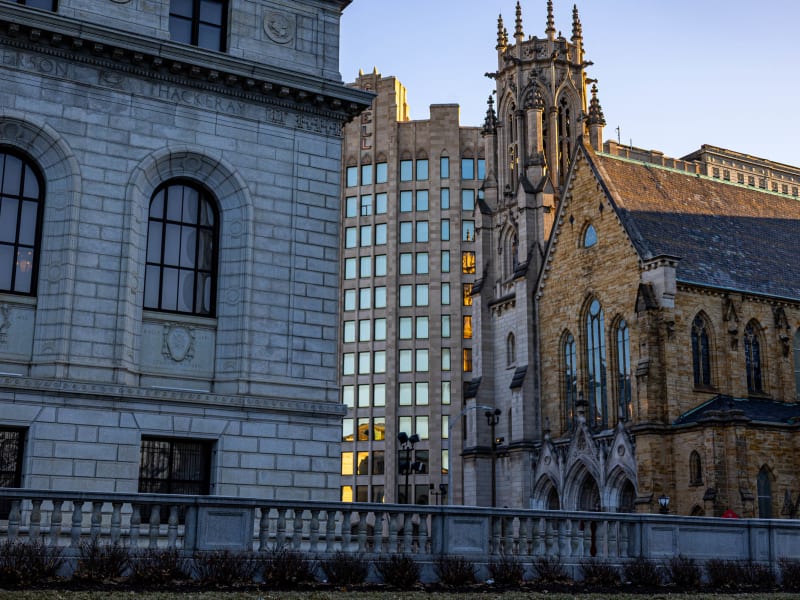
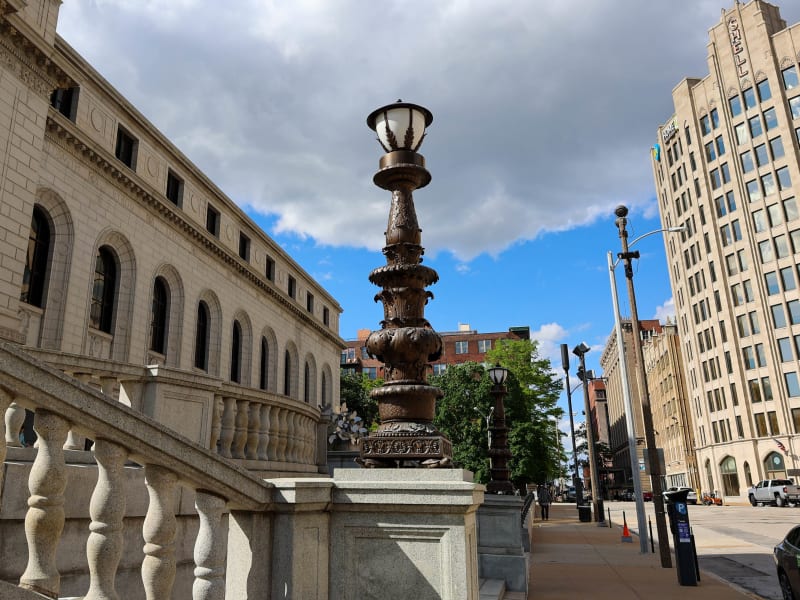
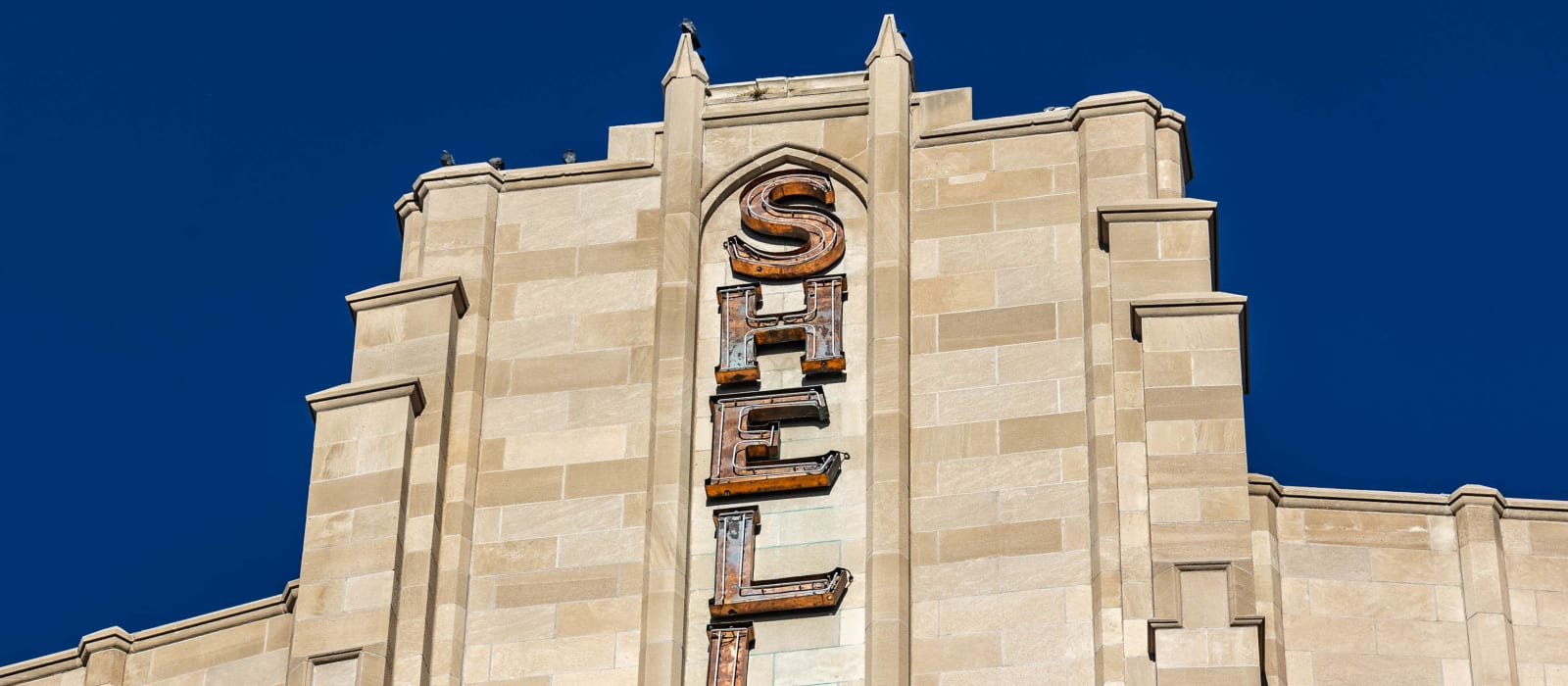
Twelve stories on a curved corner site where Locust Street doglegs at Thirteenth, among the earliest Art Deco designs in St. Louis and crossed with Late Gothic Revival. A single continuous cut-limestone elevation rounds the corner and straightens along each street, ending in tower-like returns. Vertical structural piers pulled forward give the wall a ribbed rhythm that references a seashell. Sculpted shells mark the two entrances — a single shell over the pointed arch of the western tower door, six framing the etched "Shell Building" lettering at the east entrance, which keeps its bronze doors and brass hardware. Pointed-arch Gothic windows with etched-seashell transoms and dark granite sills run the ground floor, and an illuminated "Shell" sign crowns the roof tower.
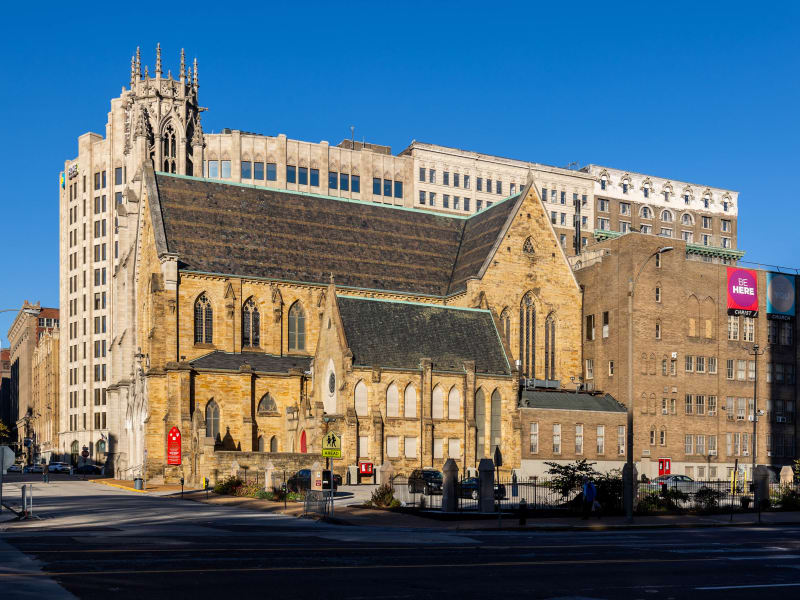
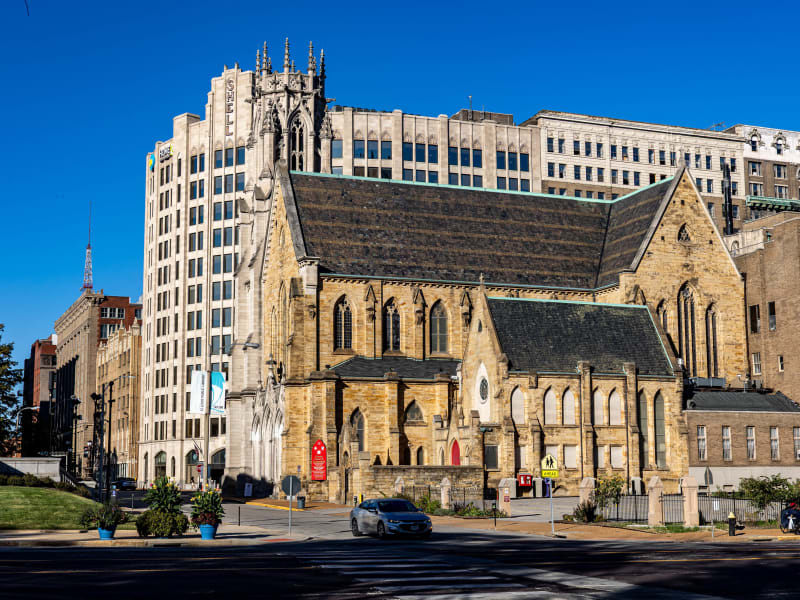
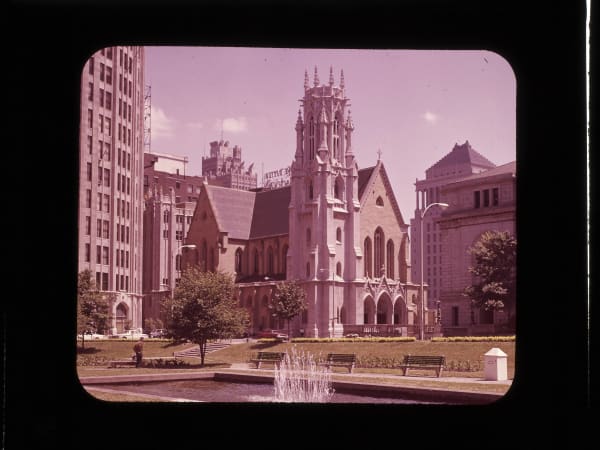
The building opened on January 1, 1926 as the headquarters of the Roxana Petroleum Company, the Mid-Continent subsidiary of Royal Dutch Shell covering all United States territory east of the Rocky Mountains. Roxana was renamed the Shell Petroleum Corporation in 1928, and the building became known as the Shell Building, or "Shell Corner." The St. Louis firm Jamieson and Spearl designed it in 1925; the same architects designed the Bishop Tuttle Memorial beside Christ Church Cathedral, across Locust Street. From 1930 to 1940 Lieutenant James H. "Jimmy" Doolittle ran Shell's aviation division from an office here, coordinating aviation activities for all of Royal Dutch Shell's United States subsidiaries, and persuaded the company to produce 100-octane aviation fuel — the high-performance fuel the aircraft of the Second World War would depend on. The company's "Super-Shell" marketing campaign, built on teaser advertising, was conceived by its St. Louis marketing bureau during the Depression. In 1939 the Mid-Continent and California companies merged as the Shell Oil Company, and by 1940 the headquarters had left St. Louis, though the marketing department stayed on two decades longer than the rest. The building was listed on the National Register of Historic Places in 2015. After about ten years vacant, it was converted in 2022 into two Hilton-brand hotels, the Home2 Suites and Tru.