Municipal Service Building
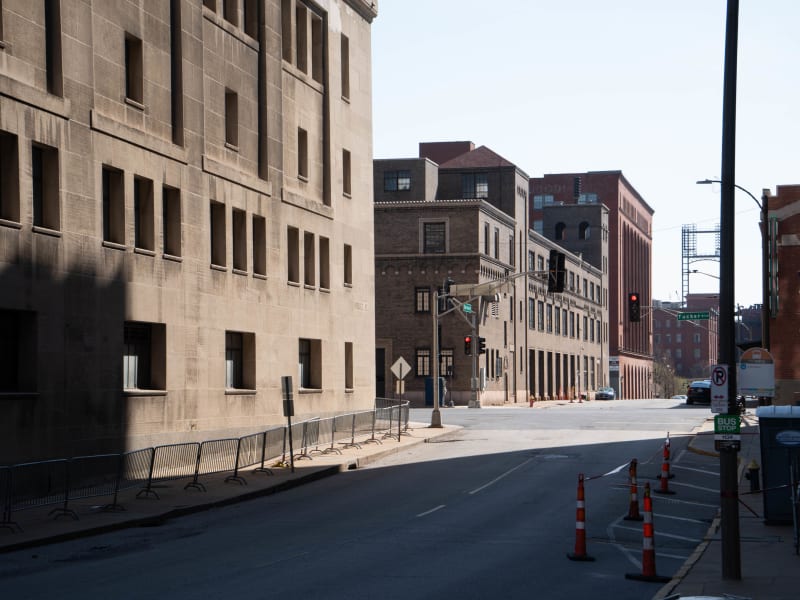
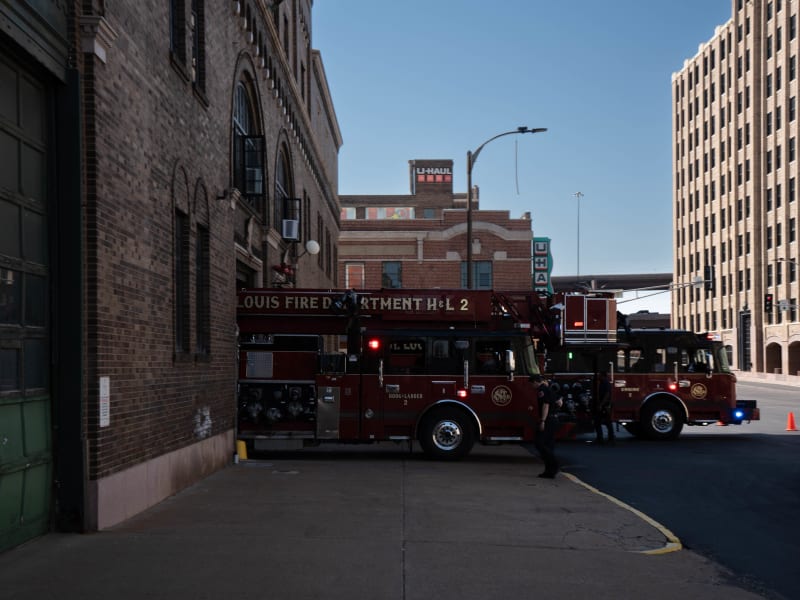
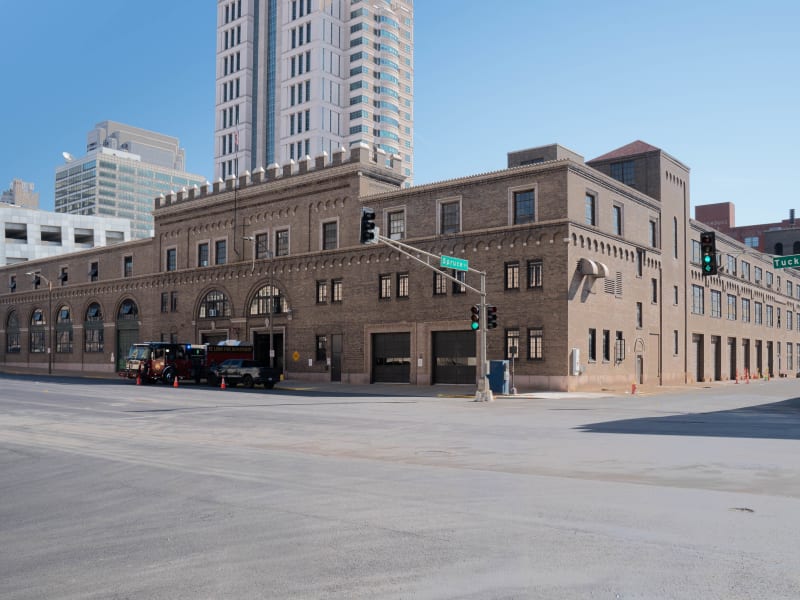
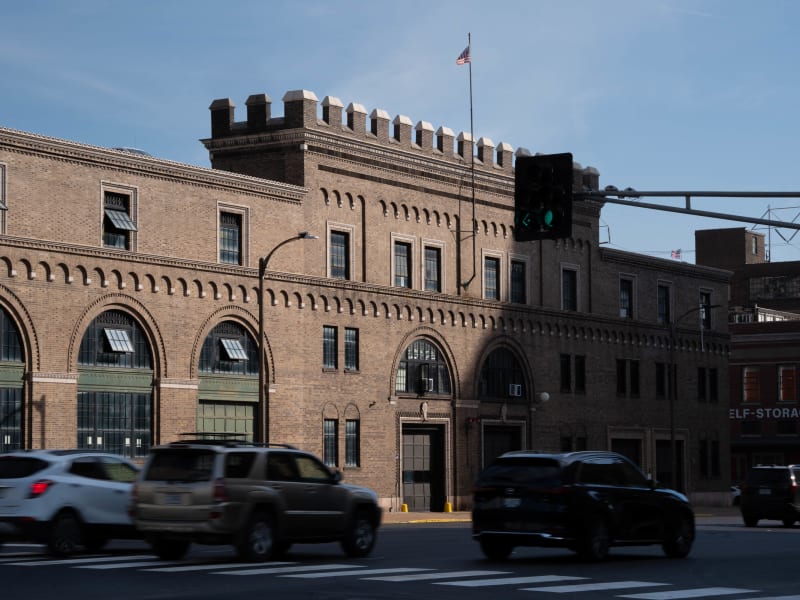
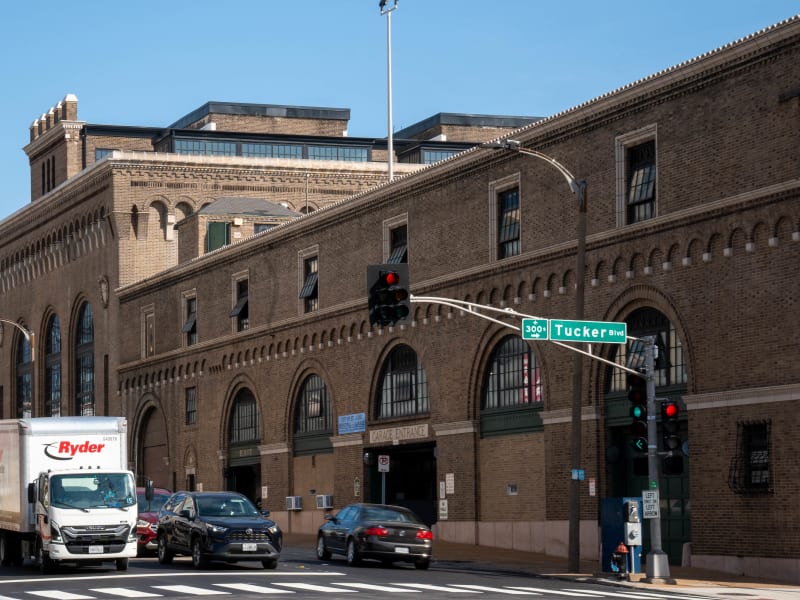
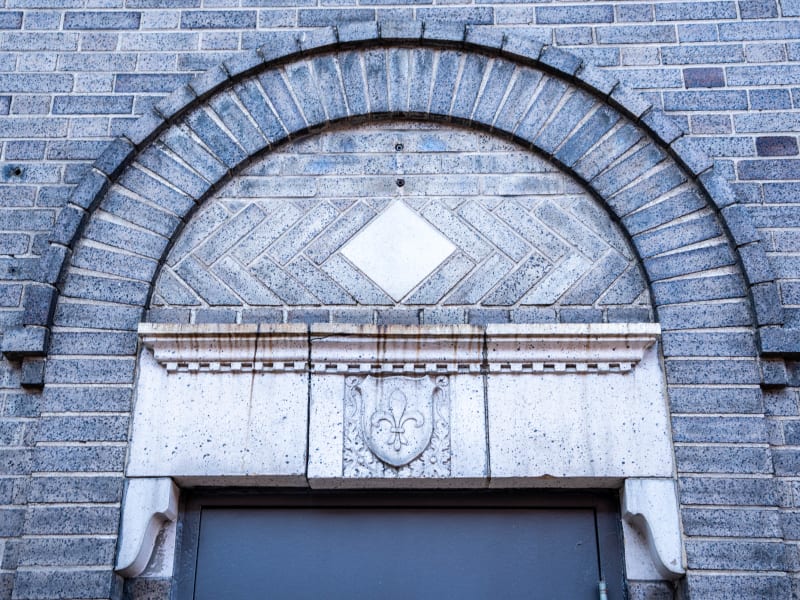
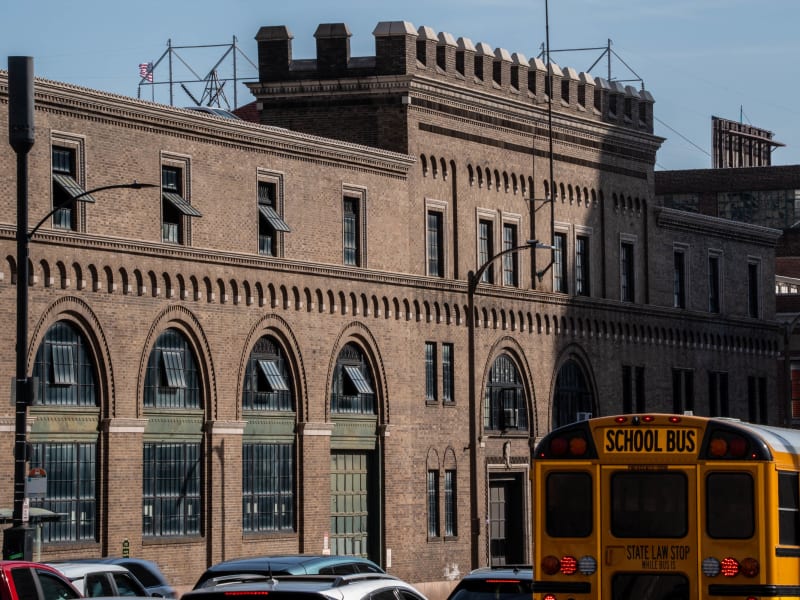
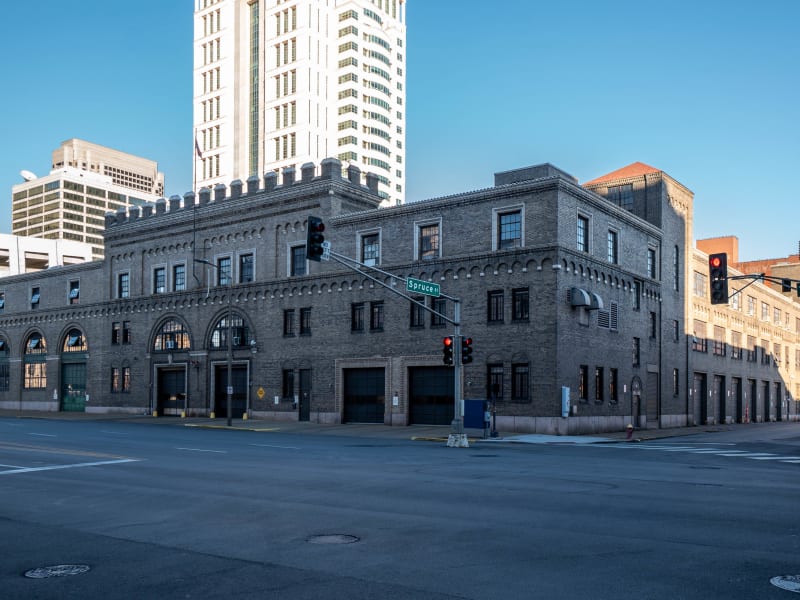
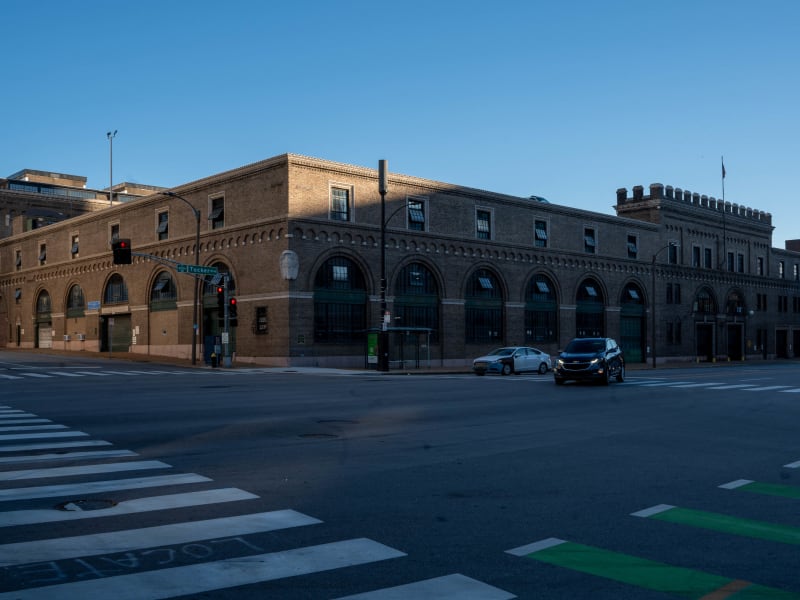
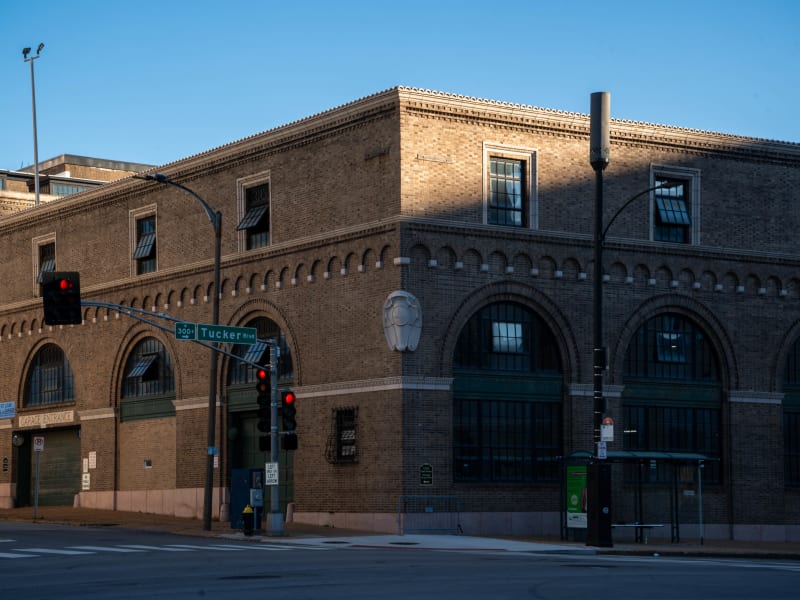
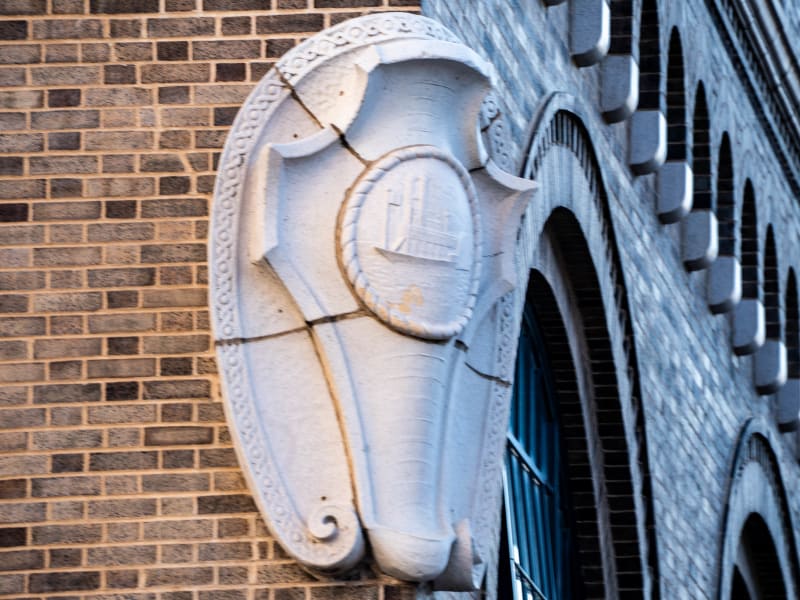
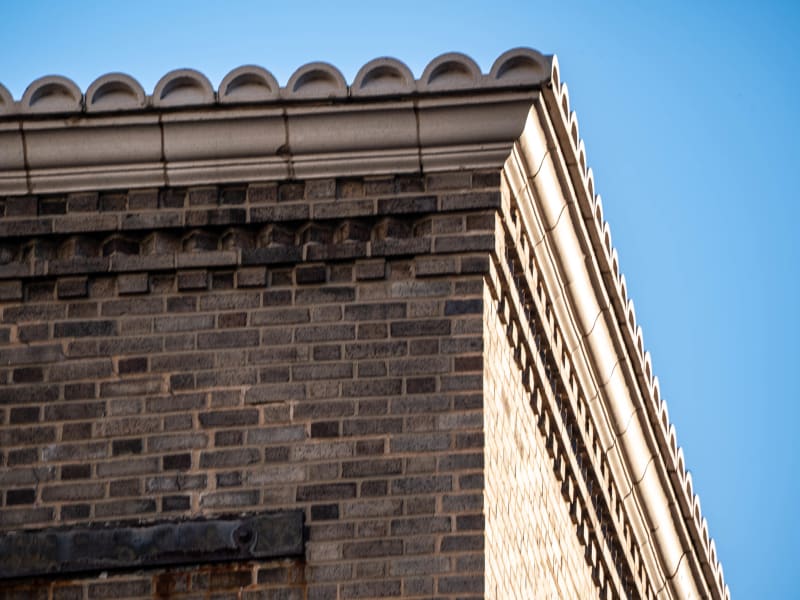
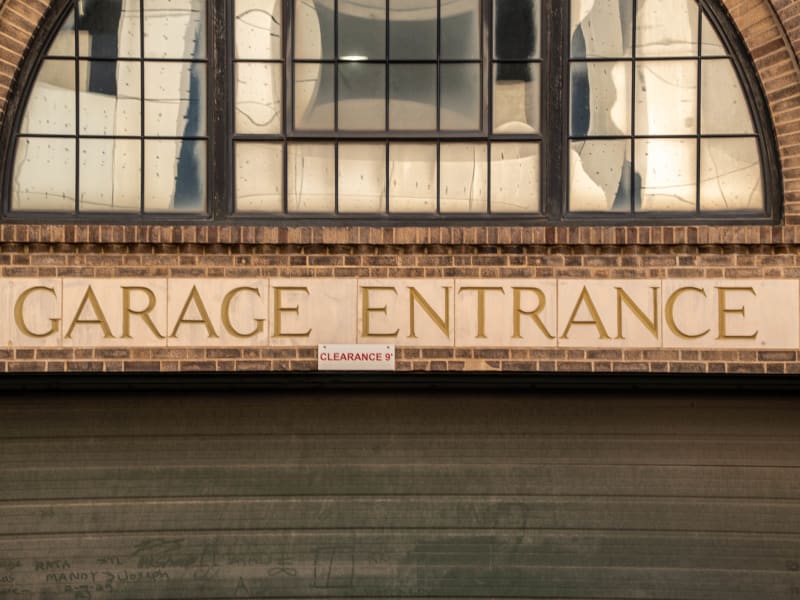
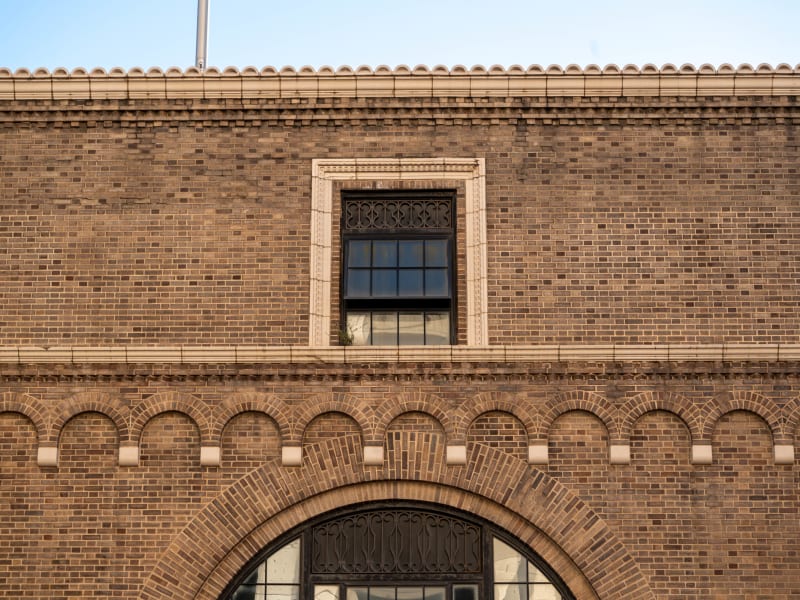
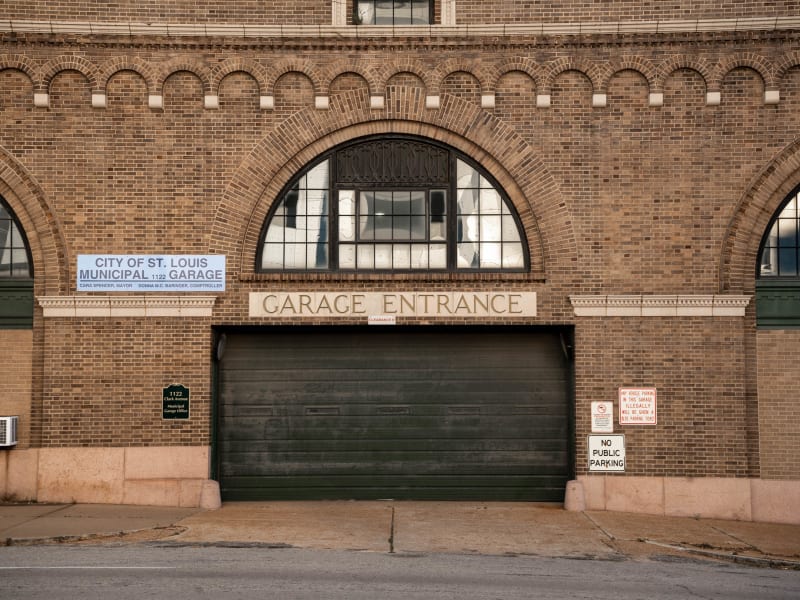
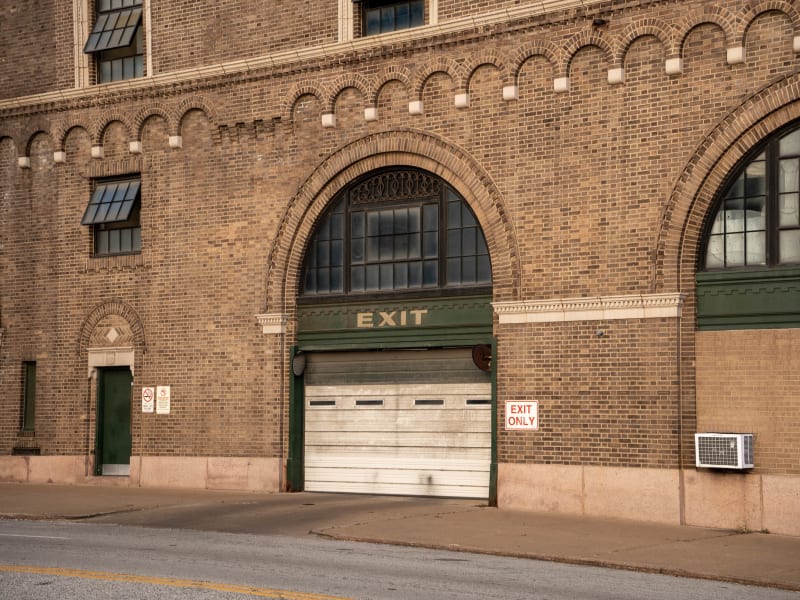
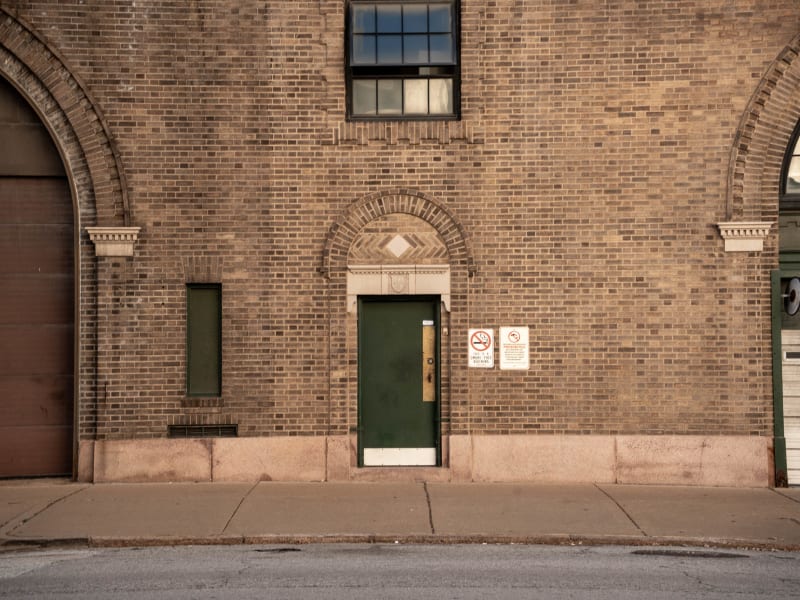
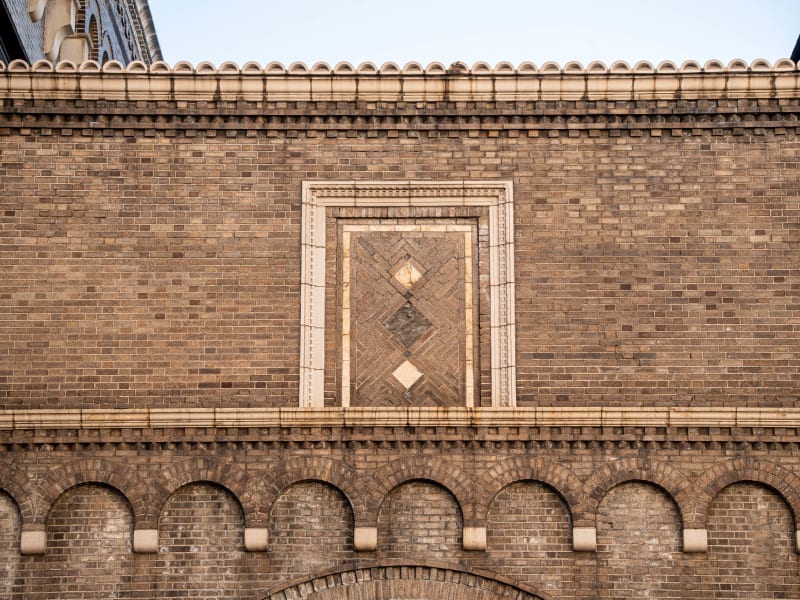
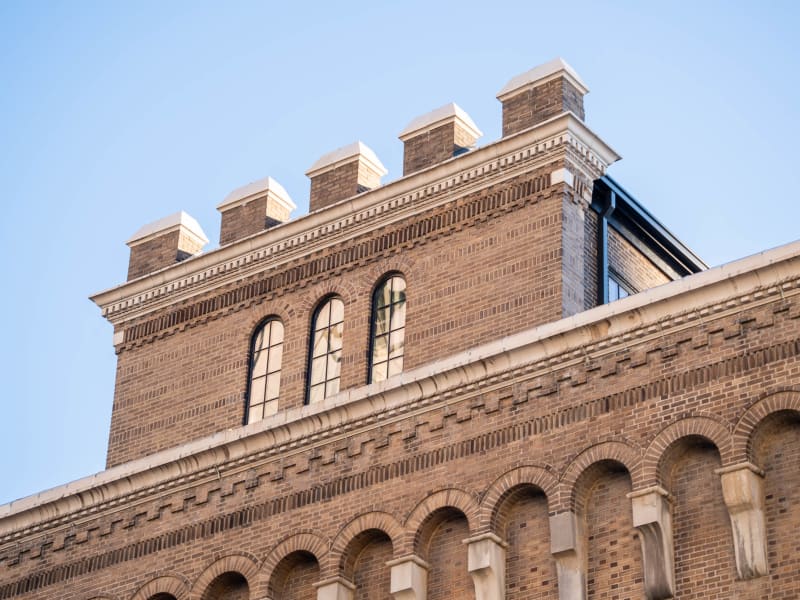
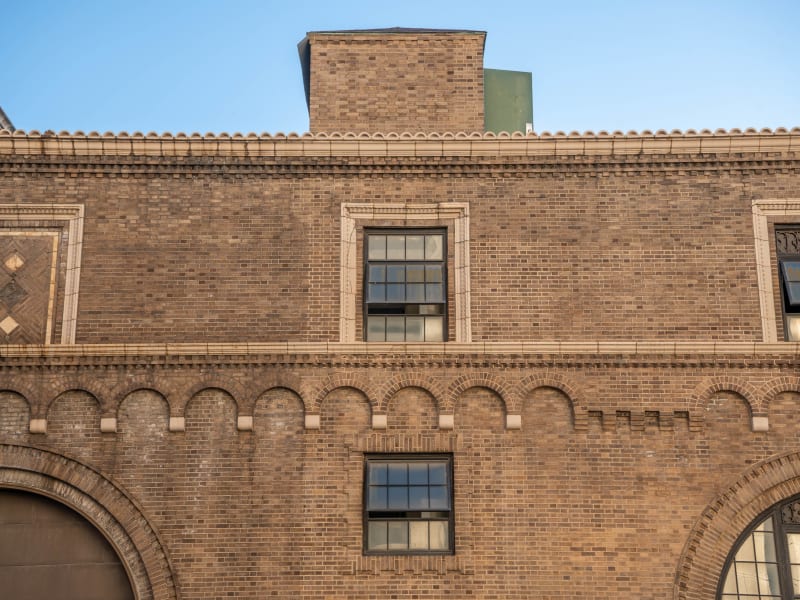
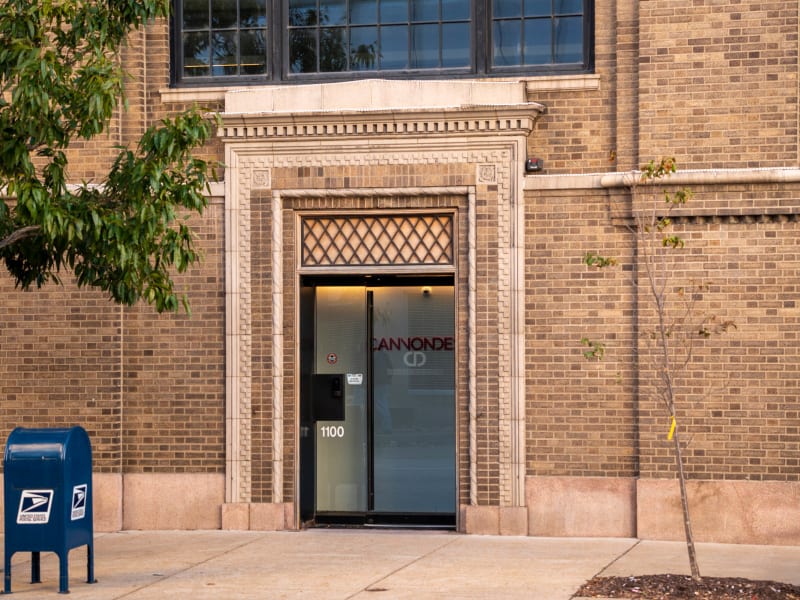
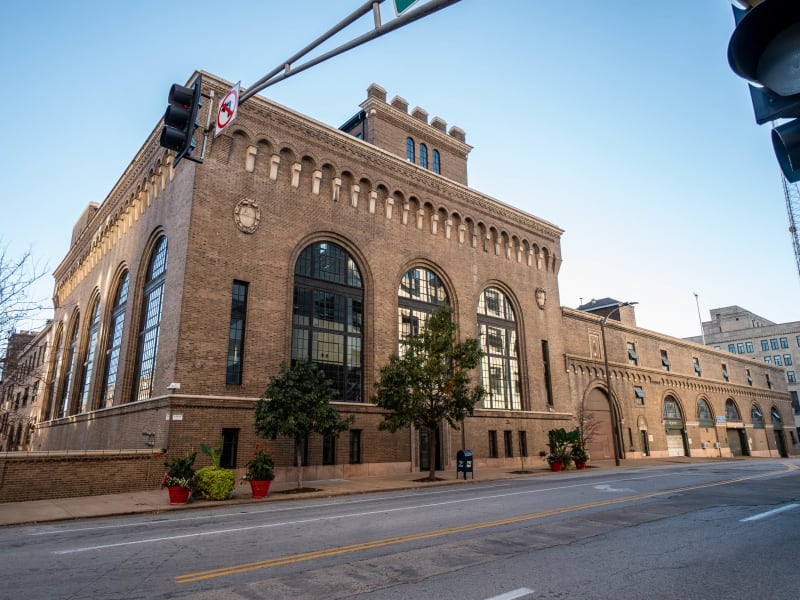
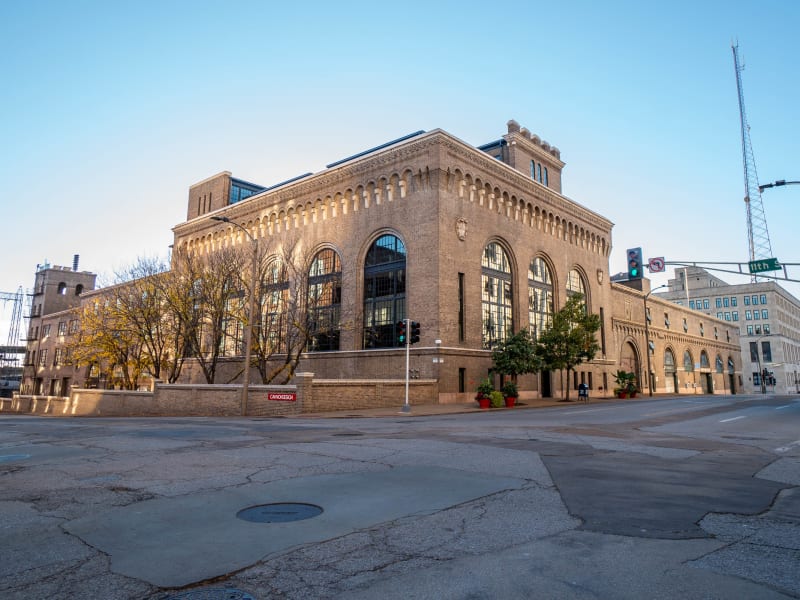
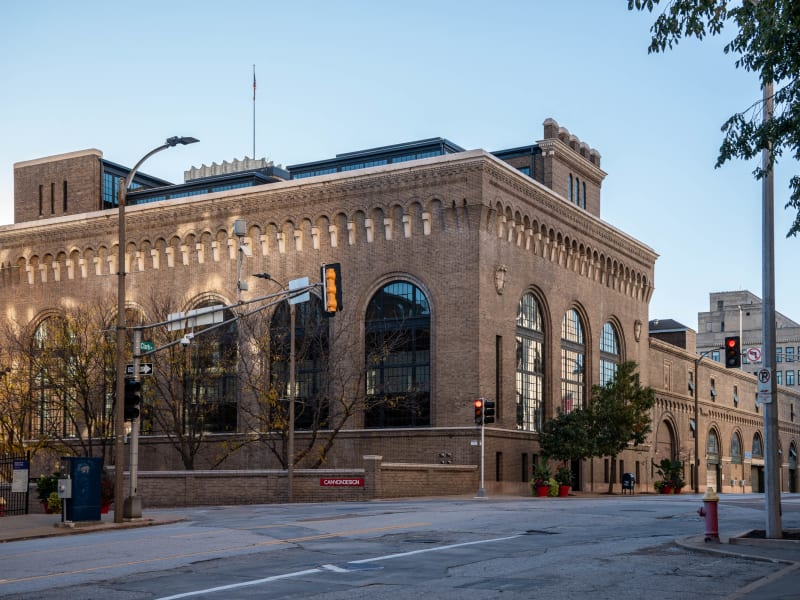
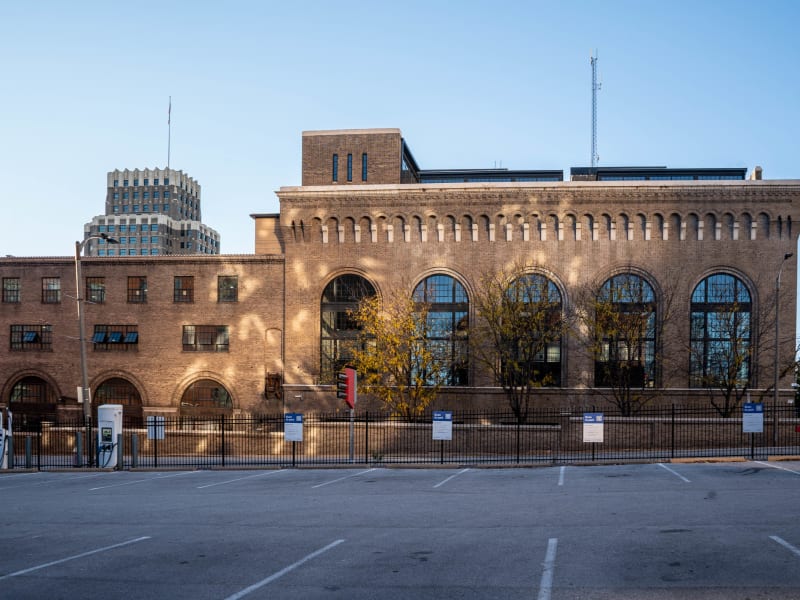
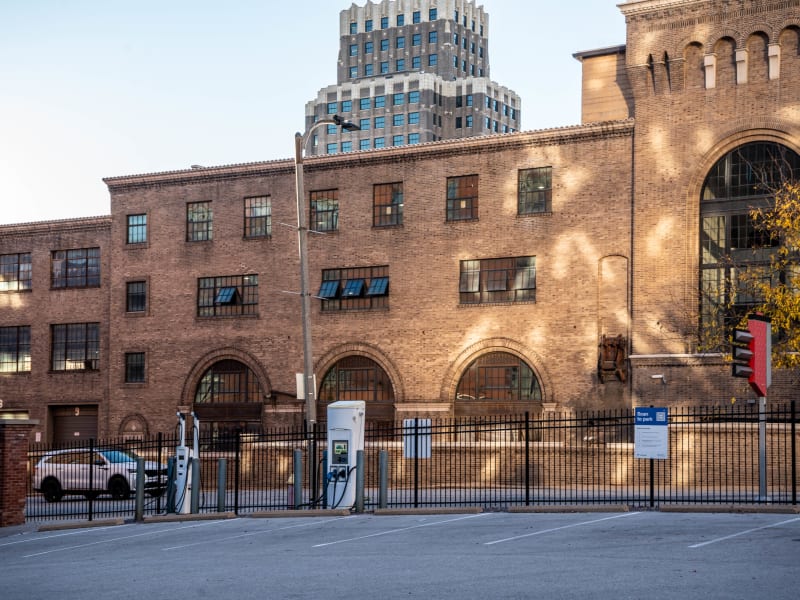
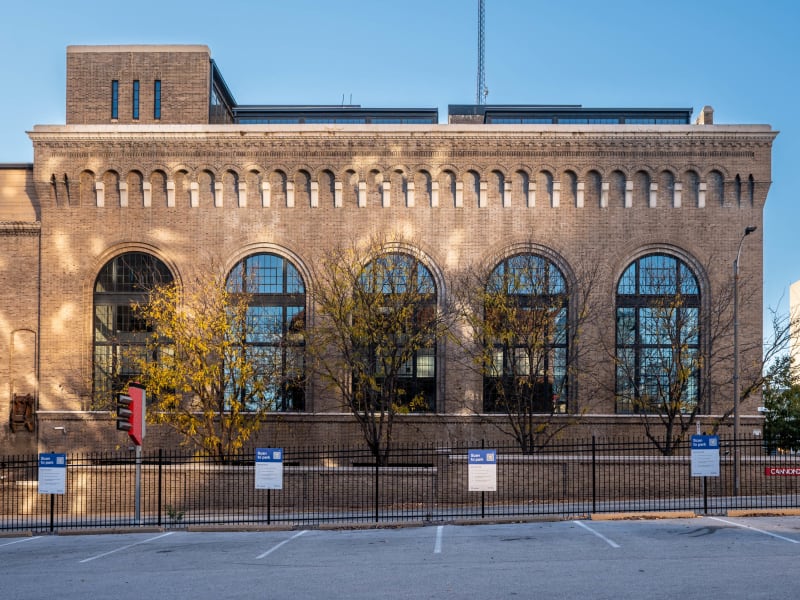
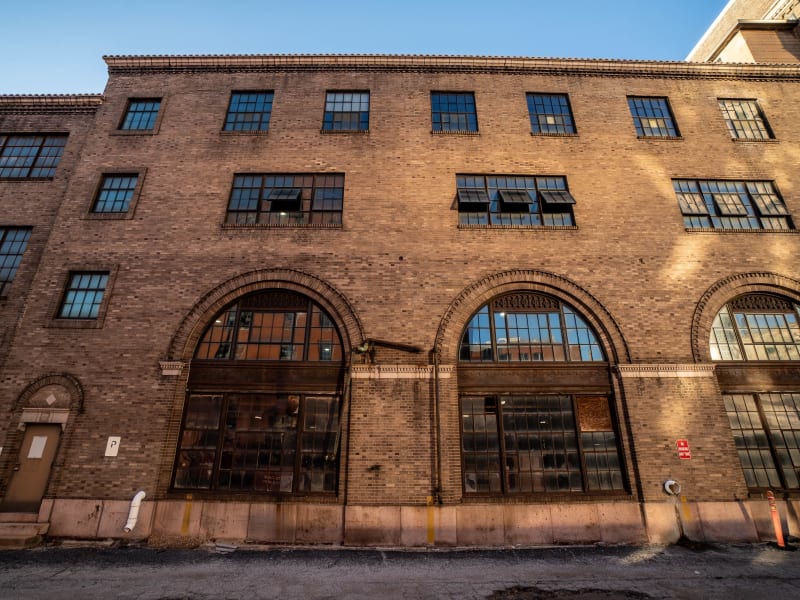
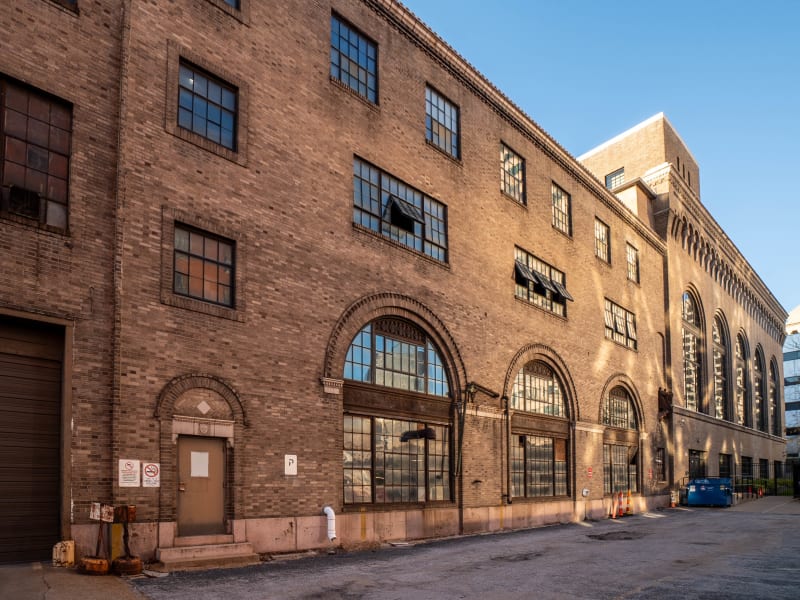
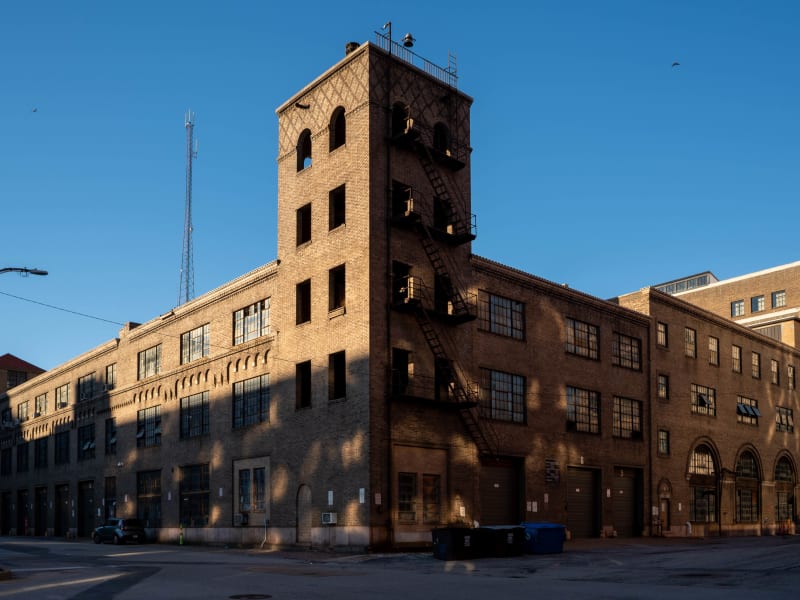
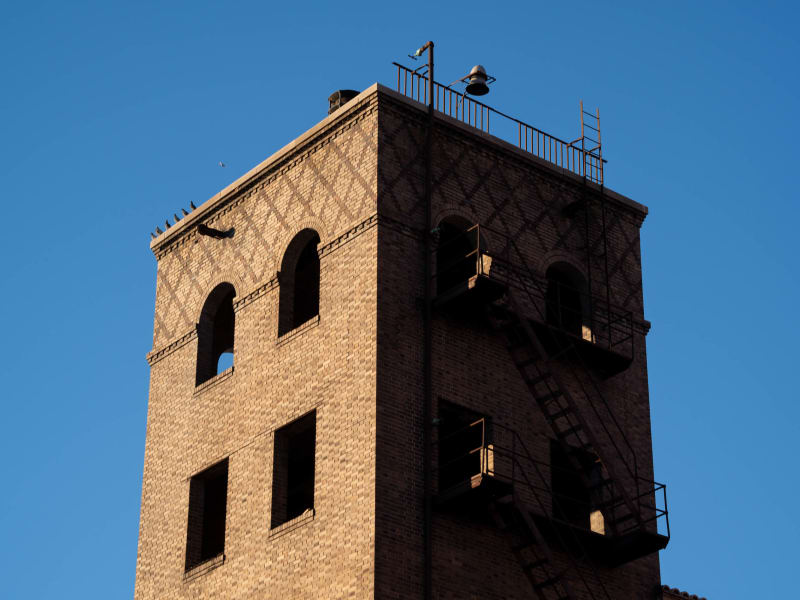
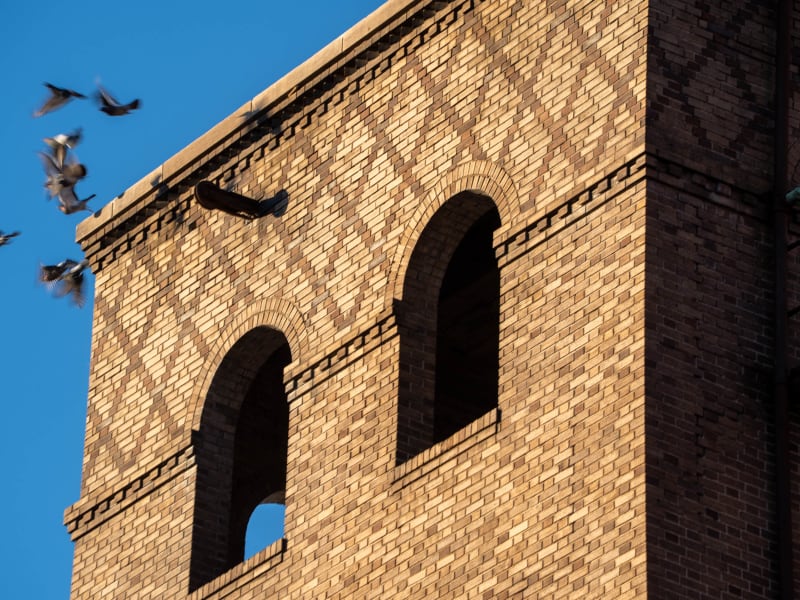
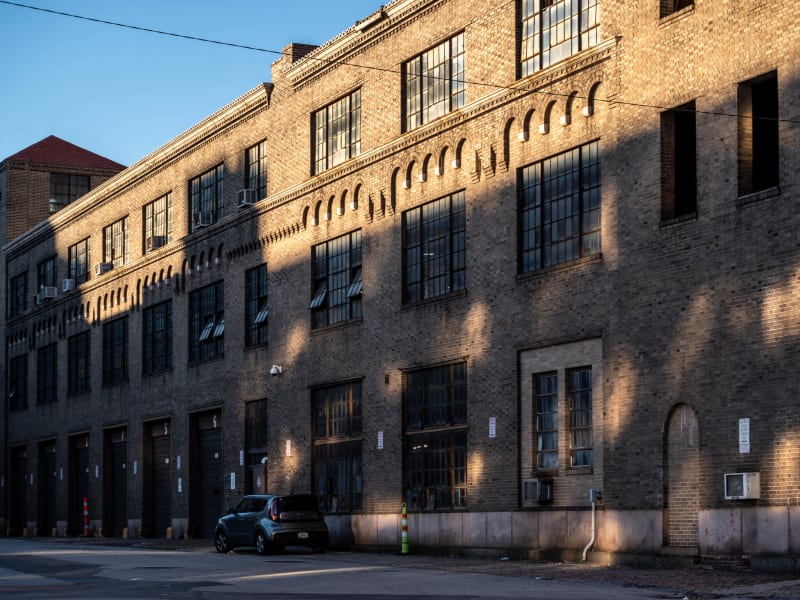
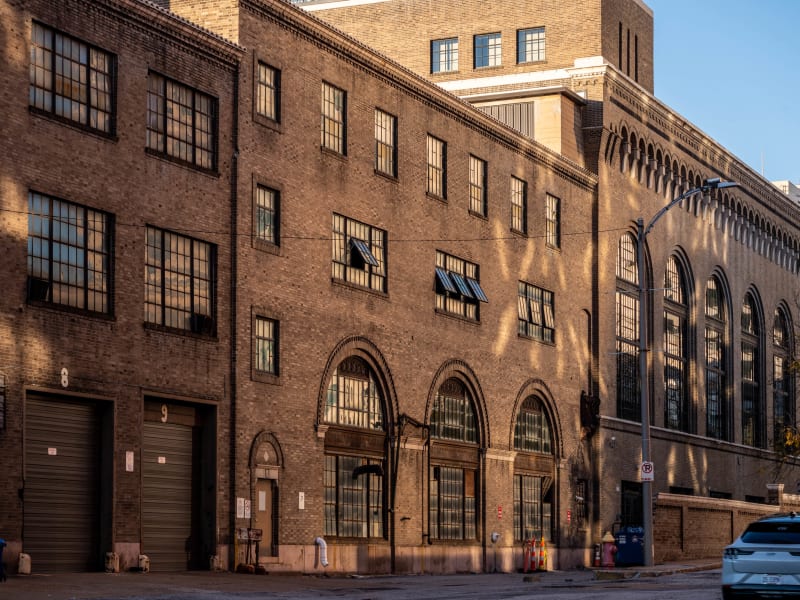
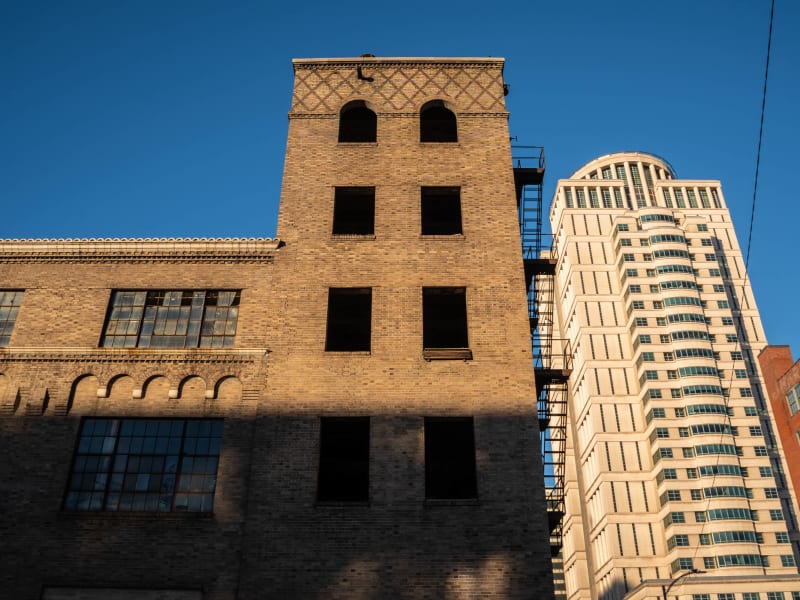
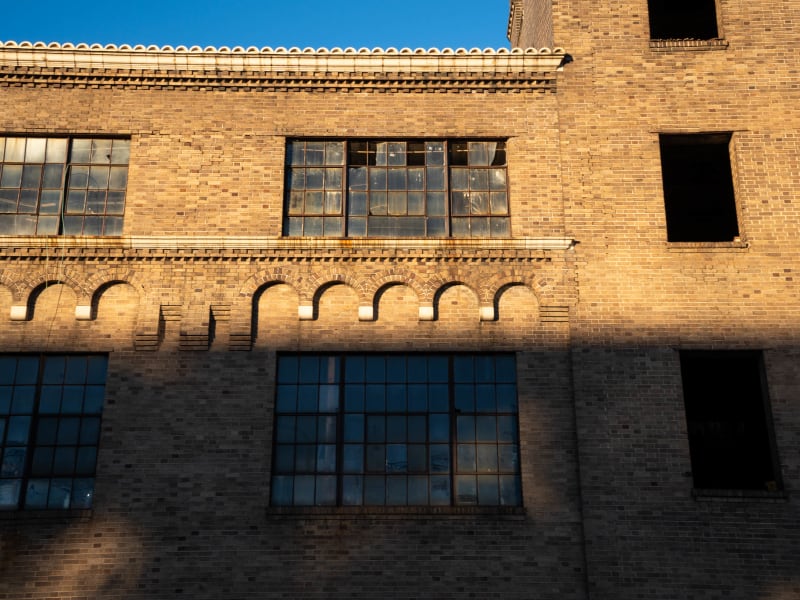
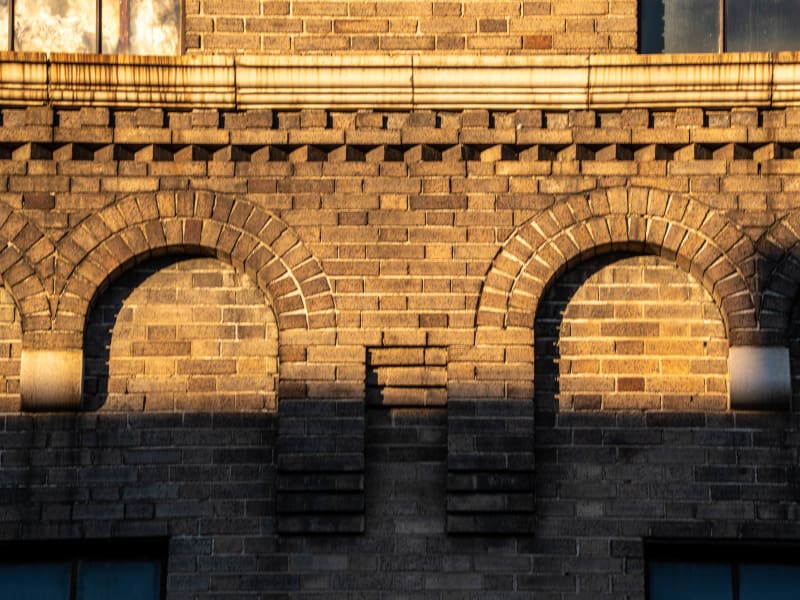
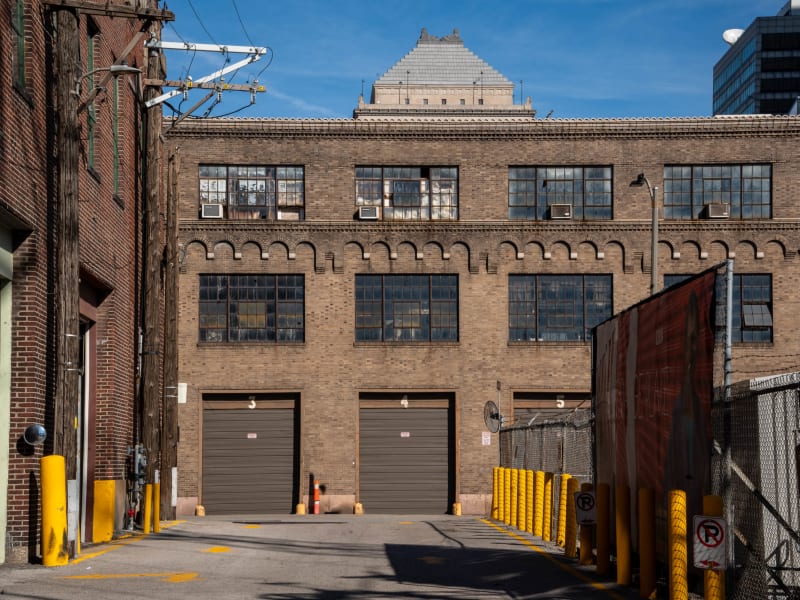
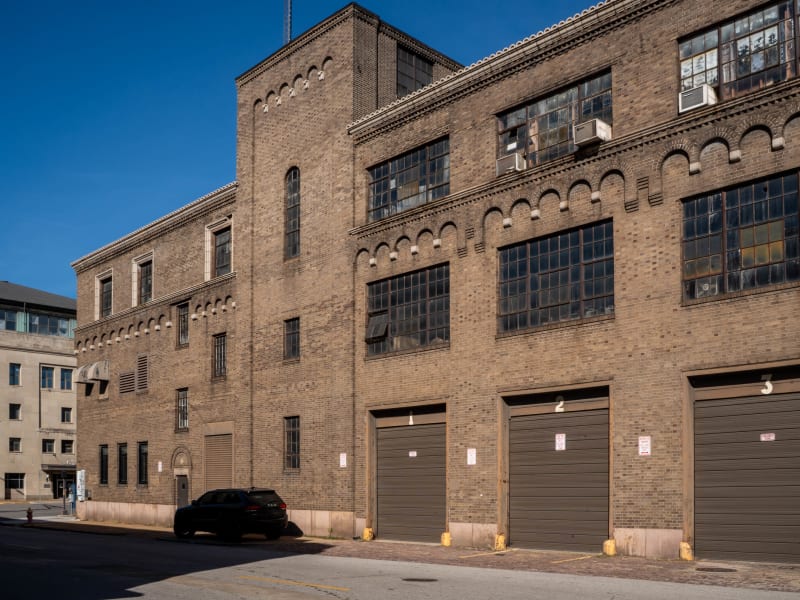
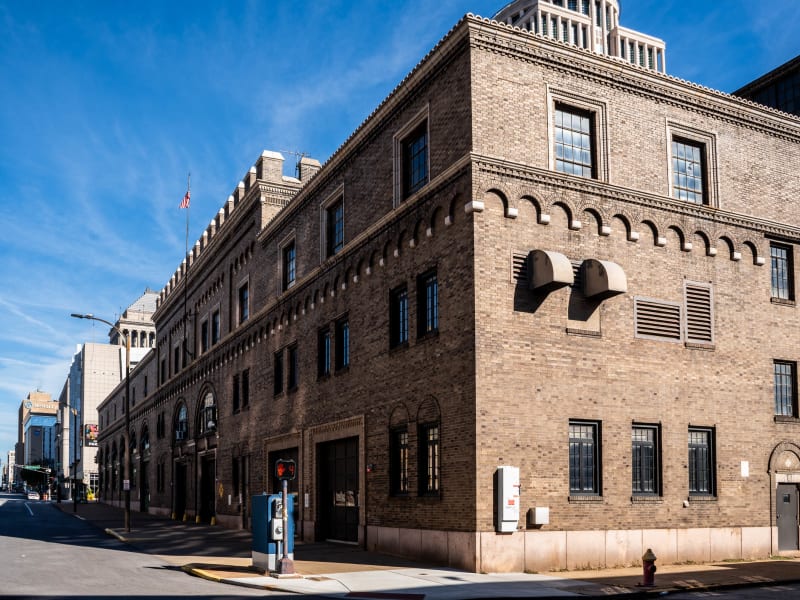
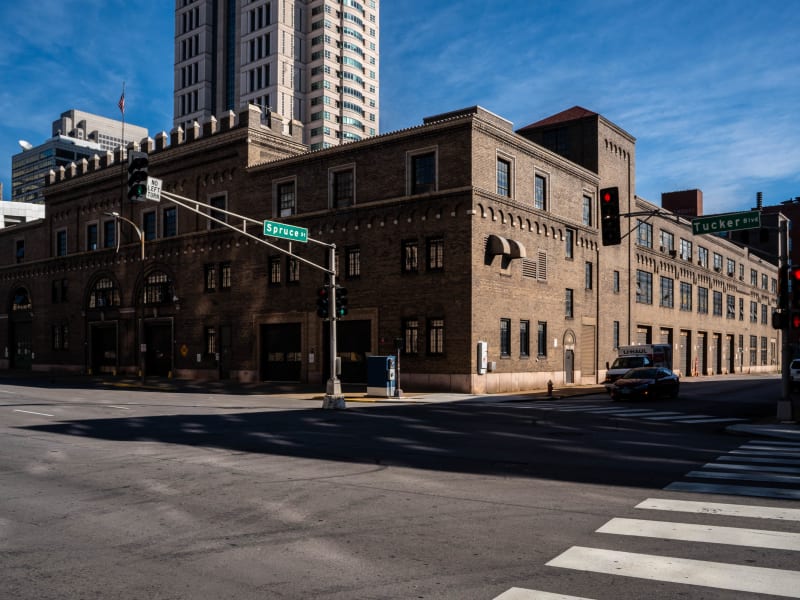
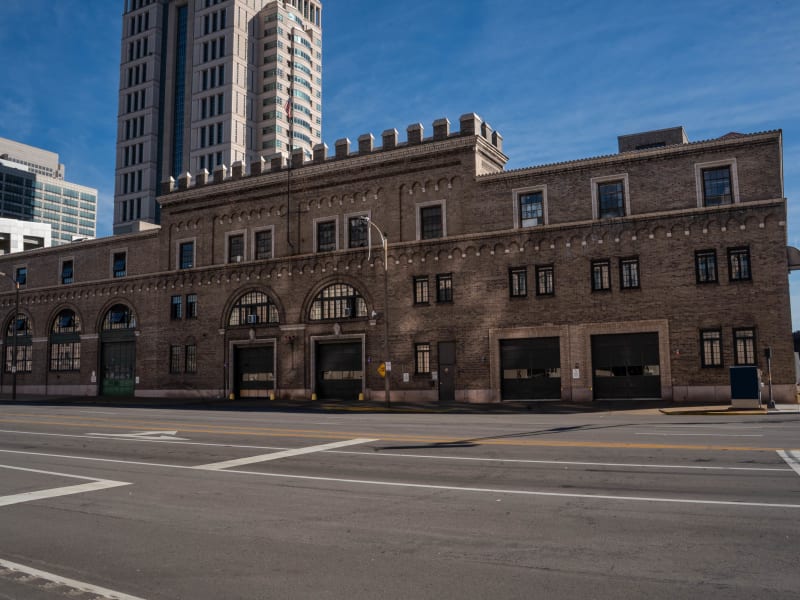
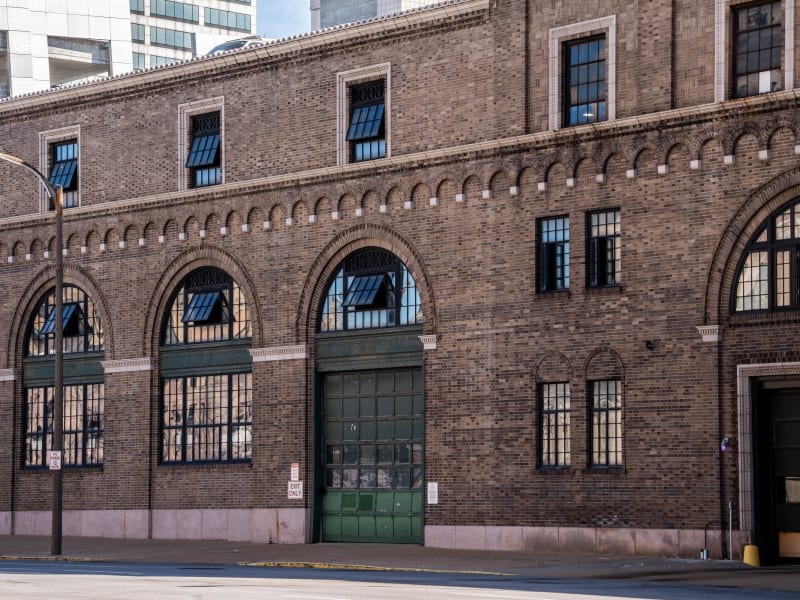
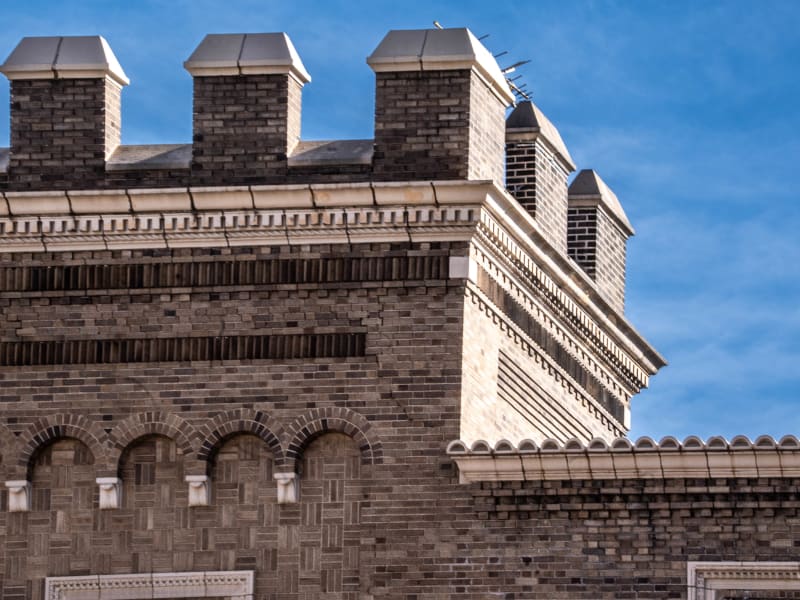
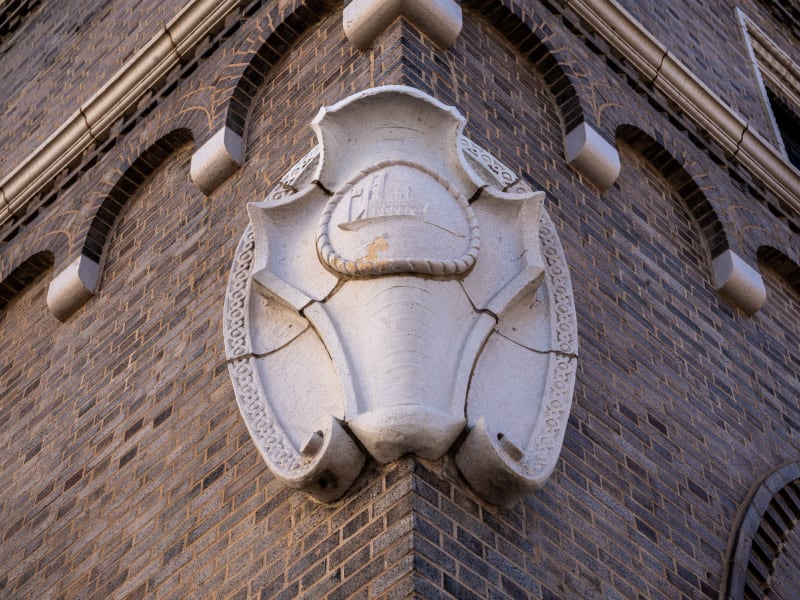
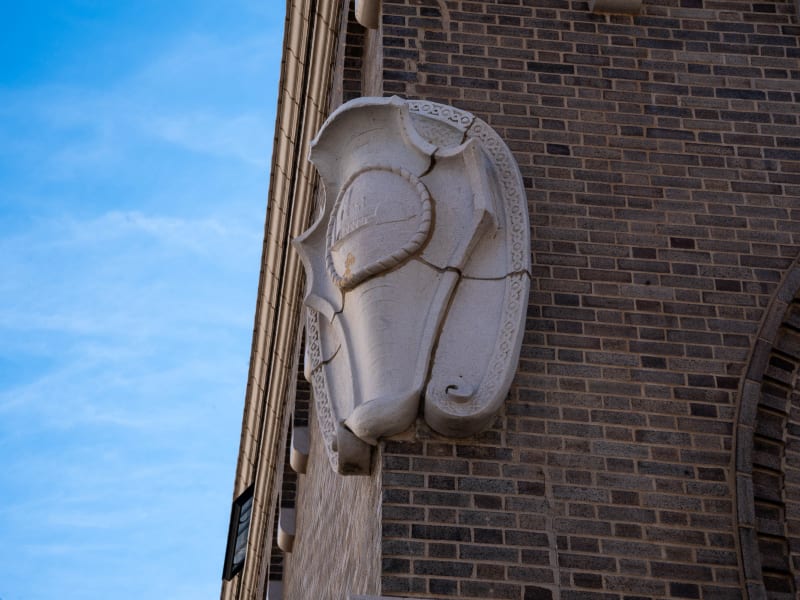
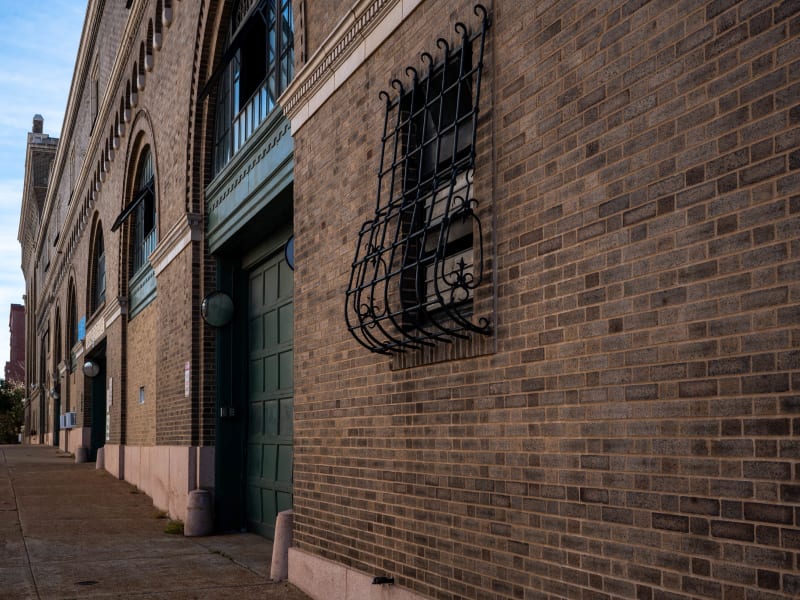
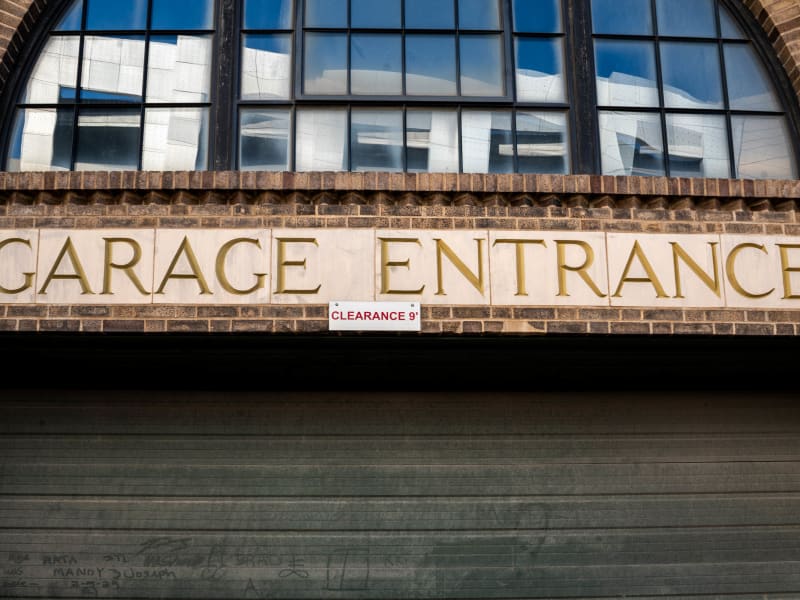
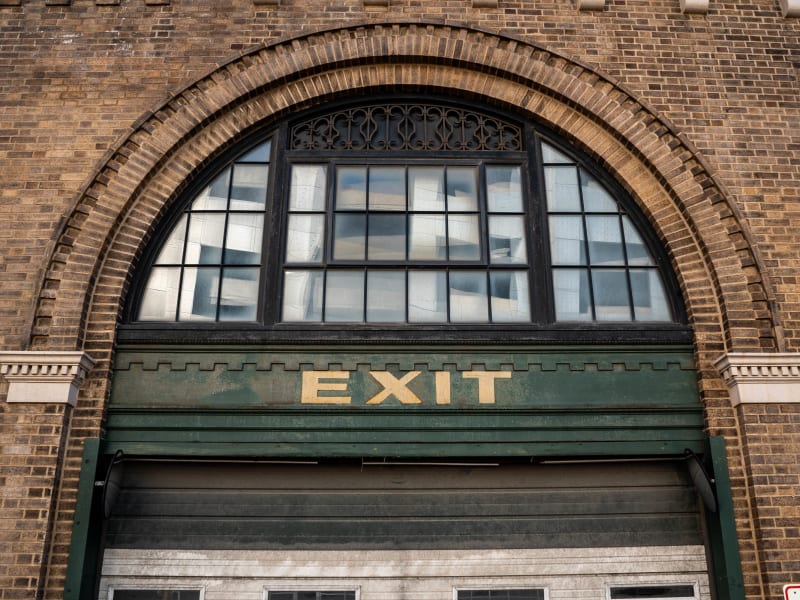
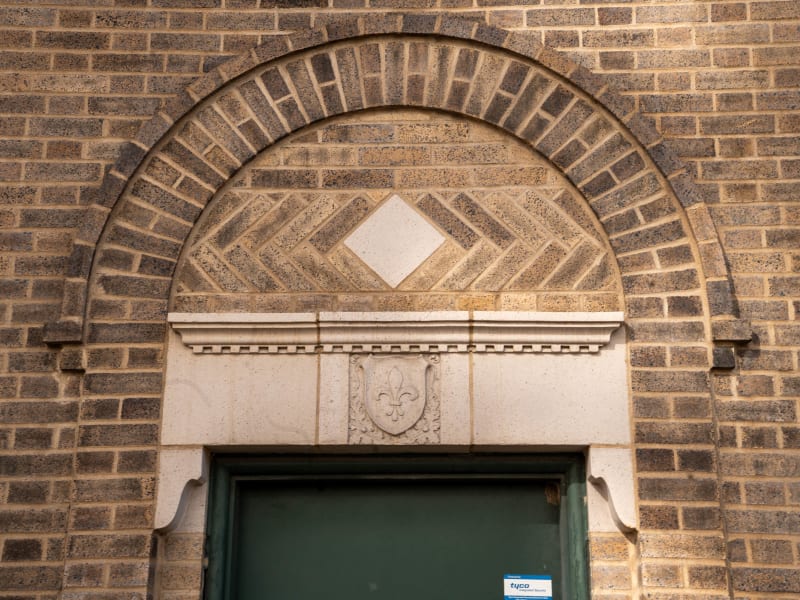
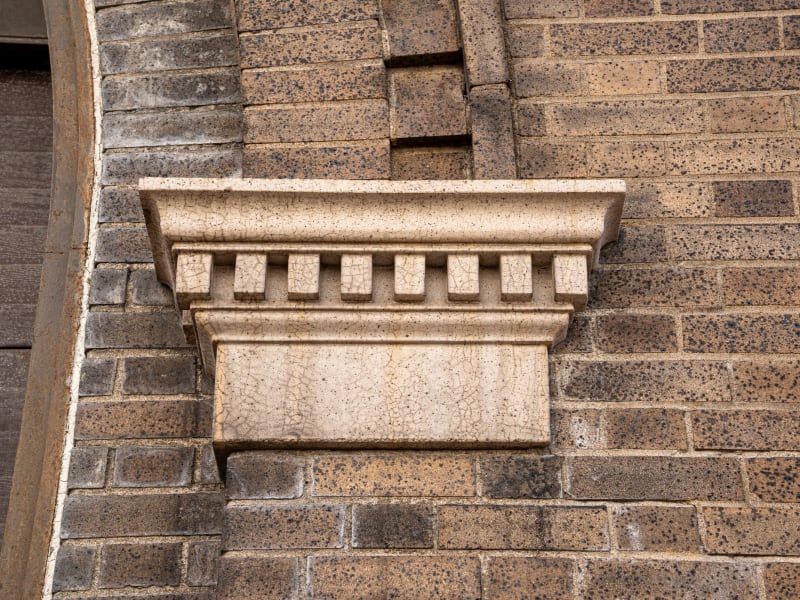
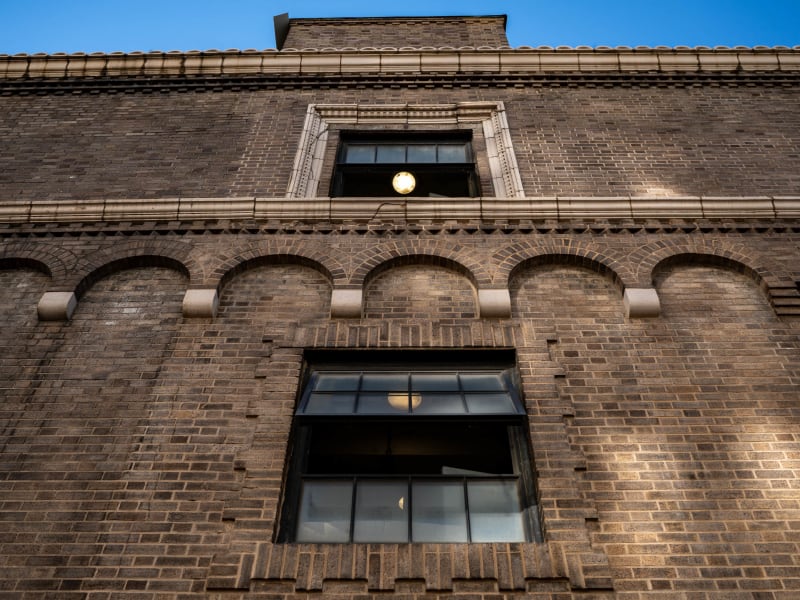
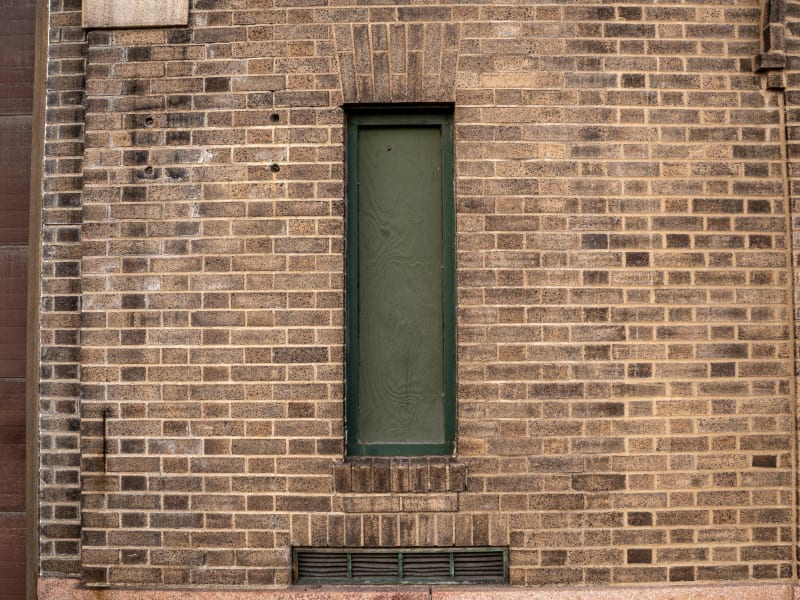
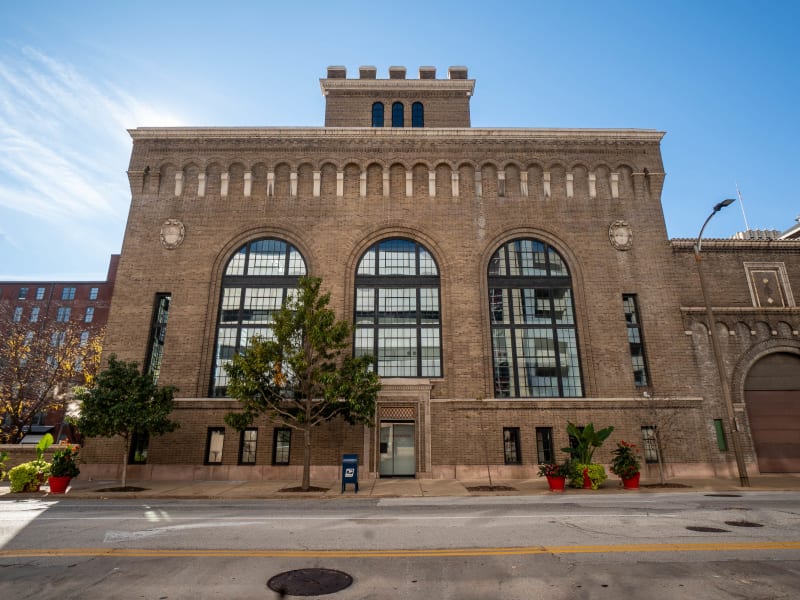
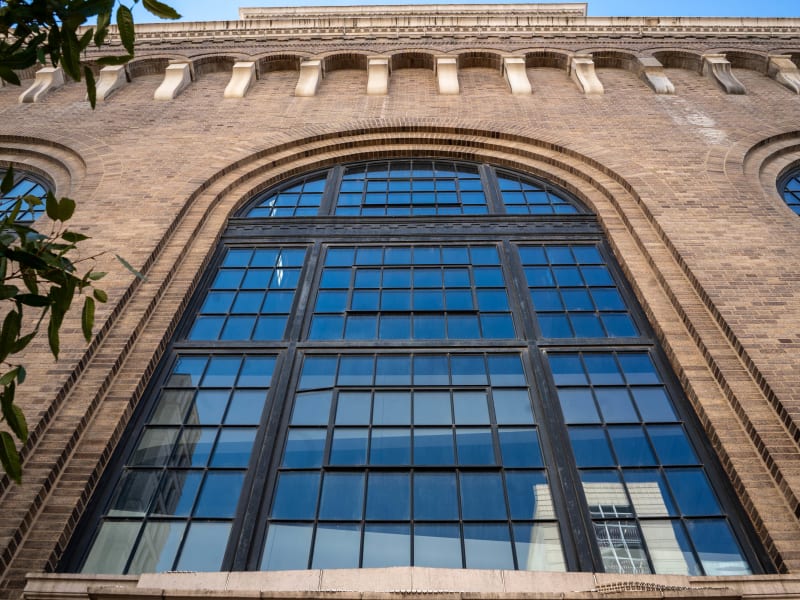
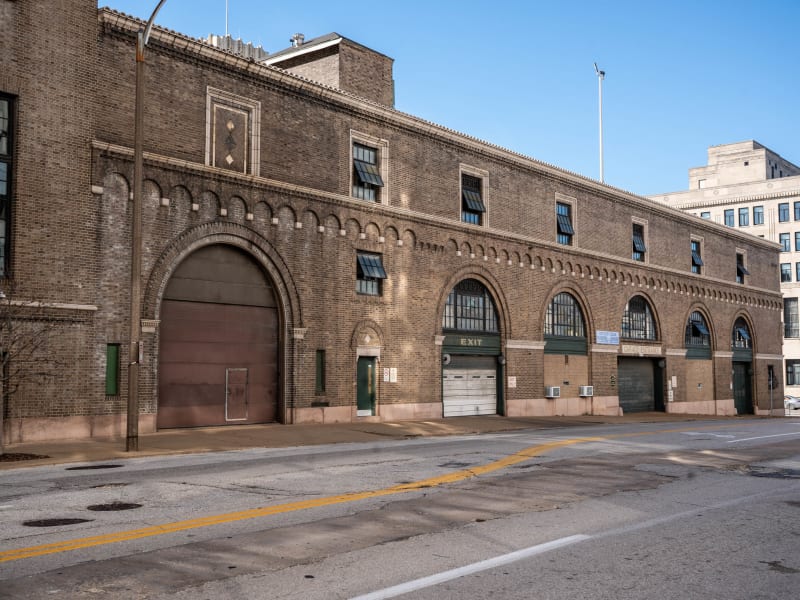
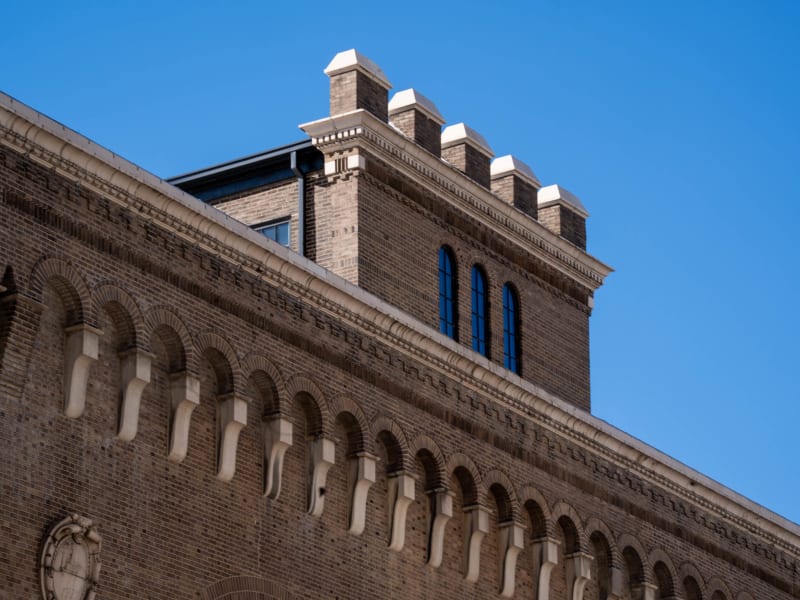
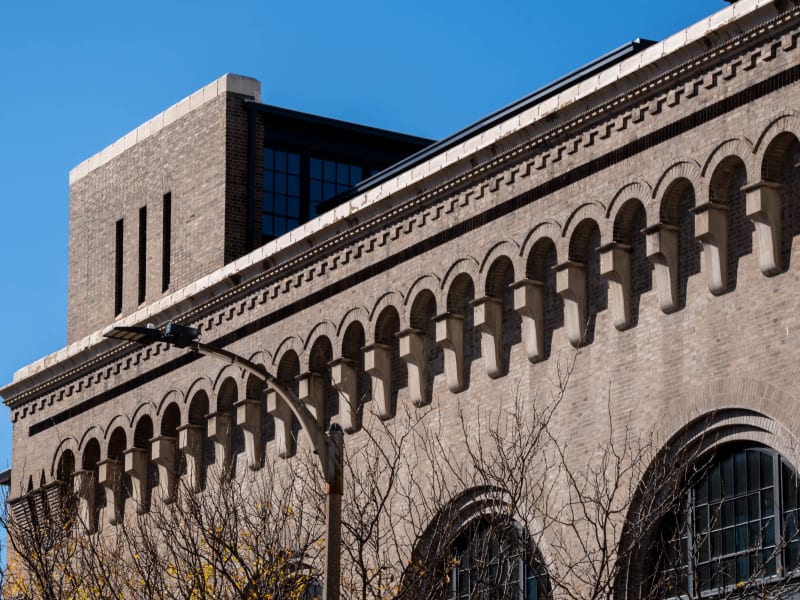
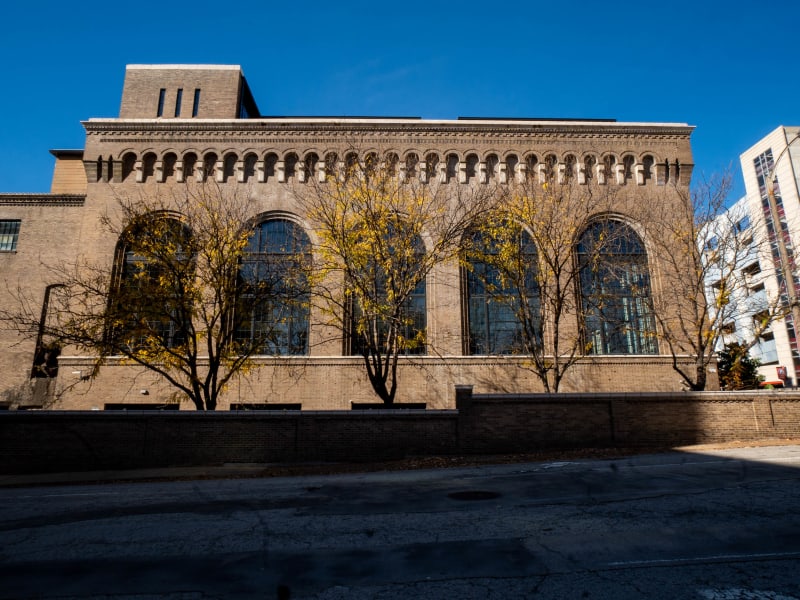
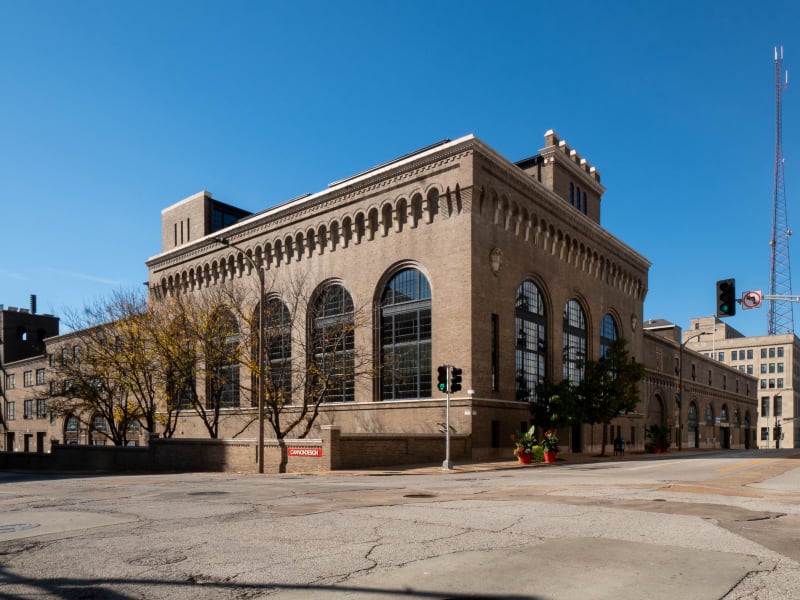
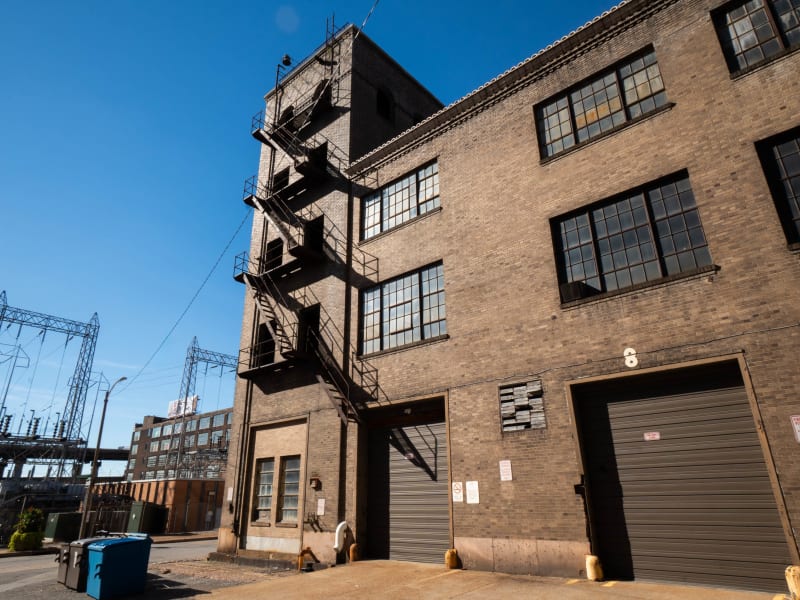
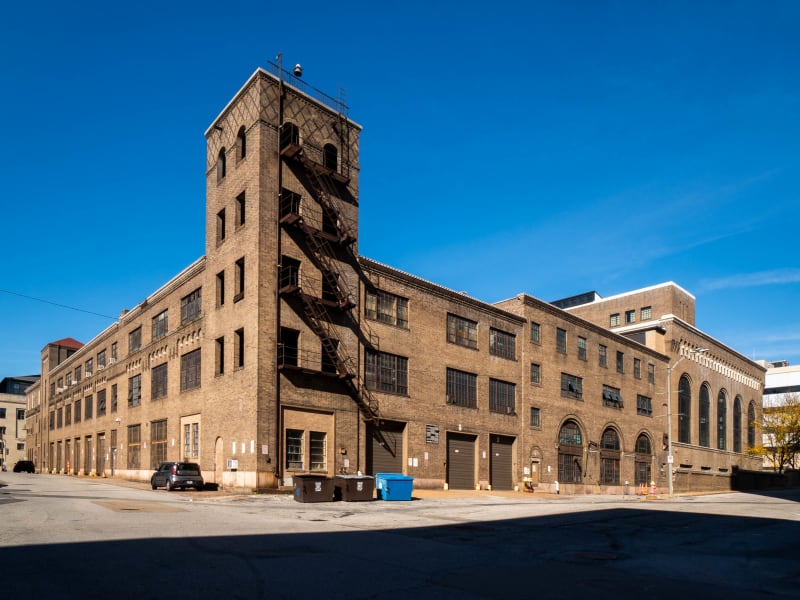
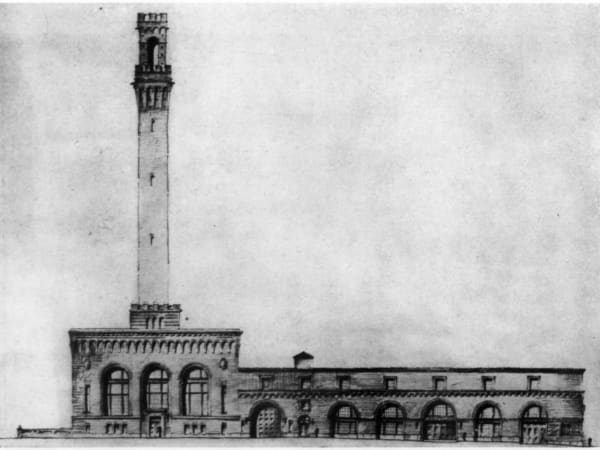
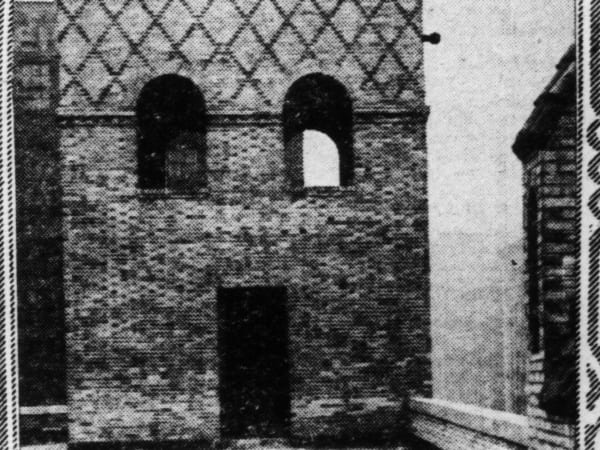
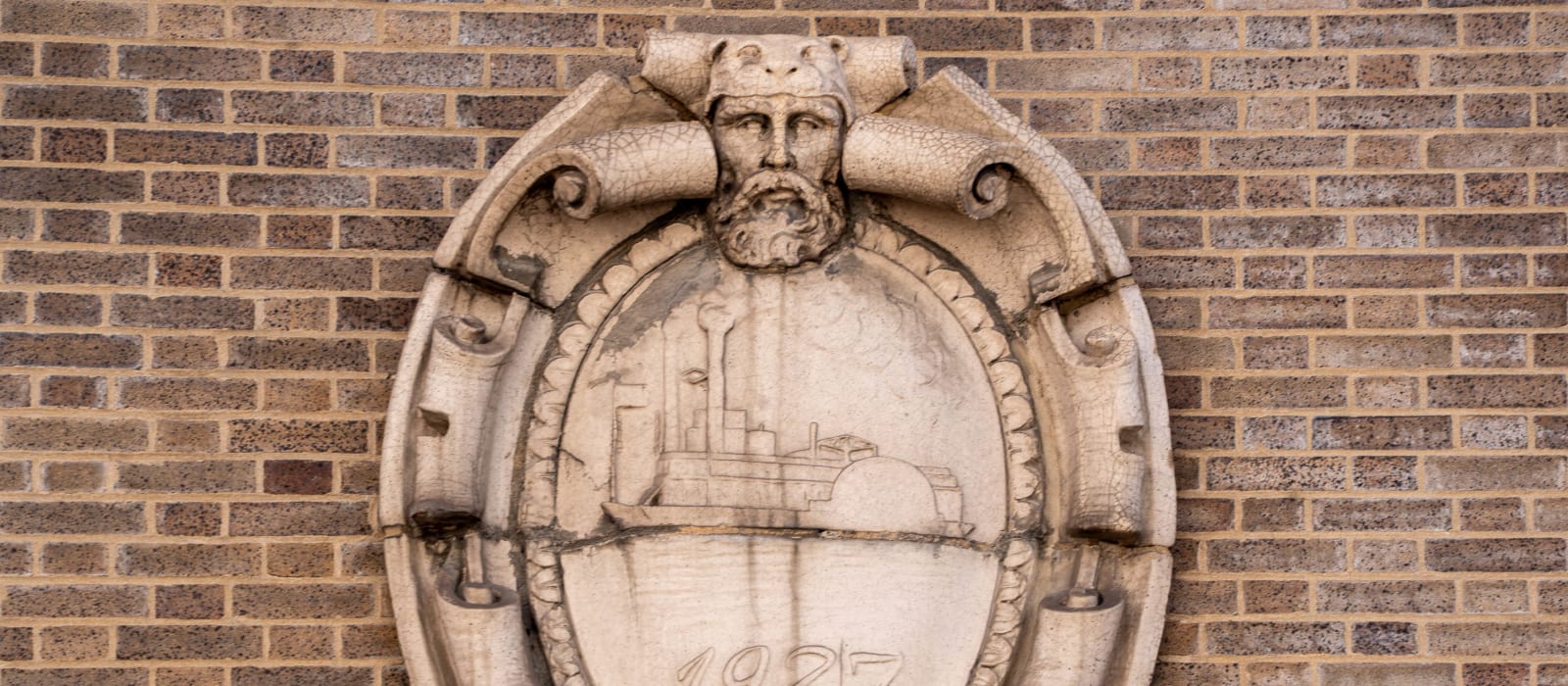
A castellated, palazzo-like block that fills an entire city block south of Clark Avenue, three to five stories of variegated buff brick on a pink granite base with cream terra cotta trim. A heavy arched corbel table runs beneath crenellated parapets. The Tucker Boulevard front is the firehouse: tall round-arched windows and a central arched vehicle door with a green paneled door, then smaller paired engine bays framed in terra cotta, under the tallest run of battlements. The Clark Avenue side opens through four round-arched garage entrances. Terra cotta escutcheons bear the city seal's steamboat, and on the power house a cartouche crowned by a bearded head in a lion skin, Hercules, frames the steamboat and the date 1927. At the northeast corner, at Clark and 11th, the power house rises about 64 feet. Its Clark Avenue face is a single great wall: three two-story round-arched windows of steel sash under the corbel table, flanked by terra cotta shields, with a small crenellated rooftop tower above. Its twin smokestacks, which rose 186 feet above the sidewalk, are gone. At the southeast corner, at Spruce and 11th, a roughly 60-foot firemen's training tower ends in a band of tapestry brick.
The Municipal Service Building was one of the public works paid for by the city's great 1923 bond issue. In February of that year voters approved $87 million across 21 propositions. Proposition 11 set aside $1 million for one building to house a cluster of city services, and it went up on City Block 436, just south of the planned civic plaza that became Memorial Plaza. The ground itself has changed more than once. This was the edge of Chouteau's Pond, the mill lake that once spread across the valley south of Market Street. Henry Chouteau, son of the city's co-founder Auguste Chouteau, built his mansion around 1830 on a peninsula reaching into the water. After the pond was drained in the 1850s and Henry died in the 1855 Gasconade Bridge disaster, the city acquired the block in 1868. There it built the Four Courts, its courthouse and jail, which opened in the early 1870s. The Municipal Service Building replaced it. The local firm of Study & Farrar, Guy Study and Benedict Farrar, known for fine work in historical styles, designed it in a castellated revival mode. The commission drew a public fight over the architects' fee, and over what partisan critics said about construction costs; Study answered publicly. The building was finished in 1927–28, and the architects reported it came in $96,000 under the estimate. In December 1928, with the Fire Department about to move in, the Post-Dispatch reported a building 280 feet long on Twelfth Street and 276 feet on Clark, with 202,000 square feet of floor space and twin stacks of concrete and brown brick rising 186 feet above the sidewalk. It combined five units on one block: a city parking garage for about 355 vehicles, with staggered ramps on Fernand d'Humy's patented system; the Fire Department's training school and repair shop; quarters for Engine Companies 14 and 24, with shared dormitories upstairs; an electric street-lighting substation; and a power house that piped steam heat to a dozen municipal buildings. Firefighters drilled with ladders, scaling poles and life nets on the training tower. The power house shut down its boilers around the late 1960s or 1970s, and the city sold it in 1984. It sat vacant and under threat of demolition before being converted to architects' offices. The building was listed on the National Register of Historic Places on January 12, 2005. The garage and a working fire station remain in city service.