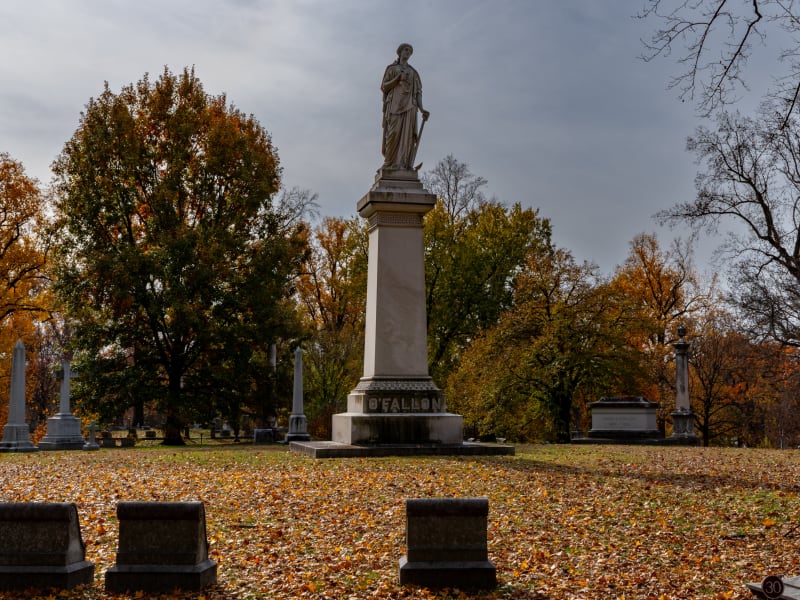
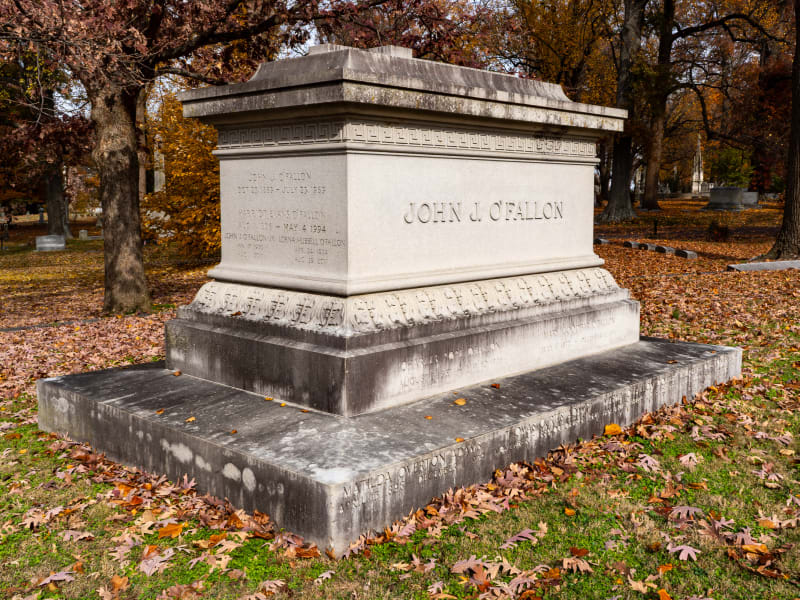
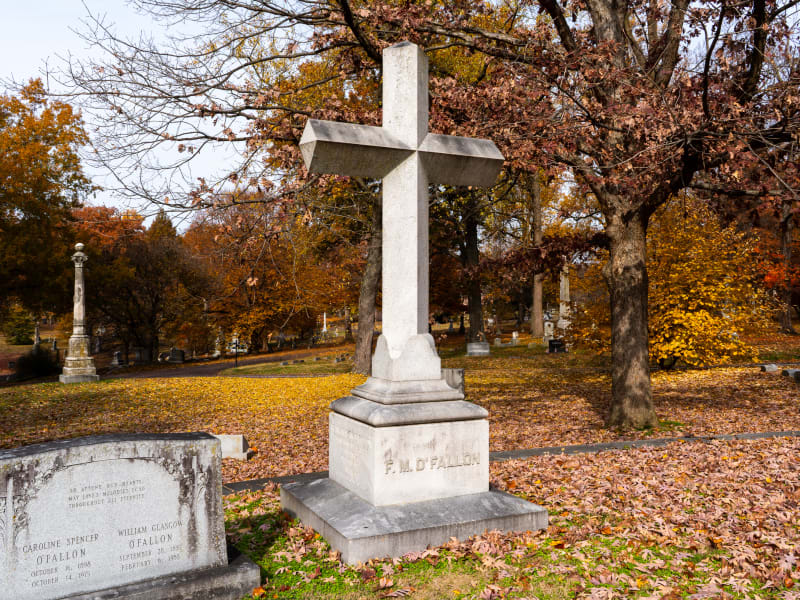
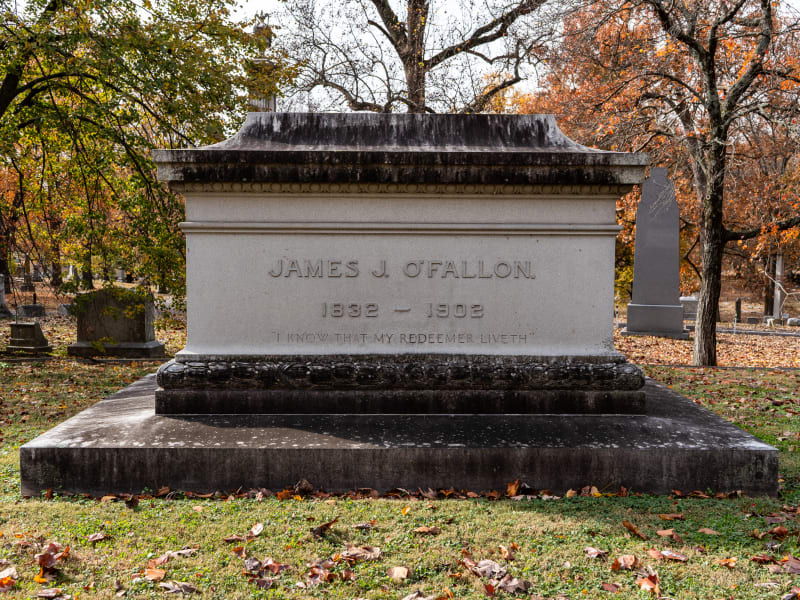
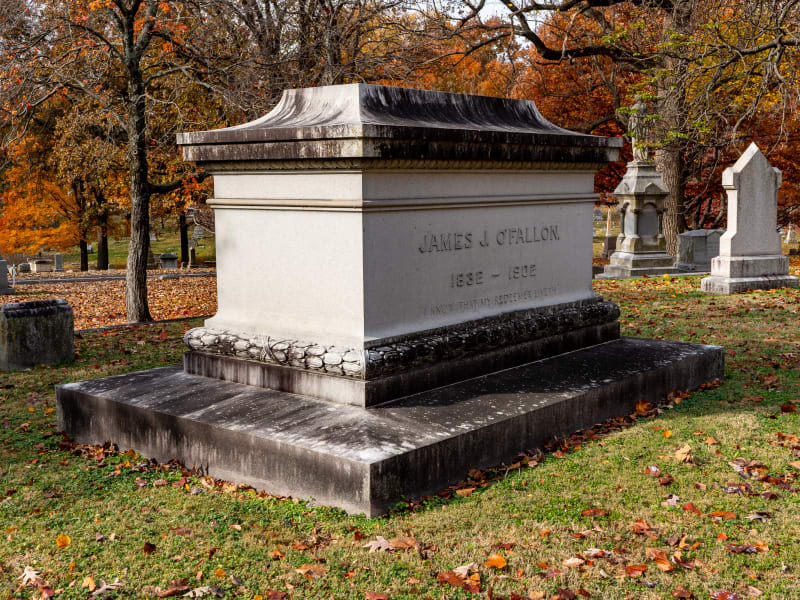
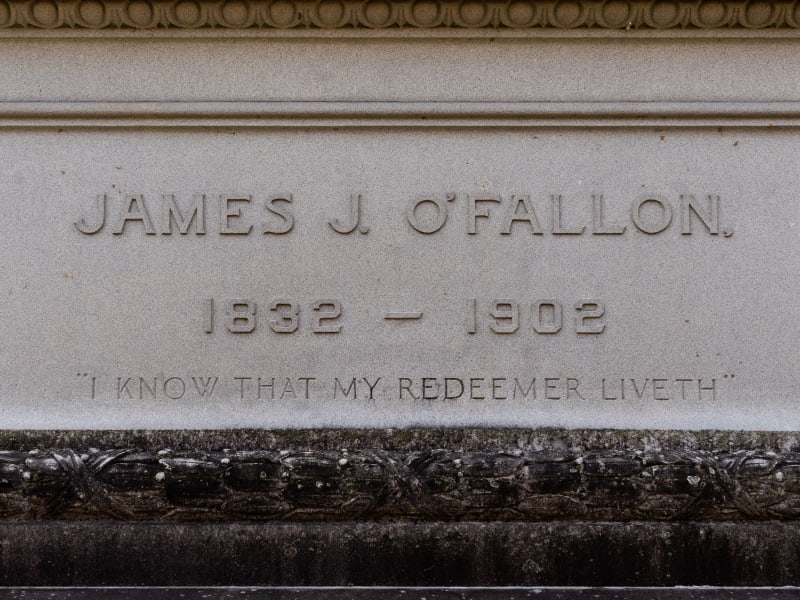
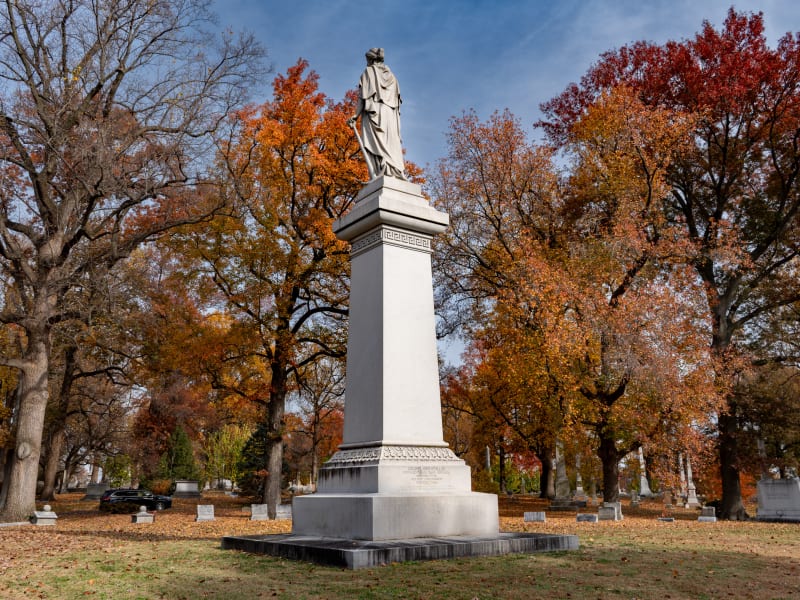
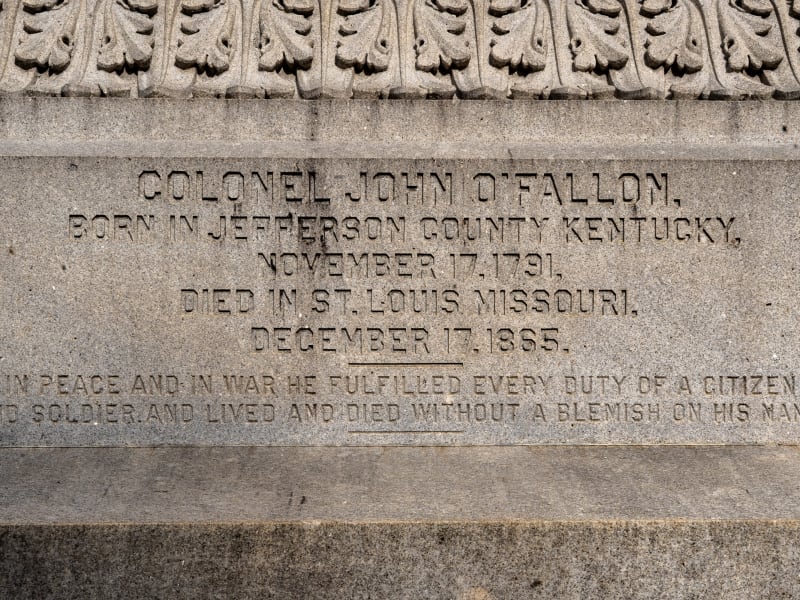
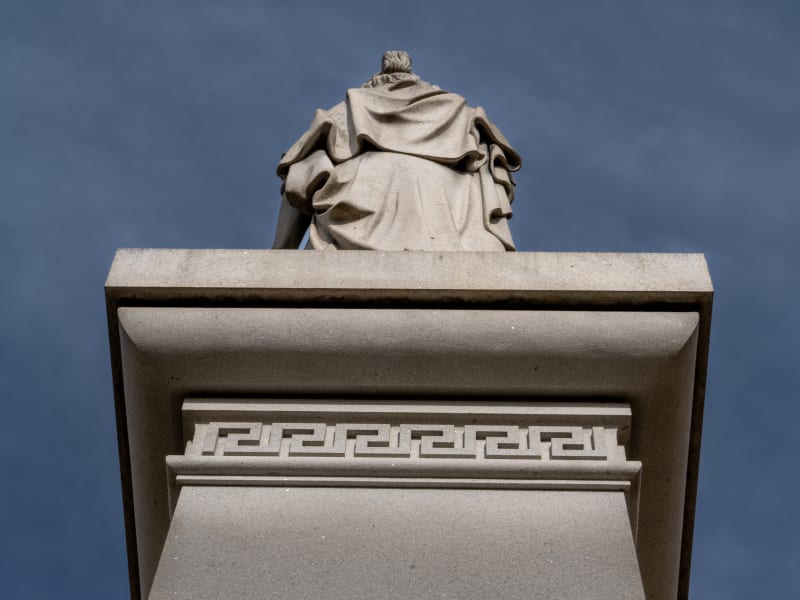
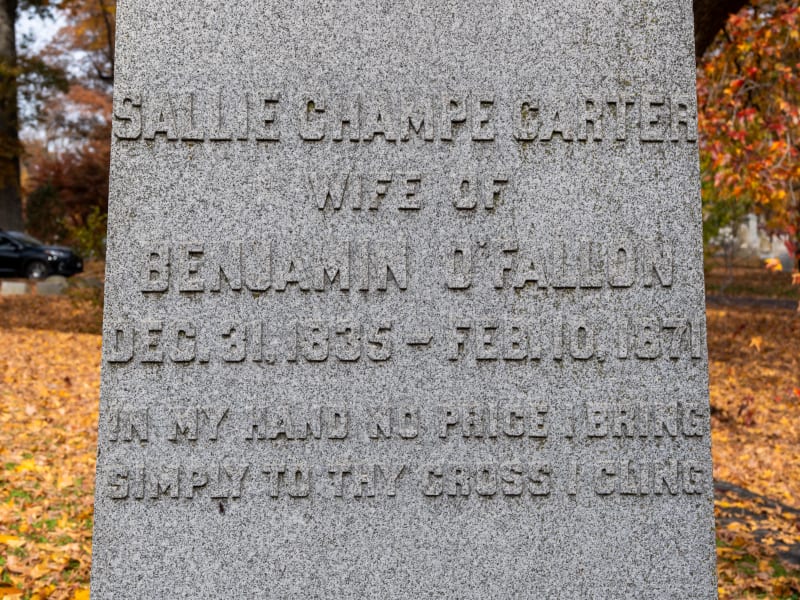
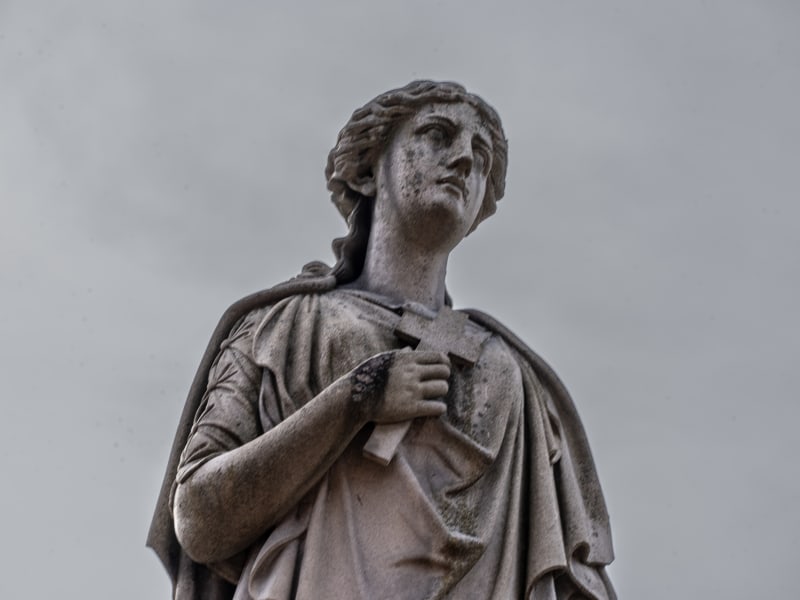
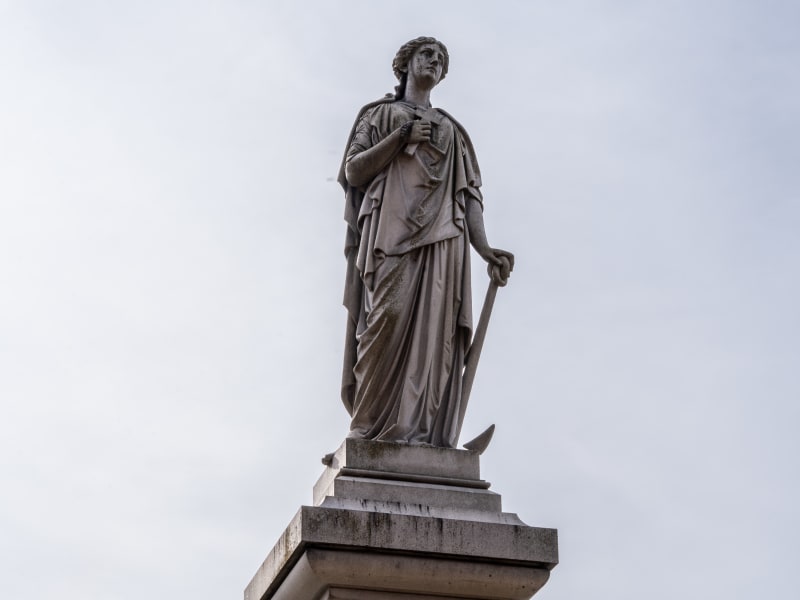
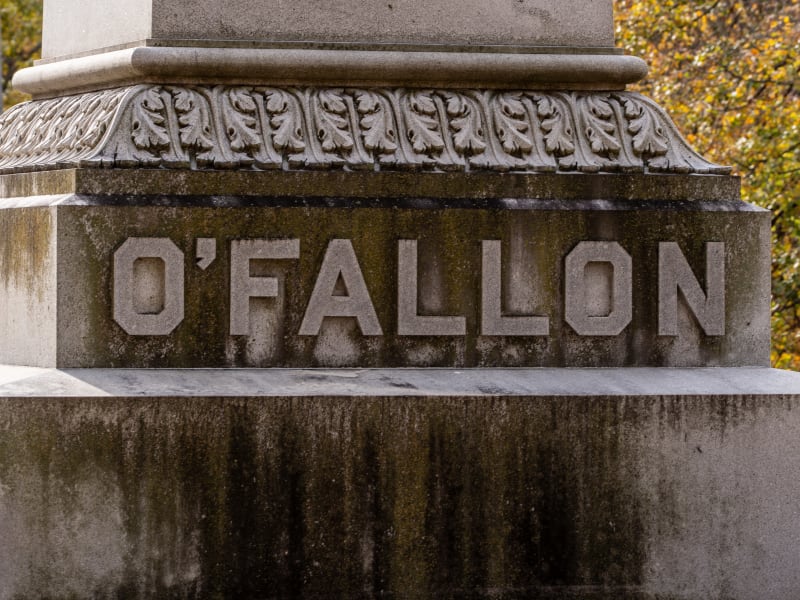
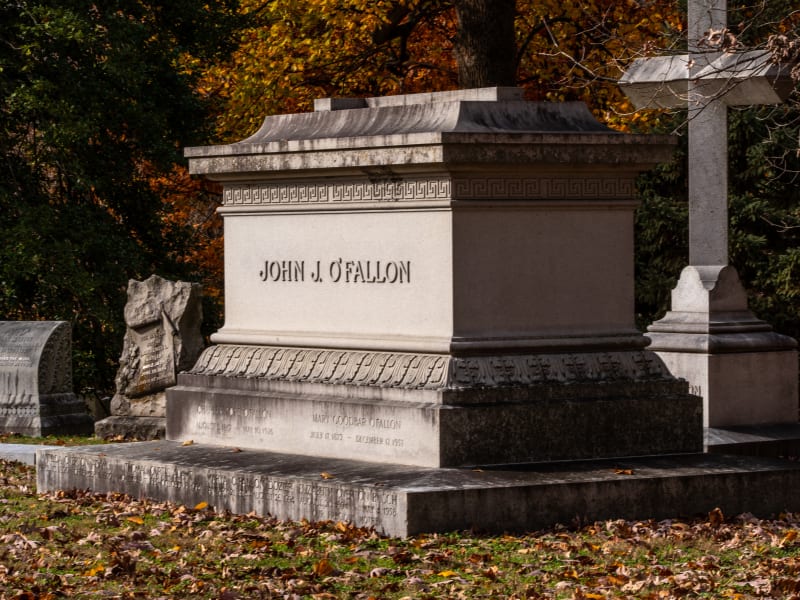
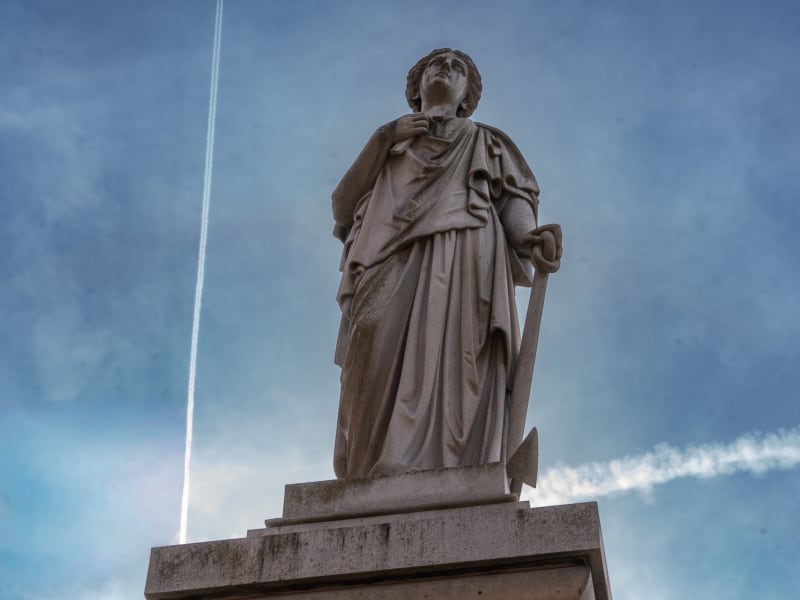
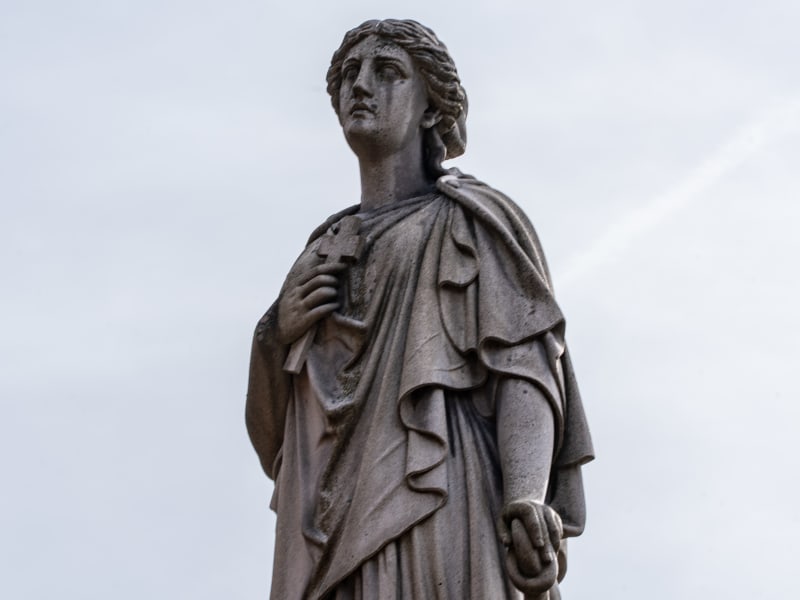
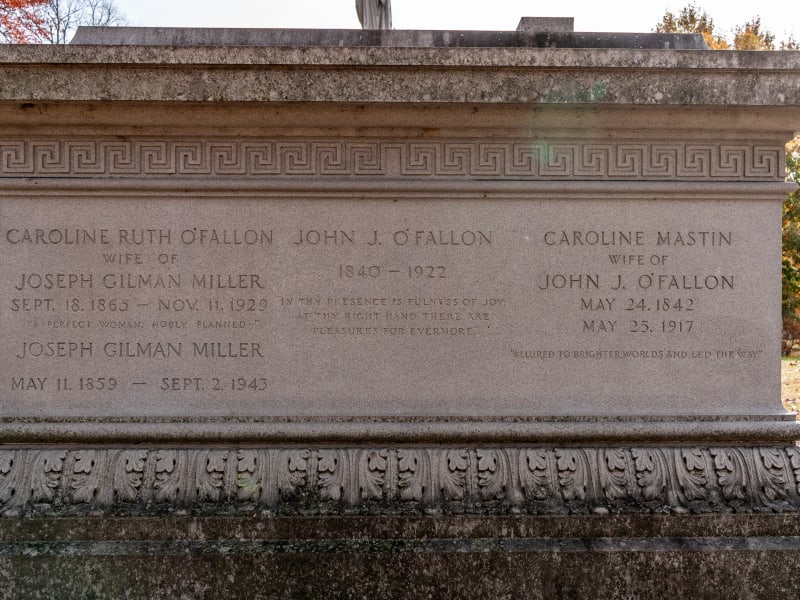
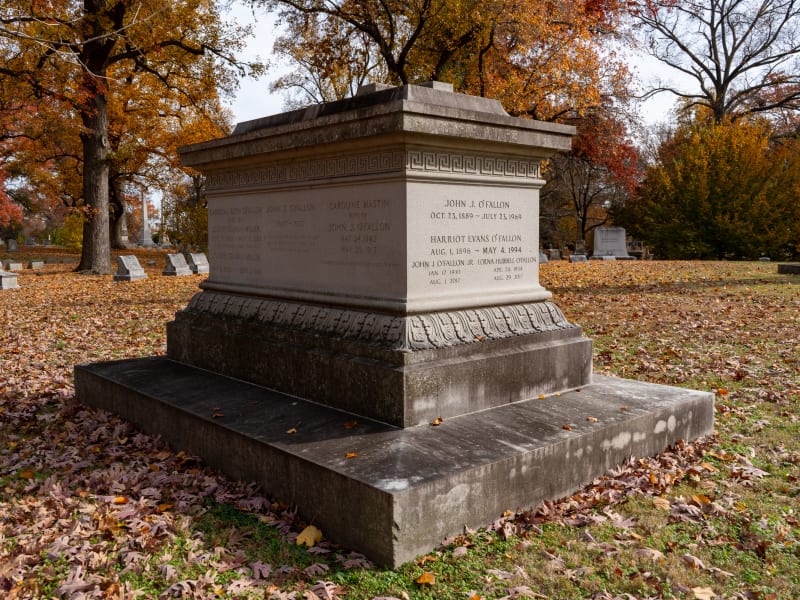
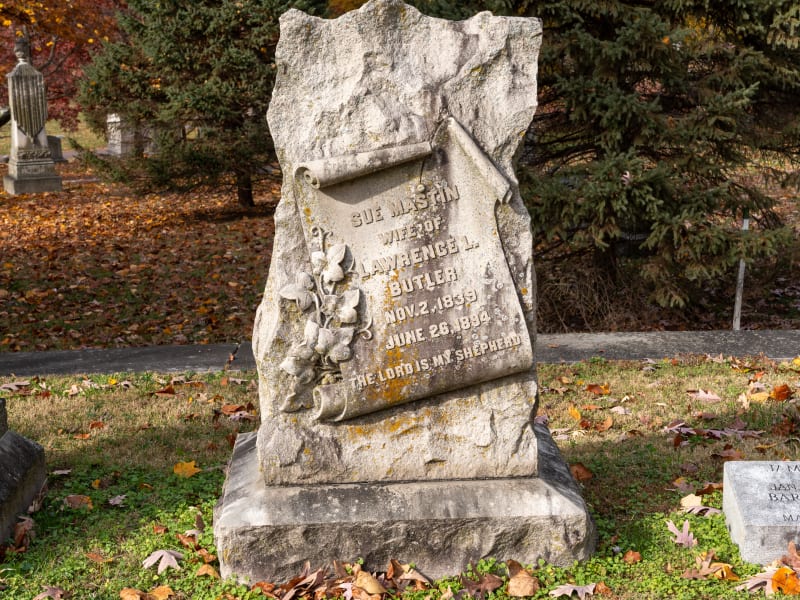
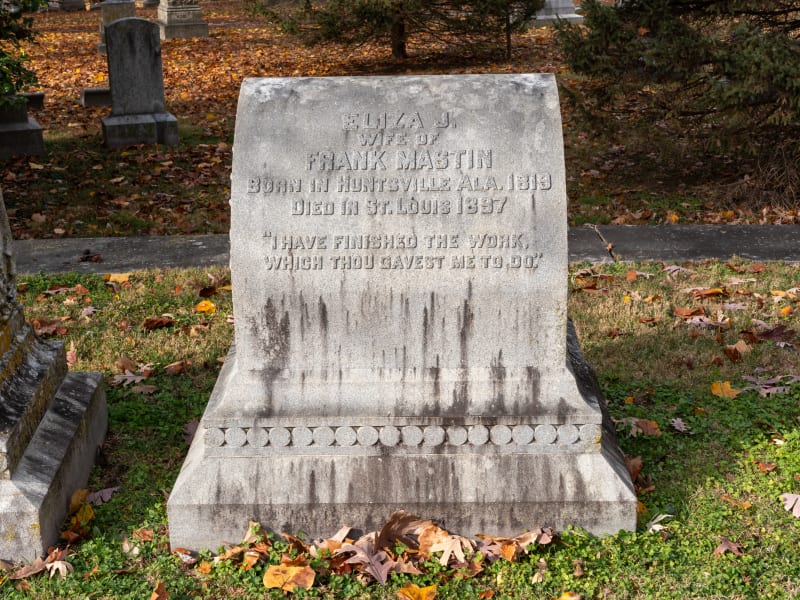
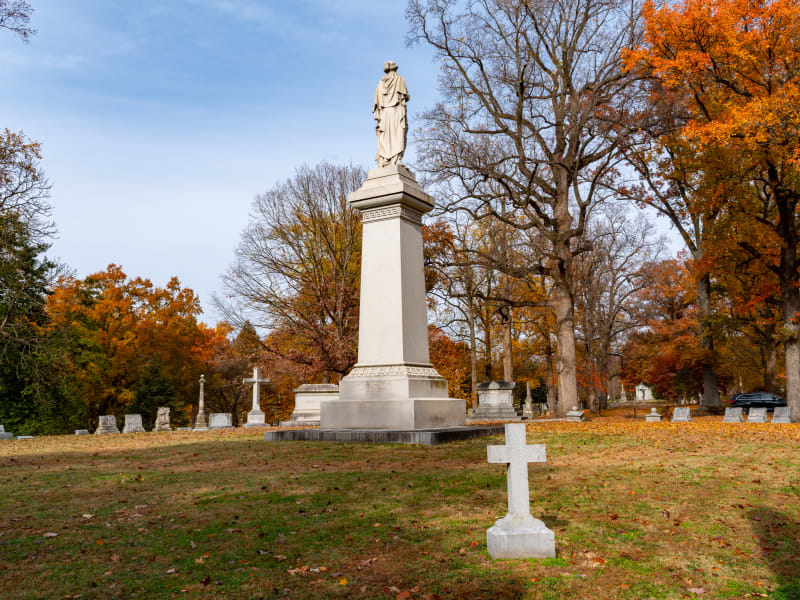
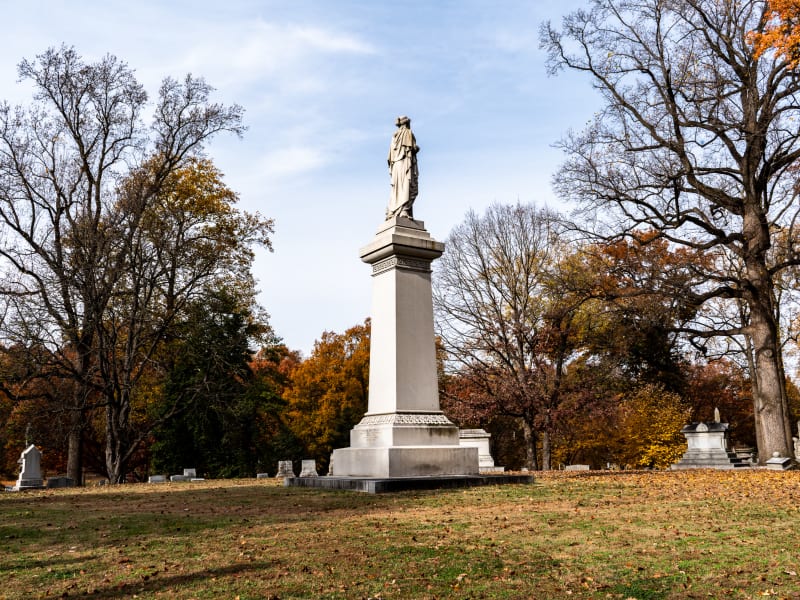
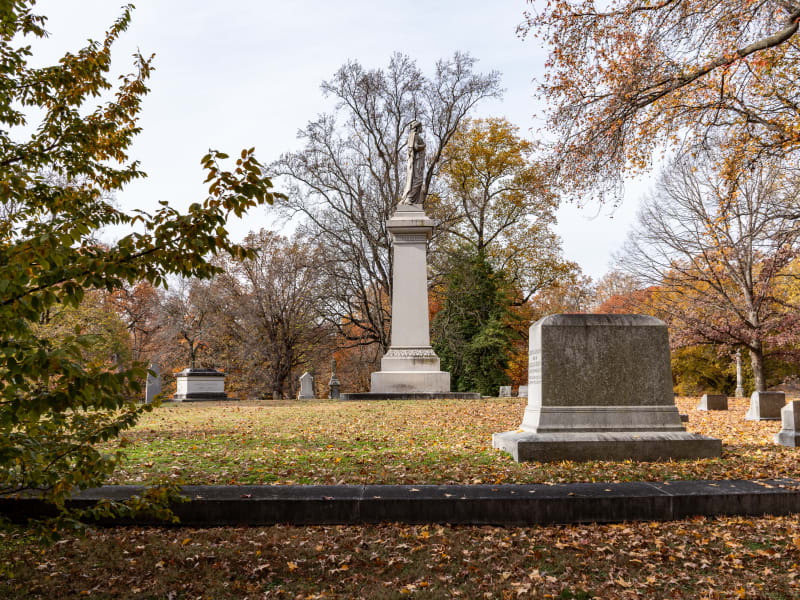
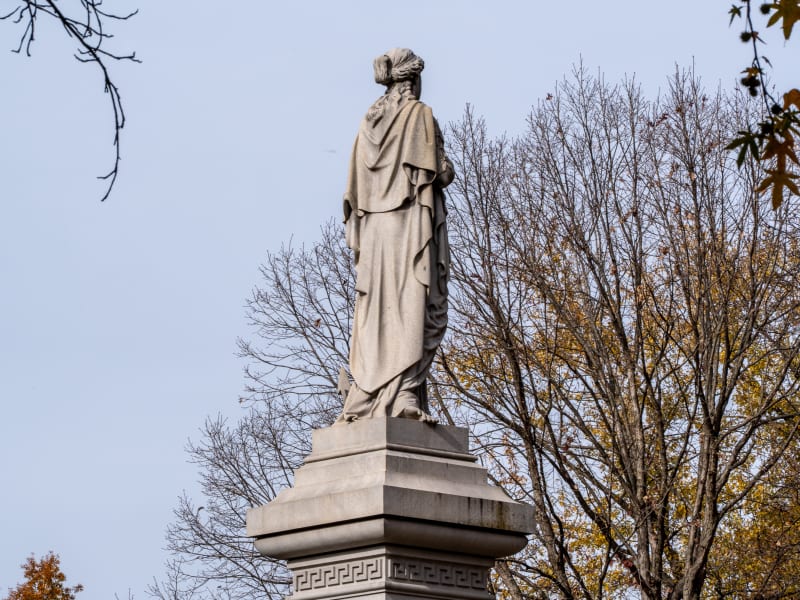
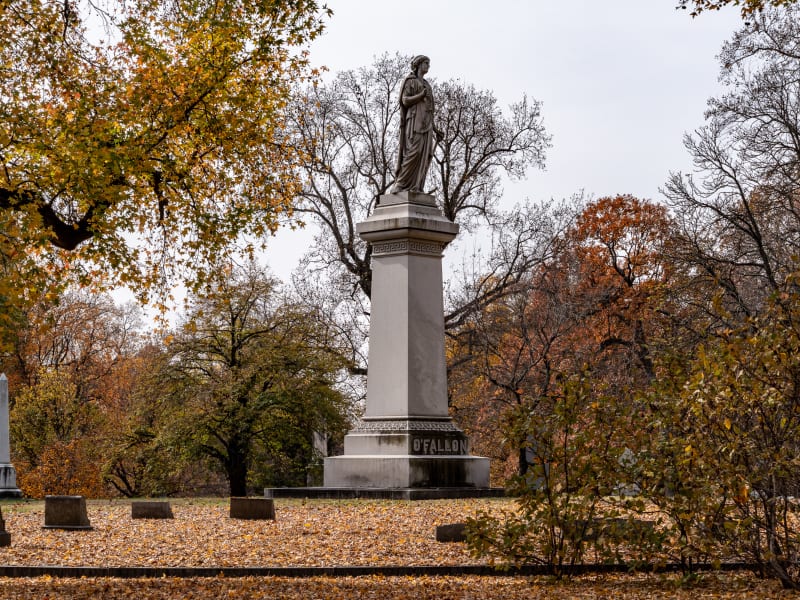
A standing figure of Hope crowns a tall, square granite shaft that tapers slightly as it rises. Draped in a long robe, she holds a cross to her breast with one hand and rests the other on an anchor, her face turned upward. A Greek-key band and a molded cap finish the top of the shaft. At its foot, a band of carved acanthus tops the die, which carries O'FALLON in raised letters on one face and the inscription to Col. John O'Fallon on another, above a broad stepped base. Family tombs, headstones and a marble cross are spread across the lot around it.
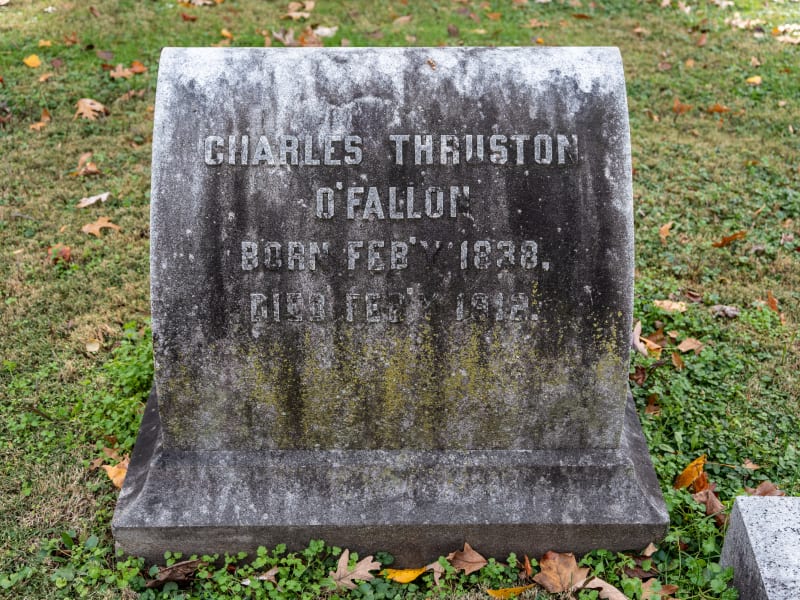
John O'Fallon was born in Jefferson County, Kentucky, on November 17, 1791, a nephew of George Rogers Clark and William Clark. He served as William Henry Harrison's aide in the War of 1812, leaving the army as a captain, and came to St. Louis under his uncle William Clark, holding the sutler and paymaster posts for the 1818–19 Missouri River expedition and the upriver posts until 1823. He became president of the St. Louis branch of the Bank of the United States in 1829 and, in the 1850s, of the Ohio and Mississippi and North Missouri railroads. By the 1860s his fortune was reported at $8 million. Census records from 1830 to 1860 show he enslaved more than 77 people, and in the late 1840s he led the city's Anti-Abolition Society. O'Fallon built the St. Louis Medical College, endowed the O'Fallon Polytechnic Institute and gave land to Saint Louis University, Washington University and the city. His country estate, Athlone, became O'Fallon Park, and O'Fallon, Missouri, and O'Fallon, Illinois, are named for him. He died in St. Louis on December 17, 1865. His monument, designed by George I. Barnett, stands on the largest lot in the cemetery, and his sons James J., Benjamin and John J. O'Fallon are buried around it with their families.