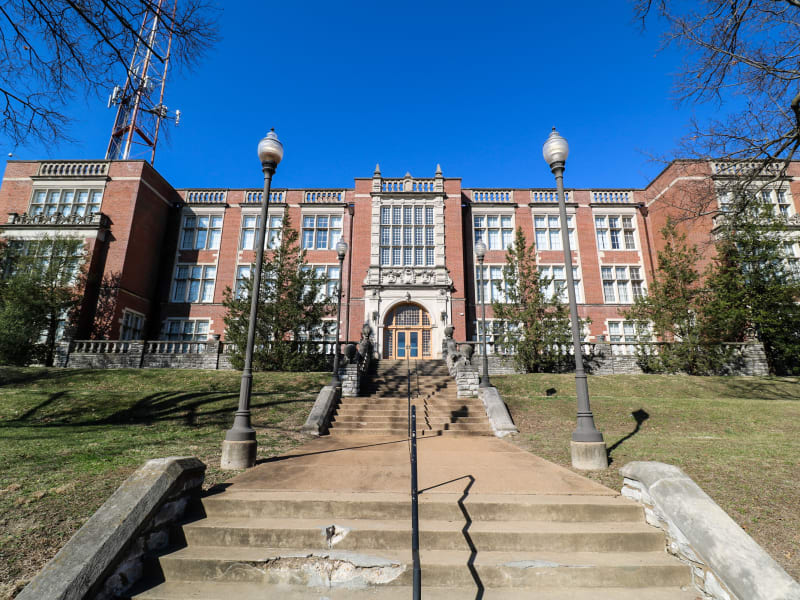
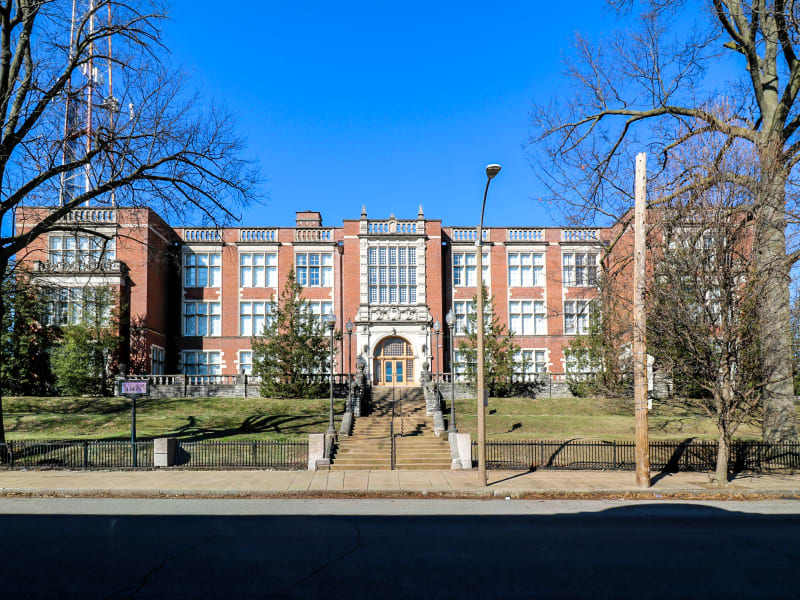
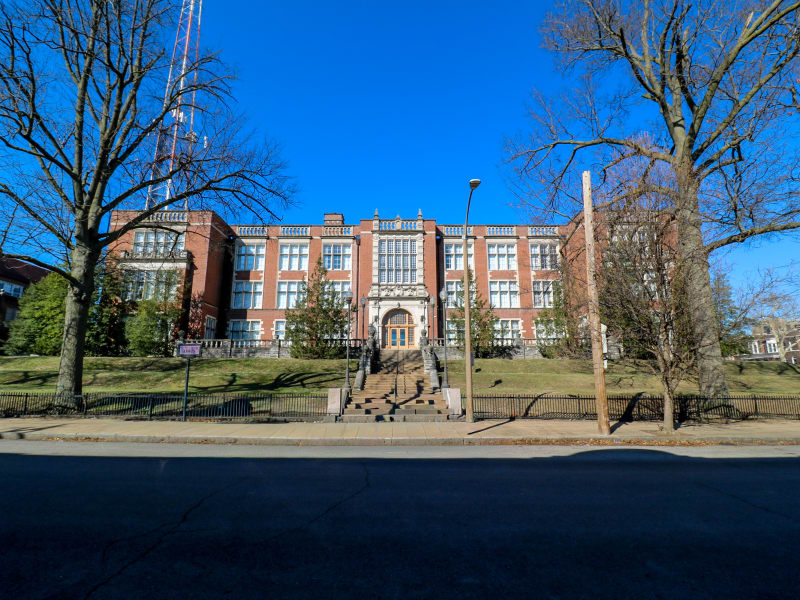
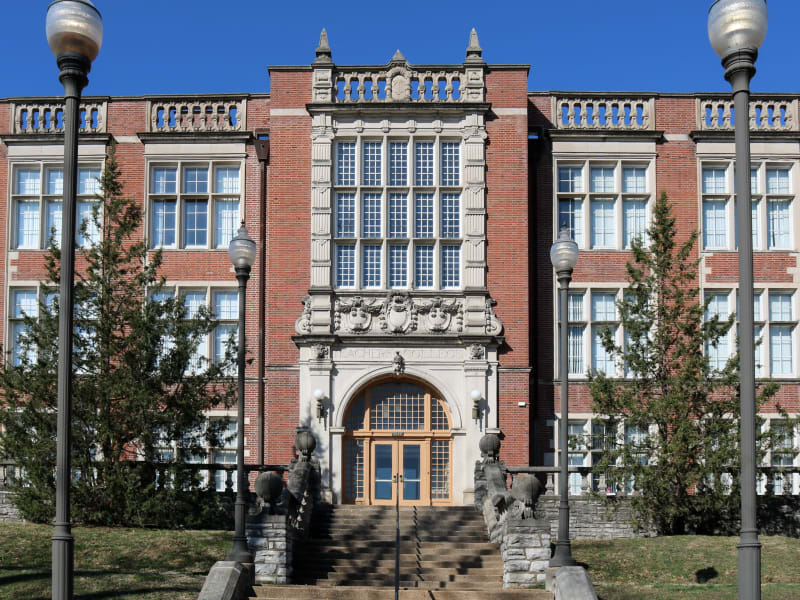
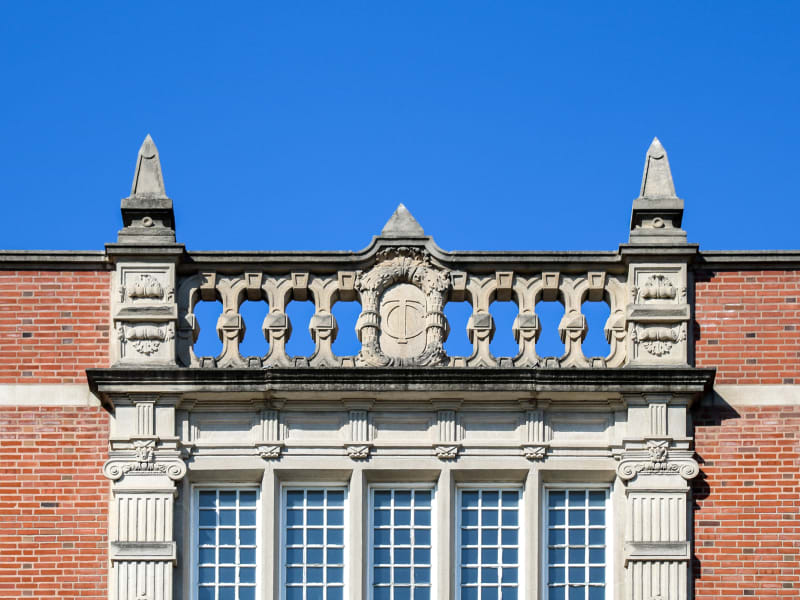
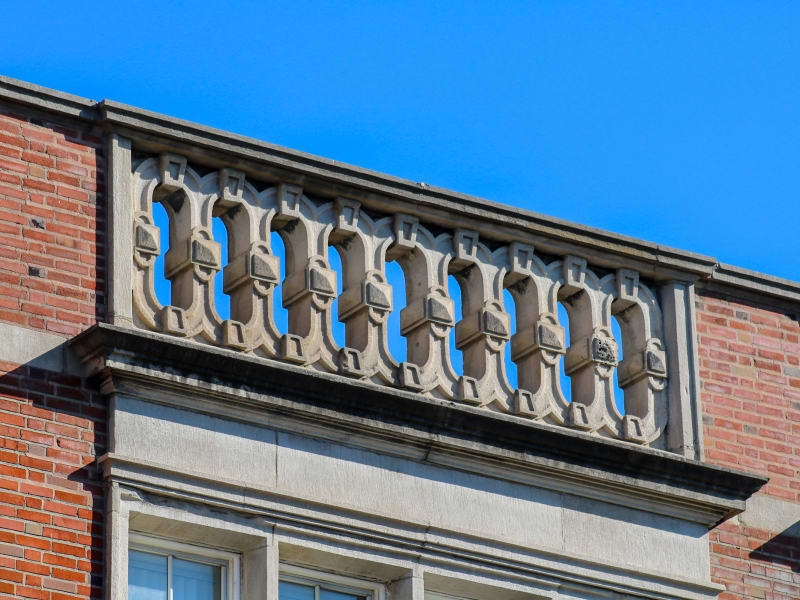
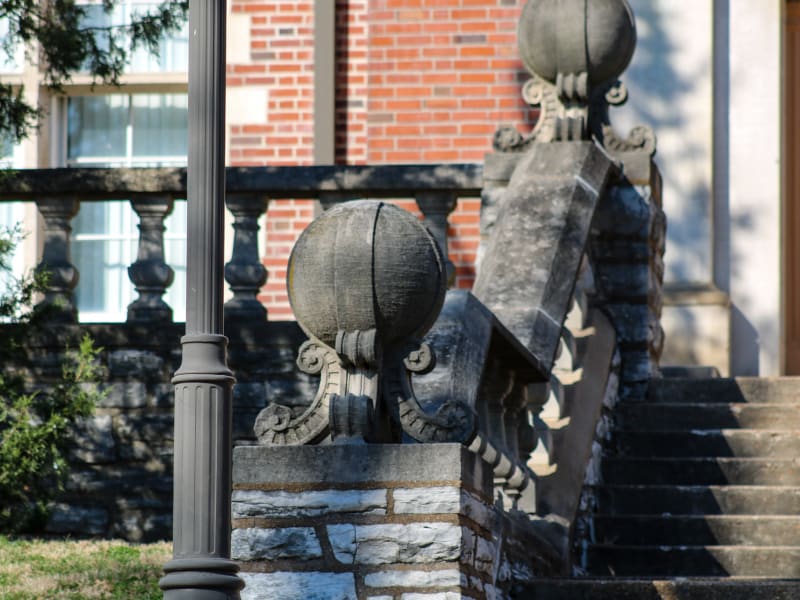
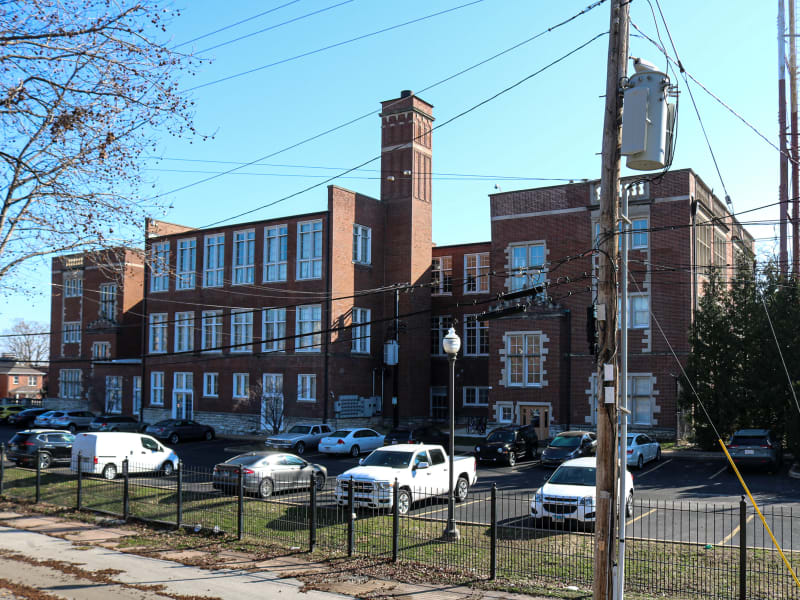
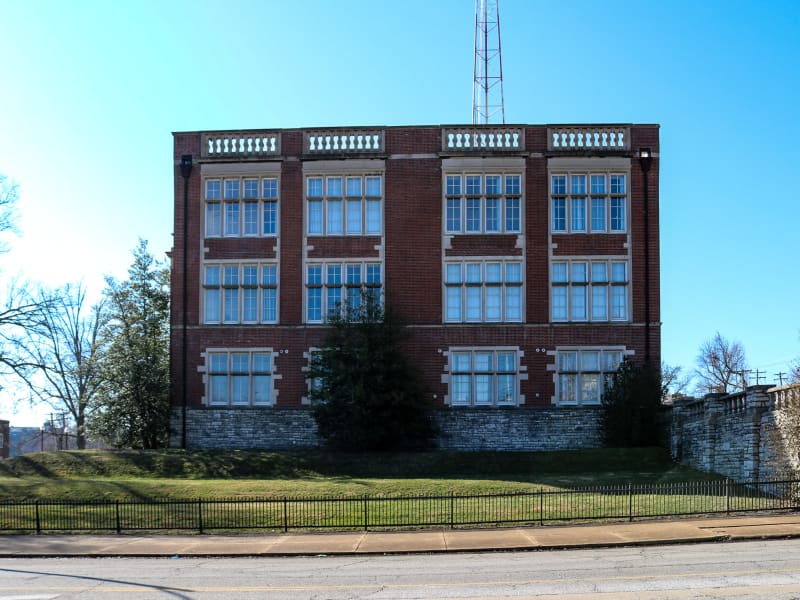
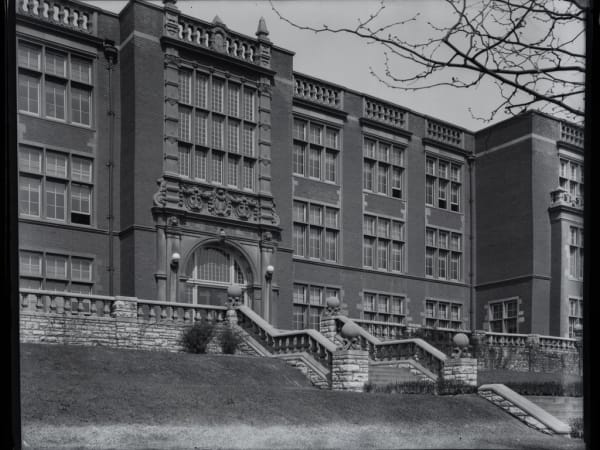
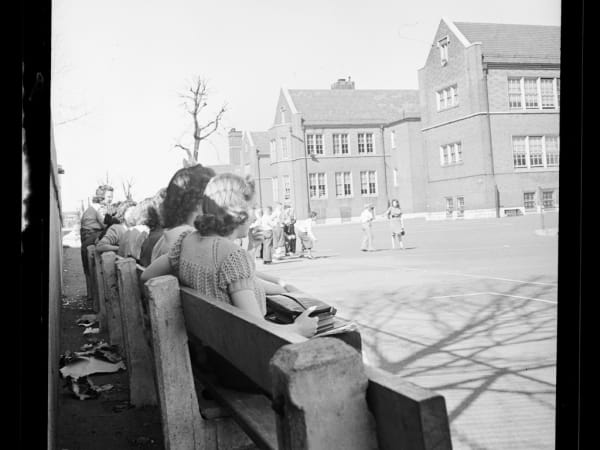
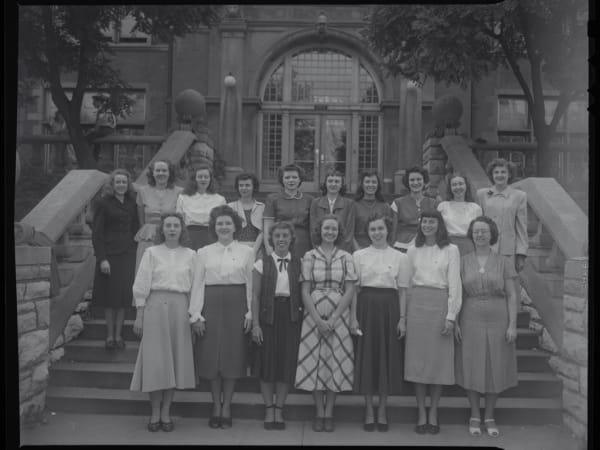
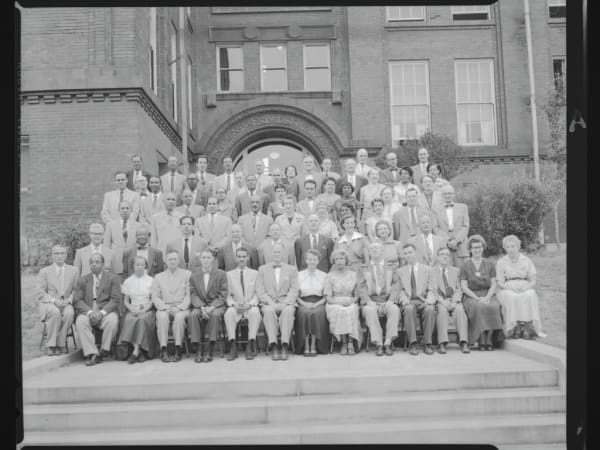
Harris Teachers College is a substantial red brick institutional building designed by William B. Ittner in 1905. The structure exhibits the Jacobethan Revival style characteristic of Ittner's school designs from this period, featuring shaped gables, stone trim, and organized window groupings that provide ample classroom light. The building's massing is symmetrical, with a prominent central entrance section flanked by extended wings. Decorative brickwork and limestone accents define the facade, while the roofline is punctuated by distinctive curved and stepped gable ends that give the building a dignified, collegiate appearance appropriate to its function as a teacher training institution.
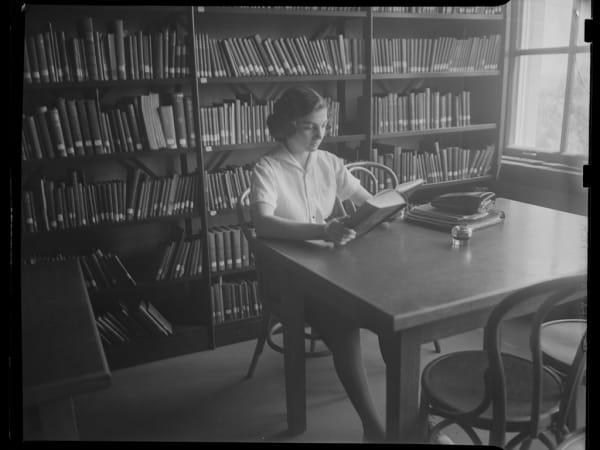
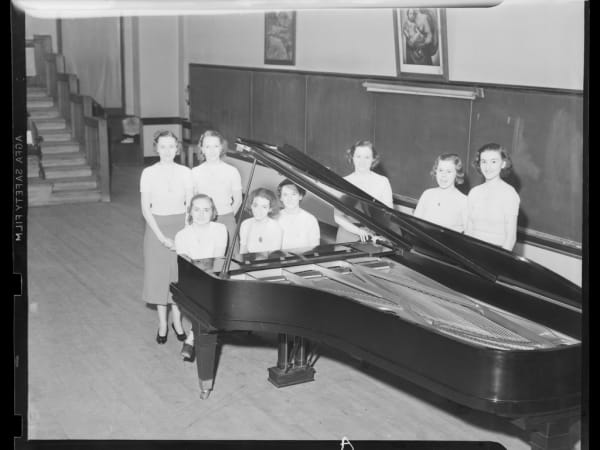
Harris Teachers College served as a training institution for future educators in the St. Louis public school system. The school traced its origins to the Harris Normal School, named in honor of William Torrey Harris, the influential superintendent of St. Louis Public Schools from 1868 to 1880 who later served as United States Commissioner of Education. The institution operated as a two-year normal school preparing students for teaching careers, later expanding its curriculum and eventually achieving college status. Throughout the twentieth century, Harris Teachers College remained dedicated to teacher preparation, becoming an important pipeline for educators entering St. Louis classrooms. In 1954, Harris Teachers College merged with Stowe Teachers College, the city's institution for training Black teachers, following the Supreme Court's Brown v. Board of Education decision. The combined institution continued operating as Harris-Stowe until it eventually relocated to a new campus. The building at 1517 South Theresa Avenue subsequently transitioned to other educational uses within the St. Louis Public Schools system. The structure remains standing in the Tiffany neighborhood.