Grand Opera House
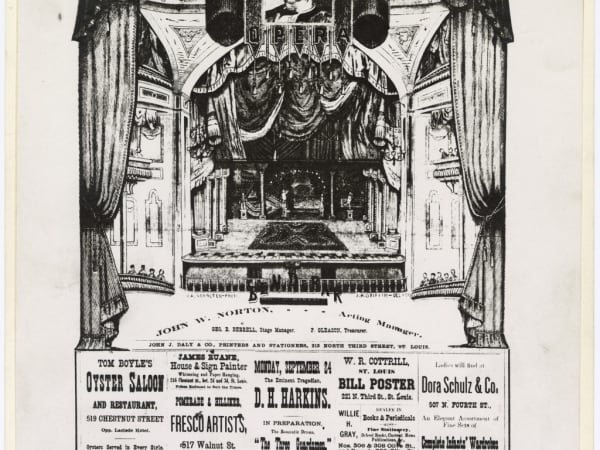
Behind its Market Street frontage, the Grand Opera House seated roughly 1,600 in an auditorium built as an orchestra floor beneath two deep, curving balconies, with tiered private boxes in ornamental plasterwork set against the proscenium arch.
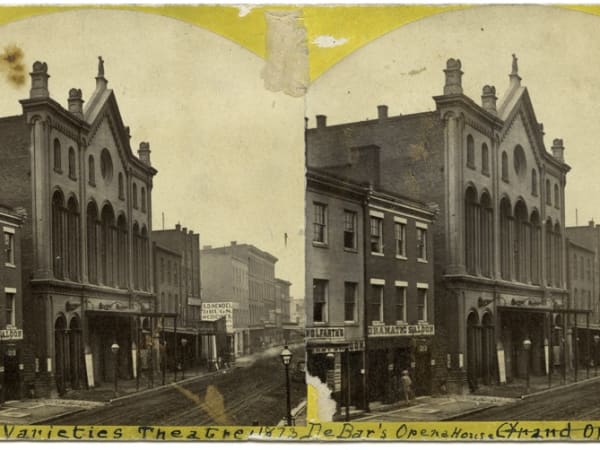
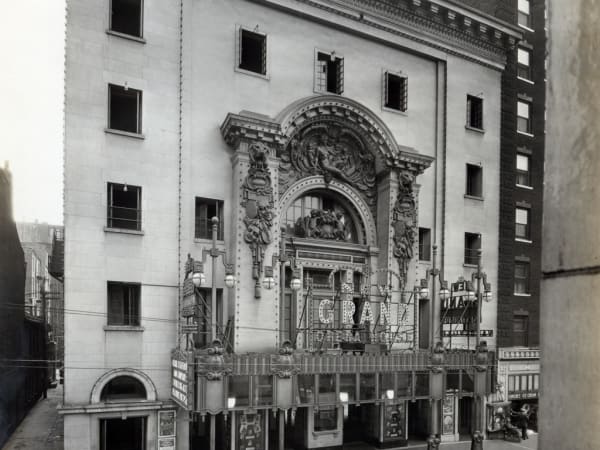
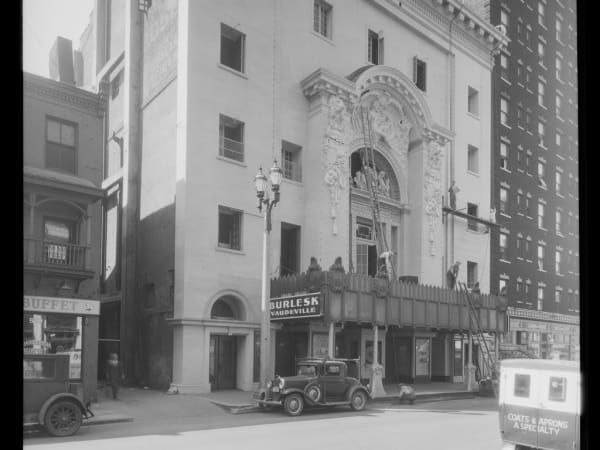
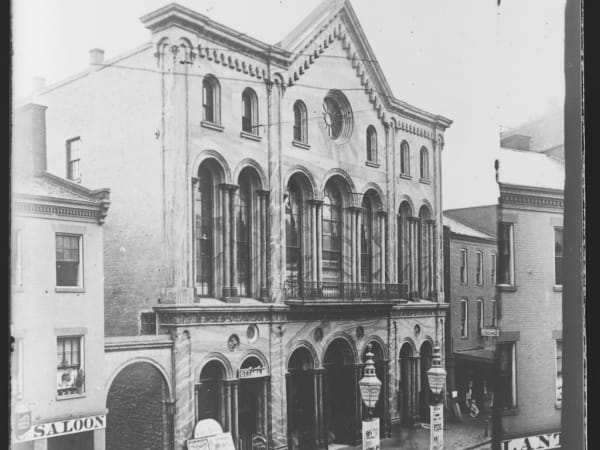
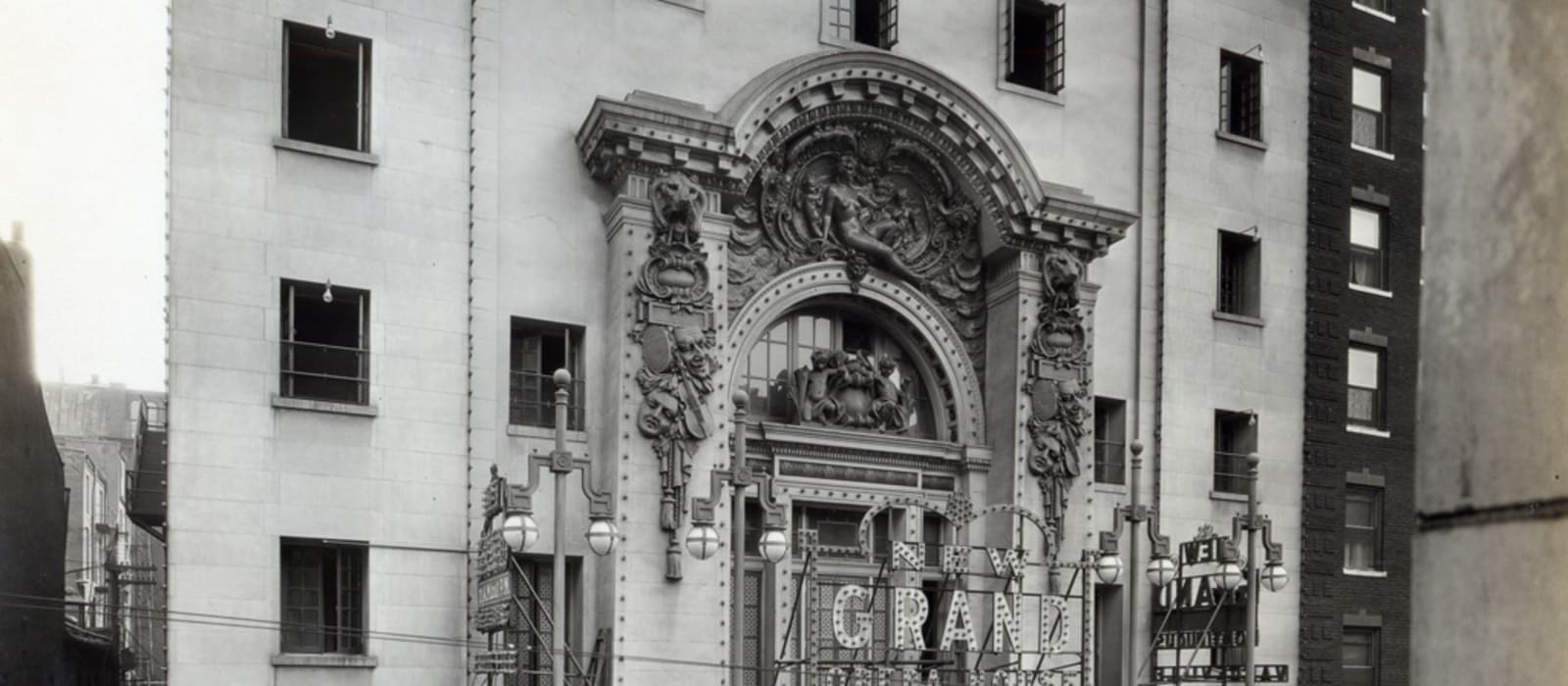
The theater opened on May 10, 1852 as the Varieties (also Field's Varieties) on the south side of Market Street between Broadway and Sixth. Over the next quarter-century it was renamed several times — the St. Louis Opera House, the Wakefield Theatre, and DeBar's Opera House — before becoming the Grand Opera House in 1877. Fire and a gas explosion destroyed the building on November 23, 1884. It was rebuilt to the design of Oscar Cobb and reopened on September 14, 1885 with about 1,600 seats. It ran as Hopkins' Grand Opera House from 1896 and moved from opera and legitimate drama through vaudeville and motion pictures. Renamed the Grand Theatre in 1935, it ended as a burlesque house, the Grand Follies, in the 1940s and closed in the early 1960s. It was demolished in 1964; the site later held the Spanish Pavilion relocated from the 1964-65 New York World's Fair.