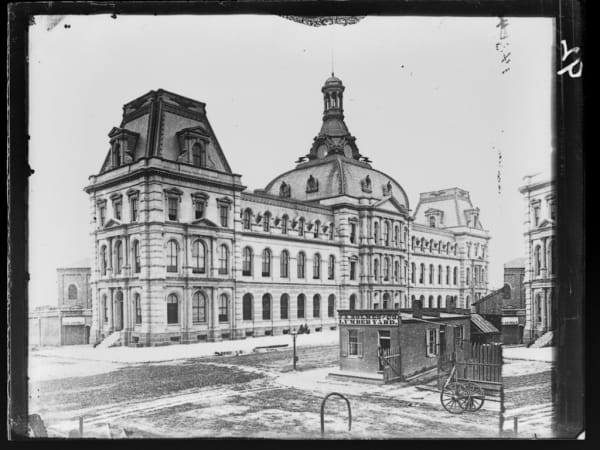
Four Courts Building
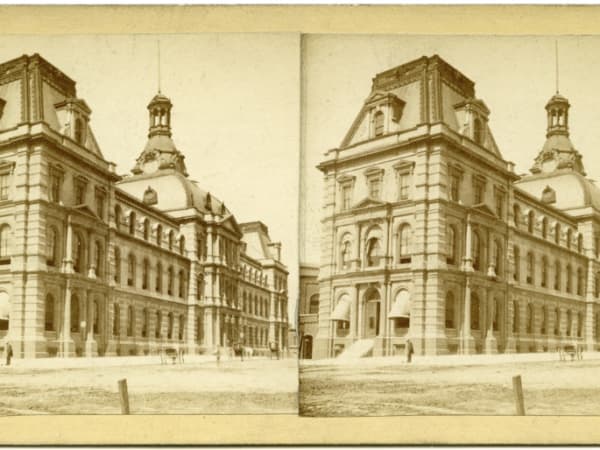
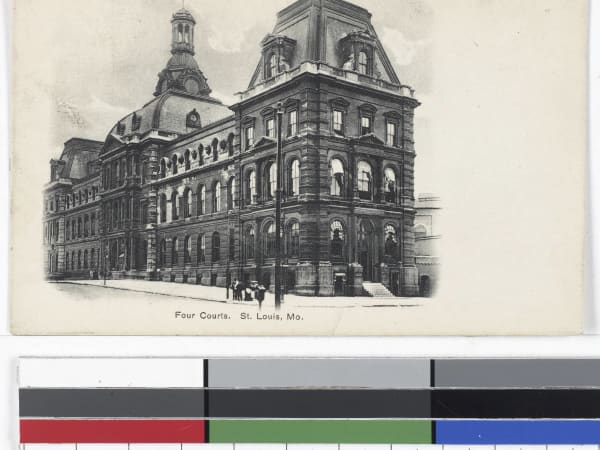
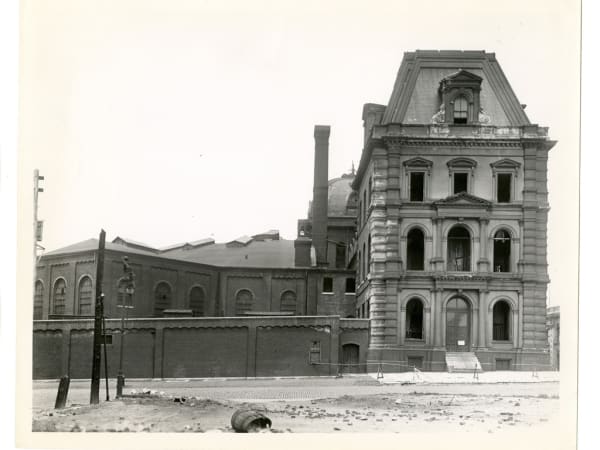
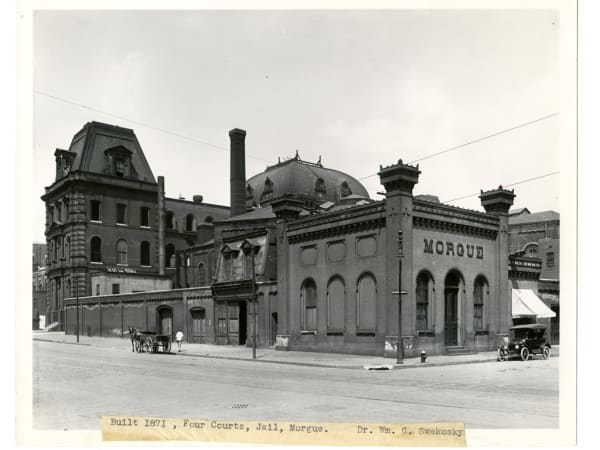
A Second Empire courthouse-and-jail at Clark Avenue and Twelfth Street, its street front a theatrical composition of mansard roofs and dormers. Behind that ceremonial face the plan curved into a half-rotunda of jail cell blocks, wrapped by a rectangular wall that enclosed the prisoners' exercise yard — and the gallows. Courthouse and jail shared one structure, so the accused could be tried and held under the same roof. Locals borrowed its name from the Four Courts in Dublin.
Thomas Waryng Walsh designed the Four Courts to replace the outgrown stone City Jail at Sixth and Chestnut, for a St. Louis approaching 300,000 people. It opened in 1871, combining courthouse and jail in a single structure and taking its name from the Four Courts in Dublin. Its plan was a deliberate reaction to the dark, cramped jail it replaced: behind the Second Empire front, a half-rotunda of cell blocks opened to light and air, an idea borrowed from the reform-minded asylum design of the day. A wall around the curved jail enclosed an exercise yard that doubled as the execution ground — the sheriff presided over hangings there, and witnesses were summoned by black-bordered letters in the mail. Within a few decades the building was obsolete, its mansard roofs leaking and its plan outdated. Its functions moved to Isaac Taylor's Municipal Courts, which opened nearby in 1910, and the Four Courts was demolished in 1927 to clear the site for the Civil Courts Building that opened in 1930.