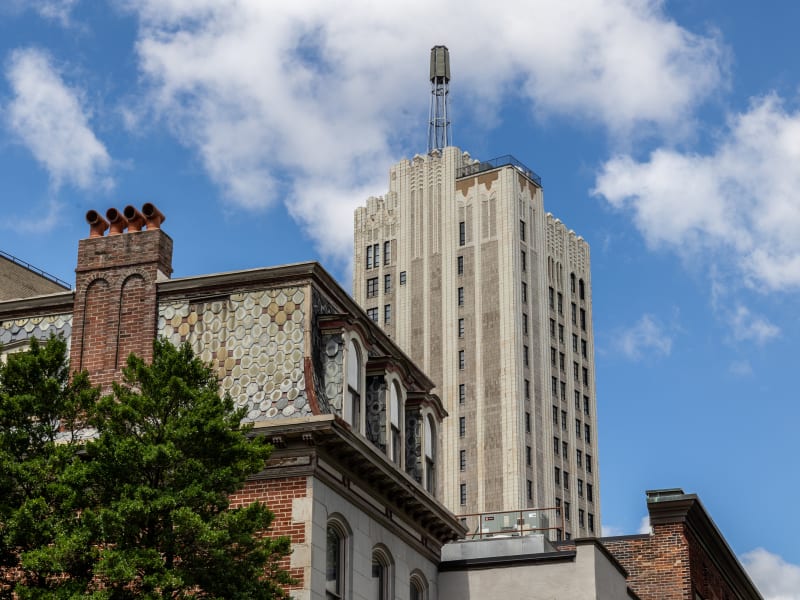
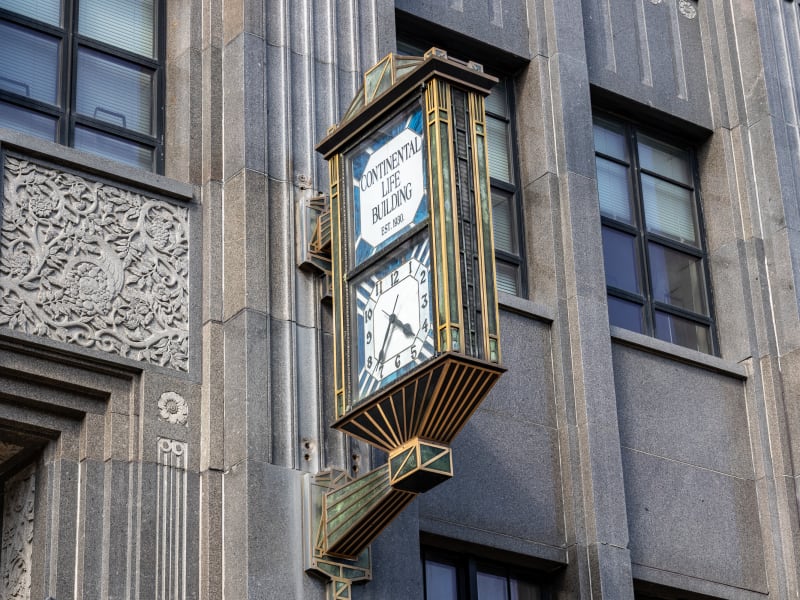
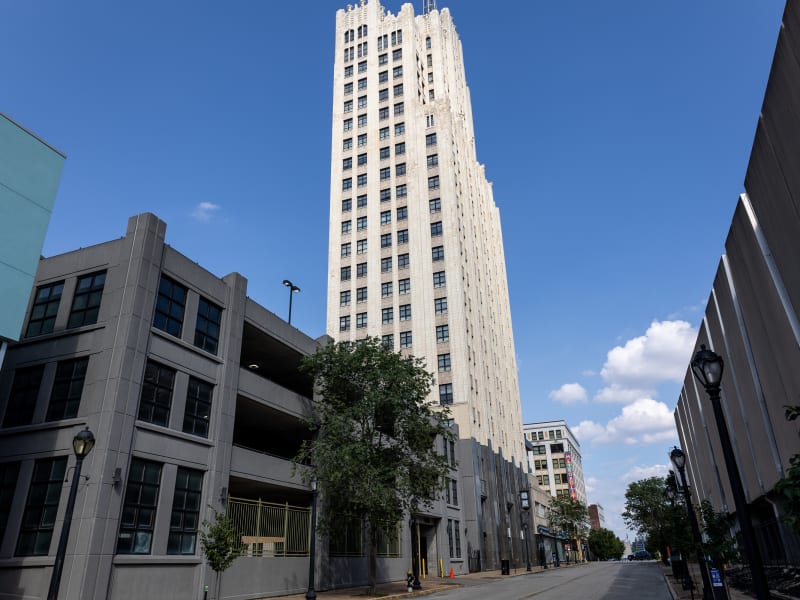
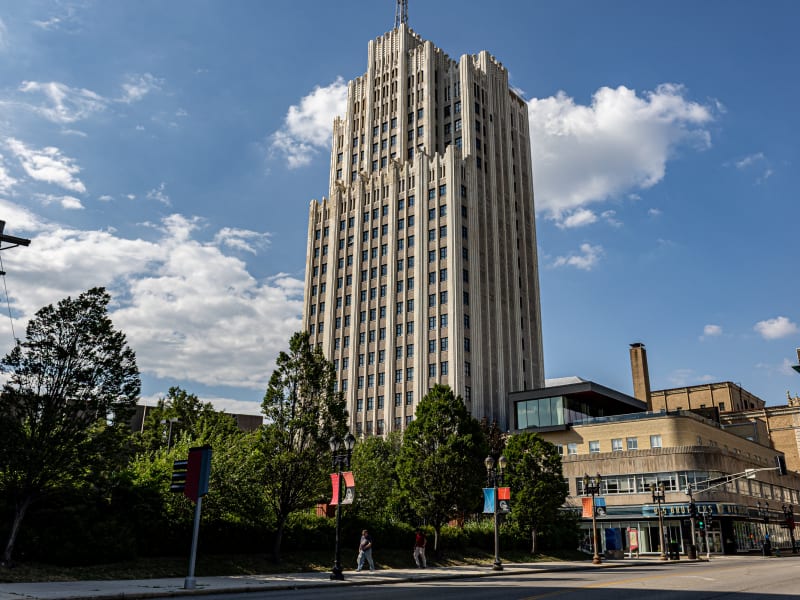
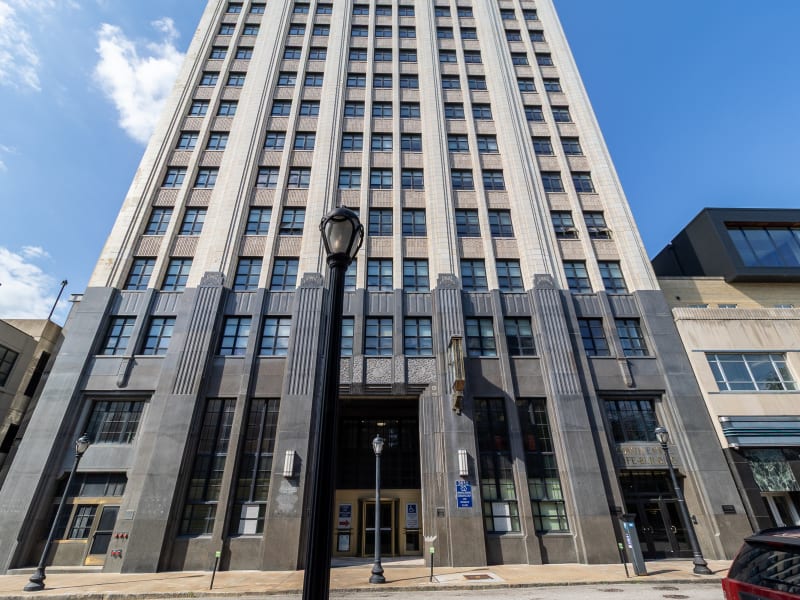
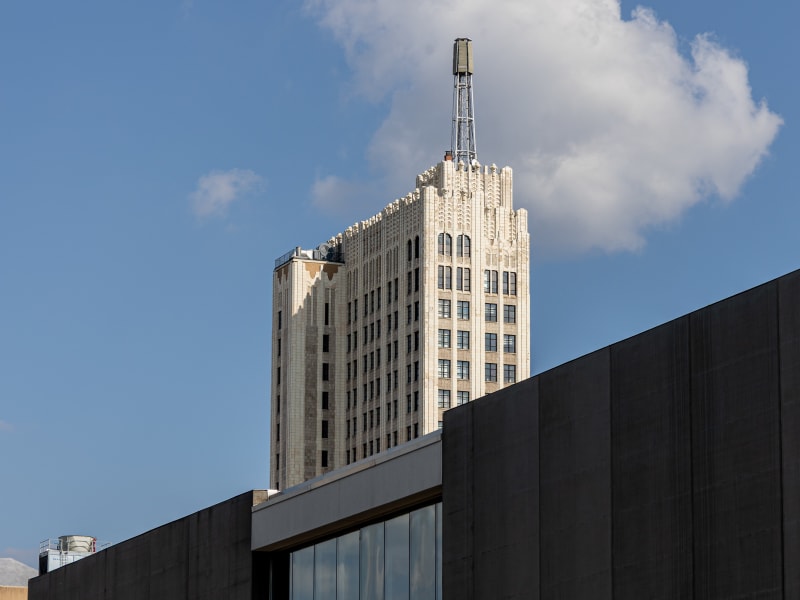
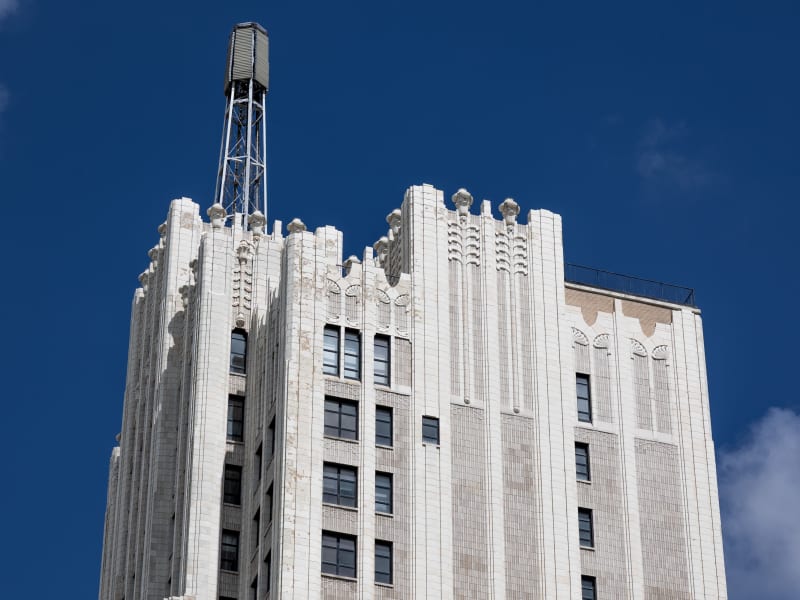
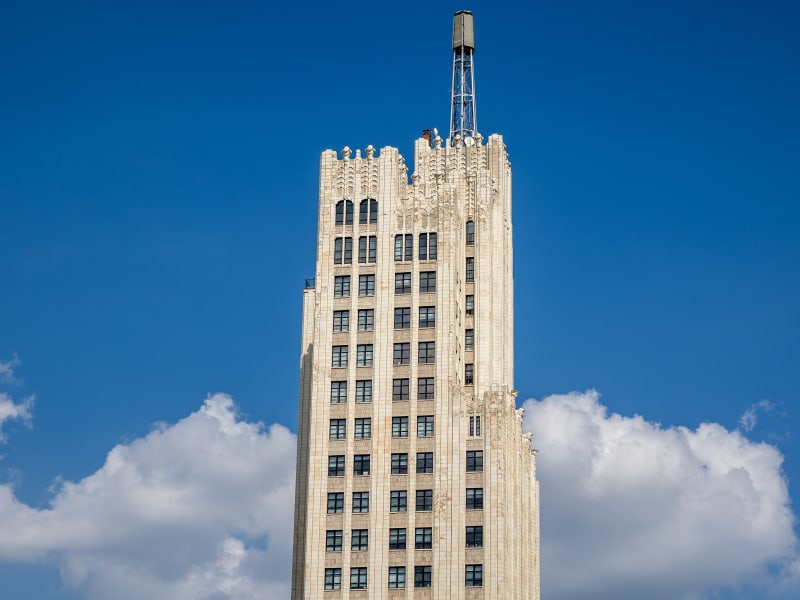
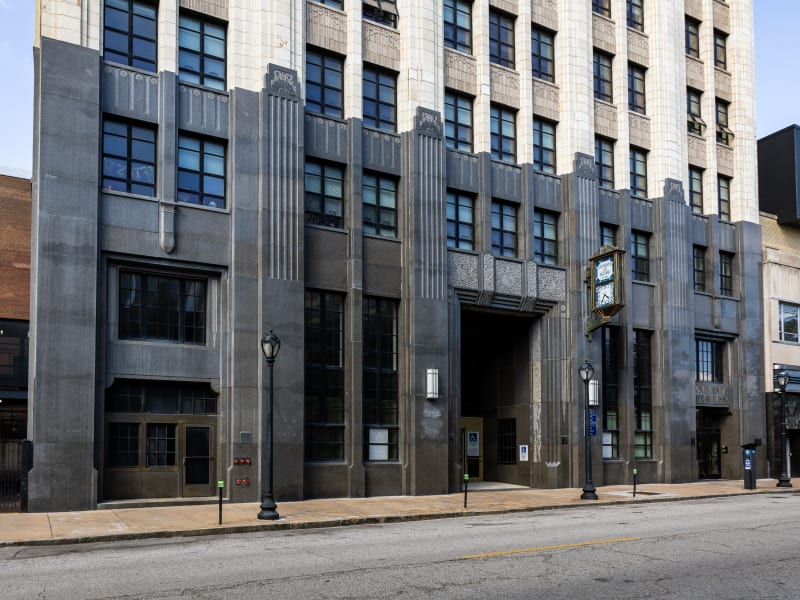
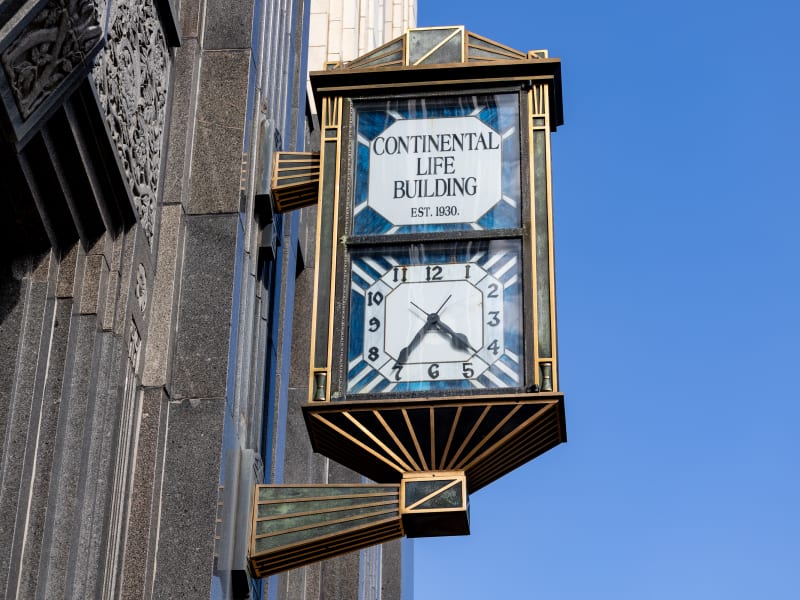
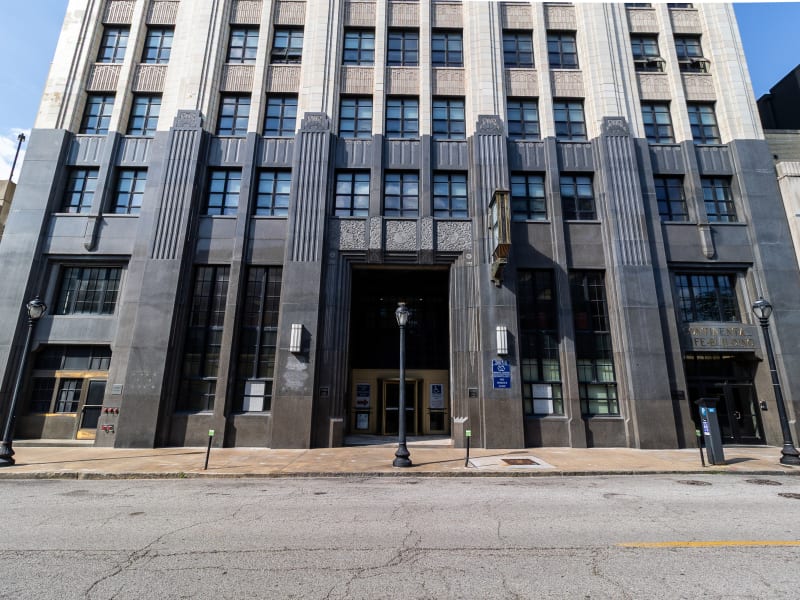
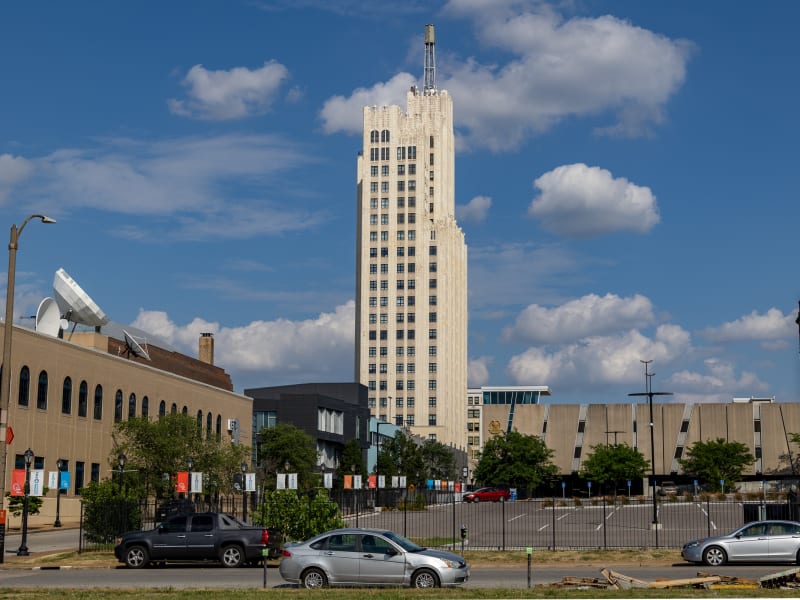
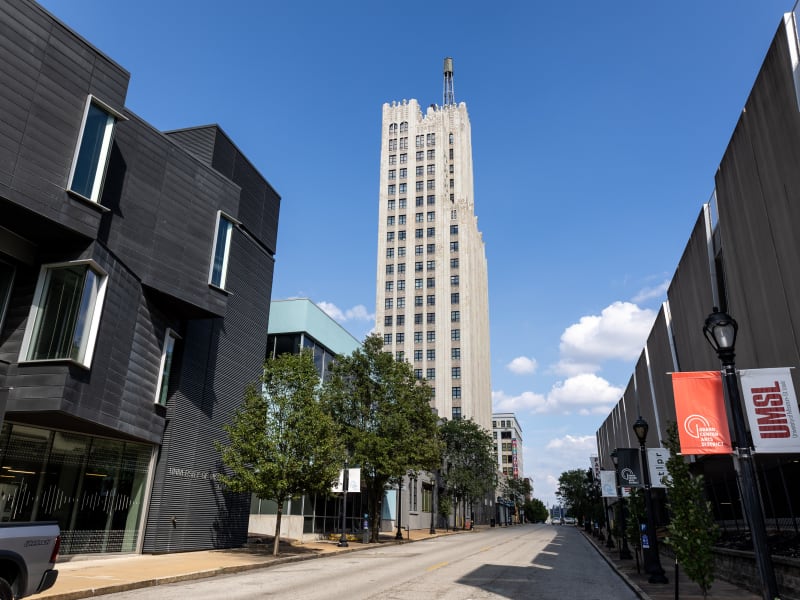
The Continental Life Building is a striking Art Deco tower that rises prominently along Olive Street, featuring the geometric ornamentation, vertical emphasis, and decorative setbacks characteristic of the style. Its limestone and brick façade showcases intricate carved detailing around the entrance and upper floors, with stylized motifs that give the building a dignified yet exuberant presence befitting the era's commercial optimism.
The Continental Life Building was constructed in 1930 as the headquarters for the Continental Life Insurance Company, arriving at a pivotal moment just as the Great Depression was beginning to reshape the American economy. The building was designed by William B. Ittner, an architect far better known for his revolutionary work in school design but who also contributed several notable commercial and institutional buildings to the St. Louis landscape. Its location on Olive Street placed it within the bustling Grand Center district, which was then emerging as a premier entertainment and commercial corridor. The Continental Life Insurance Company operated from this prominent address during the challenging economic years of the 1930s and beyond, providing life insurance services to the St. Louis region. Like many insurance companies of the era, Continental Life sought an impressive headquarters building that would project stability and permanence to policyholders and investors alike. The building served this symbolic function while also providing practical office space for the company's operations. Over the decades, as the insurance industry consolidated and Grand Center experienced cycles of decline and revitalization, the building's use evolved. The structure has survived into the twenty-first century and remains standing today, a testament to the solid construction standards of its era. Its presence contributes to the architectural character of Grand Center, a district that has seen renewed investment and cultural development in recent years as the neighborhood has worked to reclaim its historic role as a center for arts and entertainment in St. Louis.