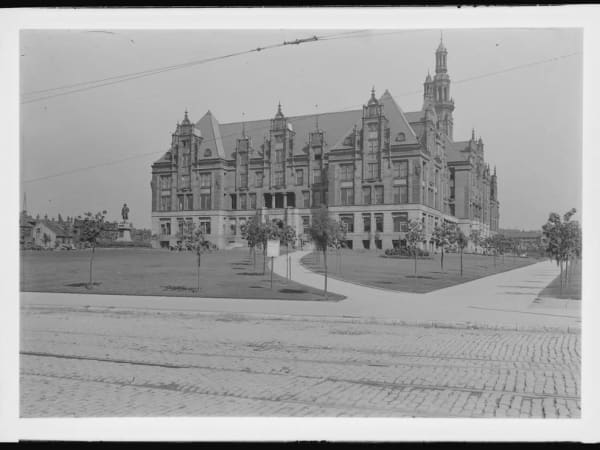
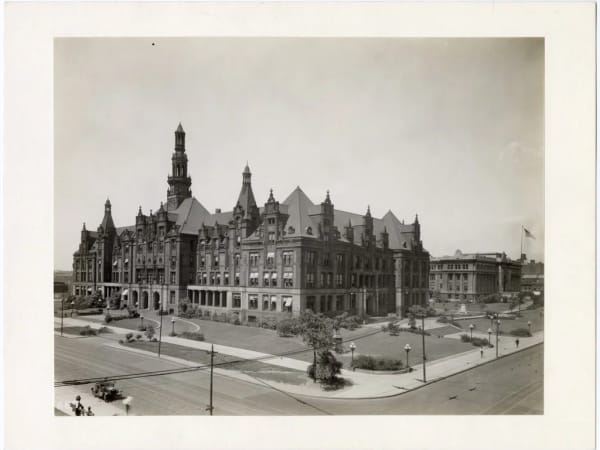
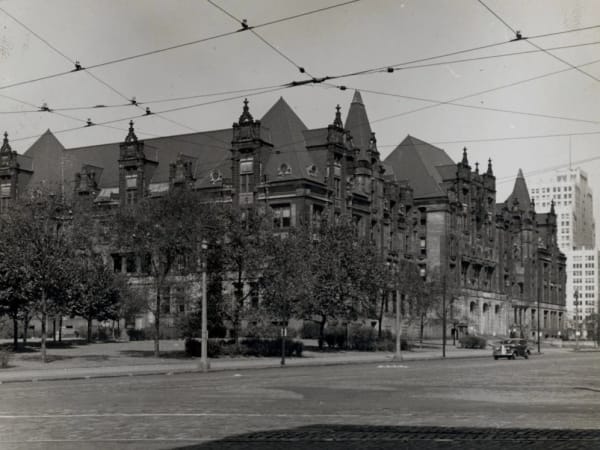
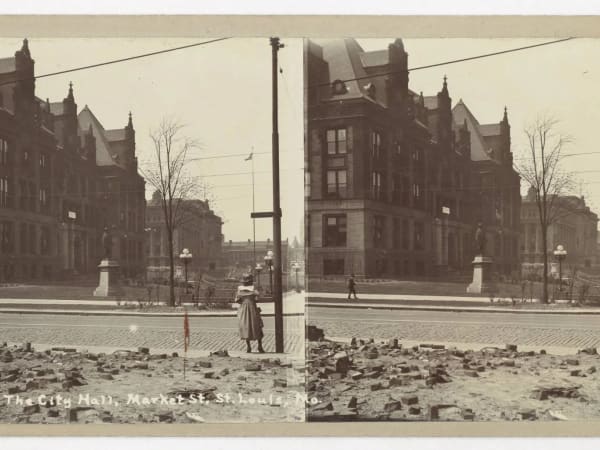
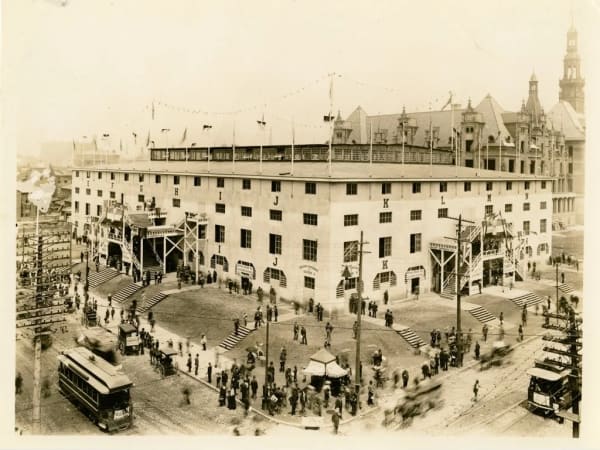
St. Louis City Hall is a monumental French Renaissance Revival building distinguished by its elaborate limestone facade, grand central entrance pavilion, and ornate classical detailing including columns, pilasters, and decorative cornices. The four-story structure features a symmetrical H-shaped plan with projecting end pavilions, mansard-influenced rooflines with dormers, and richly carved ornamentation that reflects the grandeur of the 1904 World's Fair era.
St. Louis City Hall was completed in 1904, the same year the city hosted the Louisiana Purchase Exposition and welcomed the world to its doorstep. The building was commissioned by the city government to replace an aging municipal headquarters and to project an image of civic pride and permanence befitting a metropolis that had grown into one of the nation's largest cities. Architects Eckel and Mann won the commission to design the new seat of government, which would consolidate city offices and provide a grand setting for municipal functions at the corner of 12th and Market Streets in the heart of downtown. Throughout the twentieth century, City Hall served as the administrative nucleus of St. Louis government, housing the offices of the mayor, the Board of Aldermen, and various city departments. The building witnessed countless political dramas, policy decisions, and civic ceremonies that shaped the trajectory of the city. Notable mayors from Henry Kiel to Vincent Schoemehl to Francis Slay conducted the business of governing from within its walls, navigating challenges from the Great Depression through deindustrialization and urban renewal. City Hall remains an active government building today, continuing its original function after more than a century of continuous use. The structure has undergone various renovations and updates over the decades to accommodate modern infrastructure while maintaining its role as the symbolic and functional center of St. Louis municipal government. It stands as one of the few major civic buildings from the World's Fair era that still serves its intended purpose.