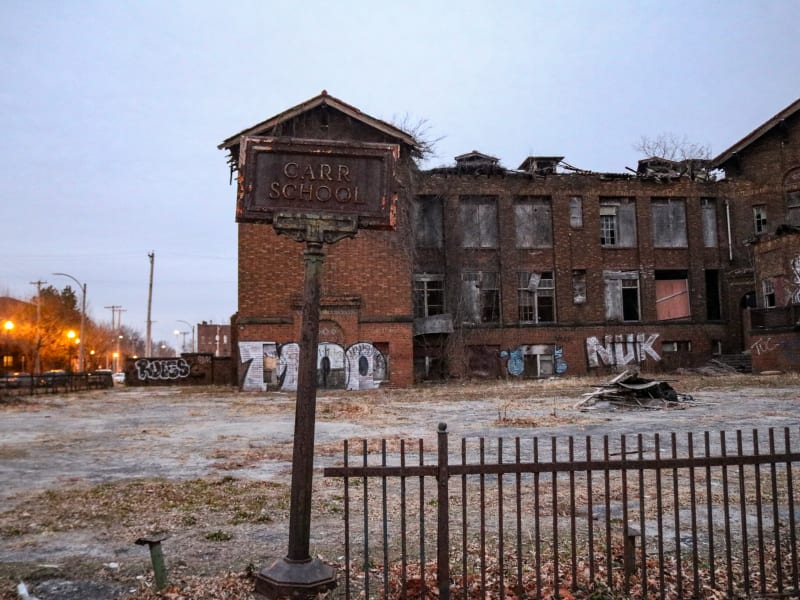
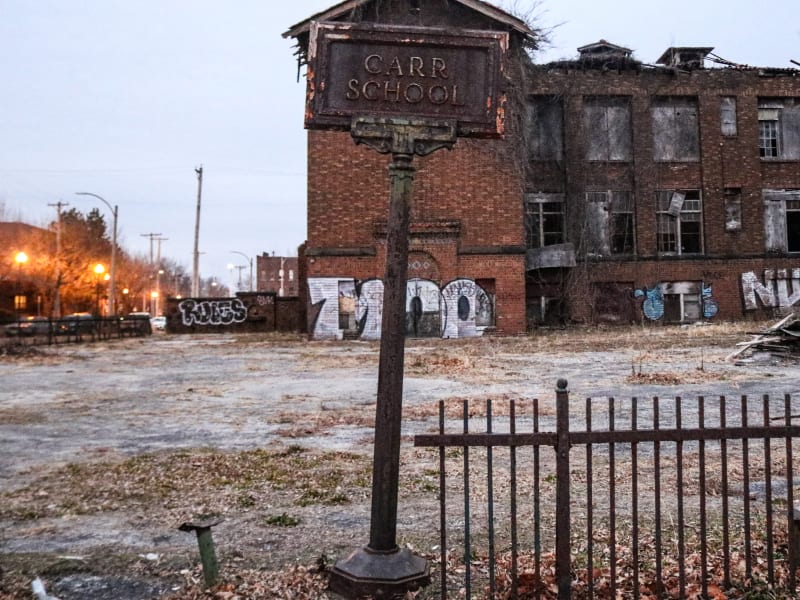
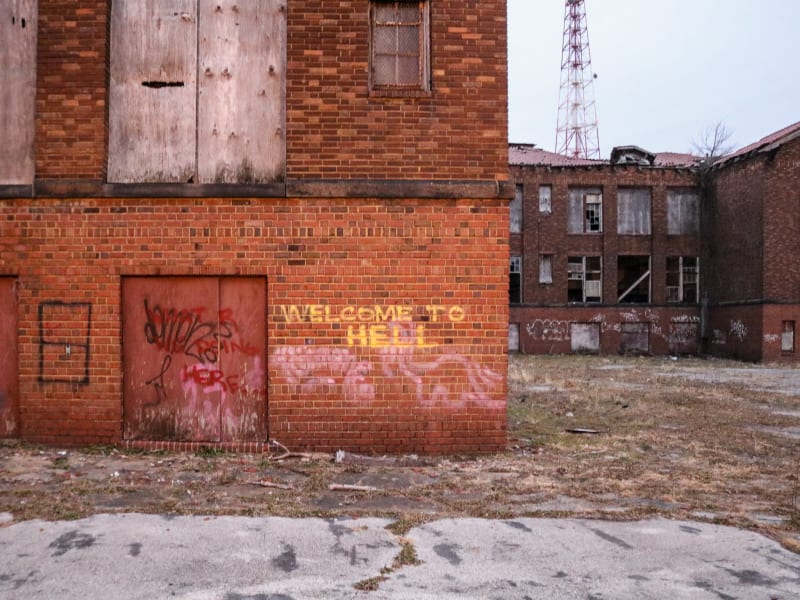
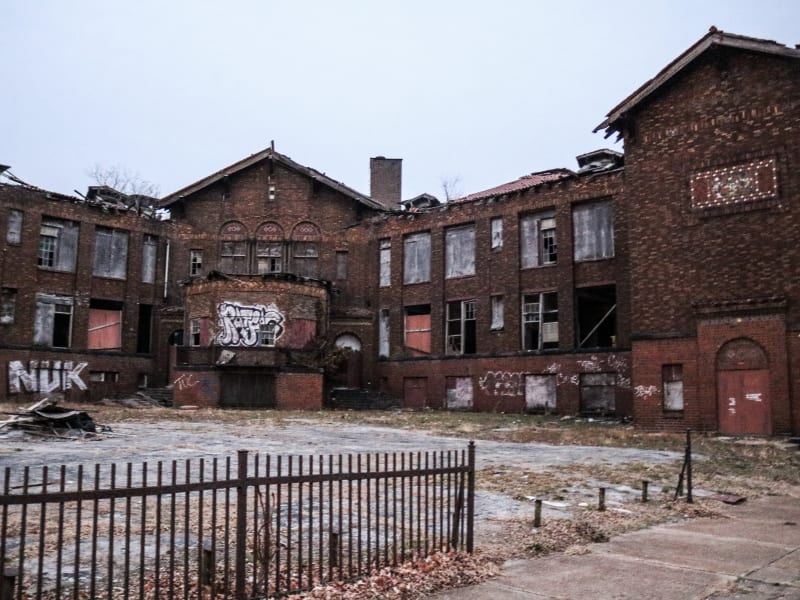
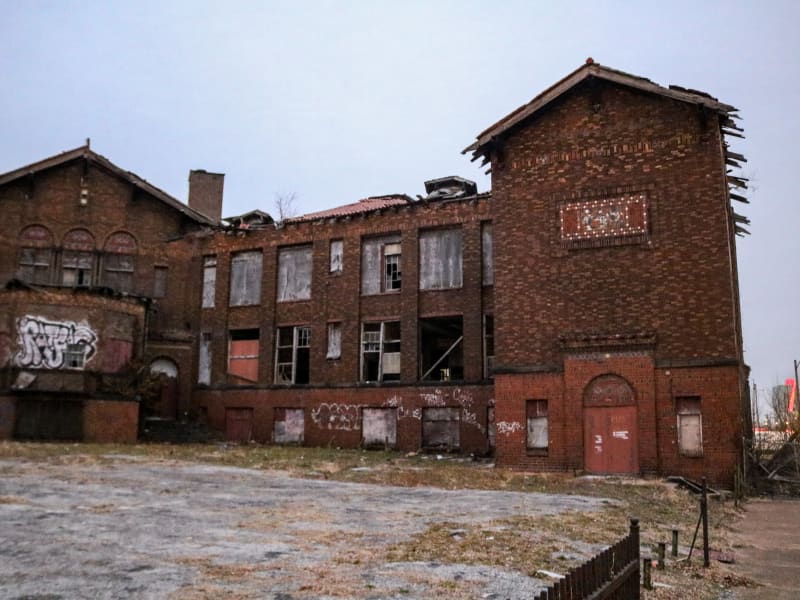
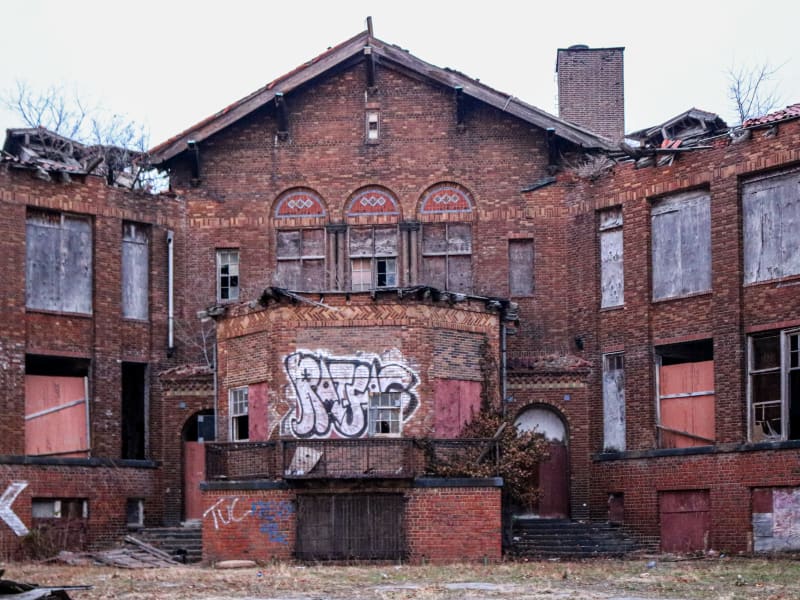
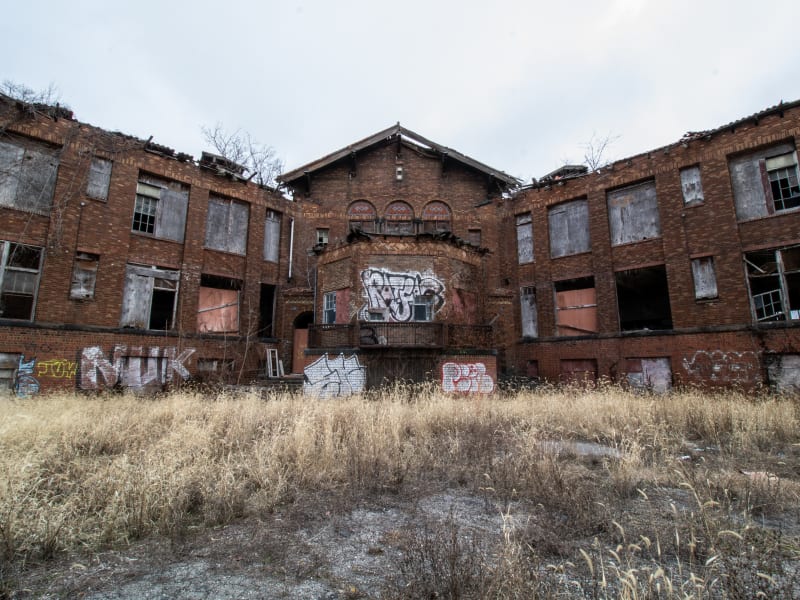
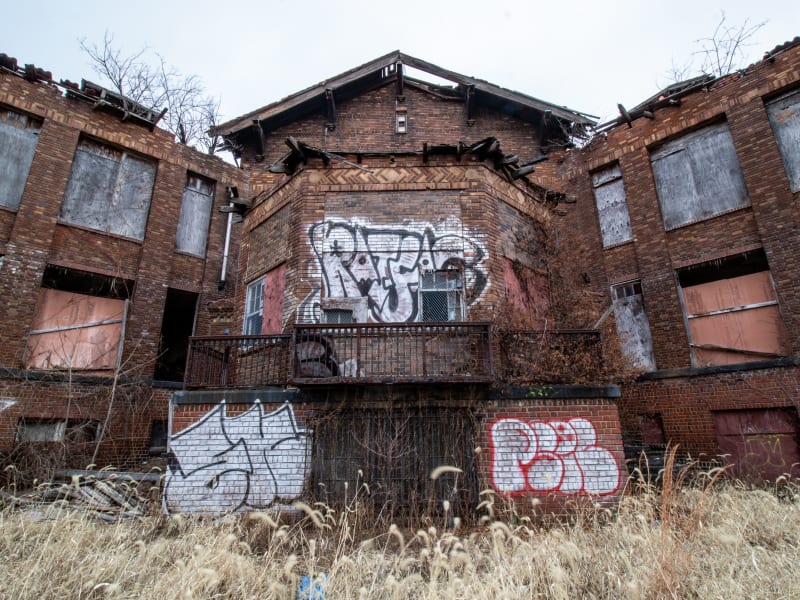
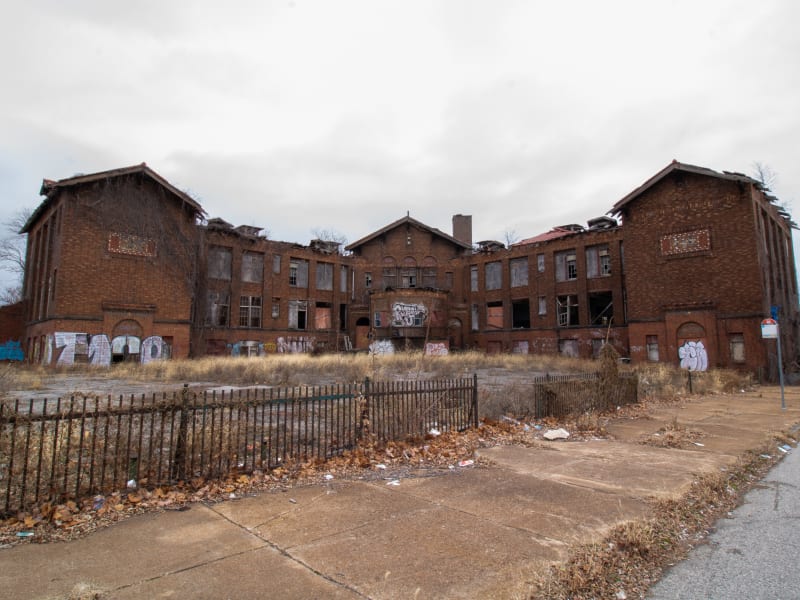
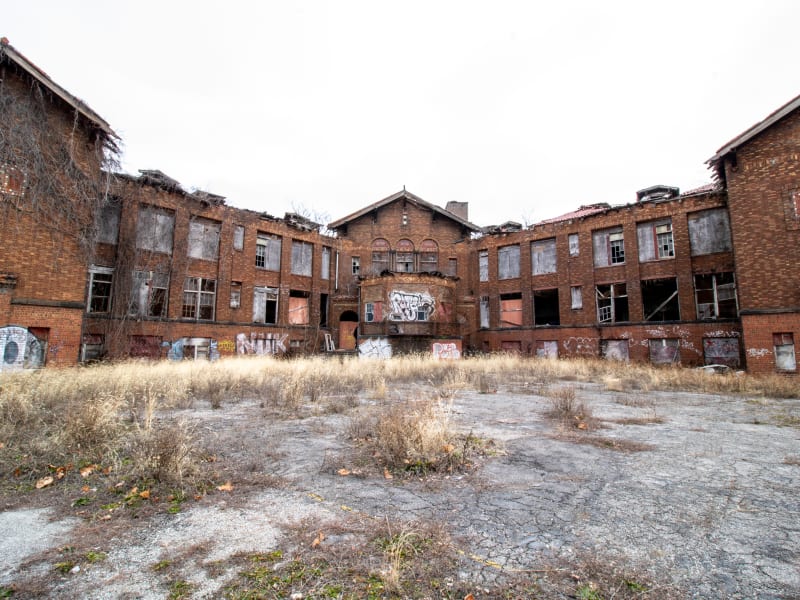
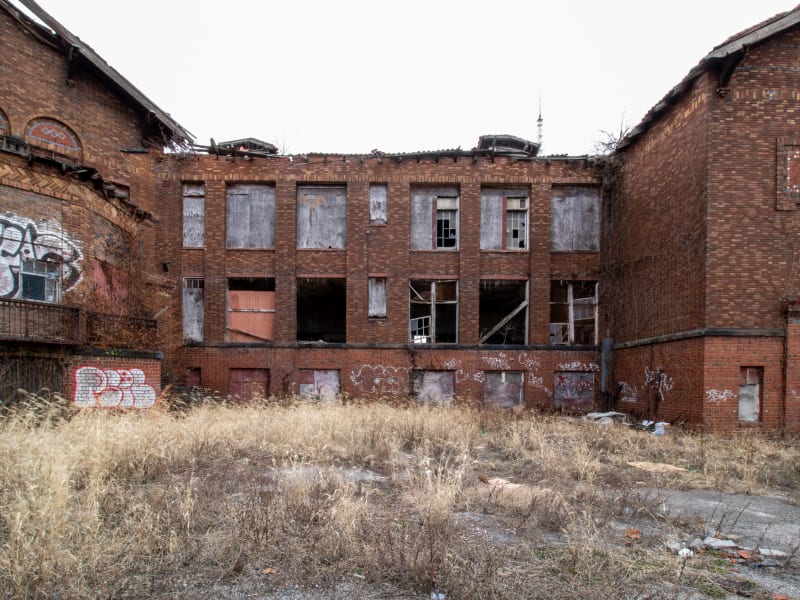
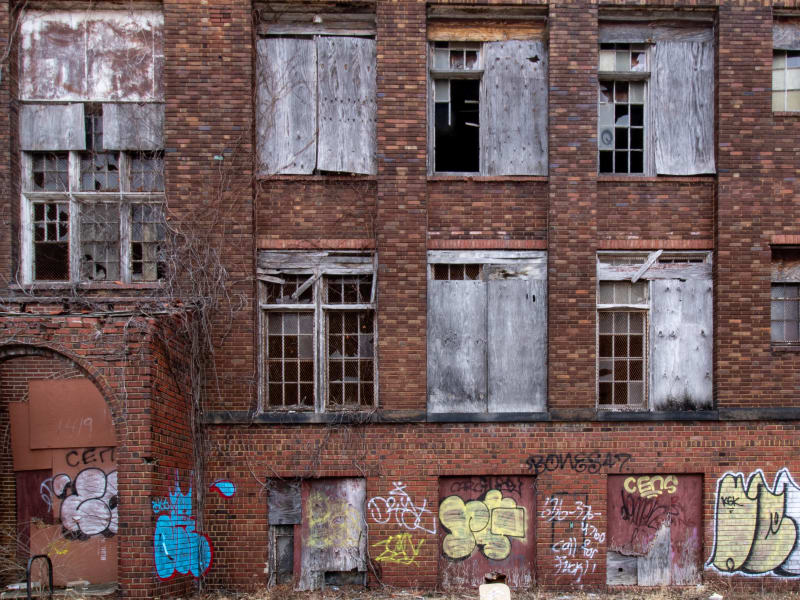
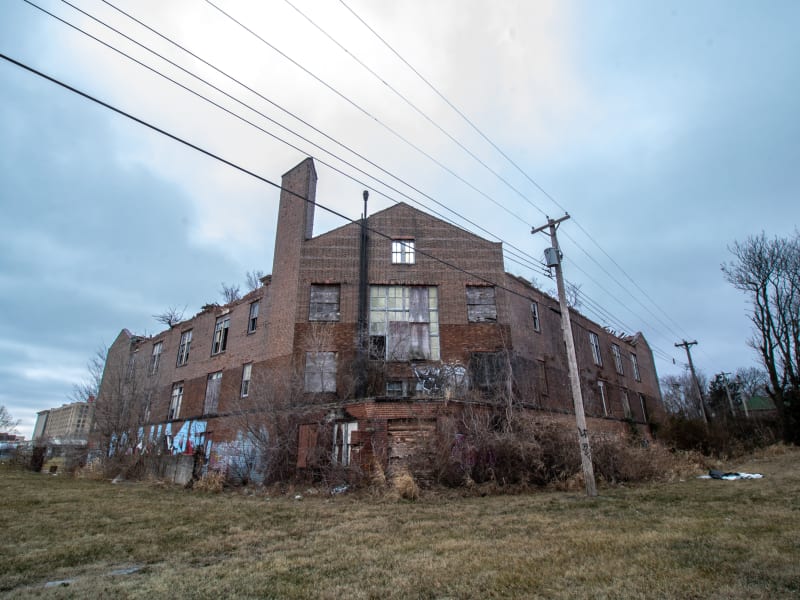
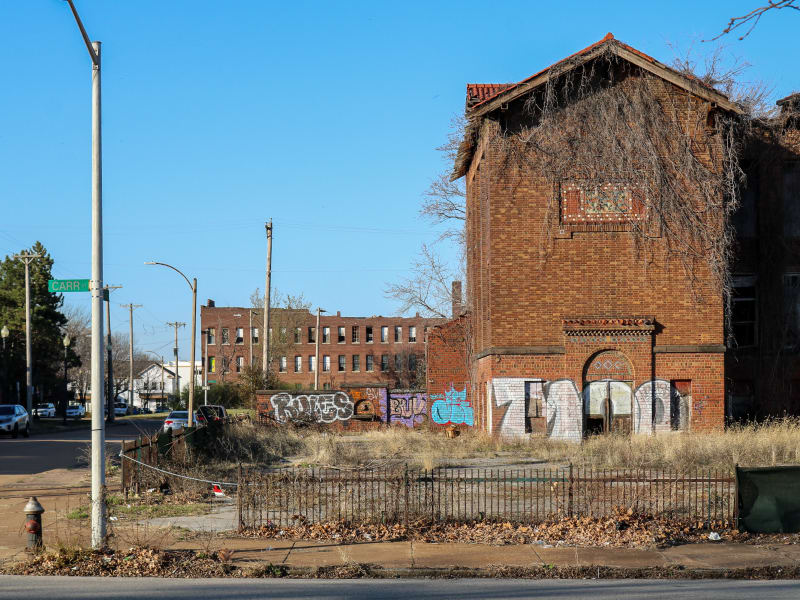
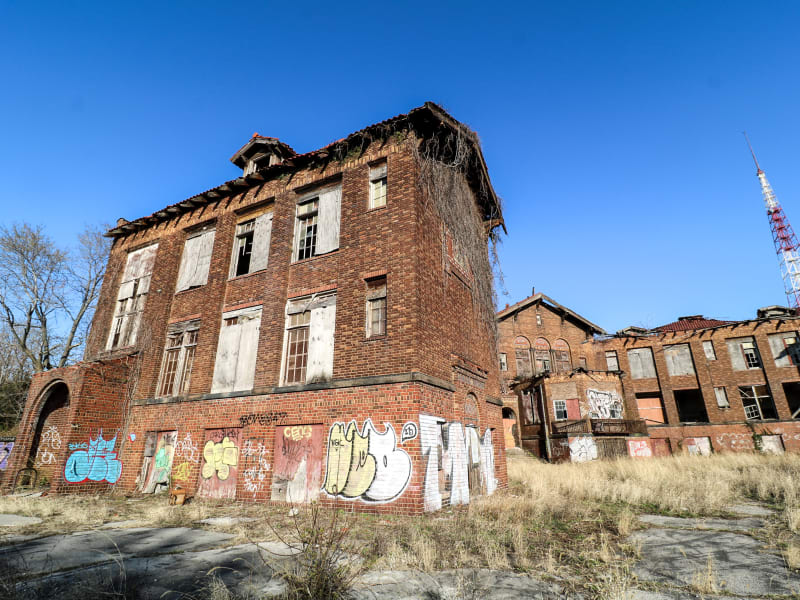
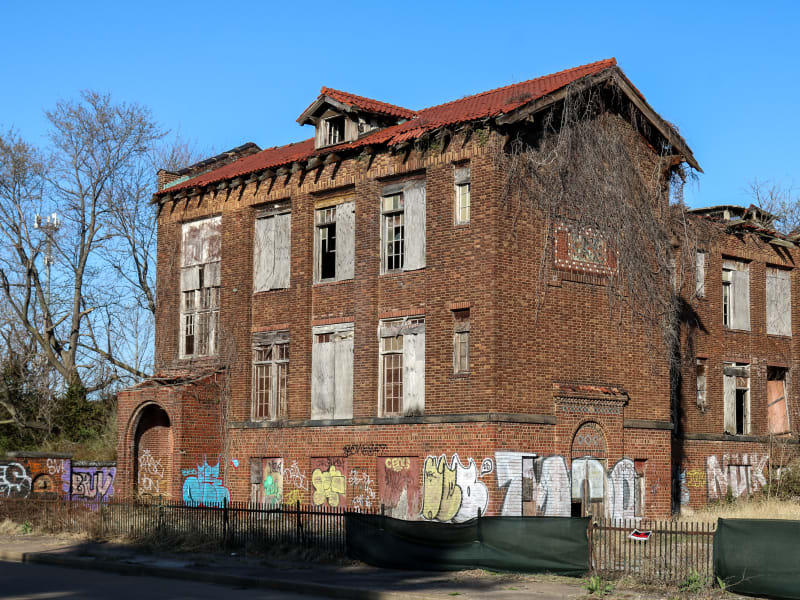
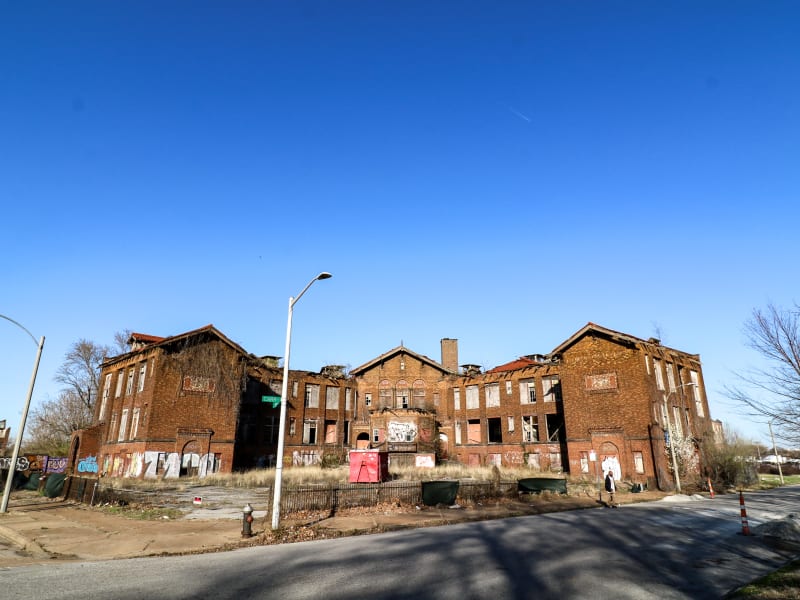
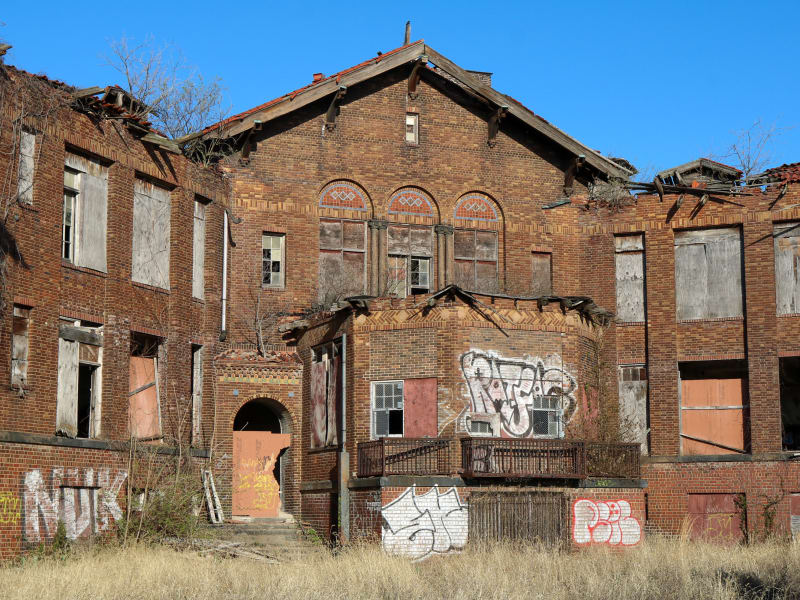
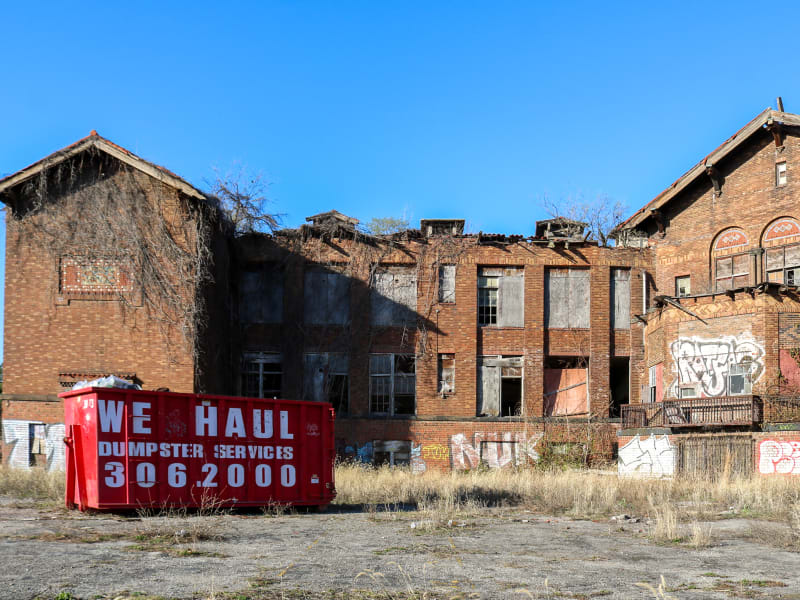
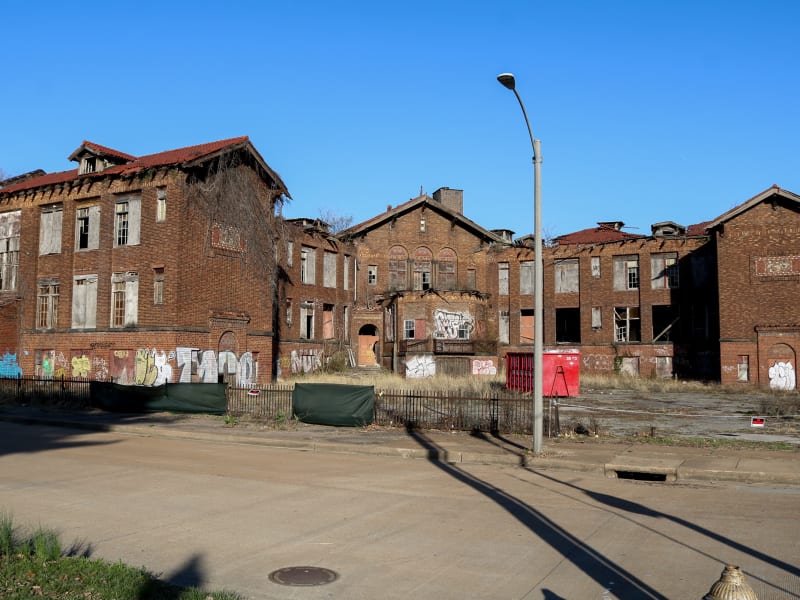
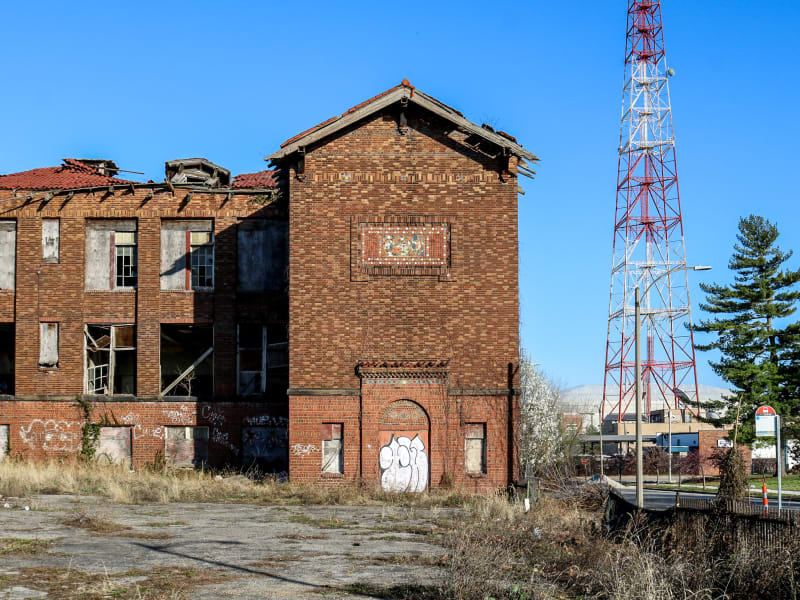
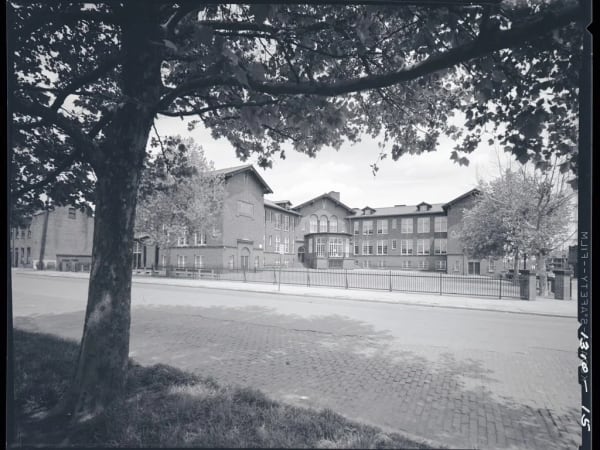
Carr School is a two-story brick Craftsman style elementary school designed by William B. Ittner in late 1908, one of only a few of his schools where the Craftsman idiom dominates. Built of fireproof concrete with variegated Flemish garden wall bond brickwork in reds, browns, and yellows under a red clay tile roof with exposed rafter tails, it is diagonally sited on a small square lot — forcing Ittner to "bend" his signature U-plan into an L that wraps the corner and opens a courtyard-like playground toward Carr Square Park. It is the only instance of this plan variation in the St. Louis Public Schools system. Polychrome tile murals of children at play, designed by Michael Lippmann, adorn the wings facing the courtyard. The building was listed on the National Register of Historic Places in December 2000.
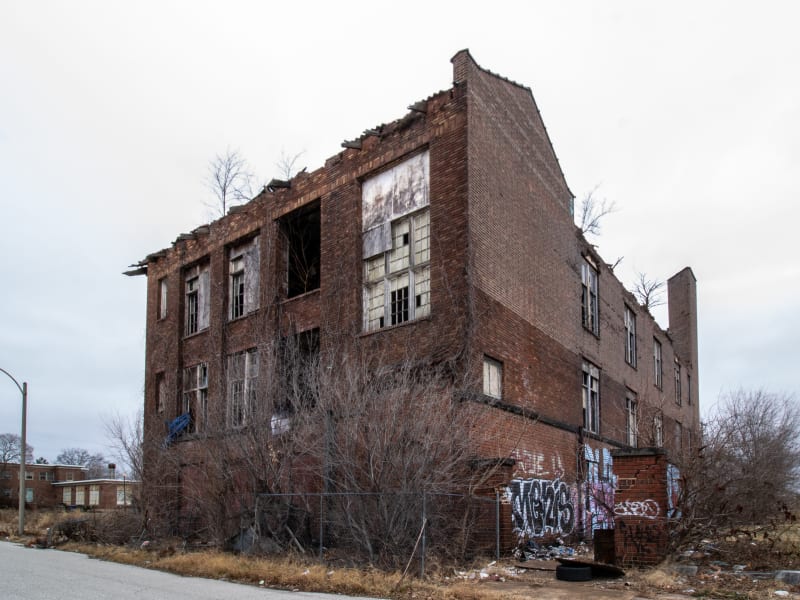
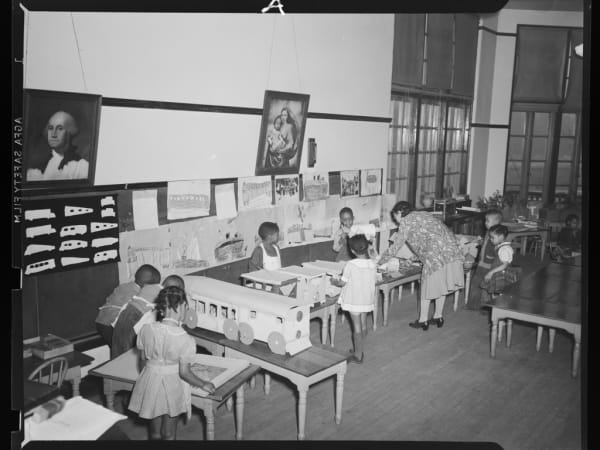
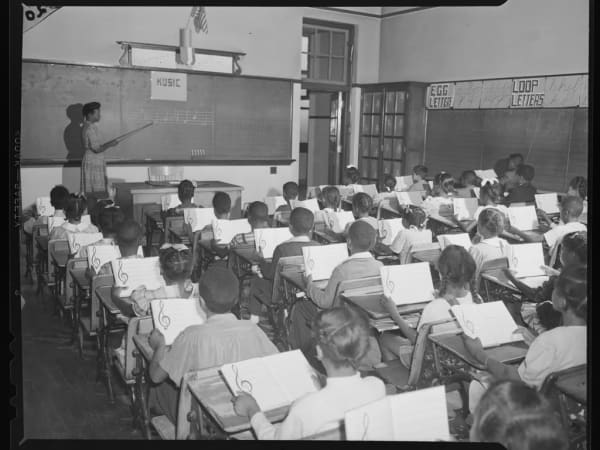
Carr School was constructed in 1908–09 on the site of an earlier Carr School built in 1885, which was demolished as the new building rose around it. Designed by William B. Ittner, Commissioner of School Buildings from 1897 to 1910, on a tight budget of $113,005, it opened in December 1909 and served the Carr Square neighborhood — a densely populated near-north-side area home to successive waves of immigrant and working-class families. The Carr Square Village public housing project, one of the city's first, was built adjacent in 1942. The school closed in the late 1970s or early 1980s (sources differ: the Landmarks Association research gives June 1978; the Preservation Research Office gives 1983) and was transferred to the Carr Square Tenant Management Corporation, which pursued renovation plans — senior housing, apartments, a charter school — for decades without success. The building was listed on the National Register of Historic Places in December 2000 under the "St. Louis, Missouri Public Schools of William B. Ittner" multiple property submission, and has appeared on Landmarks Association most-endangered lists and faced condemnation review (2009) and fire damage. It still stands, one of the only buildings surviving from the original Carr Square neighborhood, which was otherwise erased by urban renewal.