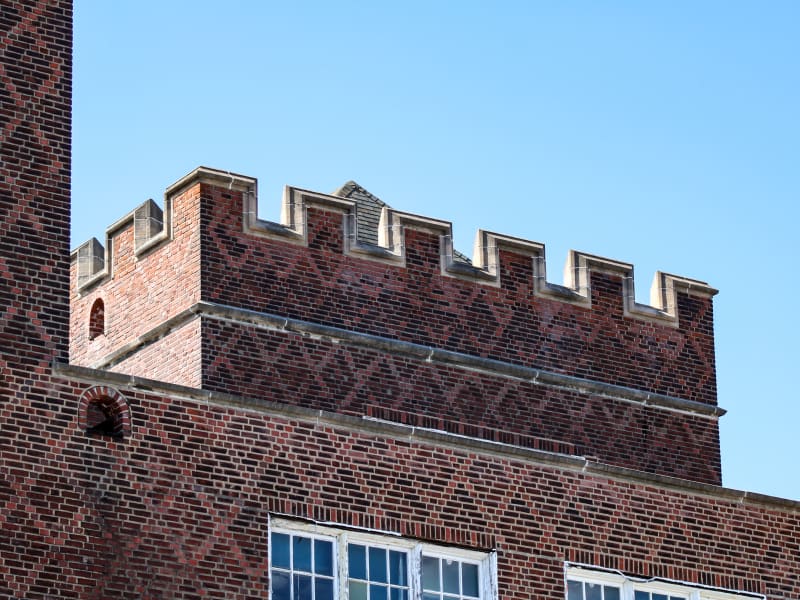
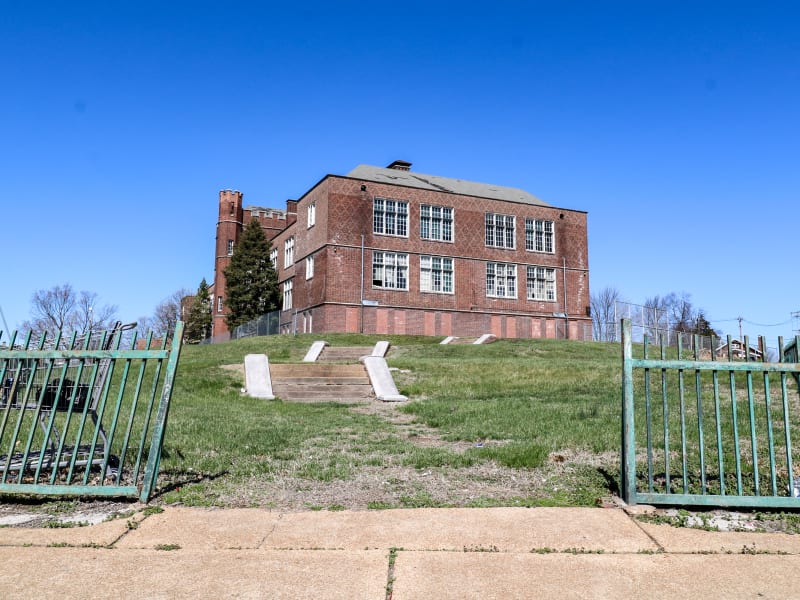
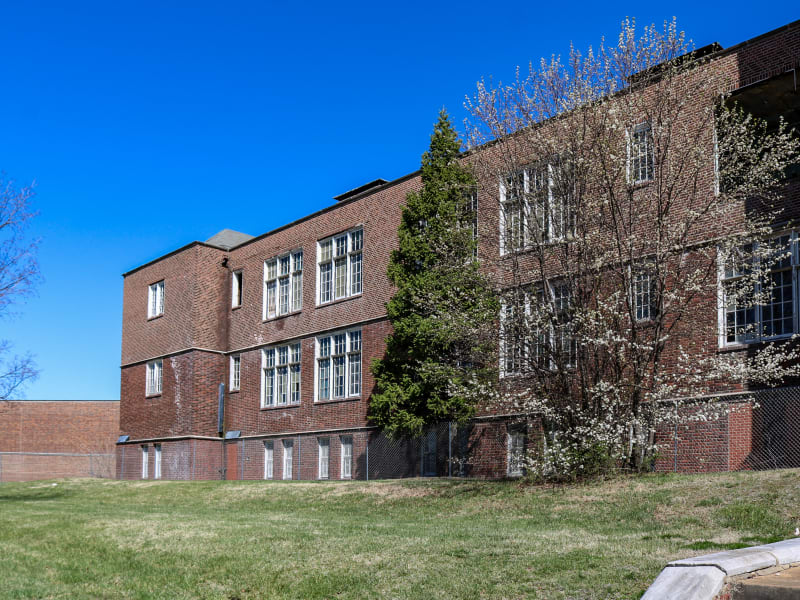
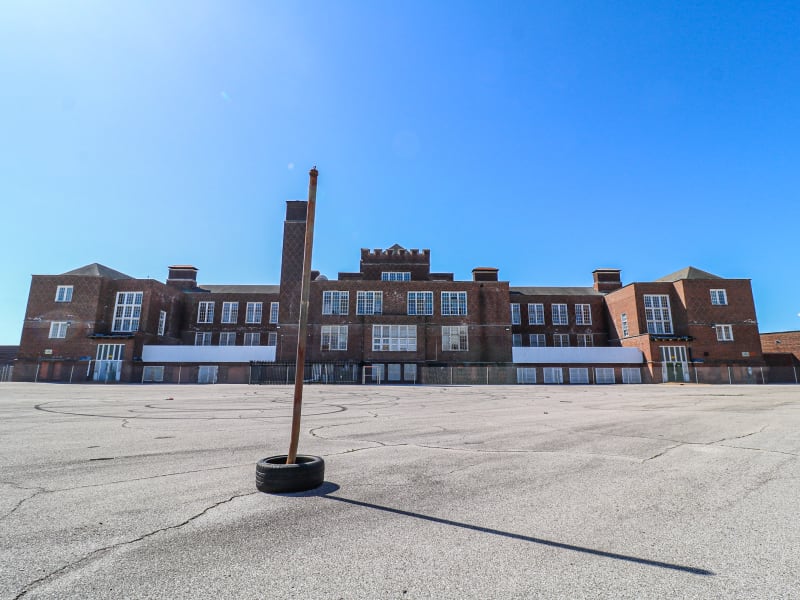
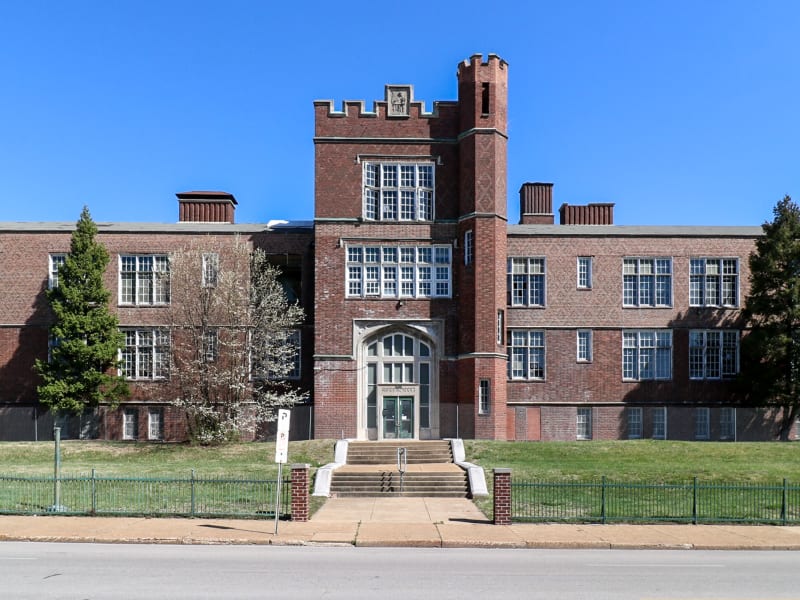
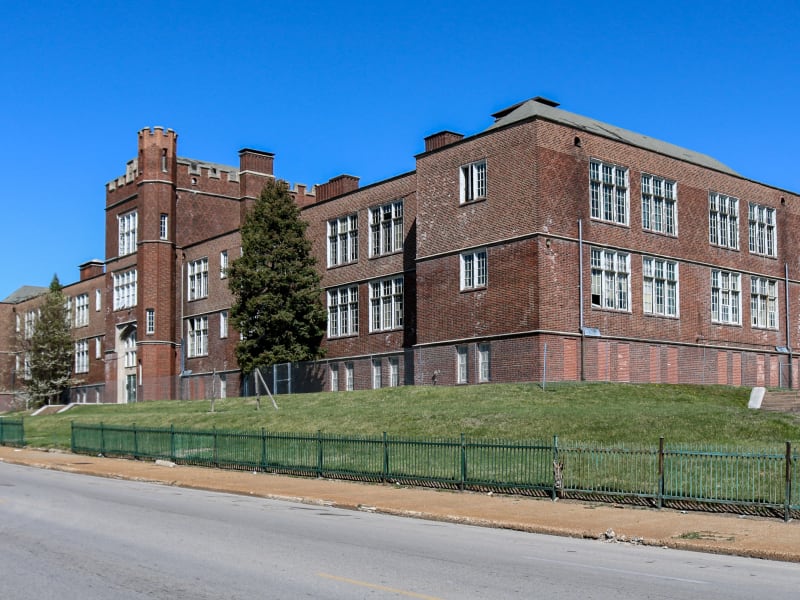
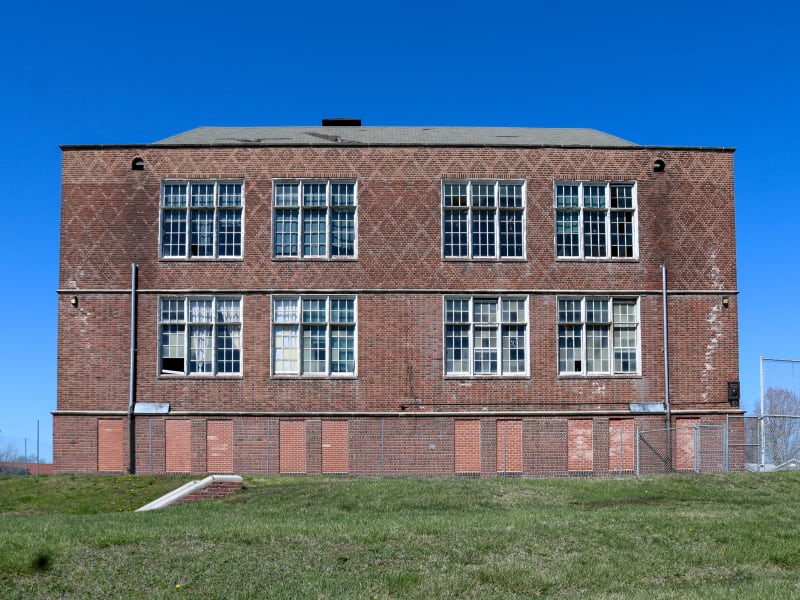
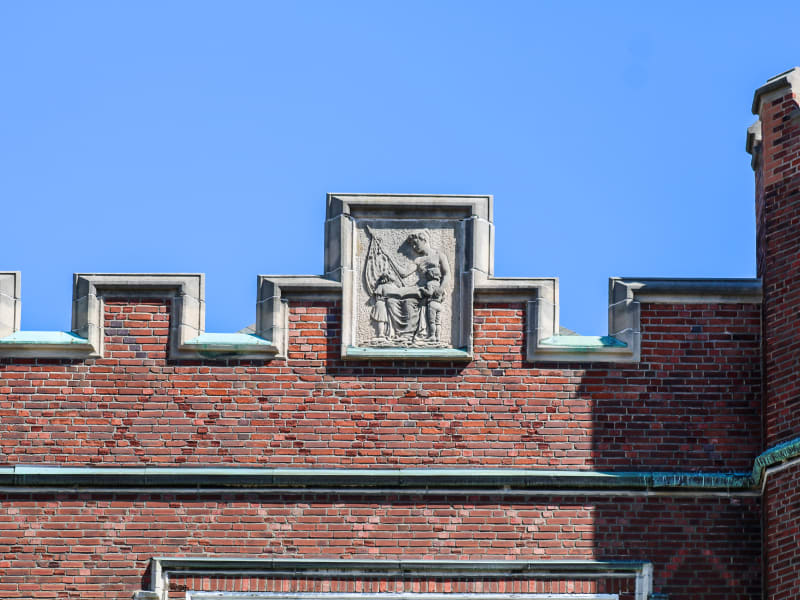
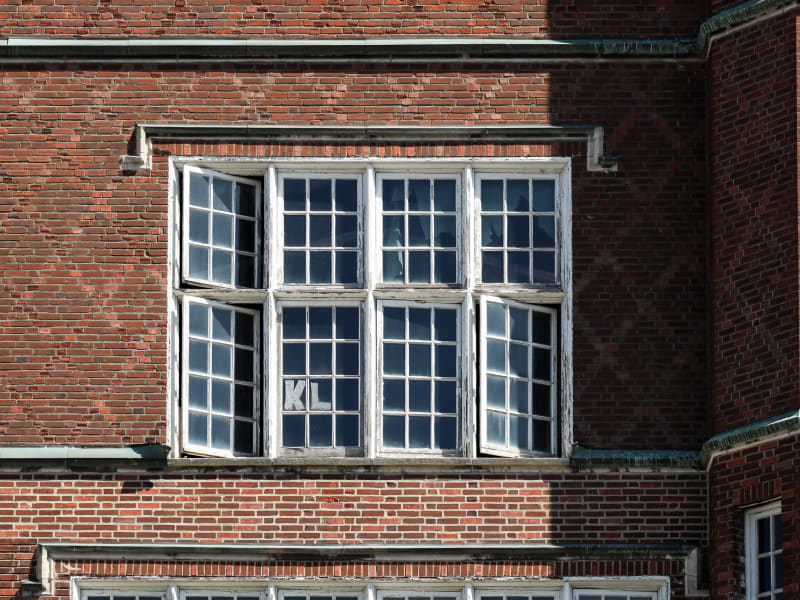
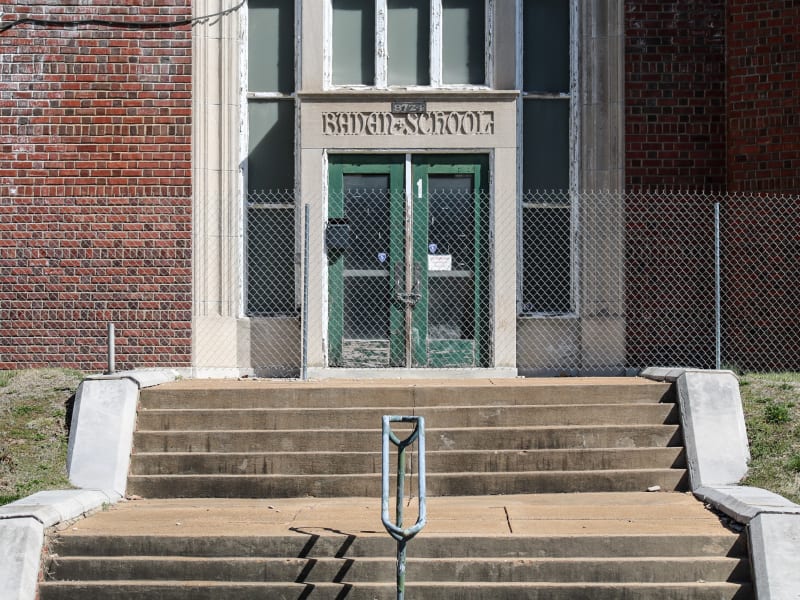
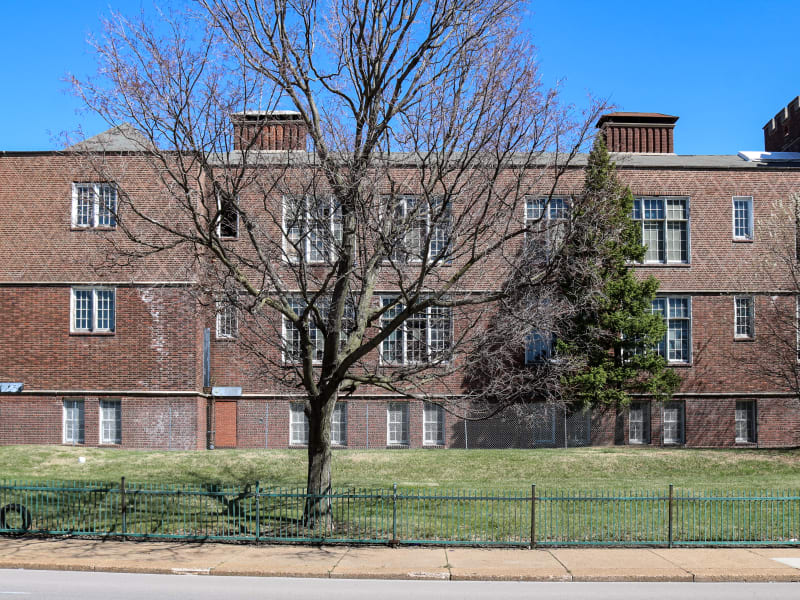
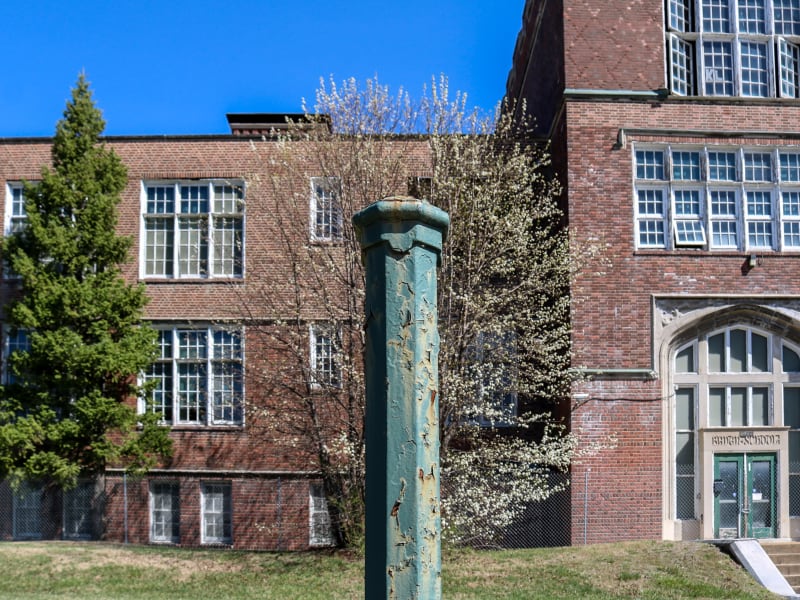
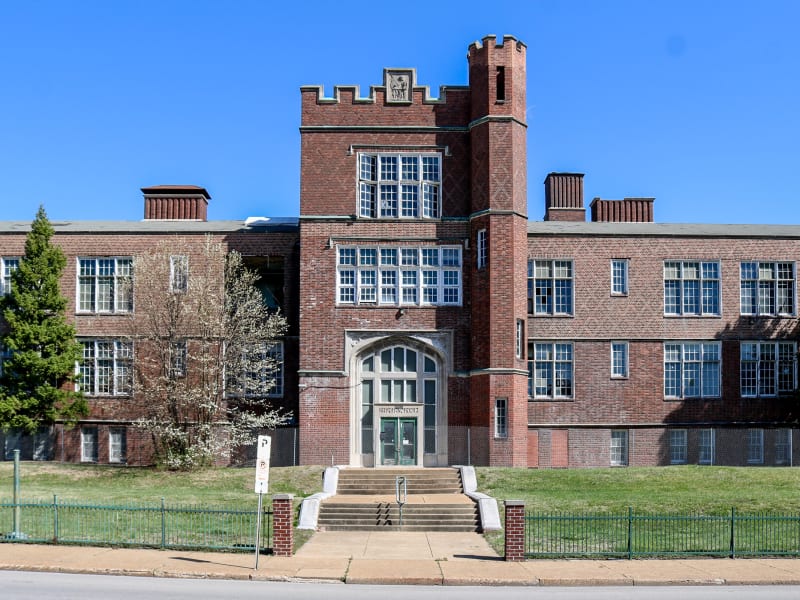
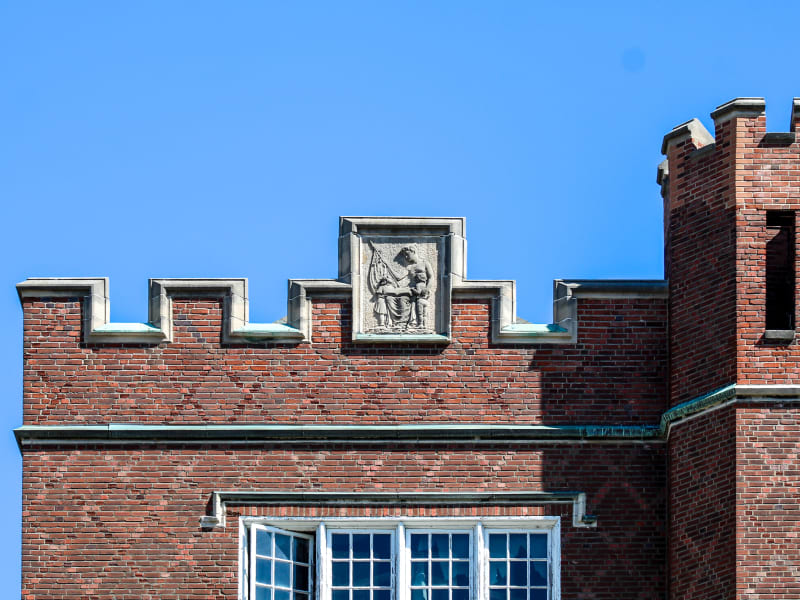
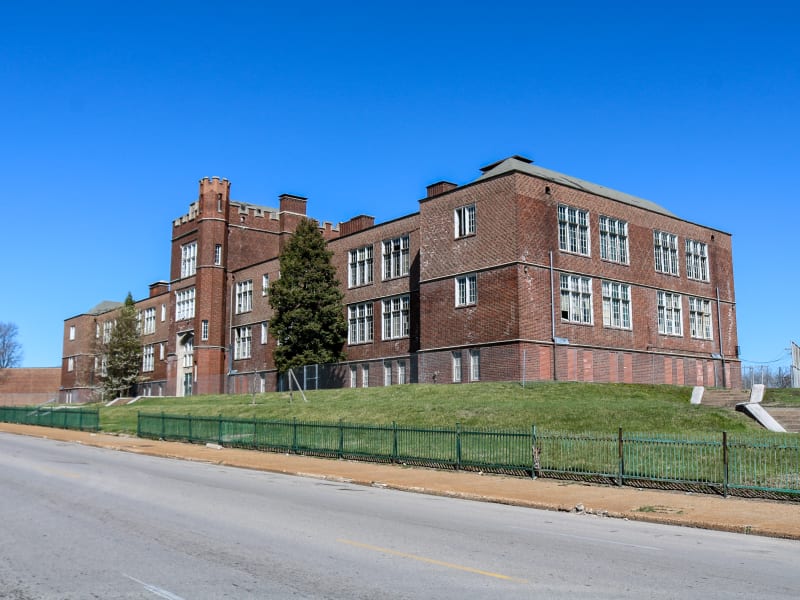
Baden School is a two-story red brick building featuring Classical Revival influences typical of early twentieth-century St. Louis public school architecture. The structure displays symmetrical massing, a raised basement level, stone trim details, and large grouped windows designed to maximize natural light in classrooms.
Baden School was constructed in 1907 to serve the educational needs of the Baden neighborhood, a community in north St. Louis that had been annexed into the city in 1876. The early twentieth century marked a period of rapid expansion for St. Louis Public Schools, as the city's growing population—swelled by industrialization and immigration—demanded new facilities. Baden, with its mix of working-class families employed in nearby manufacturing concerns and railroad operations, required a modern school building to accommodate the neighborhood's children. Throughout the early and mid-twentieth century, Baden School served generations of students from the surrounding community. Like many north St. Louis schools, it likely experienced peak enrollment during the 1940s and 1950s before demographic shifts began to reshape the area. The postwar decades brought significant population changes to Baden and neighboring communities, as residents moved to suburban areas and enrollment patterns shifted across the district. The building remains standing at its original location on Halls Ferry Road. Its continued presence reflects both the solid construction typical of St. Louis school buildings from this era and the ongoing, if transformed, role that historic neighborhood schools play in their communities.