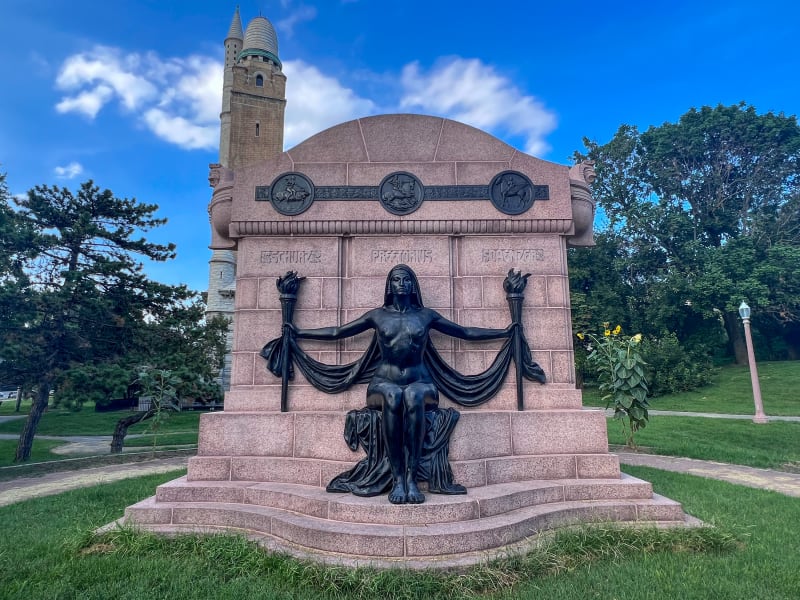
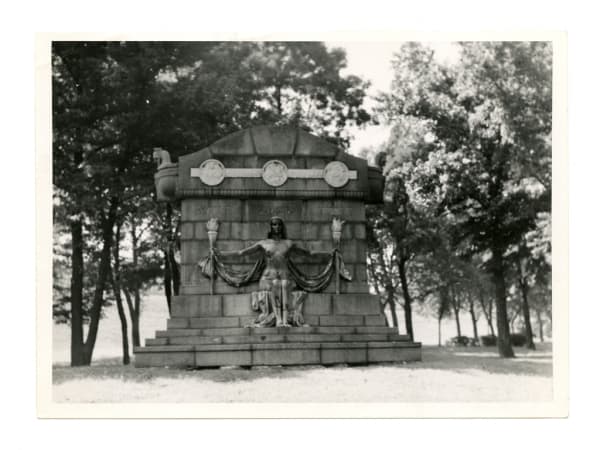
This striking bronze allegorical sculpture depicts a nude female figure holding a torch aloft in one hand and a mirror in the other, standing atop an ornate granite pedestal with classical detailing. The figure's naturalistic modeling and dignified pose embody the Beaux-Arts tradition, while the monument's elevated position within the park creates a commanding visual presence that has made it one of St. Louis's most recognized pieces of public art.
The Naked Truth, formally known as the German Memorial or Deutsche Denkmal, was erected in 1914 by St. Louis's German-American community to honor three influential German-American journalists who championed abolition and free thought in nineteenth-century America. The monument commemorates Carl Schurz, a Civil War general and U.S. Senator; Emil Preetorius, editor of the Westliche Post; and Carl Daenzer, editor of the Anzeiger des Westens. These men represented the progressive ideals of the German immigrant community that had become a powerful cultural and political force in St. Louis by the mid-1800s. The timing of the monument's dedication proved unfortunate. Just months after its unveiling in 1914, World War I erupted in Europe, and anti-German sentiment began sweeping across the United States. By 1917, when America entered the war, German culture and language were being actively suppressed throughout St. Louis and the nation. The monument's original German name fell out of use, and the sculpture became known by the English translation of its central figure's symbolic meaning—The Naked Truth—representing the unadorned honesty these journalists pursued in their work. The monument has stood in Compton Hill Reservoir Park for over a century, surviving periods of neglect and vandalism that affected many of the city's public sculptures. It remains a significant reminder of the German immigrant community's contributions to St. Louis civic life and the abolitionist movement. Today, the statue continues to serve as both a neighborhood landmark within the park and a testament to the once-thriving German-American press that helped shape public opinion in nineteenth-century St. Louis.