The German House
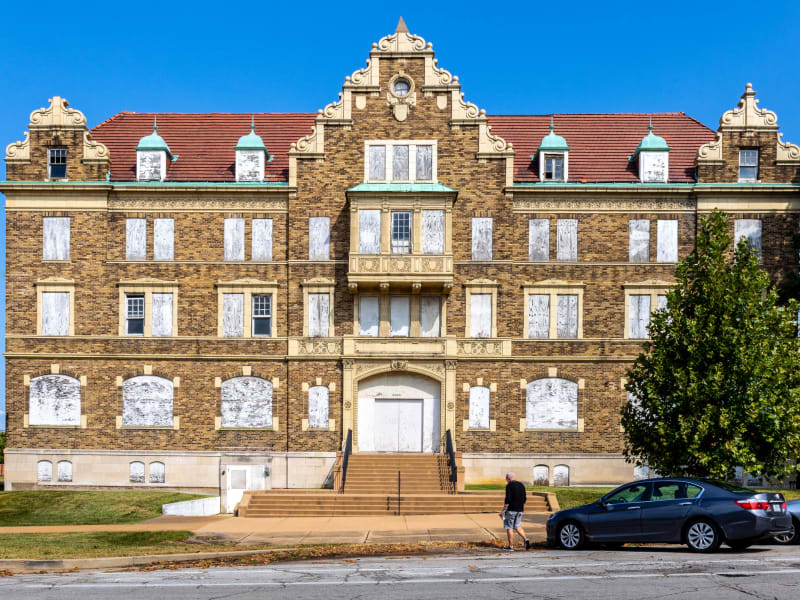
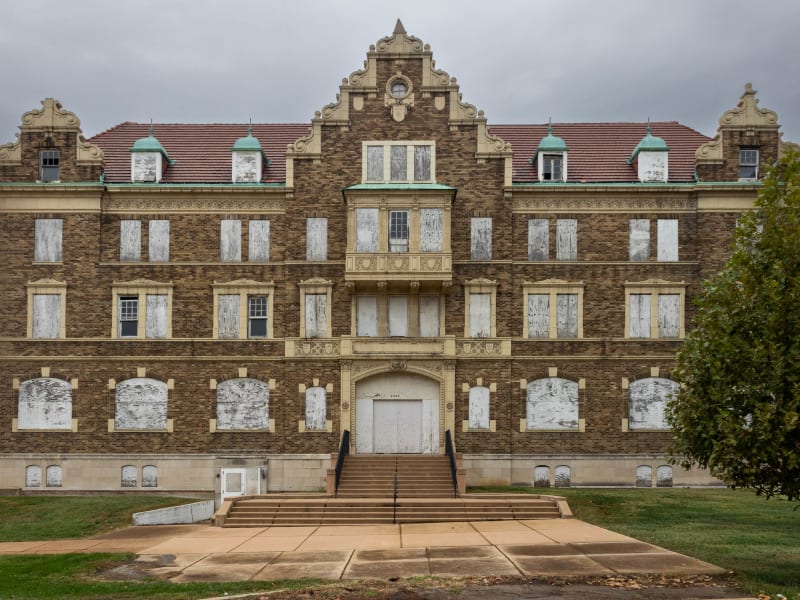
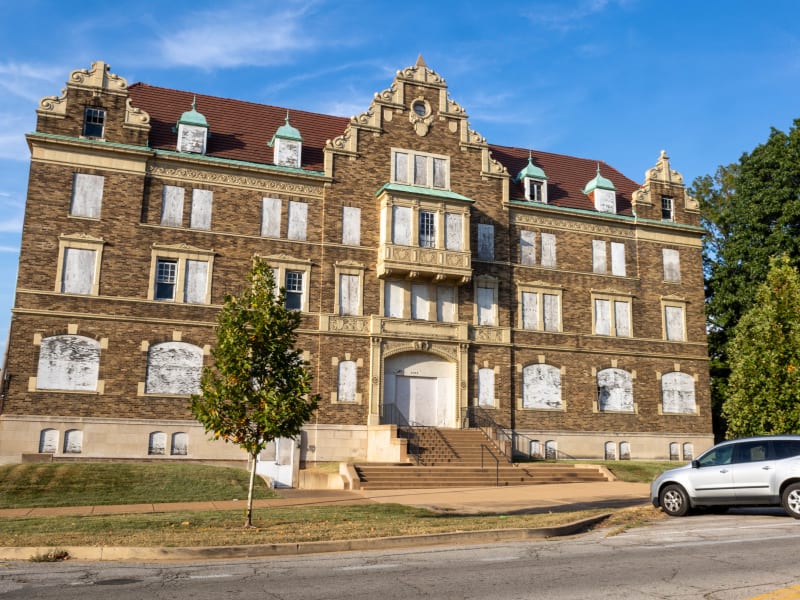
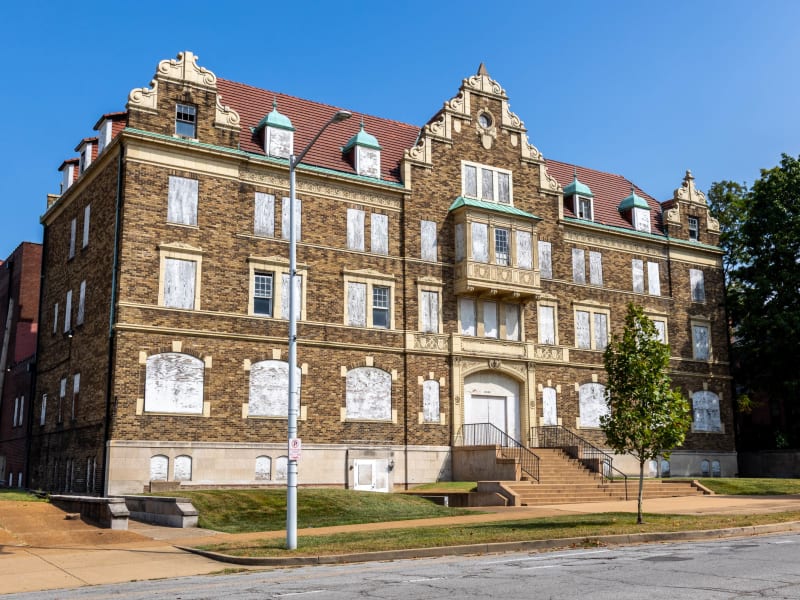
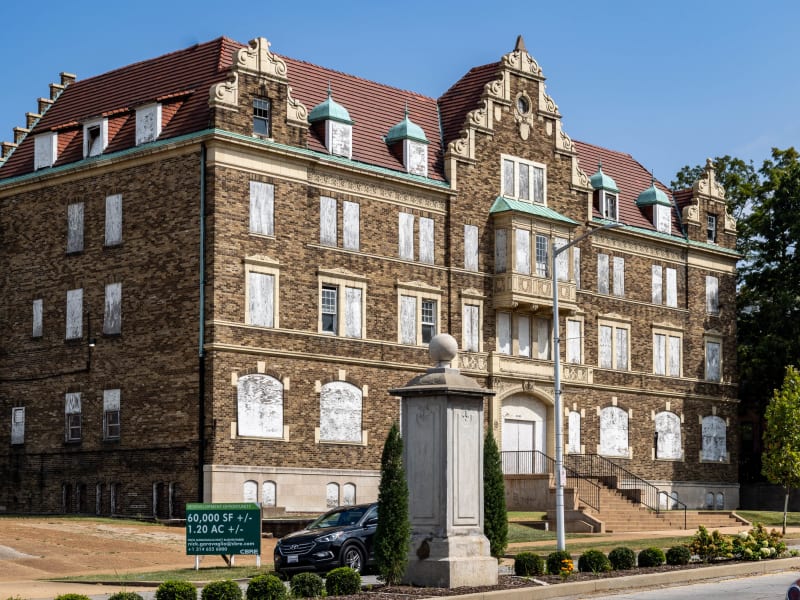
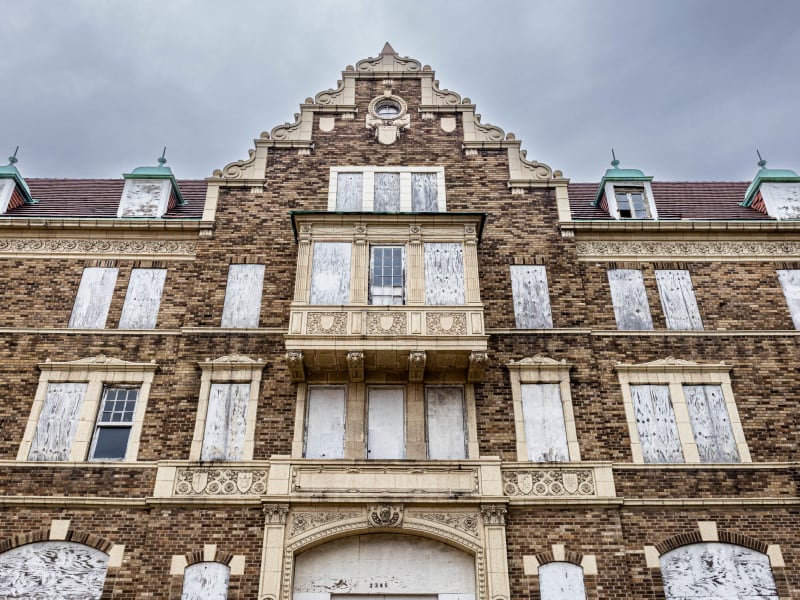
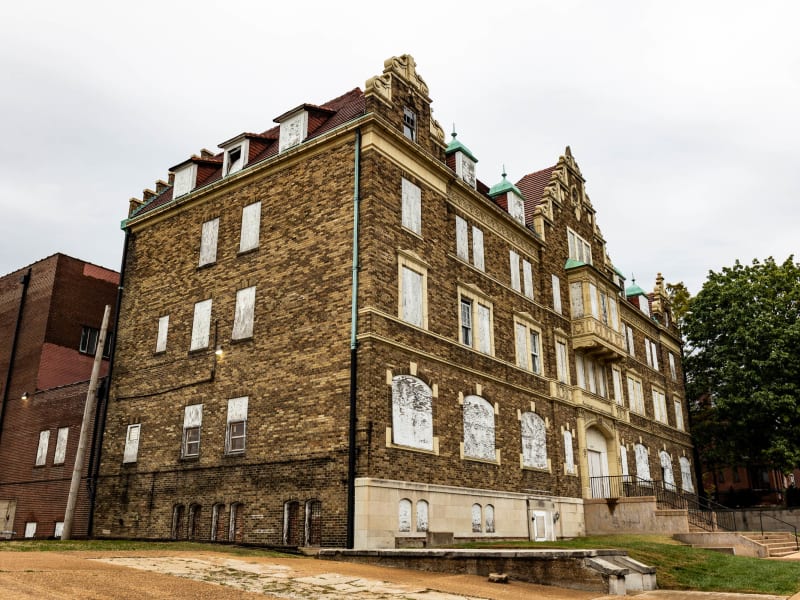
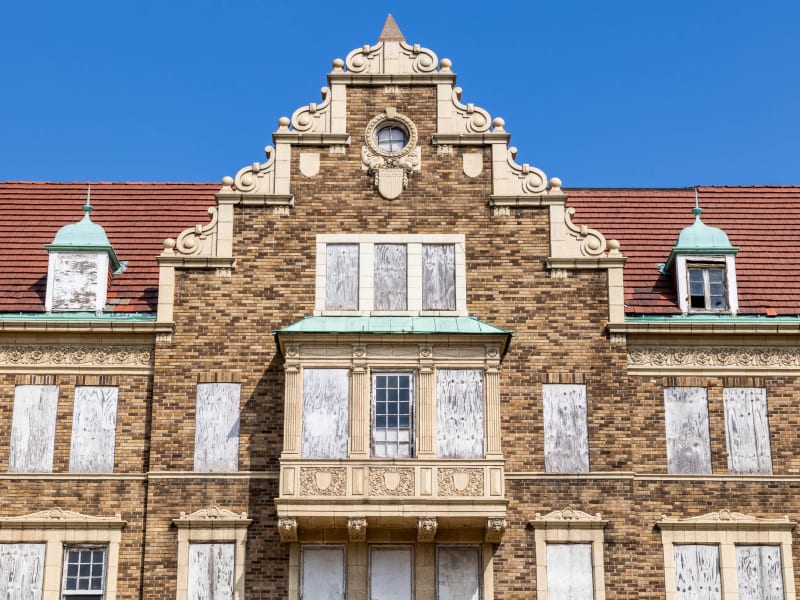
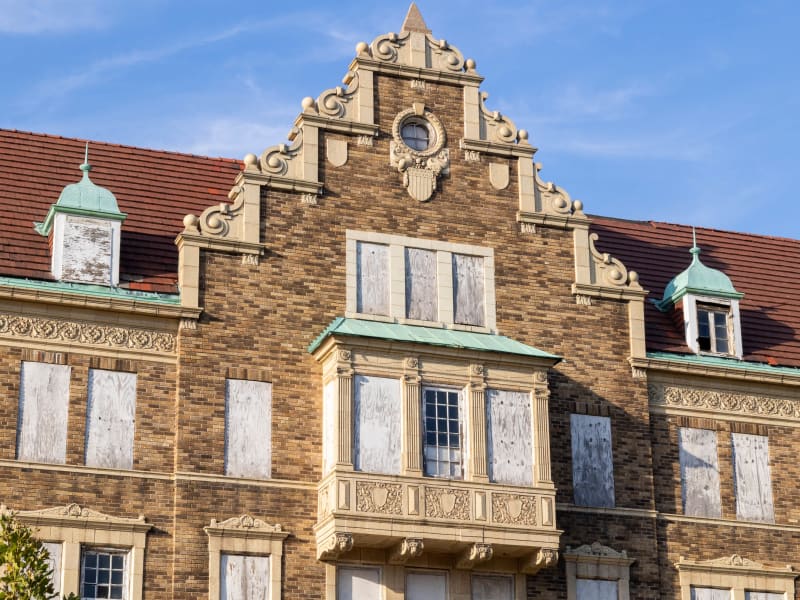
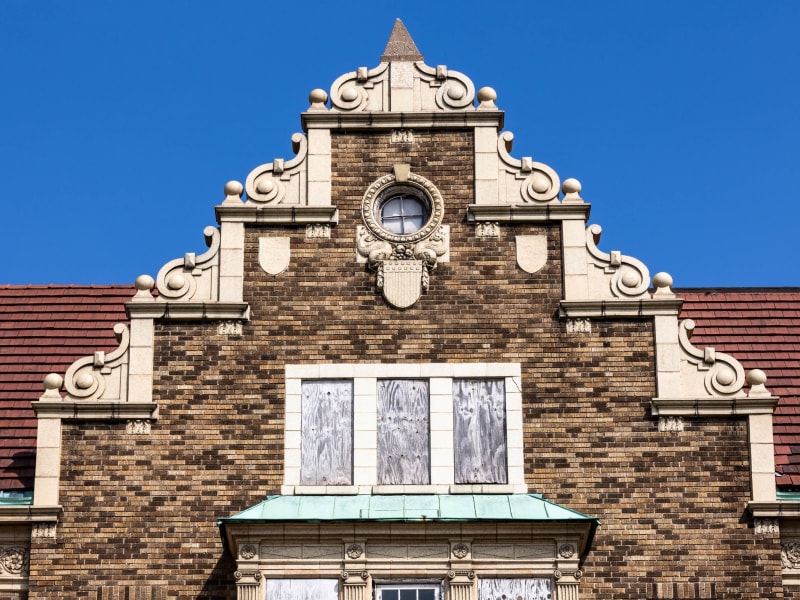
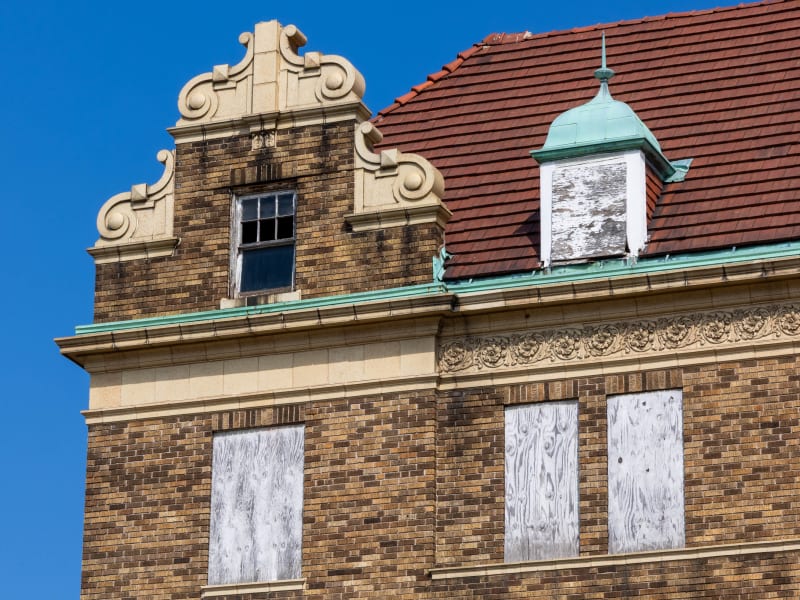
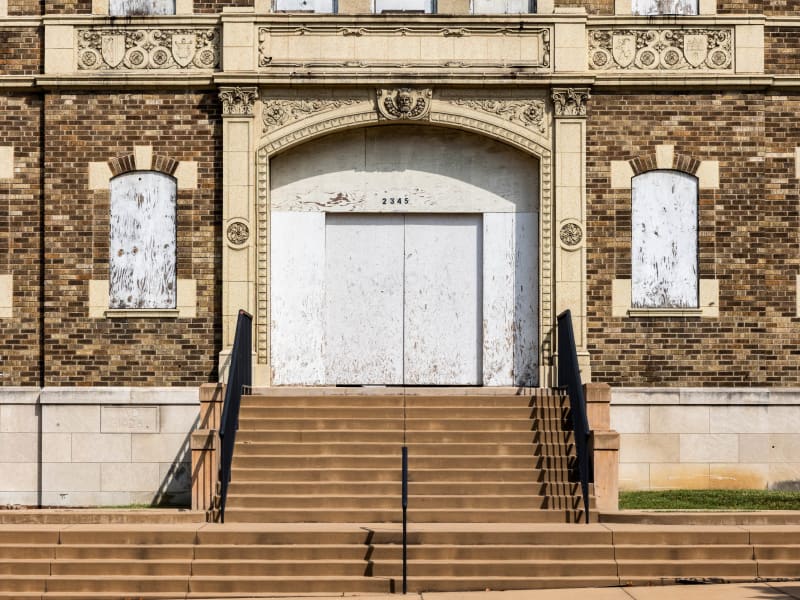
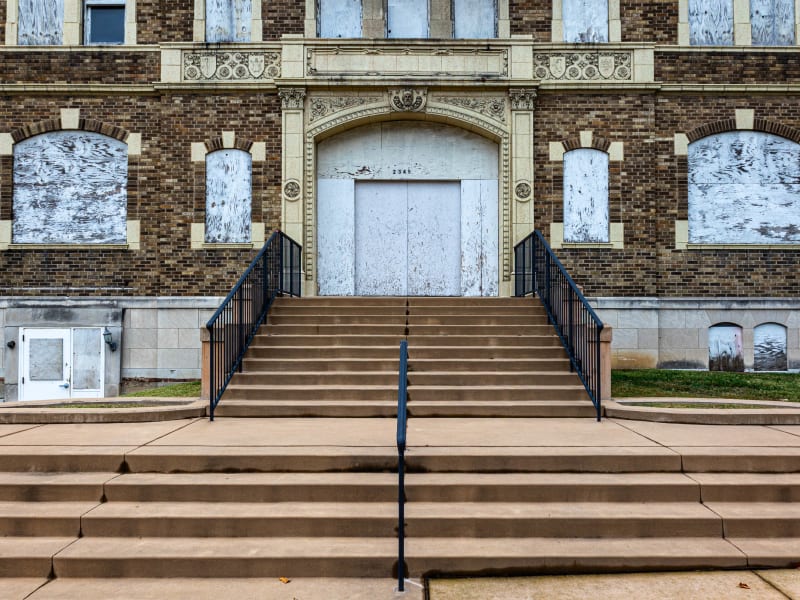
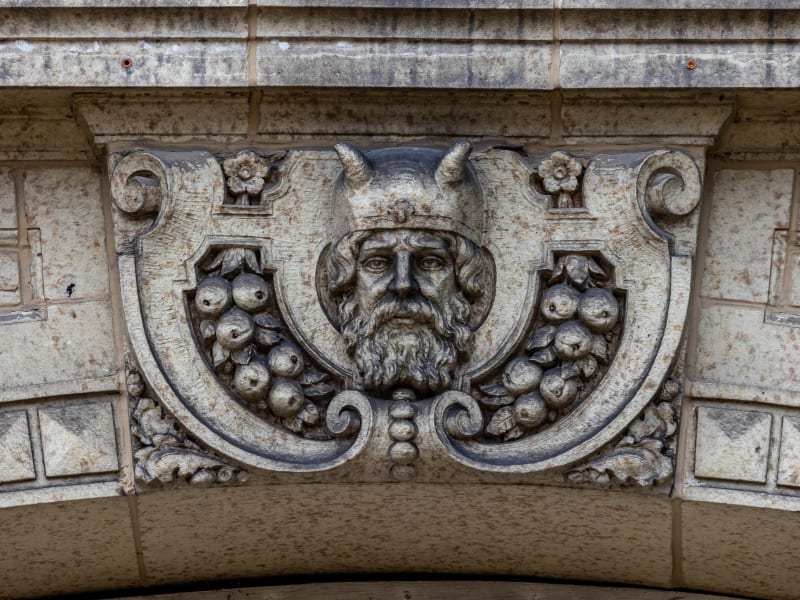
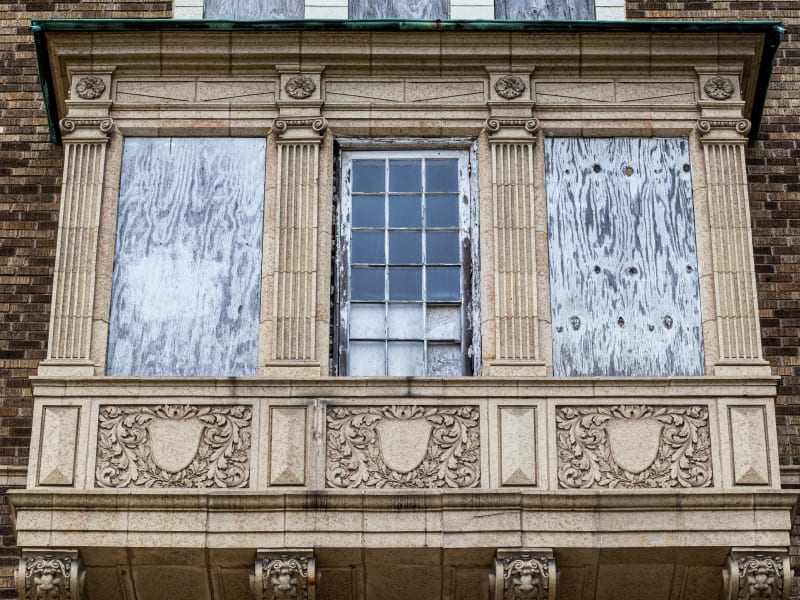
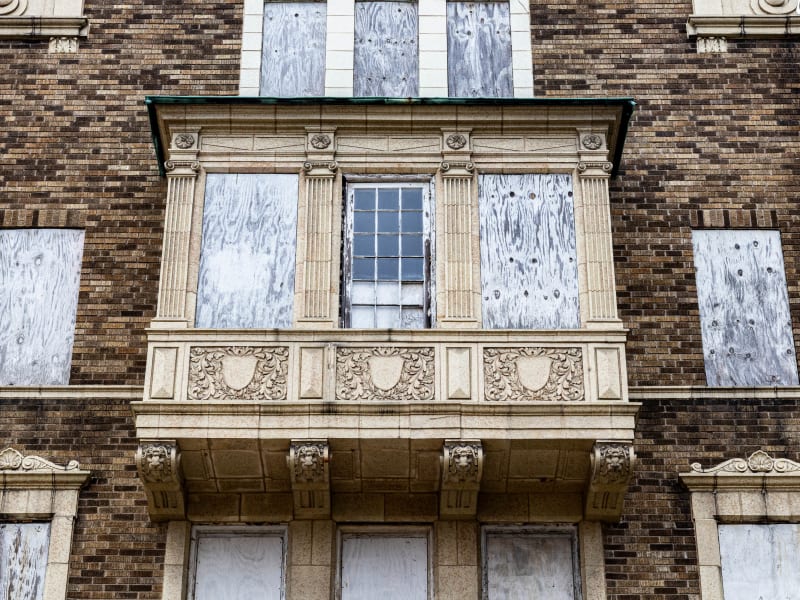
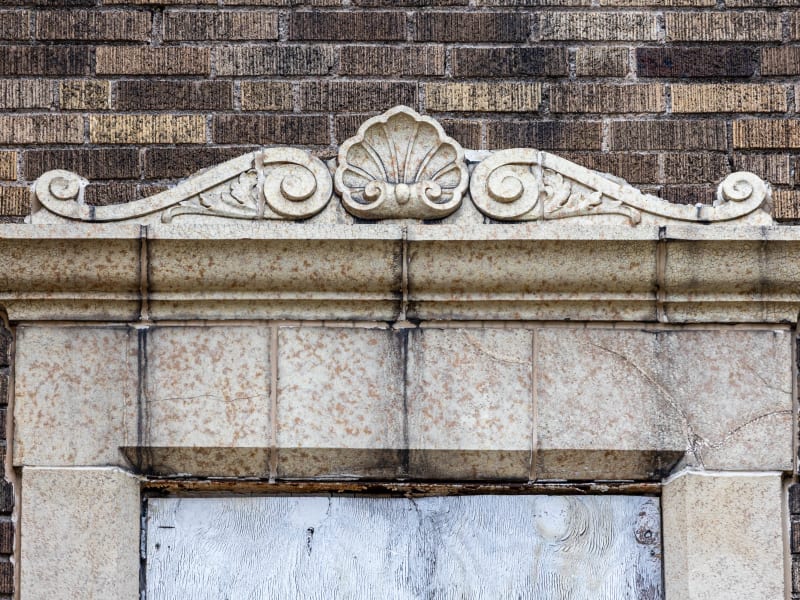
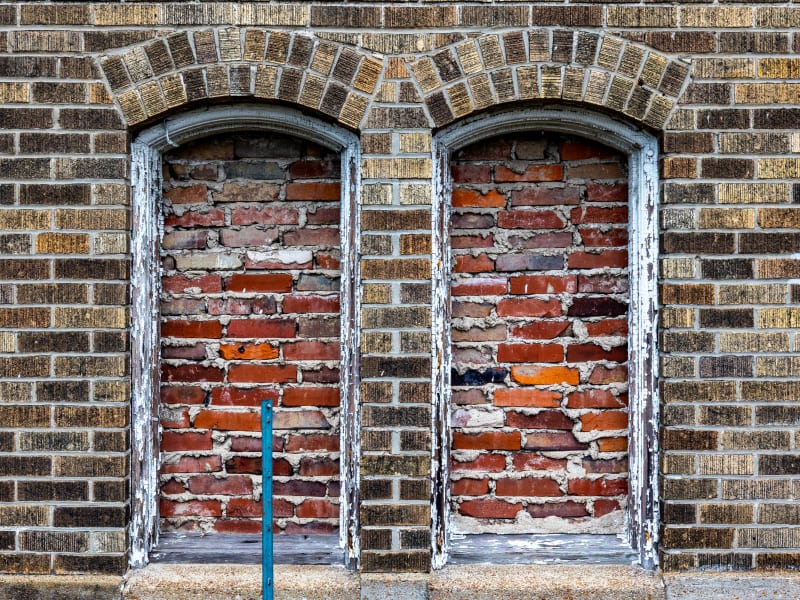
A three-story building of mottled tan-and-brown tapestry brick trimmed in cream terra cotta, in a Flemish-Renaissance manner. Its center rises to a tall curvilinear gable — scrolled sides, ball finials, and an obelisk peak — framing an oval oculus set in a cartouche of paired dolphins above an American shield. Below, a two-story oriel projects on lion-mask corbels, its windows divided by fluted Ionic colonnettes over a balustrade of swagged foliate shield panels beneath a copper hood. Scrolled end gables echo the center, and a steep red-tile hipped roof carries copper-domed dormers. A carved terra-cotta stringcourse of heraldic shields bands the facade above a round-arched, heraldry-flanked entrance.
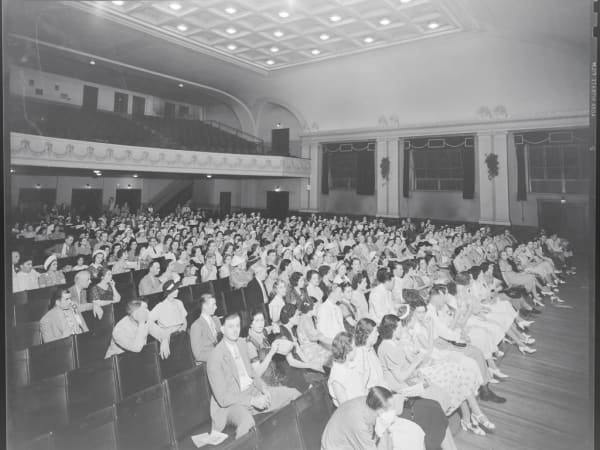
Das Deutsche Haus — the German House — was built by St. Louis's German-American community as a shared cultural center, funded by roughly a hundred German organizations that coordinated their efforts. Its cornerstone was laid in September 1928 and the building was dedicated in September 1929. Behind the facade were a theater-auditorium, a restaurant and rathskeller, banquet halls, meeting rooms, a billiard room, and bowling alleys, and by 1932 more than forty German societies met there regularly, among them the German Theater Society, the Concordia Gymnastic Society, and the United Male Singing Society. Coats of arms of Dresden, Munich, Berlin, and Hamburg ornament the front. As anti-German feeling rose around the Second World War, the building was renamed the St. Louis House; its German theater had suspended operations in 1932, and in 1937 the hall barred both pro-Nazi and anti-Nazi groups from meeting. The Church of Scientology bought the building in 2007 for $1.9 million and began restoring it in 2010.