Stowe Teachers College (1938)
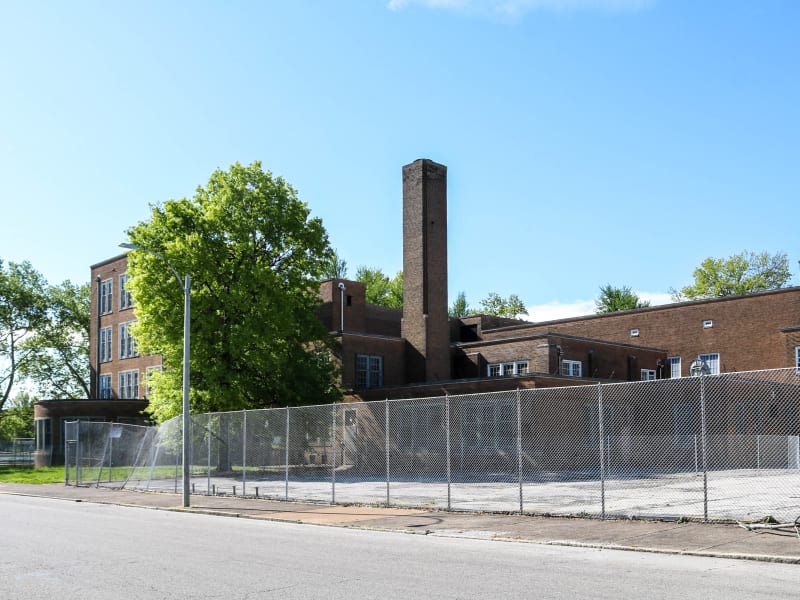
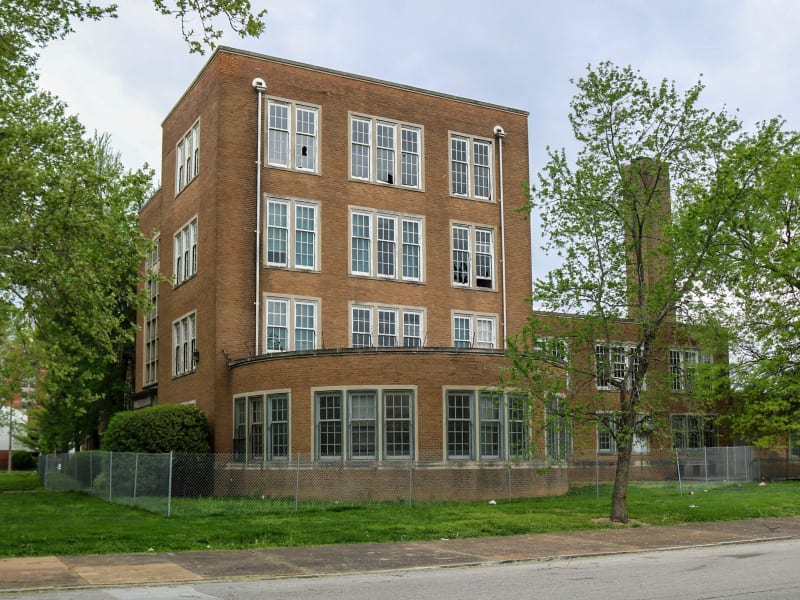
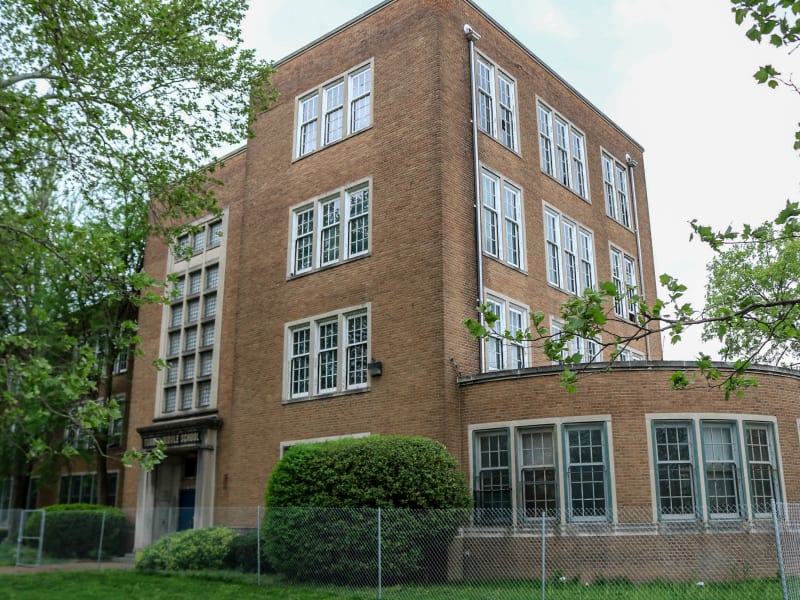
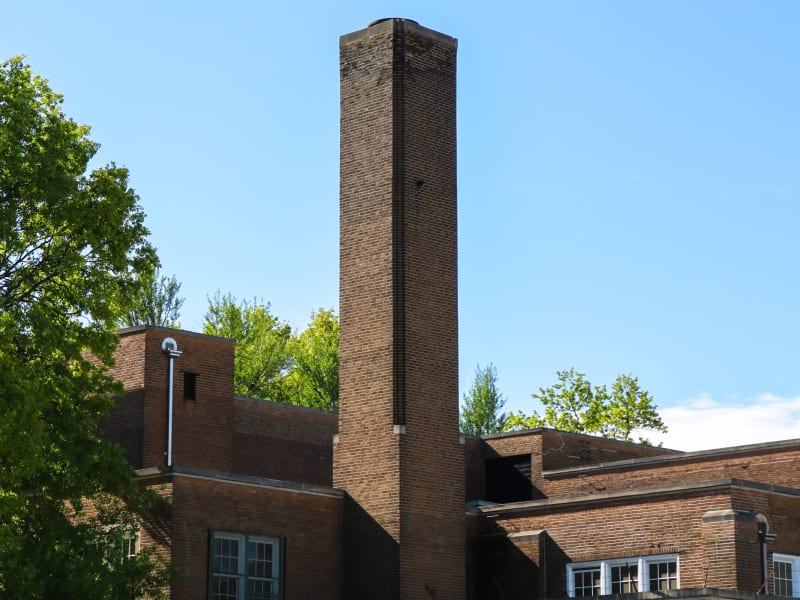
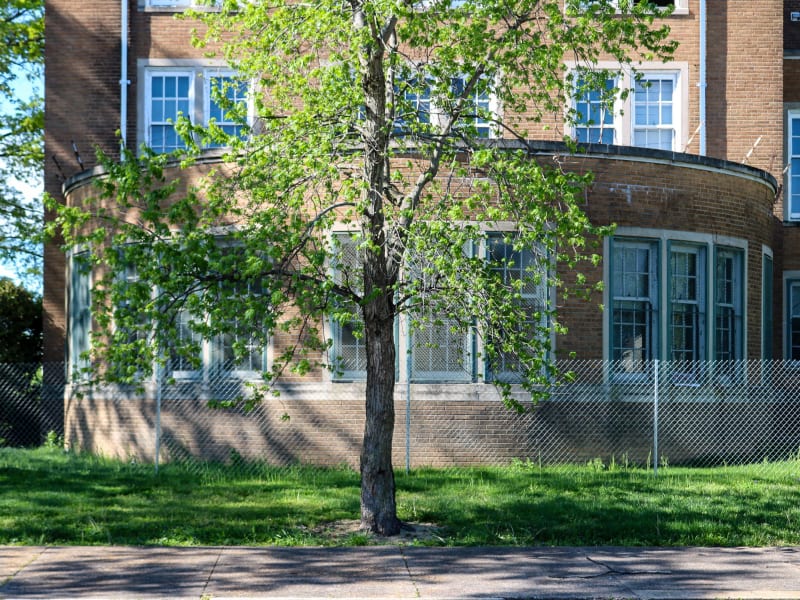
Stowe Teachers College is a four-story Streamline Moderne school of tan brick trimmed in limestone. Its defining feature is a rounded corner bay whose banded windows curve around the building above a curved brick base. Elsewhere the windows rise in tall vertical groups separated by recessed brick spandrels, and the flat roofline is finished with a plain parapet. A projecting limestone entrance pavilion, flanked by narrow fluted pilasters, carries the incised name TURNER MIDDLE SCHOOL above the doors. The building is now vacant, many of its windows broken and the grounds ringed by chain-link fence.
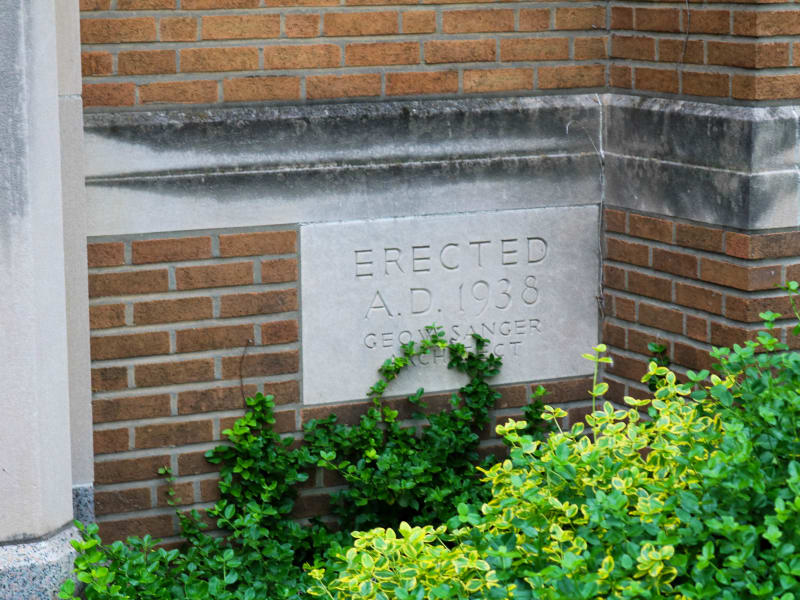
Stowe Teachers College trained African American teachers in St. Louis. The program began in 1890 as a normal school attached to Sumner High School and later took the name of the author Harriet Beecher Stowe. In 1940 the college moved into this building in the Ville — a Public Works Administration project whose cornerstone reads "Erected A.D. 1938" and names George Sanger as architect. Stowe was the segregated counterpart to the all-white Harris Teachers College; following Brown v. Board of Education, the two merged in 1954, and the combined institution was later renamed Harris–Stowe State University. After the college left, the St. Louis Public Schools operated the building as Turner Middle School, named for Charles Henry Turner, the zoologist who had taught at Sumner High School. The building faces Billups Avenue — a stretch of the former Pendleton Avenue renamed for Kenneth Brown Billups Sr., the longtime Sumner High School music teacher who became the St. Louis Public Schools' supervisor of music.