St. Louis Arena
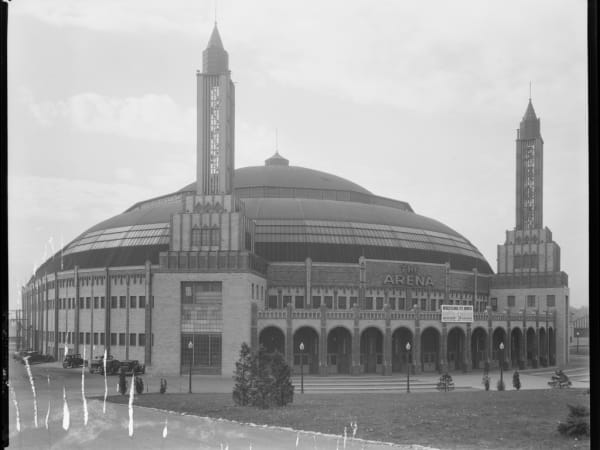
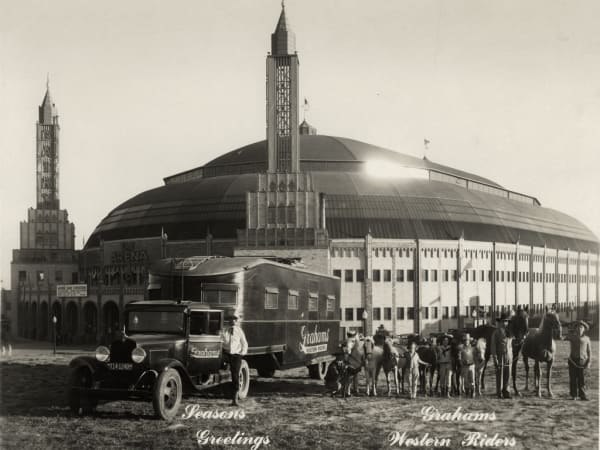
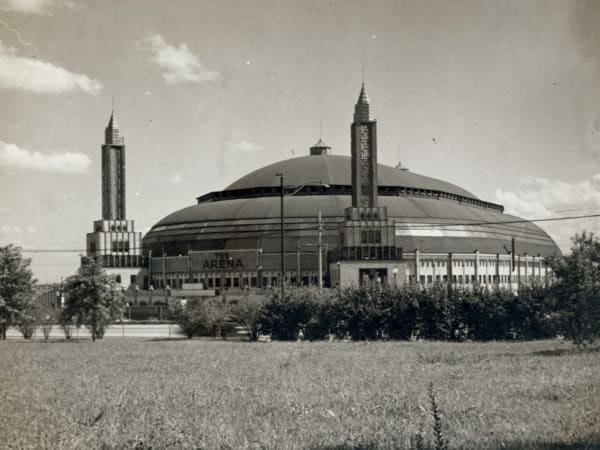
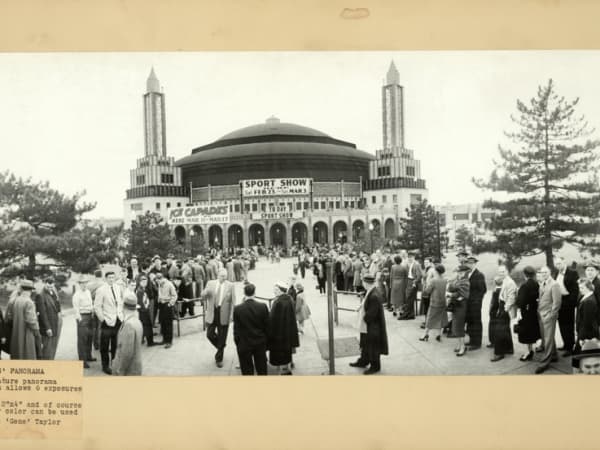
When it opened in 1929, the St. Louis Arena was the second-largest indoor entertainment venue in the United States, trailing only Madison Square Garden. Its signature engineering feat was a lamella roof — Douglas fir ribs fitted diagonally to create a fish-scale pattern — supported by 20 cantilever steel trusses, eliminating internal support columns entirely. At 476 by 276 feet, a 13-story building could theoretically have been erected inside it. Originally built for the National Dairy Show, it hosted the St. Louis Blues from the team's inaugural 1967–68 season through 1994, three Stanley Cup Finals appearances (1968, 1969, 1970), and two NCAA Final Fours (1973 and 1978). The building bore segregation fencing during its early decades, removed in 1959 renovations. When Ralston Purina bought the Blues in 1977 they renamed it the Checkerdome after their corporate logo; Harry Ornest restored the original name in 1983 when he bought the team back. The Blues moved to Kiel Center in 1994; a non-compete clause inserted by the private financiers of the new arena barred any revenue events at the old building, leaving it vacant for five years until it was imploded in 1999.
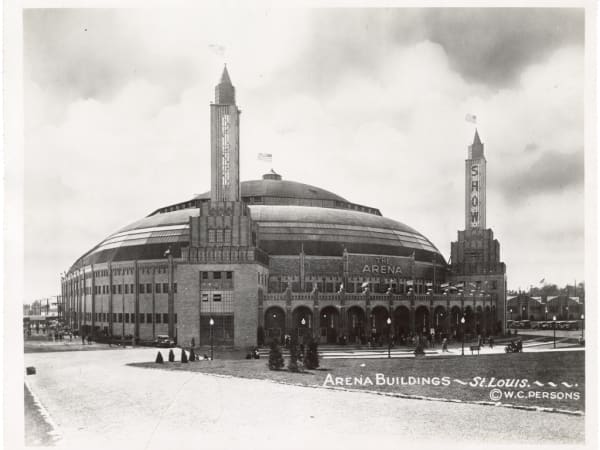


![Steel Frame for Arena [Arena Building, National Exhibition Company, 15 March 1929] Construction Progressive](https://res.cloudinary.com/dr9qb0oc7/image/upload/w_600,h_450,c_fill,q_auto,f_auto/v1782921151/historical/st-louis-arena/N20141.jpg)