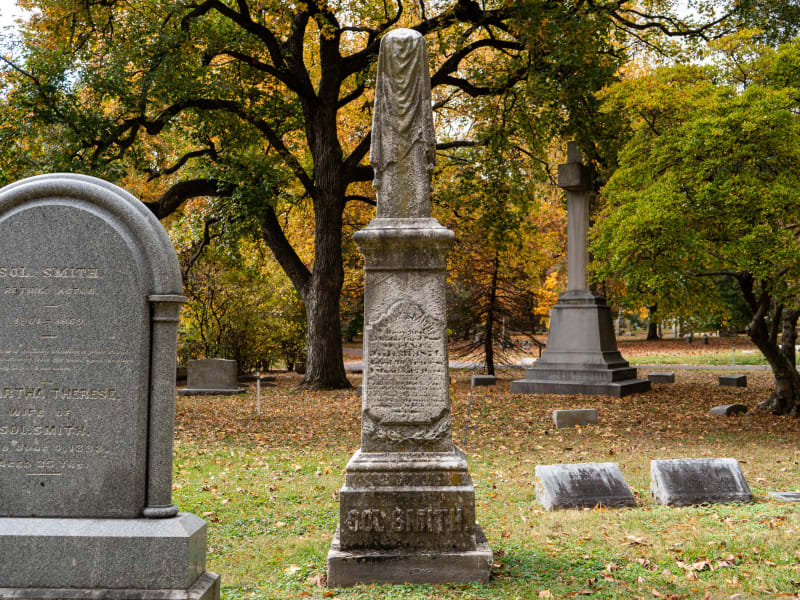
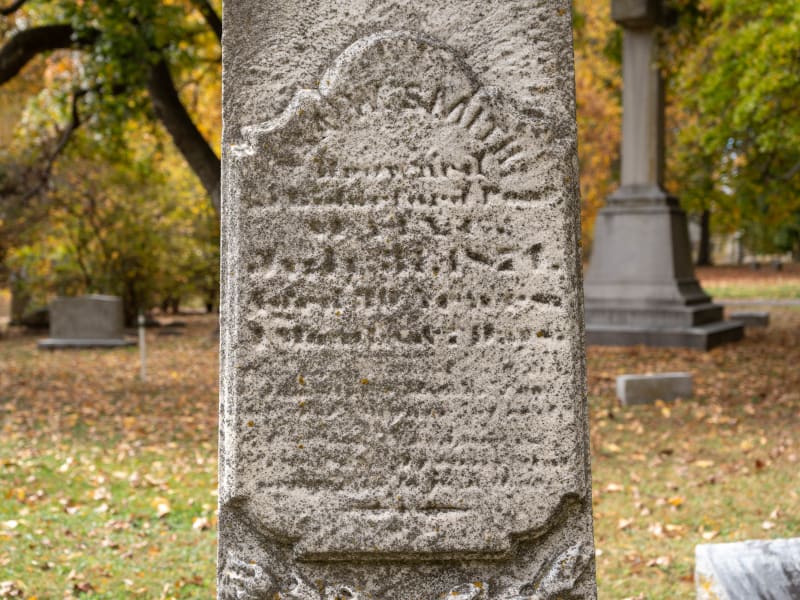
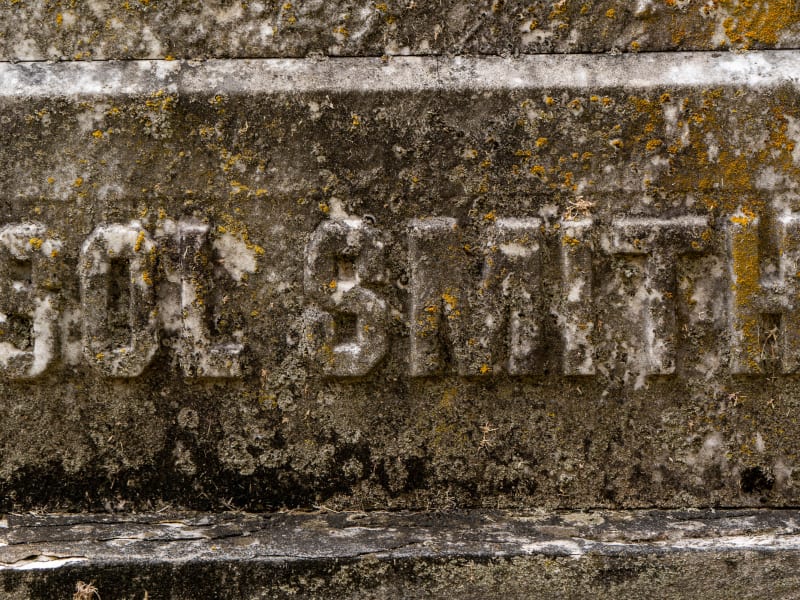
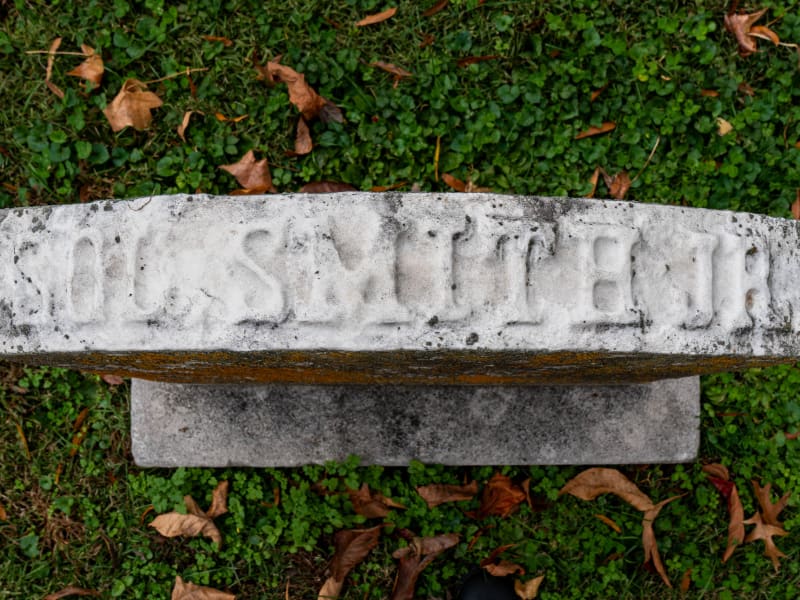
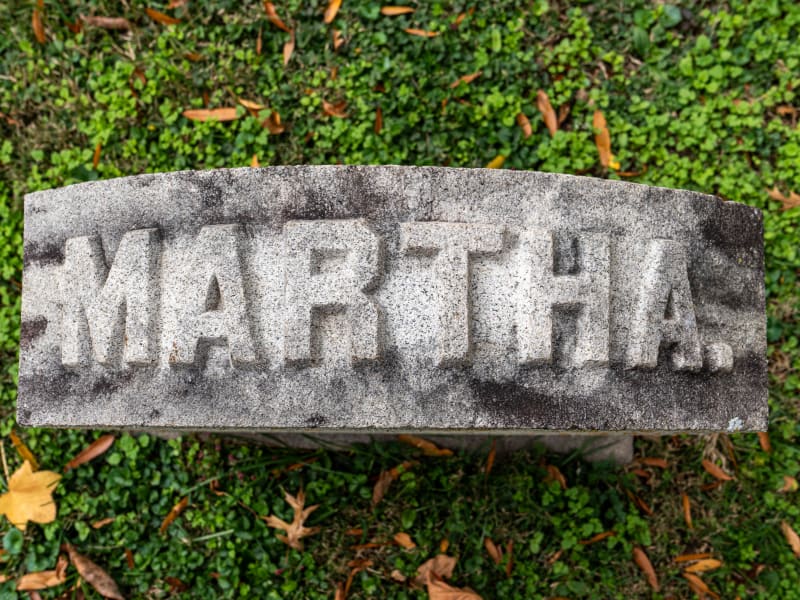
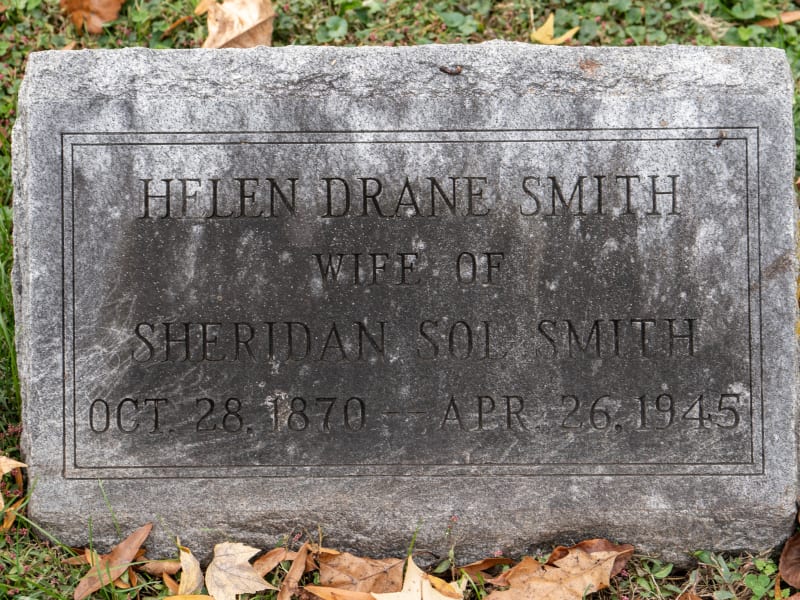
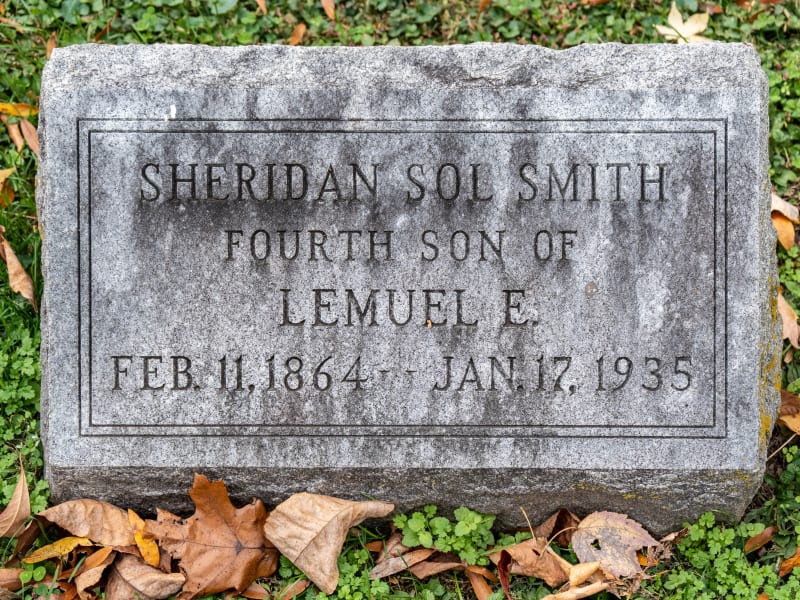
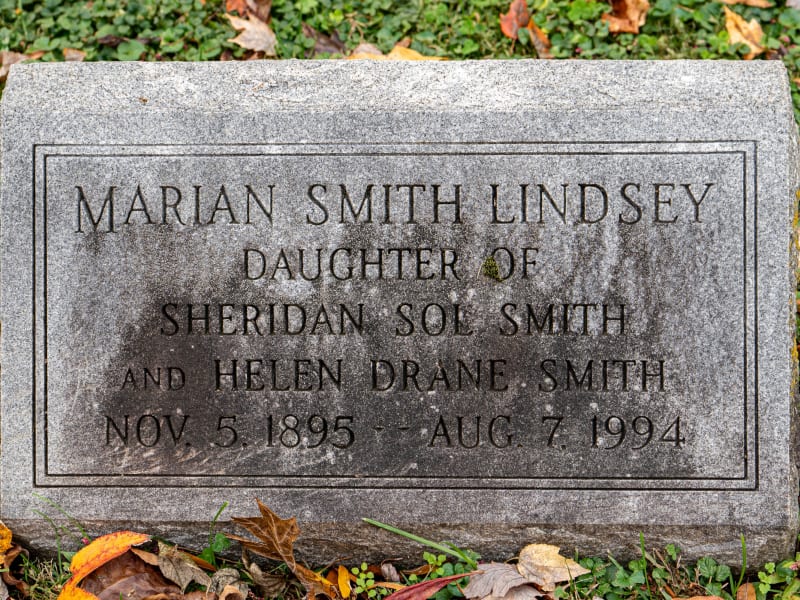
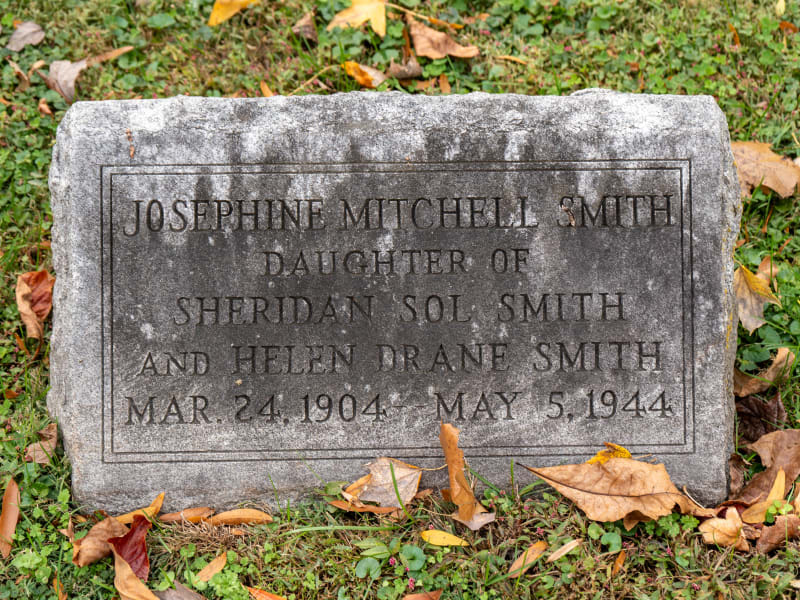
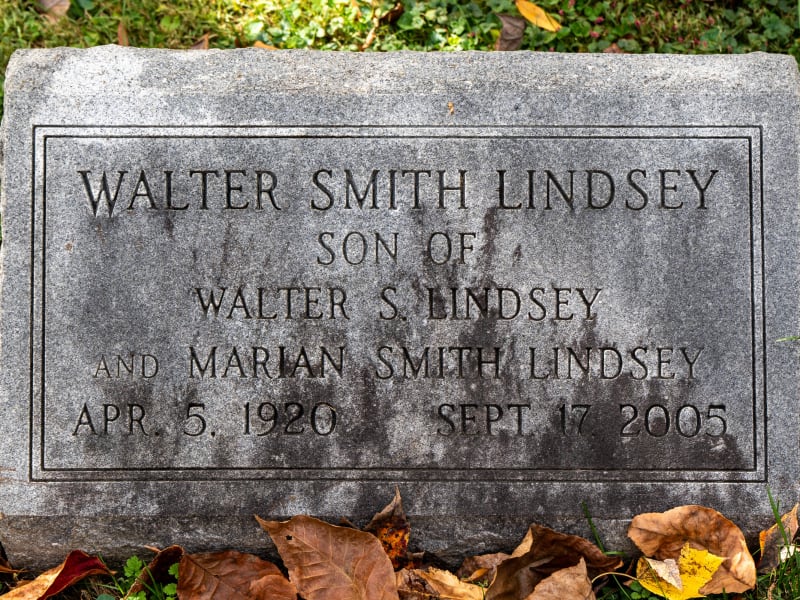
A tall marble shaft draped in a carved cloth that falls in deep folds from its rounded top, standing on a pedestal. The die carries a round-headed tablet framed by carved scrollwork, its long inscription now worn almost smooth, under a molded cap. SOL SMITH stands out in raised letters on the base block. The marble is heavily weathered and spotted with lichen. Beside it stands an arched granite headstone with half-round columns at its sides, shared by Smith and his wife: SOL. SMITH, RETIRED ACTOR, 1801–1869, three lines from Macbeth in italic script, and below them MARTHA THERESE, WIFE OF SOL. SMITH, DIED JUNE 4, 1838, AGED 35 YRS. The lot also holds low curved footstones lettered MARTHA and SOL SMITH JR., and flat markers for later generations, among them Sheridan Sol Smith (1864–1938).
Solomon Franklin Smith, known on the stage as Sol Smith, was born in Norwich, New York, in 1801. He went west in the 1820s, studied law, and began managing a theater in Cincinnati in 1823. From the mid-1830s until 1853 he and the actor Noah Ludlow ran theaters in St. Louis, Mobile and New Orleans, including the St. Louis Theatre at the southeast corner of Third and Olive streets. Smith developed the actors and staged the productions while Ludlow supplied much of the capital; the partnership ended in disputes over money. After 1853 Smith left theatrical management and practiced law in St. Louis, taking cases for orphan asylums and the poor without charge. A strong Unionist who opposed slavery and secession, he chaired a meeting at the Mercantile Library in February 1861 that came out against secession. He wrote three books of theatrical memoirs, collected in 1868 as Theatrical Management in the West and South for Thirty Years. His wife, Martha Therese Smith, died on June 4, 1838, at 35. Smith died in St. Louis in 1869. The granite headstone he shares with Martha names him "Retired Actor" and carries lines from Macbeth: "Life's but a walking shadow, a poor player, / That struts and frets his hour upon the stage, / And then is heard no more." He also placed a headstone at Bellefontaine for the actress Blanche Shea, killed in an accident during a performance at the St. Louis Theatre in 1851.