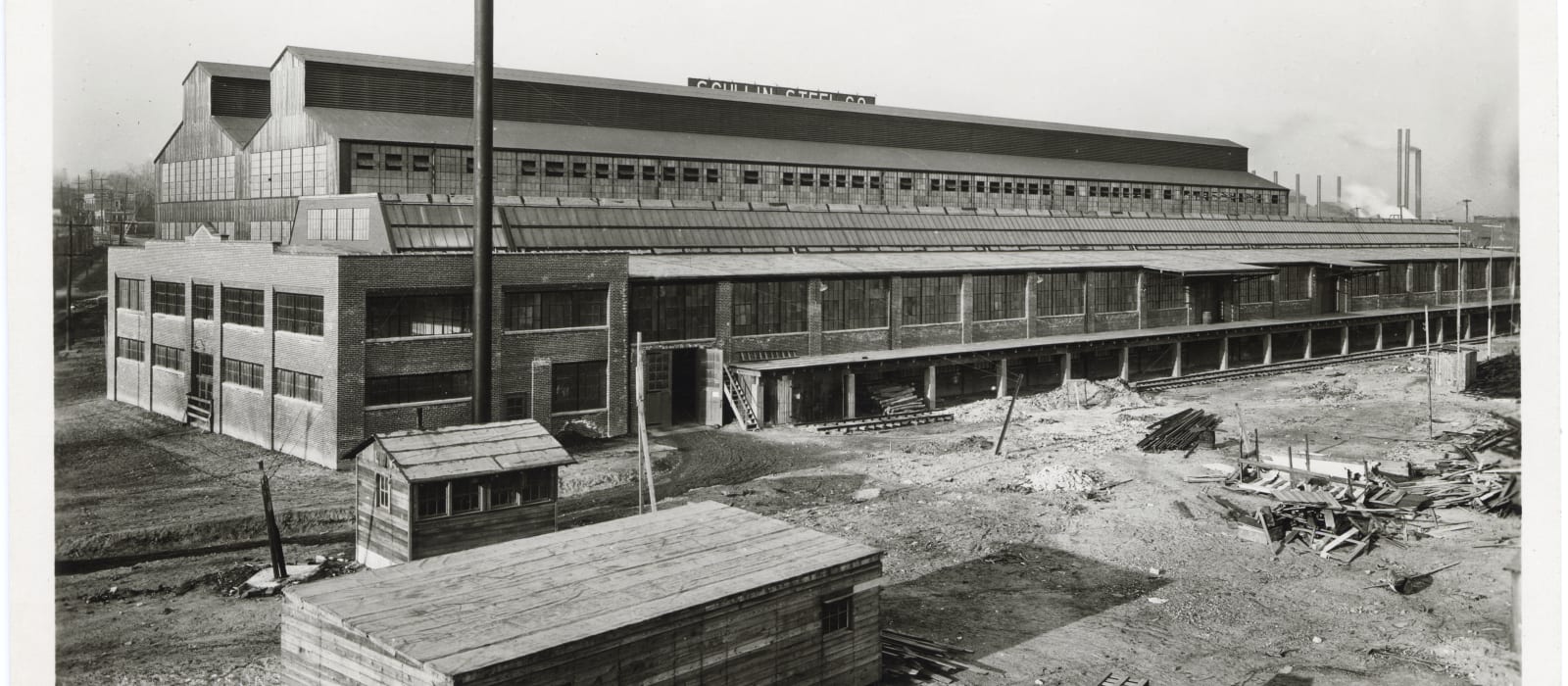
Scullin Steel Company Plant
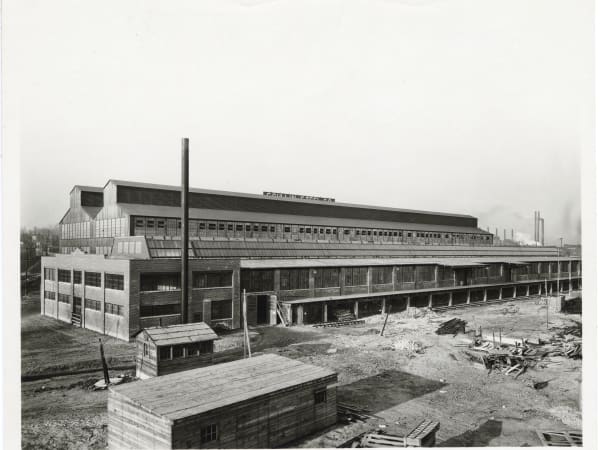
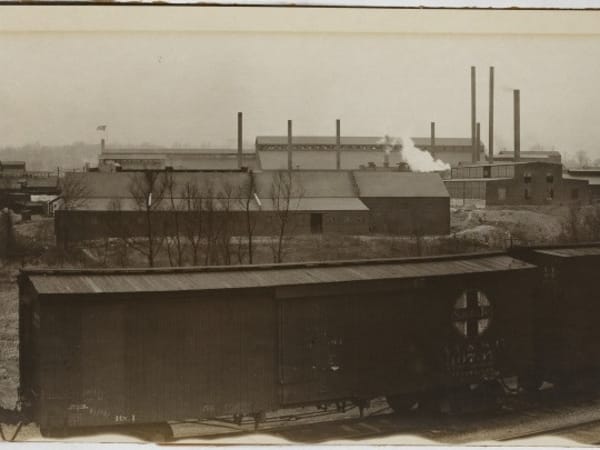
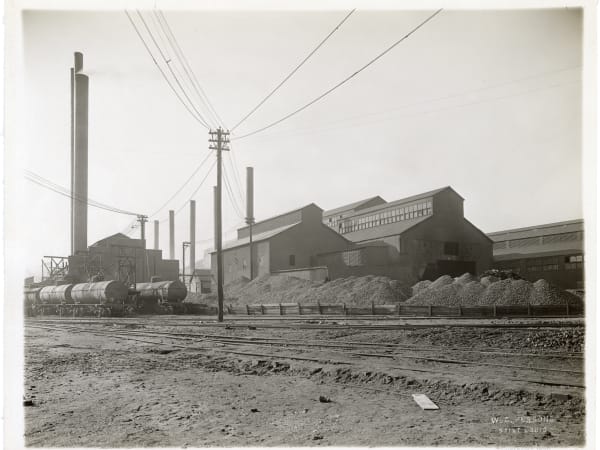
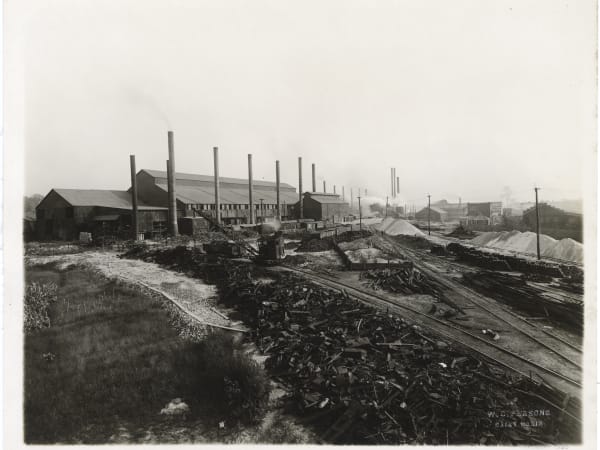
A sprawling steel foundry that stretched for about twelve blocks along the Pacific Railroad (later Missouri Pacific) tracks on the south side of Manchester Avenue, between Ellendale and Franz Park. Early photographs show long sawtooth- and monitor-roofed foundry sheds, rows of tall smokestacks, rail sidings and storage yards heaped with scrap, sand and limestone. The site is now the St. Louis Marketplace, at Manchester and Abbott.
John Scullin, a former railroad brakeman who became a railroad contractor and streetcar-line builder, founded the Scullin Steel Company in St. Louis around 1898 or 1899. Its plant grew up along the Pacific Railroad on Manchester Avenue, part of the industrial corridor that followed the rail line and the River des Peres west through Cheltenham. It cast steel for the railroad industry. During World War I it poured shell ingots, which Missouri Historical Society photographs from 1918 to 1919 show, and by the 1930s it employed more than 1,200 people. In World War II it became one of the government's largest steel contractors, and the company built a new administration building across Manchester in 1943. It is said to have supplied some steel for the Gateway Arch. Production wound down in the 1970s, and the company closed the plant ca. 1981, laying off its remaining workers. The works then stood empty for most of a decade; a 1990 photograph shows the sign and buildings still in place. They were cleared about 1990–91 for the St. Louis Marketplace, a shopping center completed in 1991 as the city's first tax-increment-financing project, with railroad tracks rerouted to make room. The center was repositioned as office space in 2005. Several houses built for Scullin executives still stand on Ellendale Avenue and Ellendale Place.