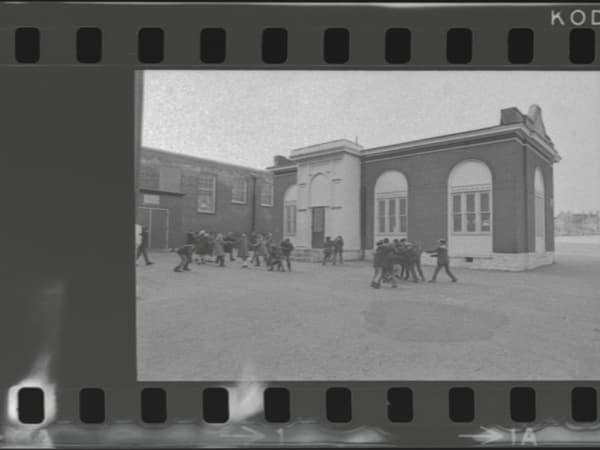
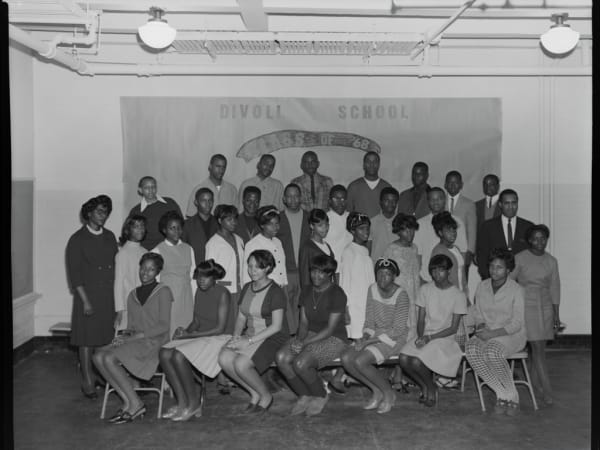
The Ira C. Divoll School was a substantial brick school building typical of early public school construction in post-Civil War St. Louis, likely featuring the straightforward Italianate styling common to institutional buildings of its era. As one of the city's older school structures, it would have presented a dignified, utilitarian appearance with characteristic tall windows, decorative cornices, and the solid masonry construction that defined 1870s civic architecture.
The Ira C. Divoll School was constructed in 1872, during a period of rapid expansion for the St. Louis Public Schools system following the Civil War. The school was named in honor of Ira C. Divoll, who served as the first superintendent of St. Louis Public Schools from 1858 until his death in 1869. Under Divoll's leadership, the school system had grown dramatically, and naming this new building after him recognized his foundational contributions to public education in the city. The school served the educational needs of children in what is now the Jeff-Vander-Lou neighborhood for nearly a century. Like many St. Louis public schools of its era, Divoll School witnessed significant demographic shifts in its surrounding community over the decades, transitioning from serving a predominantly German and Irish immigrant population in its early years to becoming a school for African American students as neighborhood demographics changed in the twentieth century. By the mid-twentieth century, many of St. Louis's oldest school buildings were showing their age and struggling to meet modern educational standards. The Ira C. Divoll School was demolished in 1970, part of a broader pattern of urban renewal and school consolidation that reshaped the Jeff-Vander-Lou neighborhood during this period. The loss of the nearly century-old building reflected both the physical deterioration of aging infrastructure and the dramatic population decline that affected many north St. Louis neighborhoods during the postwar decades.