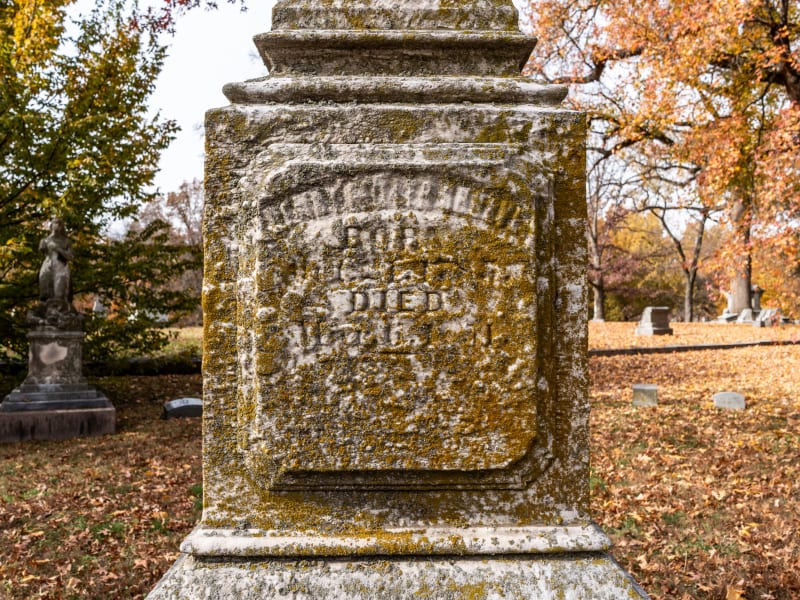
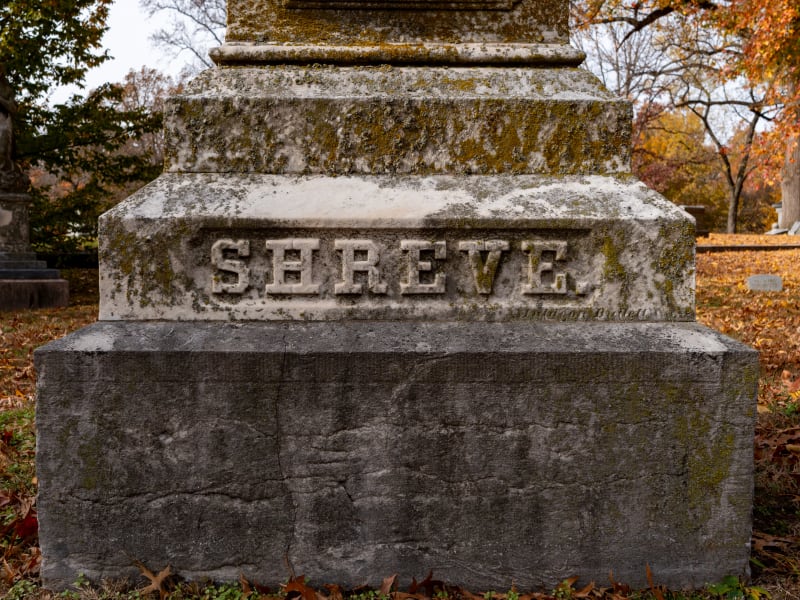
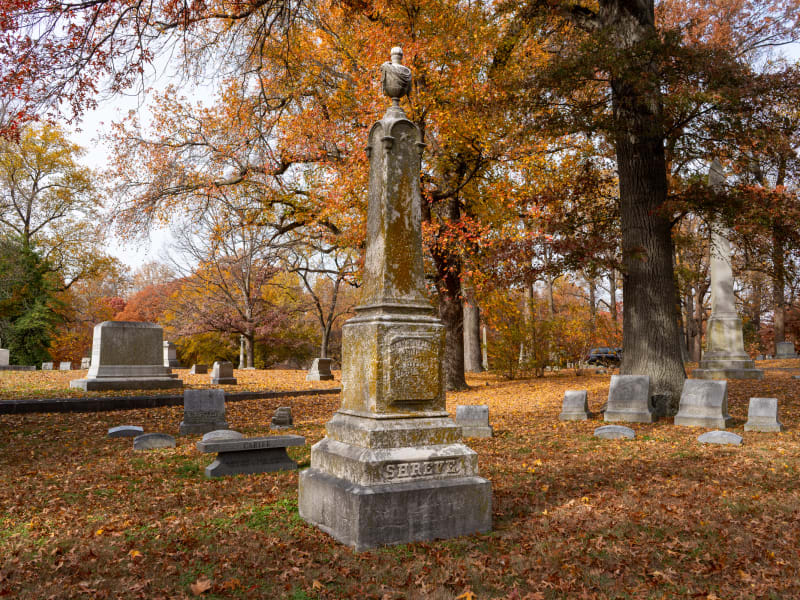
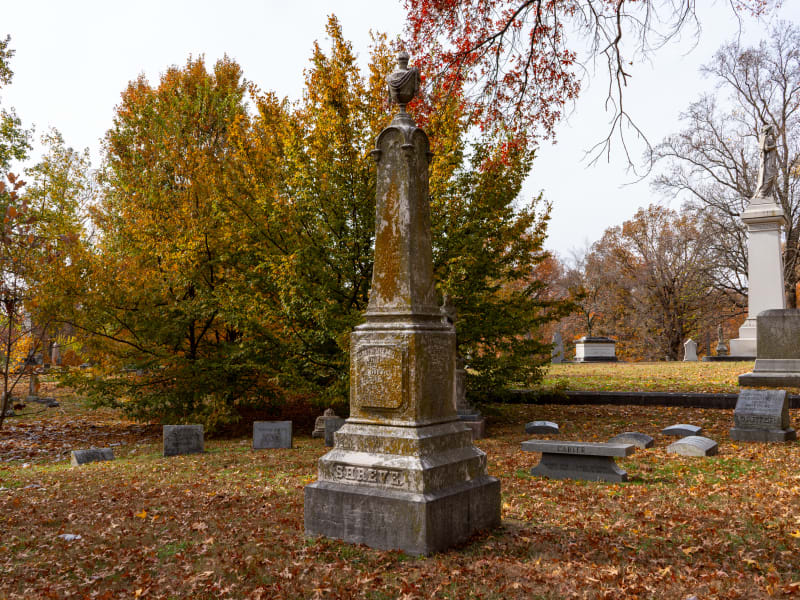
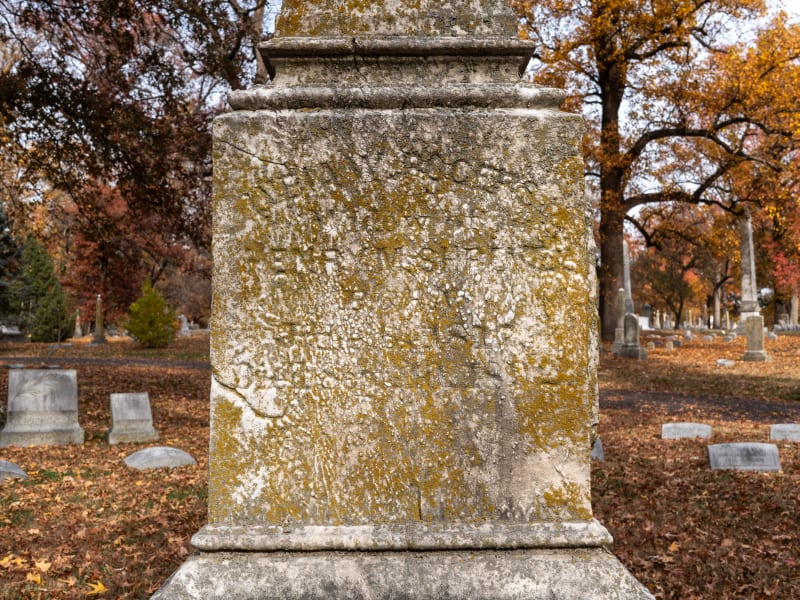
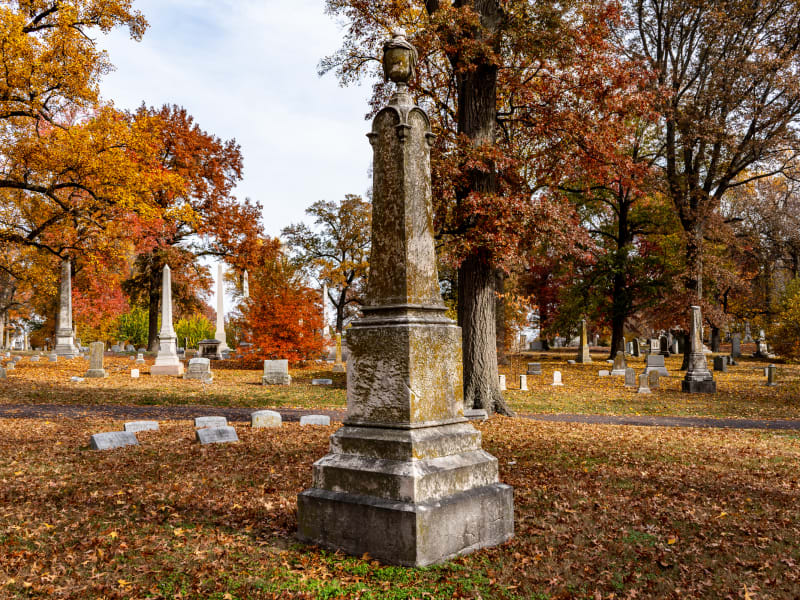
A tall marble monument on a stepped base, now heavily patched with lichen. SHREVE stands in raised letters on the lower block. Above it, a square die holds a recessed inscription panel whose lettering has worn nearly smooth, under a molded cap. A slender, tapering square shaft rises from the die and ends in a rounded top with small projecting brackets, crowned by a draped urn.
Henry Miller Shreve was born in Burlington County, New Jersey, on October 21, 1785, and grew up on the Monongahela. In 1807 he took a keelboat from Pennsylvania to St. Louis to trade furs. He went on to build steamboats with shallow hulls that rode on the water, a design that suited western rivers, and his challenges helped break the Fulton-Livingston steamboat monopoly. As Superintendent of Western River Improvements he designed the snagboat, the first being the Heliopolis, to pull sunken trees from the channels. Ordered in 1832 to clear the Great Raft, a logjam of about 150 miles on the Red River, he finished the work by 1838, and the town that grew from his work camp was named Shreveport. Late in life he moved to St. Louis to live with his daughter Rebecca and her husband, Walker Randolph Carter. His youngest daughter, Florence, died in January 1851, and Shreve died at the Carters' home on March 6, 1851.