Darst-Webbe
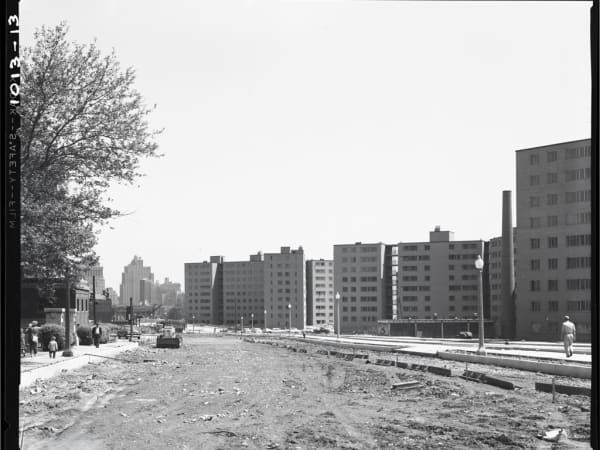
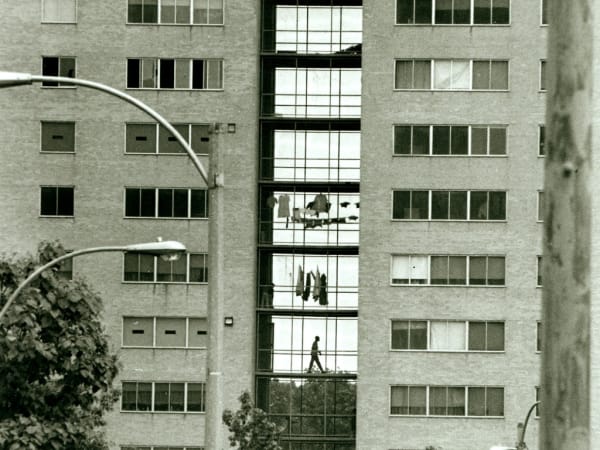
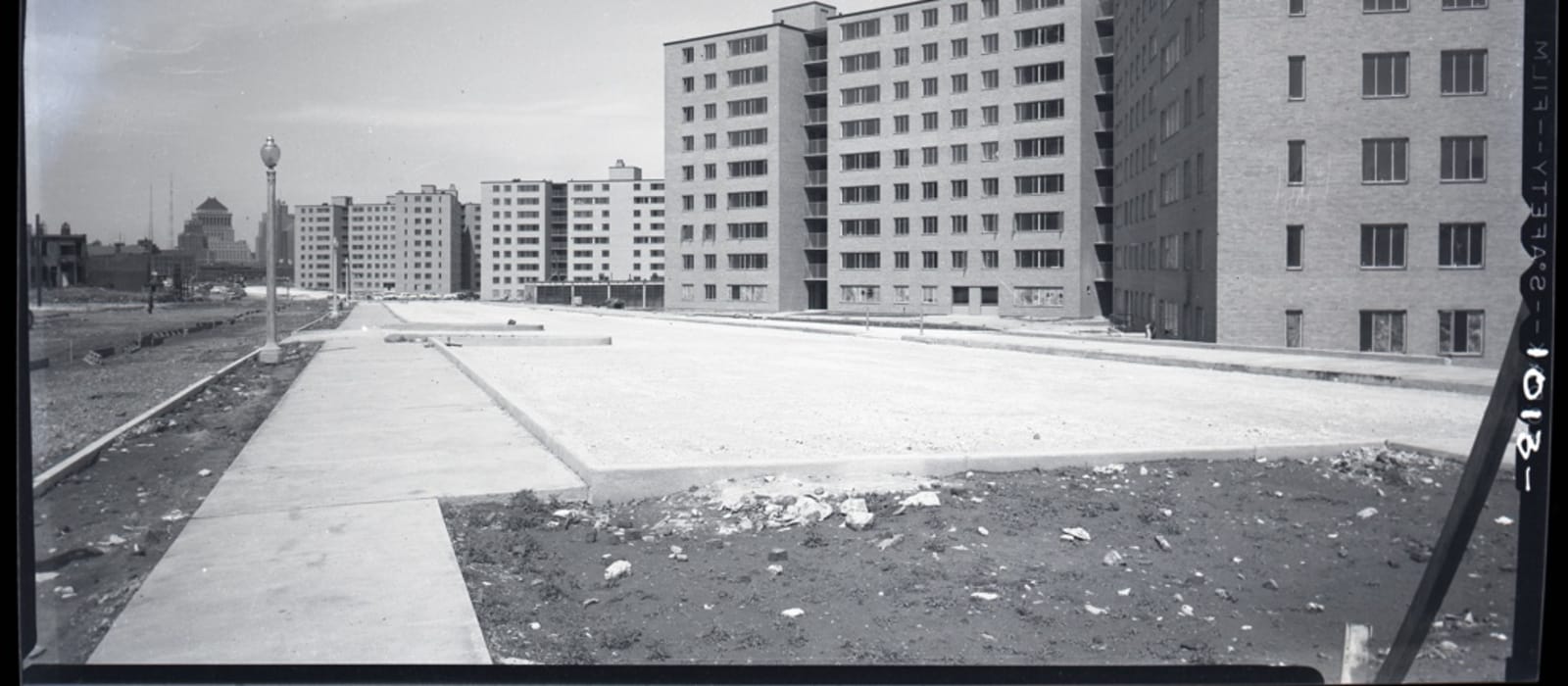
The Darst-Webbe complex was a large-scale public housing project in the Peabody Darst Webbe neighborhood, between Soulard and Lafayette Square. Designed by Hellmuth, Obata and Kassabaum (HOK) and built in two phases between 1956 and 1961, it comprised eight towers totaling over 1,200 units. Demolished in 1999, it stood as one of St. Louis's most prominent examples of mid-twentieth-century high-rise public housing.
The Darst-Webbe complex grew out of St. Louis's postwar urban renewal program, which targeted densely settled neighborhoods near downtown as "blighted" and cleared them for redevelopment. The land between Soulard and Lafayette Square — historically known as Frenchtown — was cleared in the 1940s, displacing a dense working-class neighborhood of brick row houses. In its place, the city's Housing Authority commissioned two adjacent public housing projects from the newly formed firm of Hellmuth, Obata and Kassabaum (HOK). The Joseph M. Darst Apartments, named for St. Louis Mayor Joseph M. Darst (1949–1953), opened in October 1956 with four 9-story towers and 645 units. The Anthony Webbe Apartments followed in May 1961, adding two 9-story towers, one 12-story tower, and one 8-story tower with 578 units — bringing the combined complex to over 1,200 units on roughly 27 acres. Like Pruitt-Igoe on the Near North Side, Darst-Webbe suffered from chronic underfunding, deferred maintenance, and the structural isolation of concentrating poverty in high-rise towers cut off from the surrounding street grid. By the 1980s, occupancy had declined sharply. The Housing Authority razed the entire complex in 1999. Under the federal HOPE VI program, low-rise mixed-income housing was built in its place, designed to echo the scale and brick character of traditional St. Louis row houses.