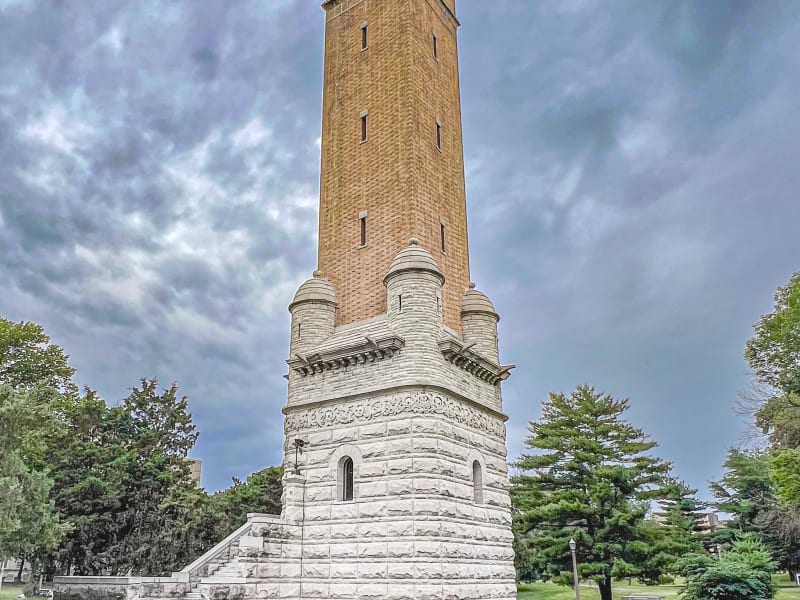
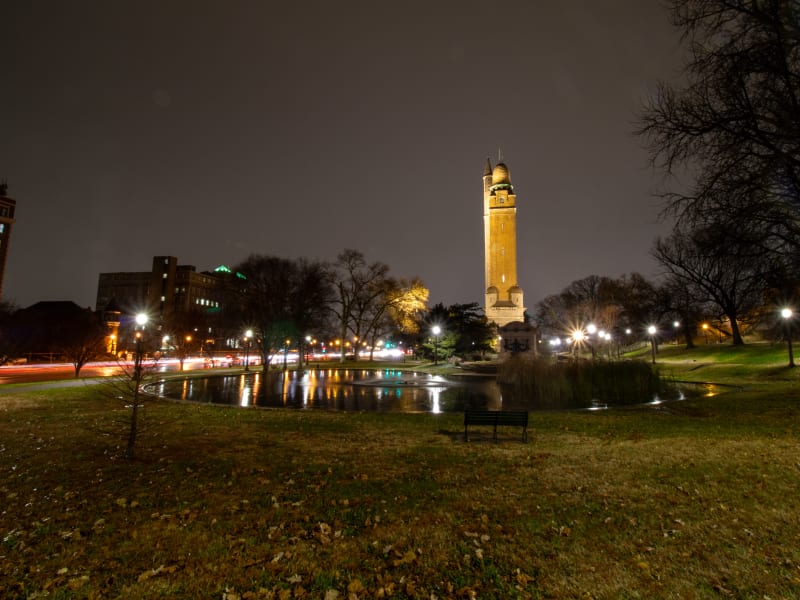
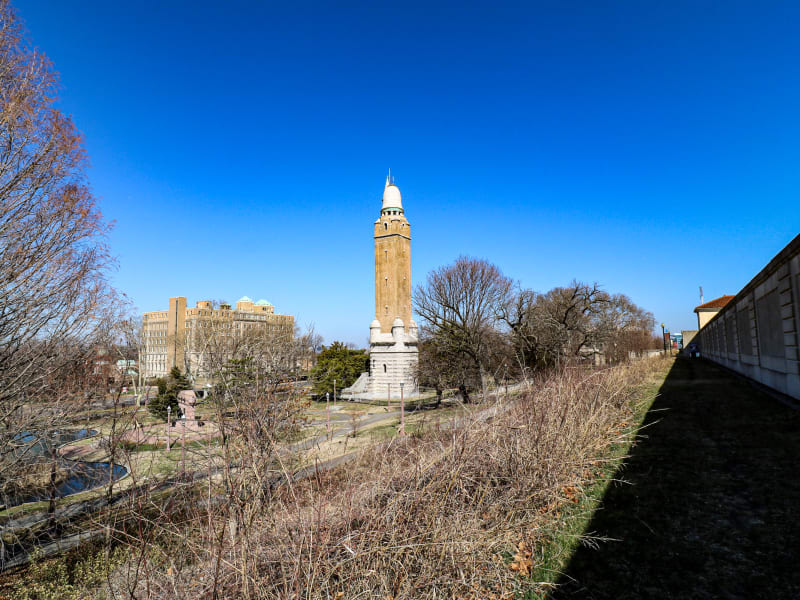
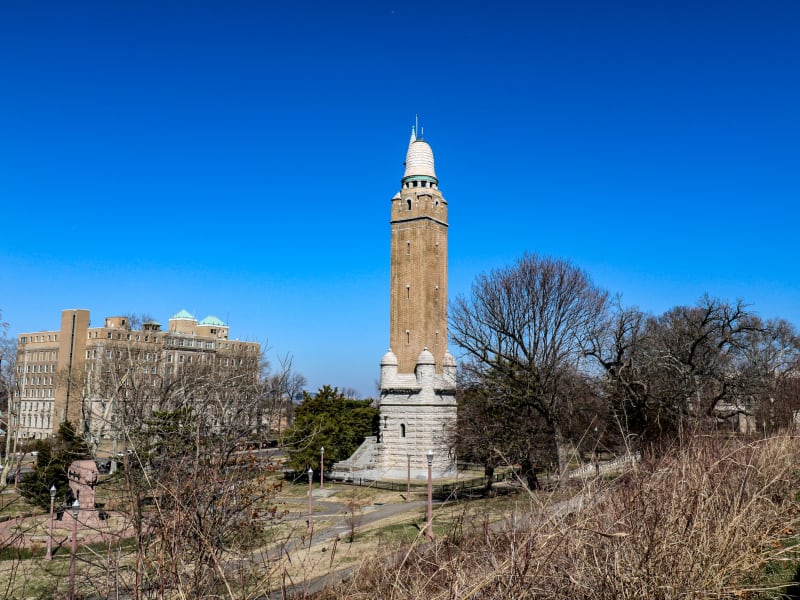
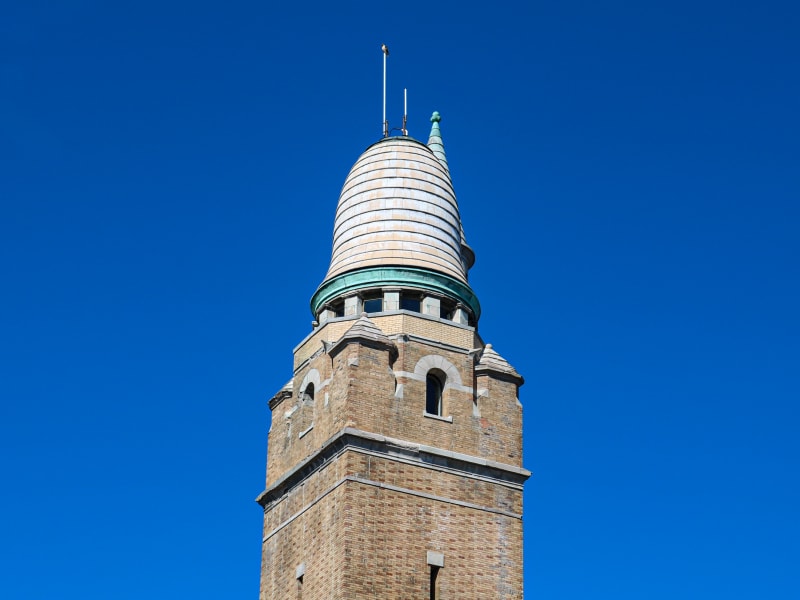
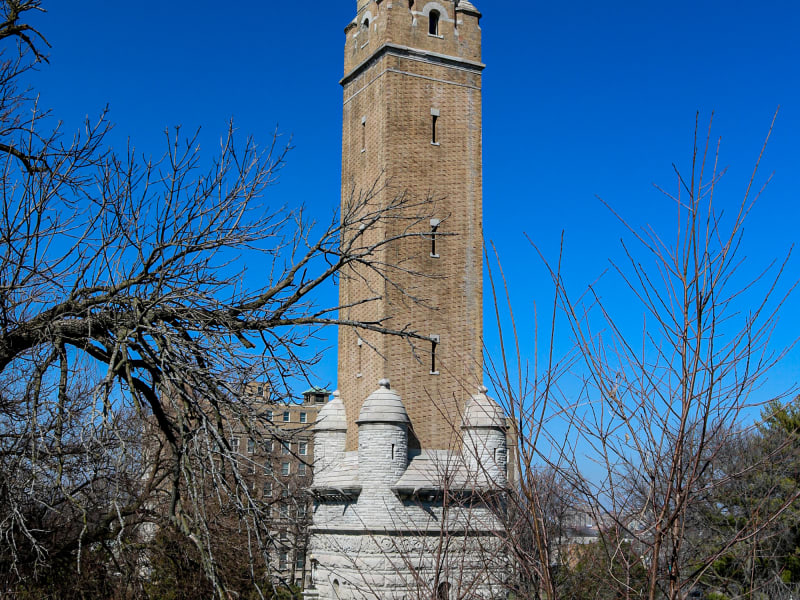
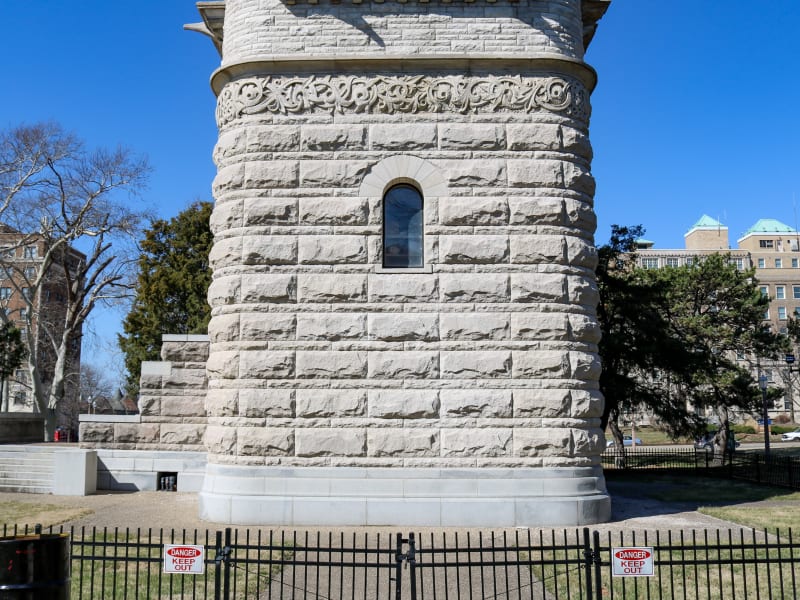
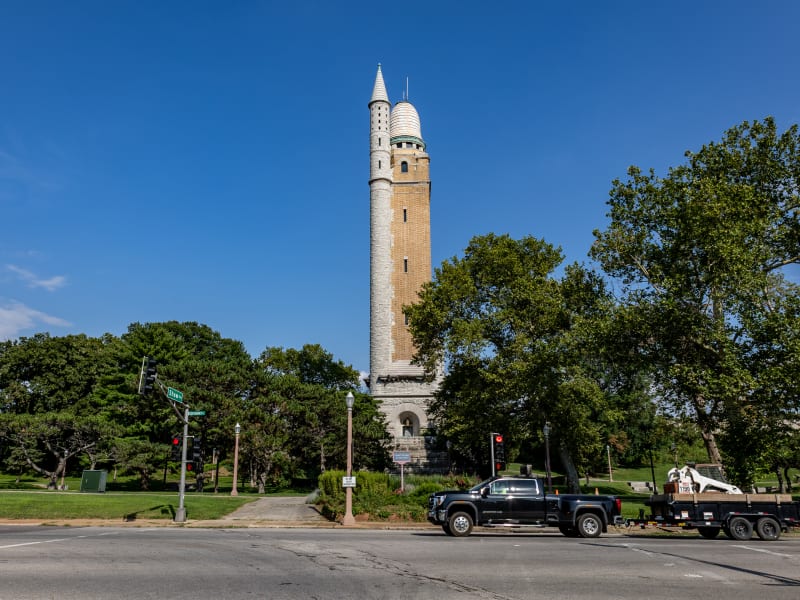
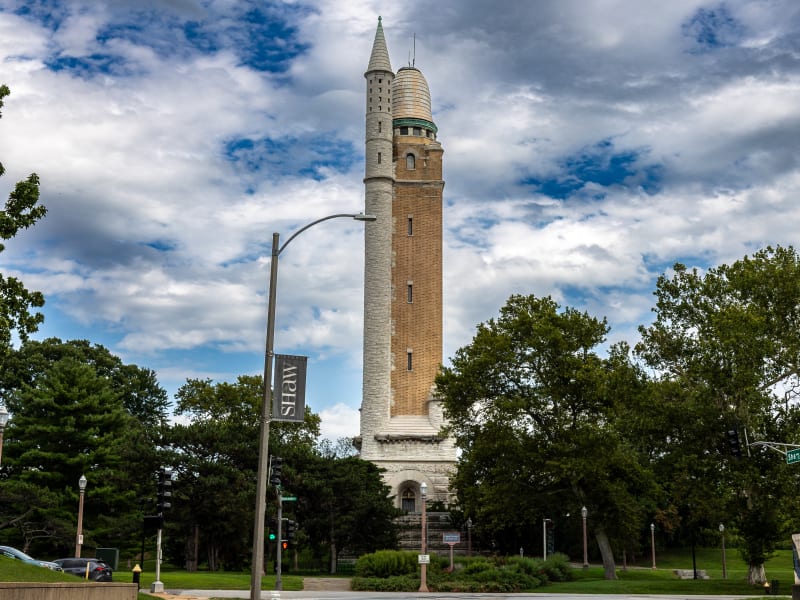
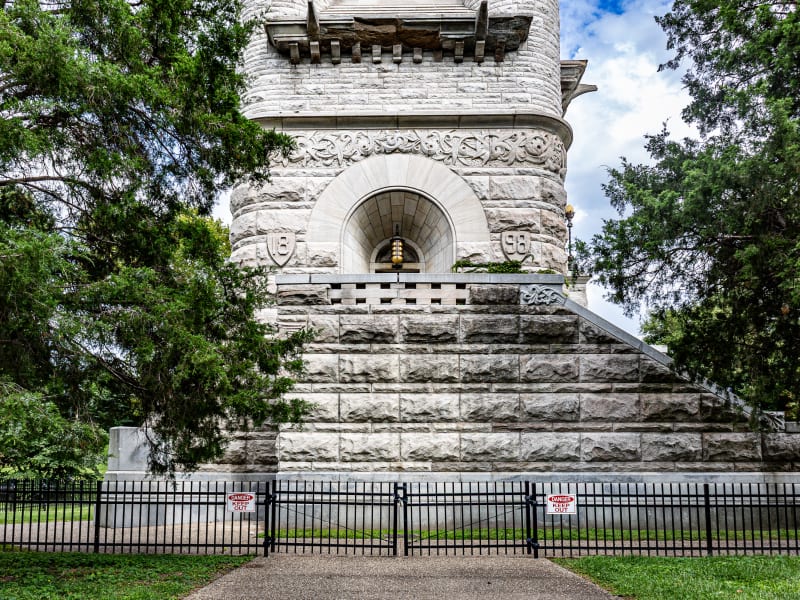
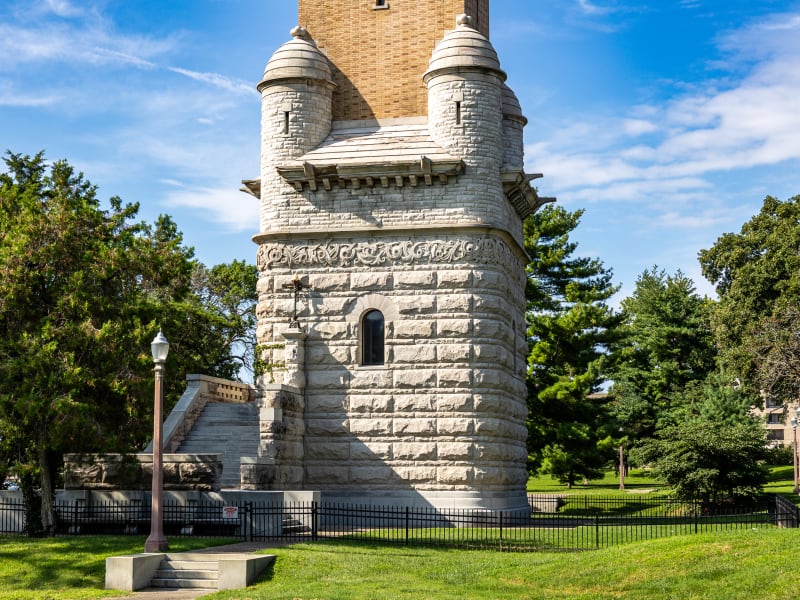
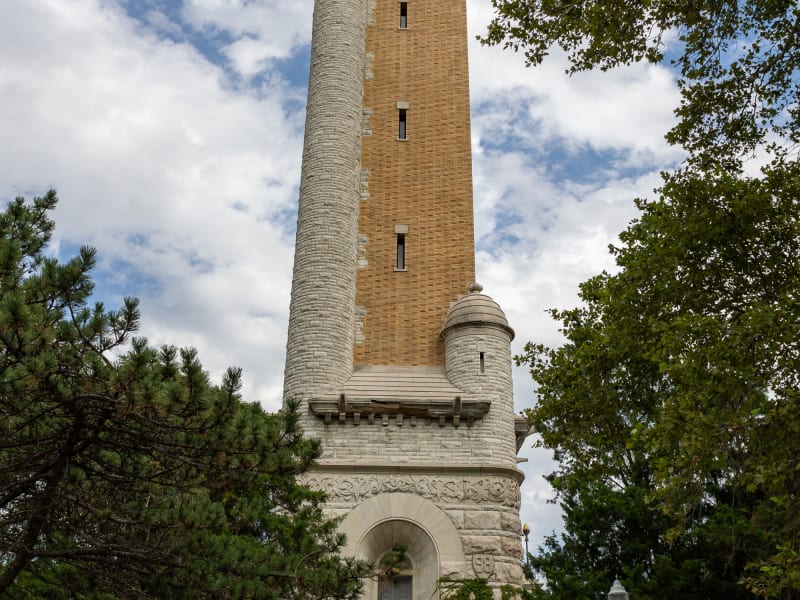
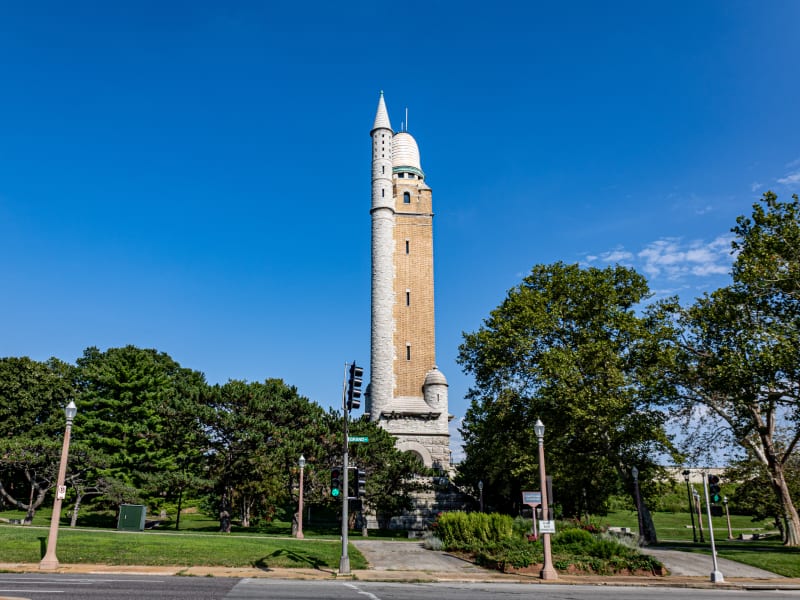
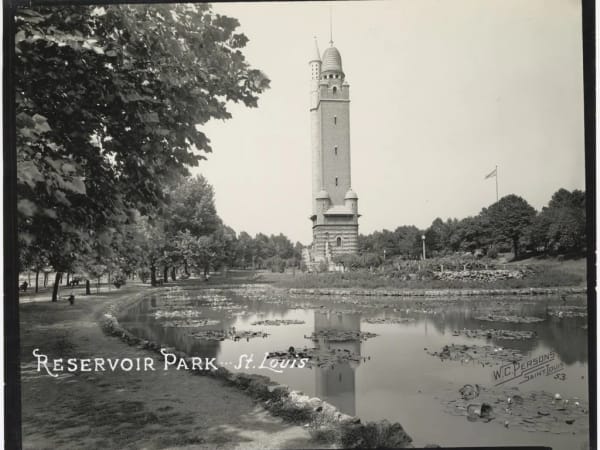
The Compton Hill Water Tower rises 179 feet in a striking Romanesque Revival design, featuring a cylindrical red brick shaft adorned with terra cotta ornamentation, clustered colonnettes, and corbeled arches beneath its conical roof. The tower's ornate detailing—including gargoyles, a decorative observation balcony, and an elaborate crowning turret—transforms a purely functional structure into one of the city's most picturesque landmarks.
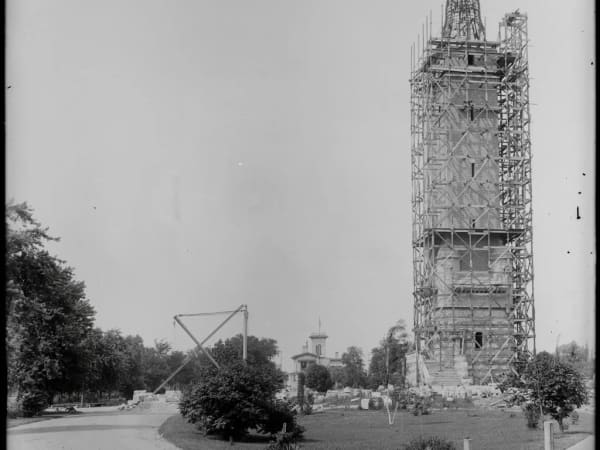
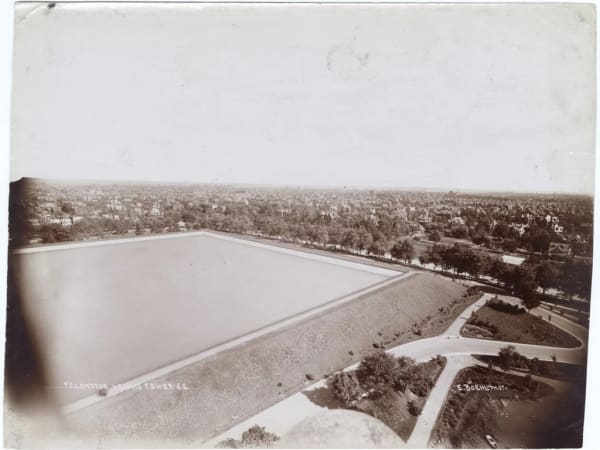
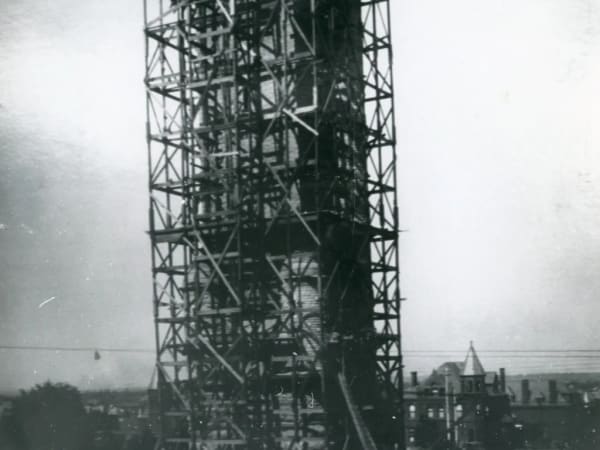
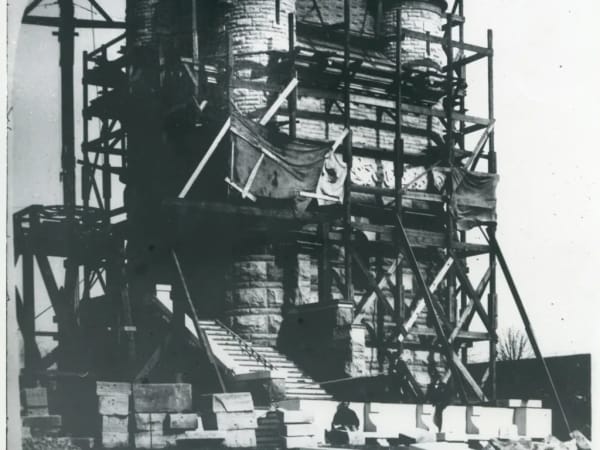
The Compton Hill Water Tower was constructed in 1898 as part of St. Louis's effort to improve its municipal water system during a period of rapid urban growth. The tower served a critical infrastructural purpose: maintaining consistent water pressure for the surrounding neighborhoods, particularly the newly developed Compton Heights subdivision. The city commissioned the project as one of three standpipe towers built in St. Louis during this era, joining the Grand Avenue Water Tower (1871) and the Bissell Street Water Tower (1886) in forming a network designed to equalize pressure throughout the city's expanding water distribution system. Architects Harvey Ellis and George R. Mann designed the tower, with Ellis contributing the ornamental vision that distinguished the structure from purely utilitarian waterworks. The 179-foot standpipe was intended not merely as infrastructure but as a civic monument befitting the prestigious Compton Heights neighborhood, which was being developed as an upscale residential area. The tower's construction reflected the City Beautiful movement's influence on St. Louis planning, demonstrating that municipal utilities could serve as aesthetic landmarks. Throughout the twentieth century, the tower continued its original function before eventually becoming obsolete as water system technology evolved. Unlike the Grand Avenue Water Tower, which was demolished in 1945, the Compton Hill tower survived due to its location within a dedicated park and strong community attachment. The tower was added to the National Register of Historic Places in 1972, recognizing its significance. Today, the Compton Hill Water Tower remains standing as one of only seven such nineteenth-century water towers surviving in the United States, maintained by the city and occasionally opened to the public for tours offering panoramic views of St. Louis.