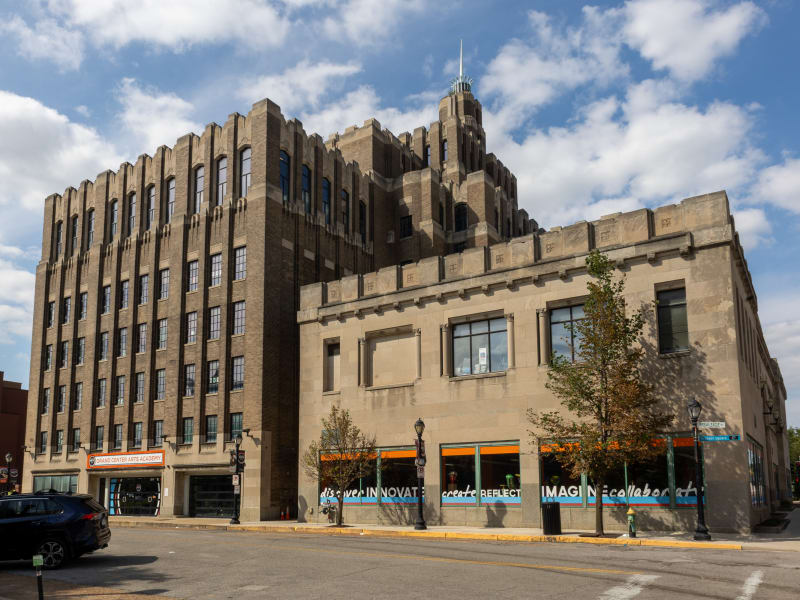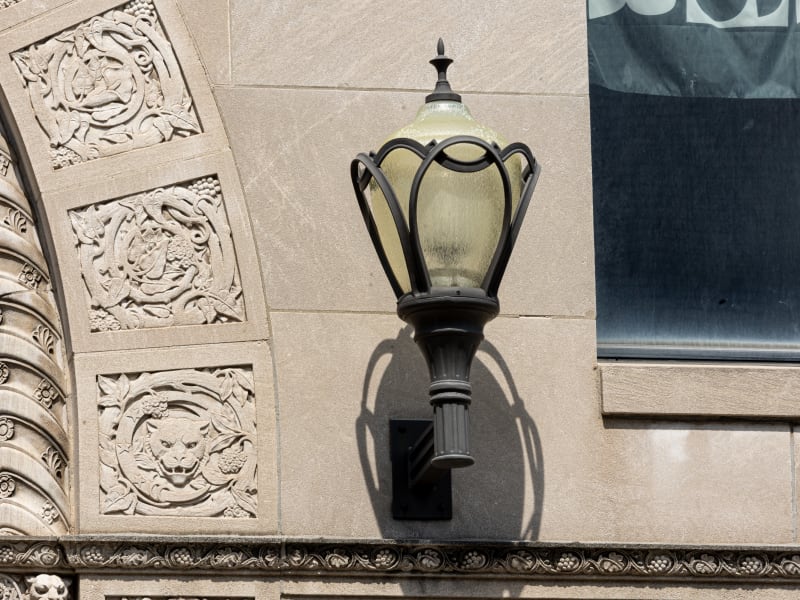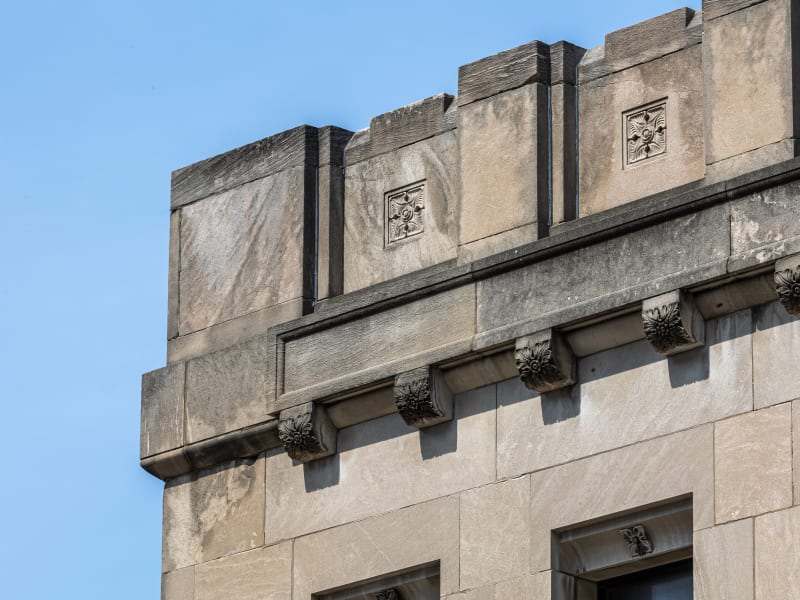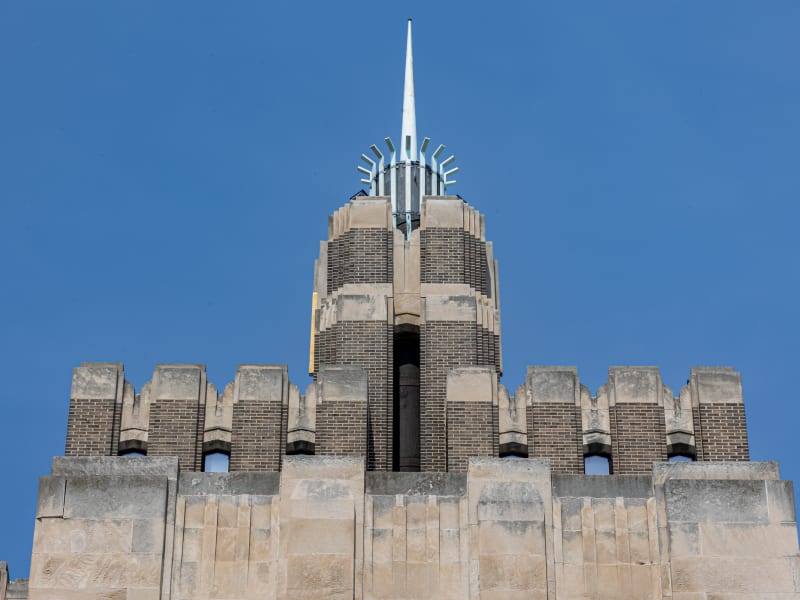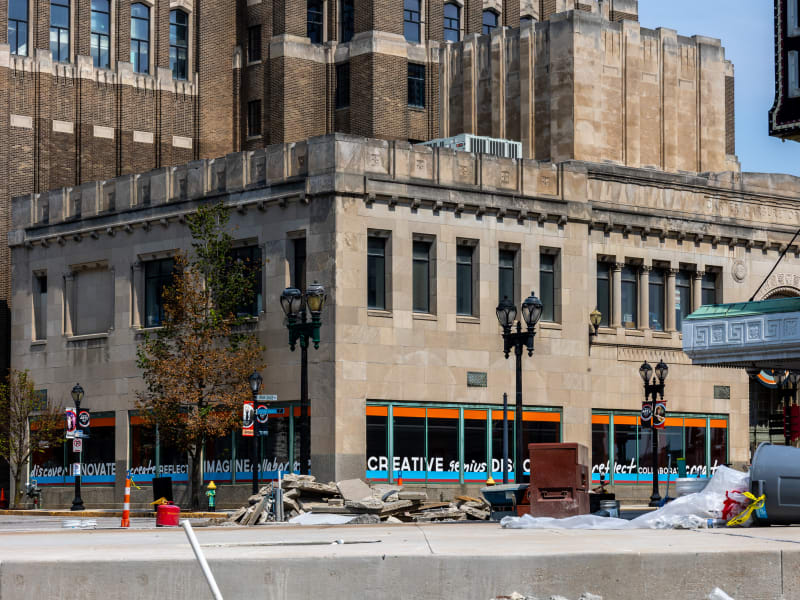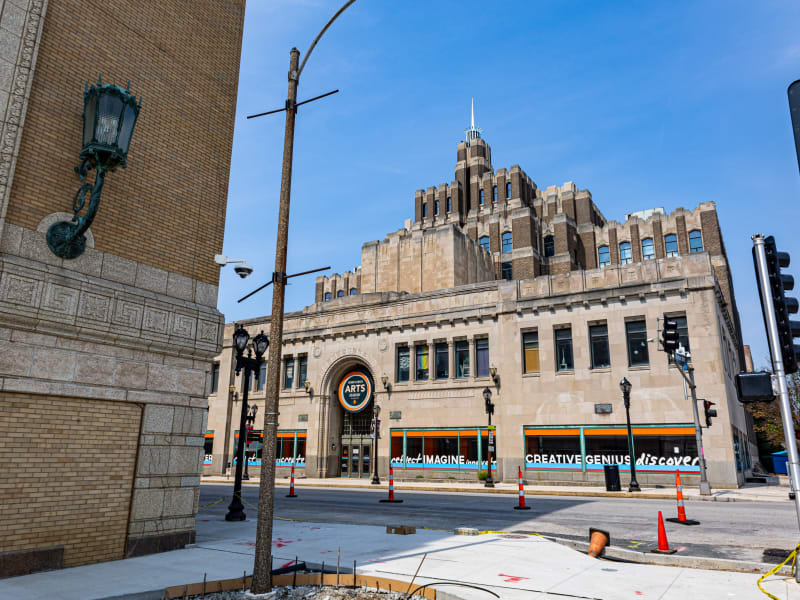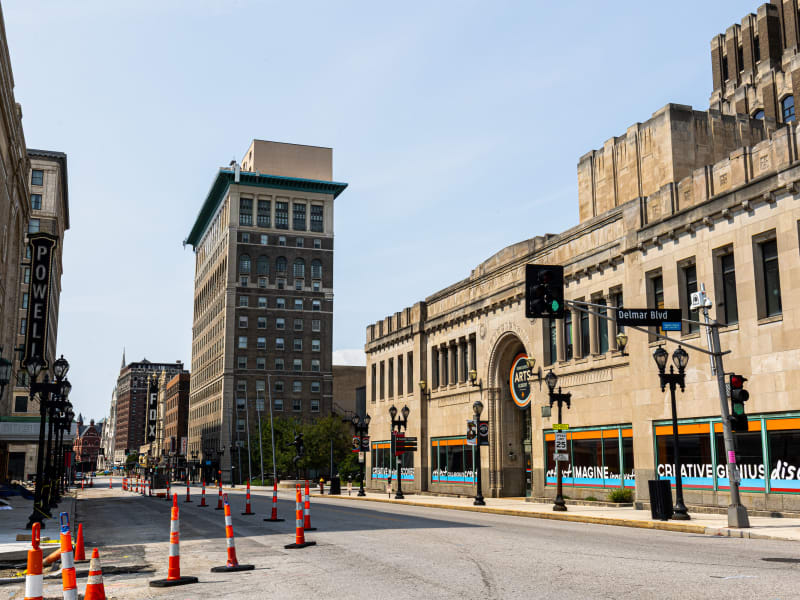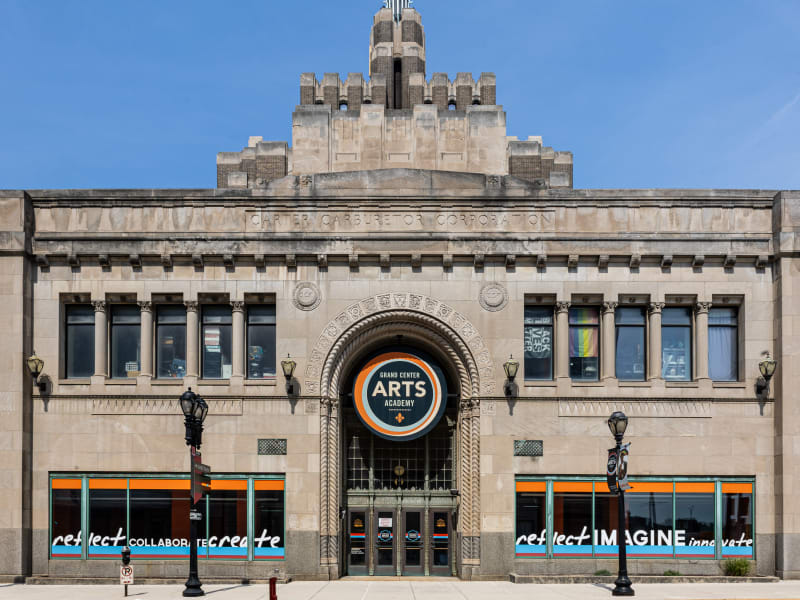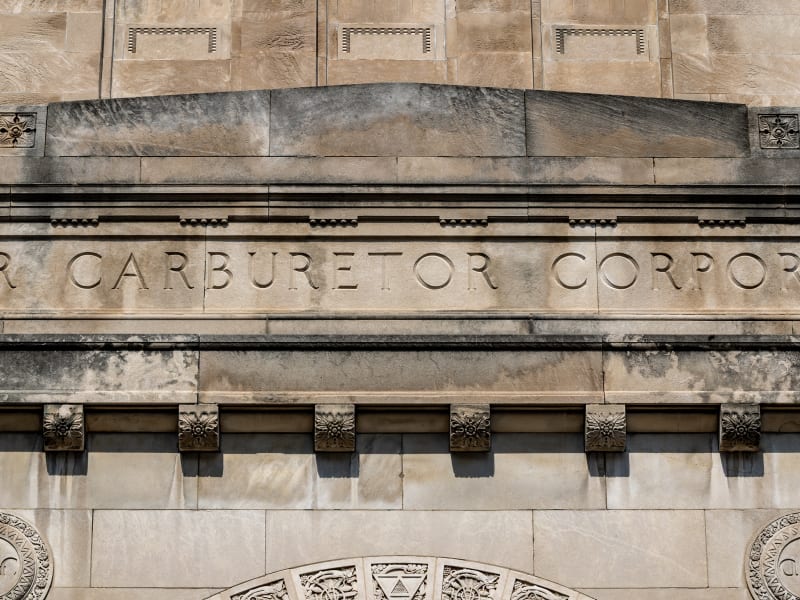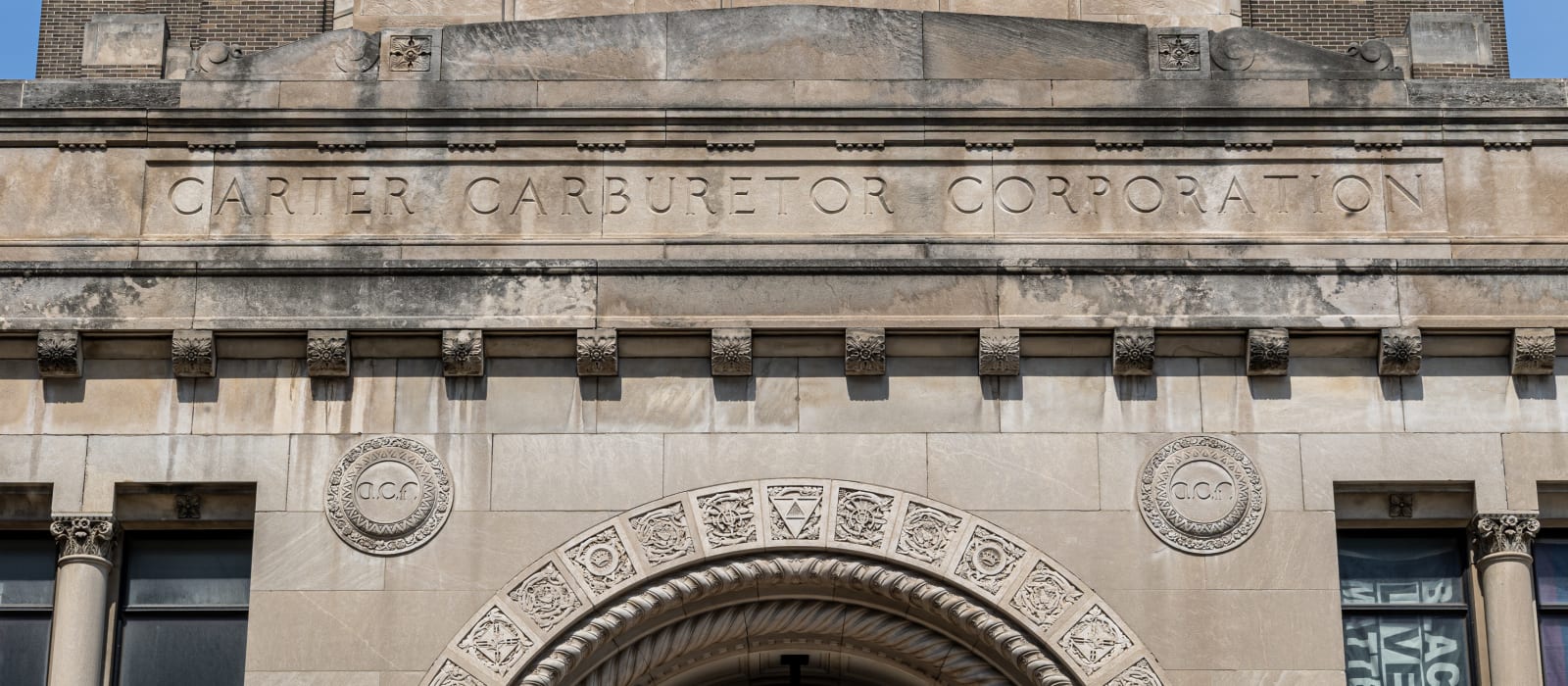
The Carter Carburetor Headquarters is a handsome four-story brick commercial building that anchors its corner of North Grand Boulevard with Classical Revival restraint, featuring symmetrical window arrangements, decorative stone trim, and a dignified cornice line. The building's substantial massing and refined detailing reflect the corporate ambitions of early automotive industry suppliers, with its red brick facade and orderly fenestration creating a dignified presence along the boulevard.
The Carter Carburetor Headquarters was constructed in 1925 to serve as the central office for the Carter Carburetor Corporation, a company that would become one of the most significant automotive parts manufacturers in the United States. The building was designed by the architectural partnership of Hugo K. Graf and Wilbur T. Trueblood, who created a substantial commercial structure befitting the growing prominence of the carburetor manufacturer. Carter Carburetor had established itself in St. Louis and required a headquarters that could accommodate its expanding administrative operations as the automobile industry boomed during the 1920s. The Carter Carburetor Corporation grew to become a major supplier to Detroit's automobile manufacturers, producing carburetors for numerous American car brands throughout the twentieth century. At its peak, the company employed thousands of workers across its St. Louis facilities, with the Grand Boulevard headquarters serving as the nerve center for operations that made the company a household name among automotive enthusiasts and mechanics. The building anchored Carter's presence in what was then a thriving industrial and commercial corridor. The decline of the American automotive industry and the eventual obsolescence of carburetor technology in favor of fuel injection systems led to Carter Carburetor's diminished relevance by the late twentieth century. The company changed hands several times before its St. Louis operations eventually ceased. The headquarters building on North Grand Boulevard still stands today in the Grand Center district, though it no longer serves its original industrial purpose. Like many former manufacturing and corporate buildings in St. Louis, it represents both the city's proud industrial heritage and the challenges of adaptive reuse in a post-industrial economy.