Carter Carburetor Corporation
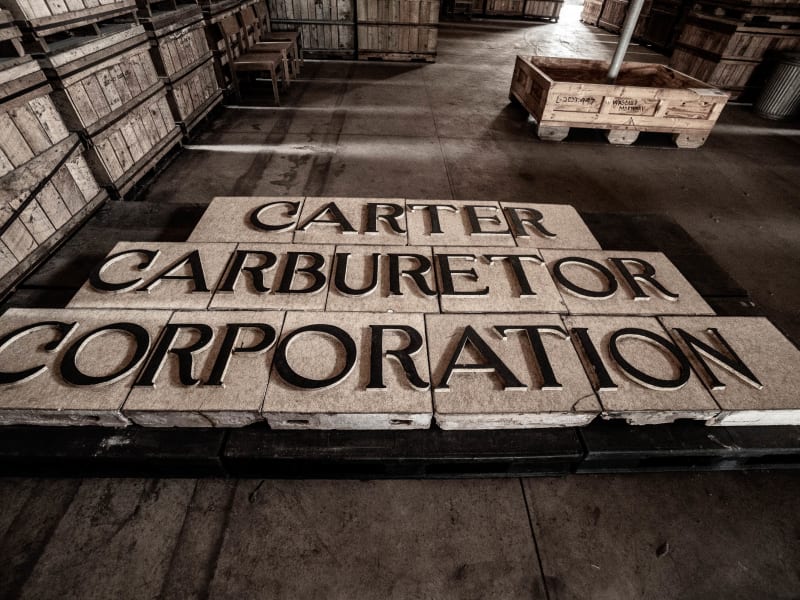
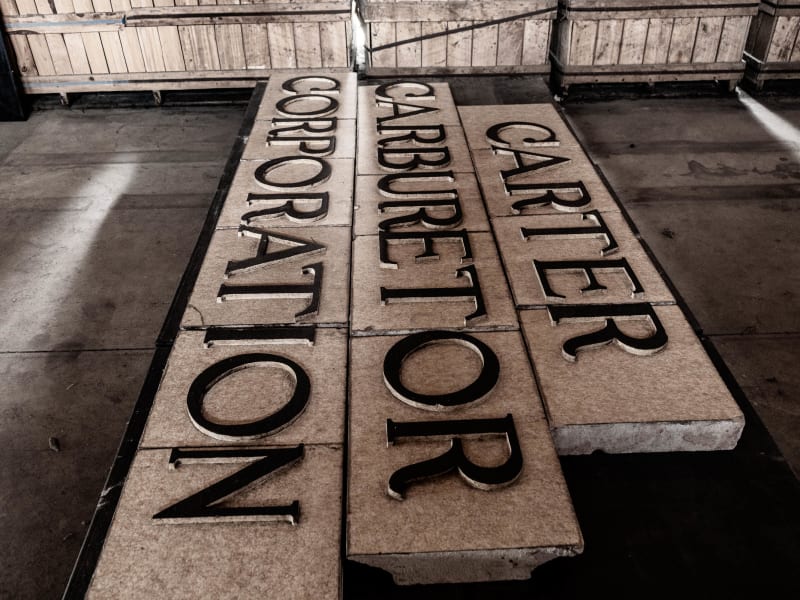
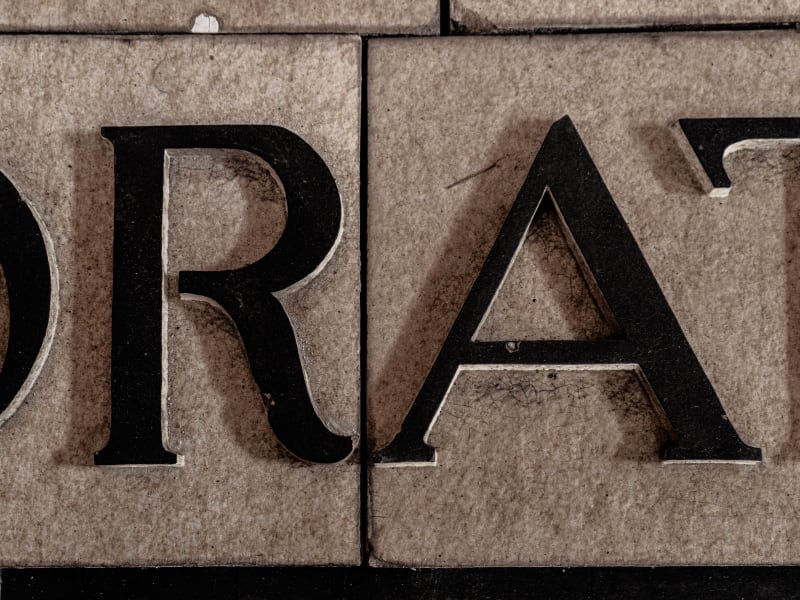
A long brick daylight factory, three and four stories, its walls opened up into wide bays of steel-sash windows between brick piers, with a tall smokestack rising behind. The company name ran in carved stone panels, CARTER CARBURETOR CORPORATION in raised, dark-painted serif letters across three lines of blocks. Those panels were saved when the plant came down and now lie at the National Building Arts Center.
William Carter founded the company in St. Louis in 1909, after experimenting with carburetors while running a bicycle shop. His early cast-brass carburetors were more precise than most of the competition. In 1915 the company built its plant on a 10-acre tract on North Spring Avenue, designed by Hugo K. Graf, and in the early 1920s Carter sold out to the American Car and Foundry Company. At its peak the plant employed more than 3,000 people and supplied Chevrolet, Buick, Oldsmobile, Chrysler and Packard. It adapted carburetors for the Willys Jeep, including the waterproofed YS model for water crossings, and in 1952 it produced the first American four-barrel carburetor, for Buick’s straight-eight. The complex grew to about 480,000 square feet of connected factory, testing, office and warehouse buildings, among them the four-story CBI Building at 2840 N. Spring and the two-story WILLCO Building. As fuel injection replaced carburetors, ACF closed the plant in 1984 and turned the property, contaminated with PCBs and TCE, over to the city’s Land Reutilization Authority. The EPA reached a $35 million cleanup settlement with ACF Industries in 2013. Demolition began in August 2015, and the EPA declared the cleanup complete in May 2020. The Boys & Girls Clubs of Greater St. Louis built a youth golf and sports facility on the cleared site.