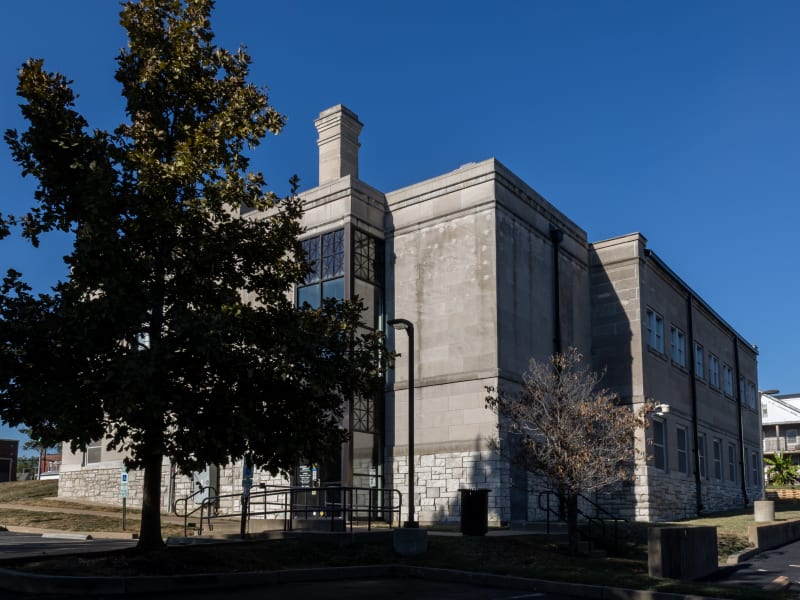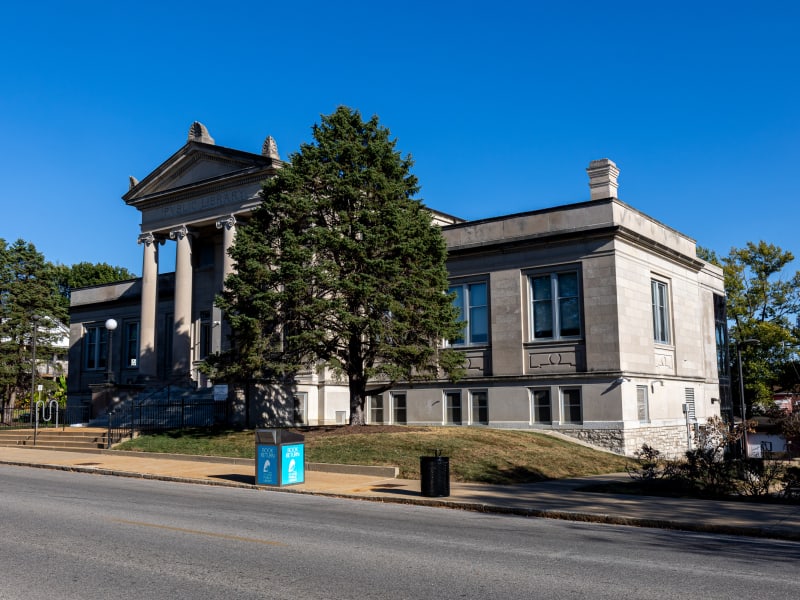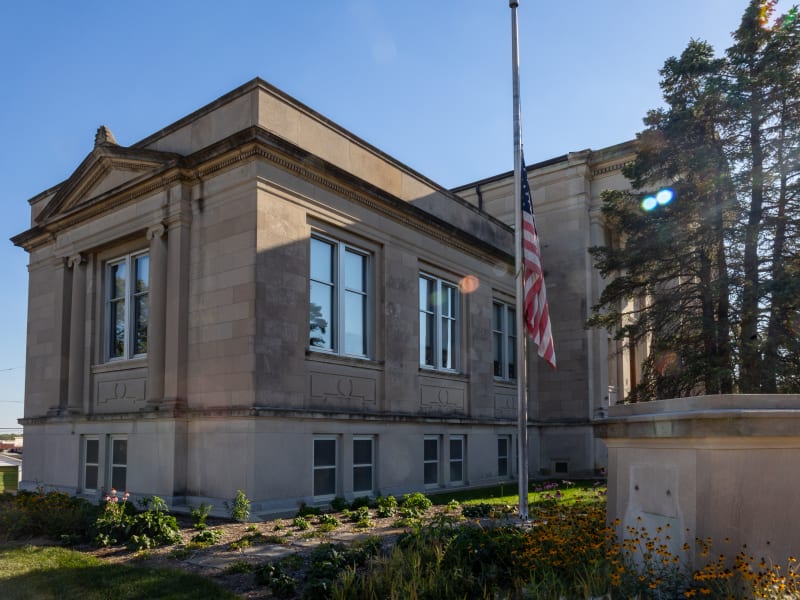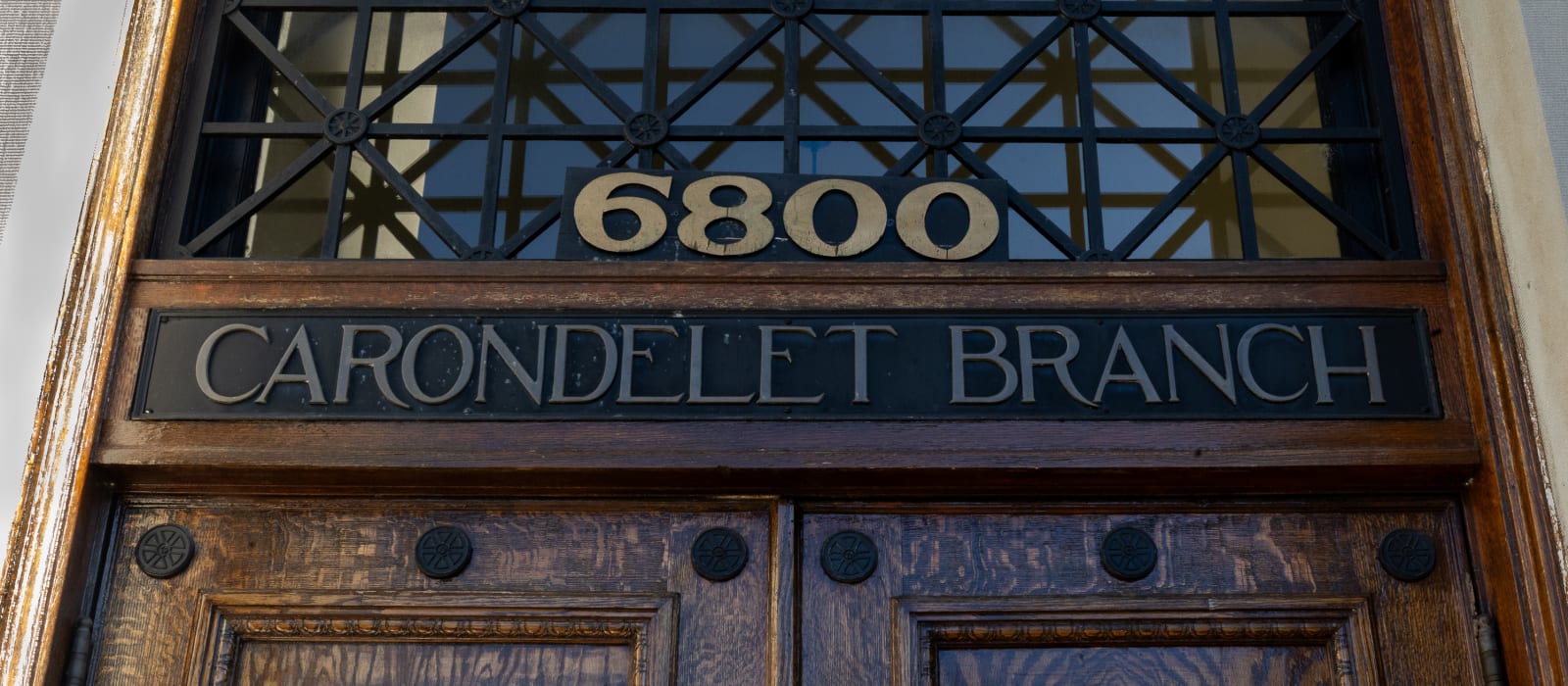
The Carondelet Branch Library is a handsome Classical Revival building featuring a symmetrical brick facade with limestone trim, prominent arched windows, and a dignified entrance accessed by a wide staircase. The structure exemplifies the refined civic architecture typical of Carnegie-era libraries, with its balanced proportions, decorative cornice, and restrained ornamentation conveying an air of permanence and public purpose.
The Carondelet Branch Library opened in 1908, funded by a grant from industrialist Andrew Carnegie as part of his ambitious program to establish free public libraries across America. Carnegie donated funds for six branch libraries in St. Louis, and the Carondelet location was designed by local architect Ernst Preisler to serve the predominantly German and working-class community in this historic river town that had been annexed by St. Louis in 1870. The branch represented a significant civic investment in an area that had long maintained its own distinct identity separate from the larger city. For over a century, the Carondelet Branch has served as a cornerstone institution in this South St. Louis neighborhood, providing educational resources and community programming to generations of residents. The library has witnessed the transformation of Carondelet from an industrial riverfront community centered on iron works and manufacturing to a more residential neighborhood, adapting its services to meet changing community needs throughout the decades. The building remains an active branch of the St. Louis Public Library system today, continuing to fulfill its original mission of providing free public access to books and information. Having survived the decline that affected many urban neighborhoods in the mid-to-late twentieth century, the Carondelet Branch stands as one of the enduring Carnegie libraries still operating in St. Louis, a testament to both the durability of its construction and the ongoing commitment to public library service in the community.