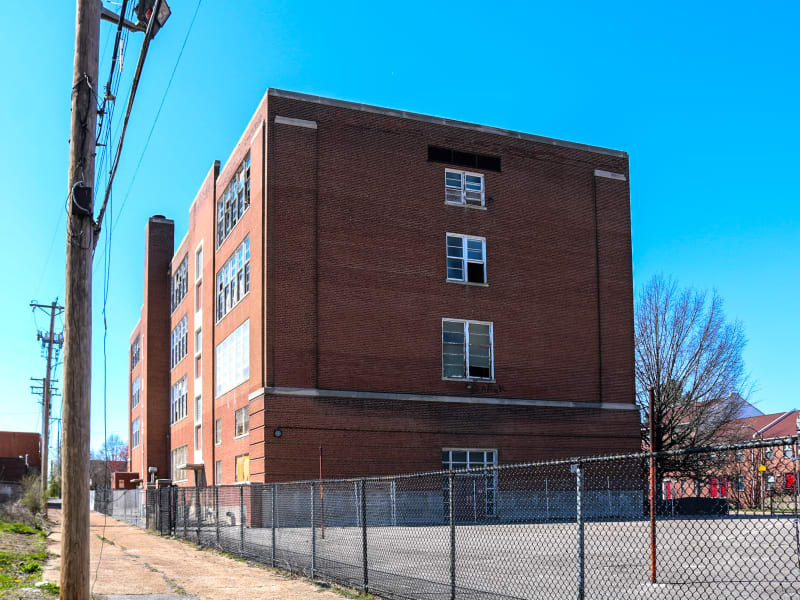
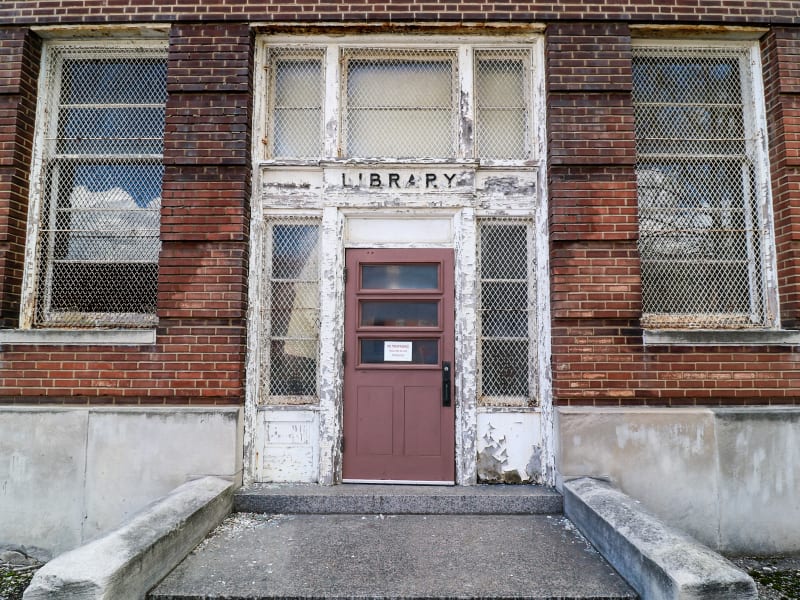
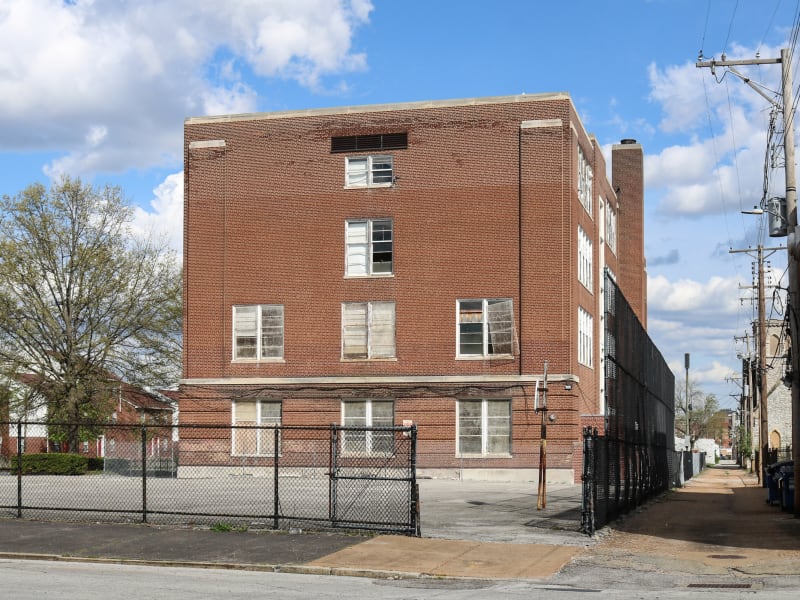
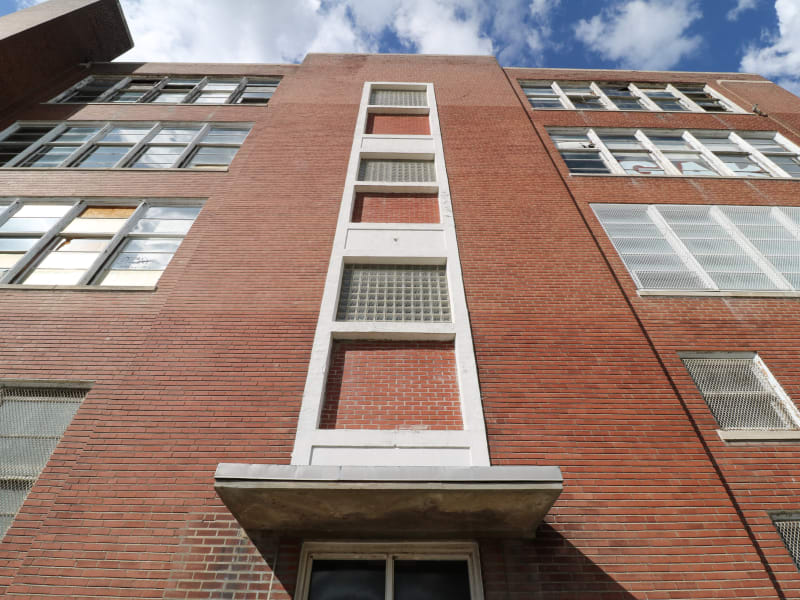
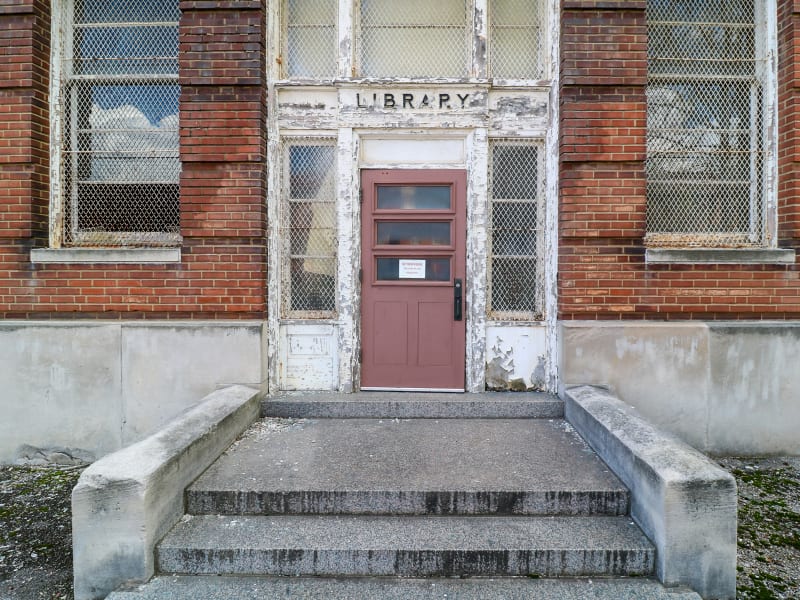
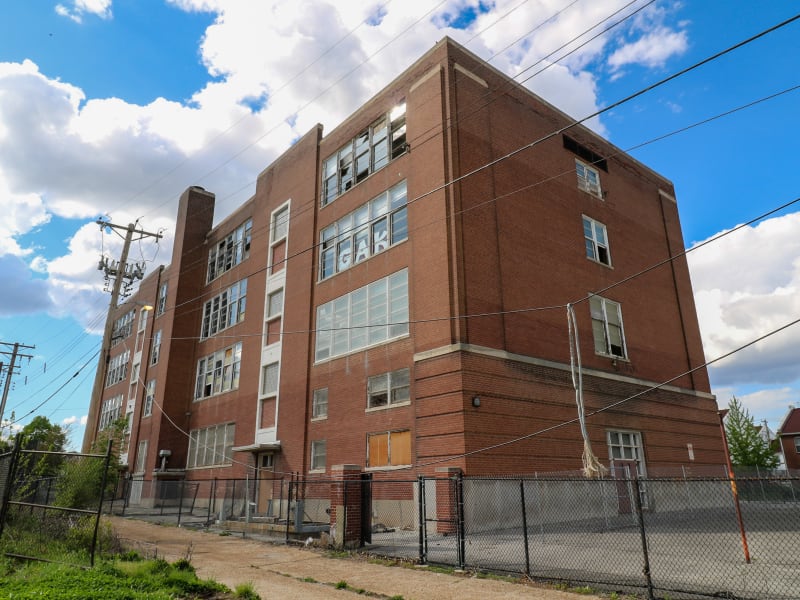
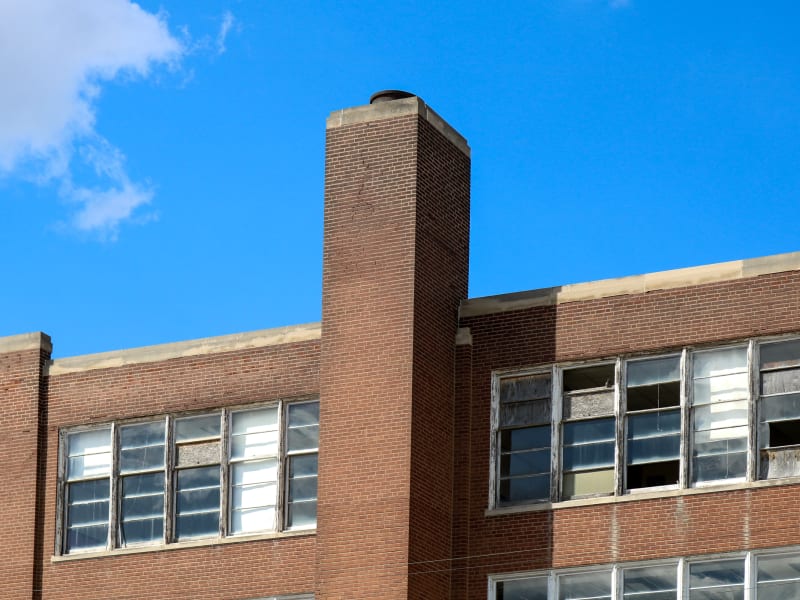
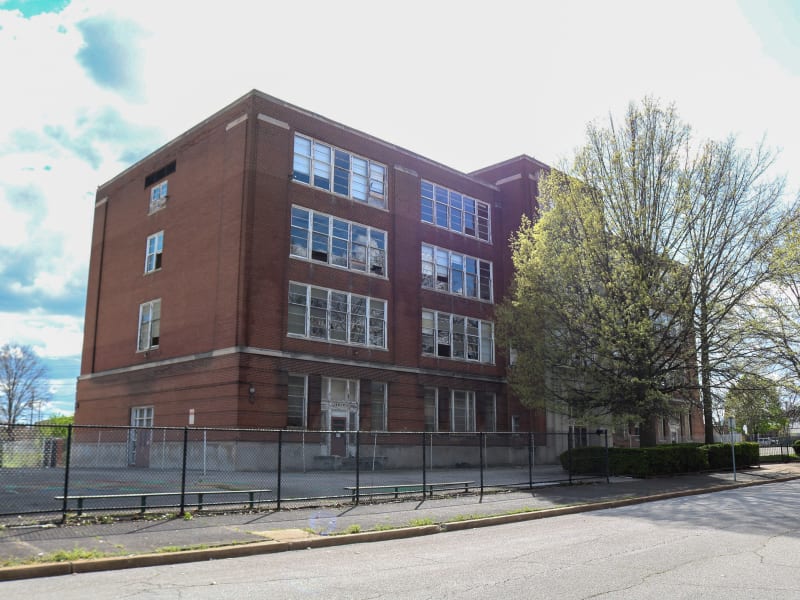
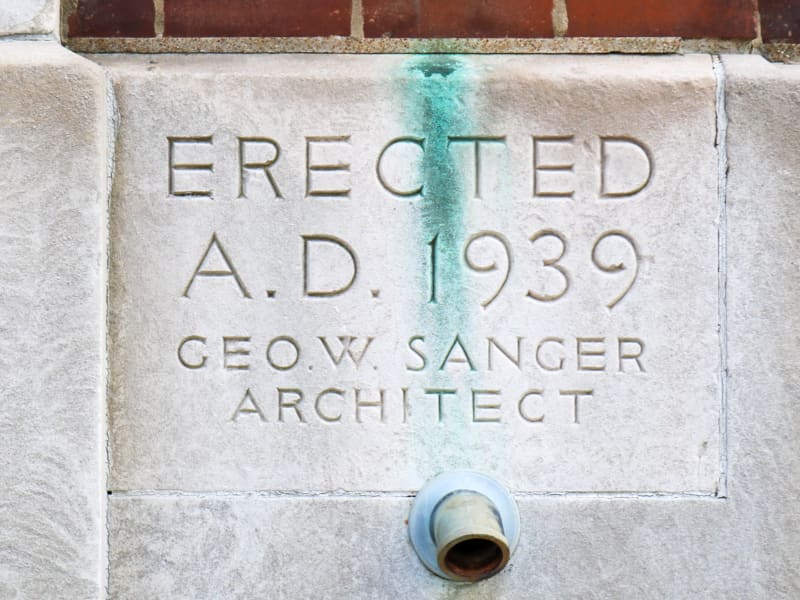
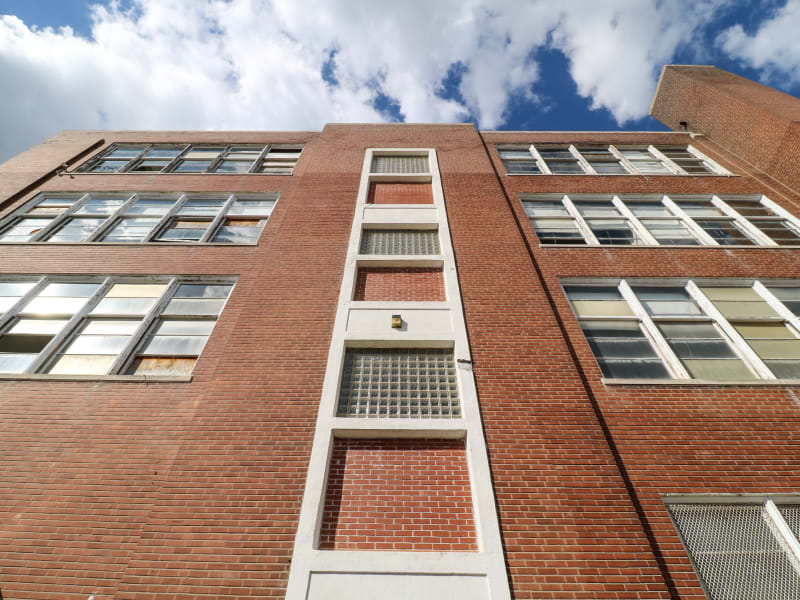
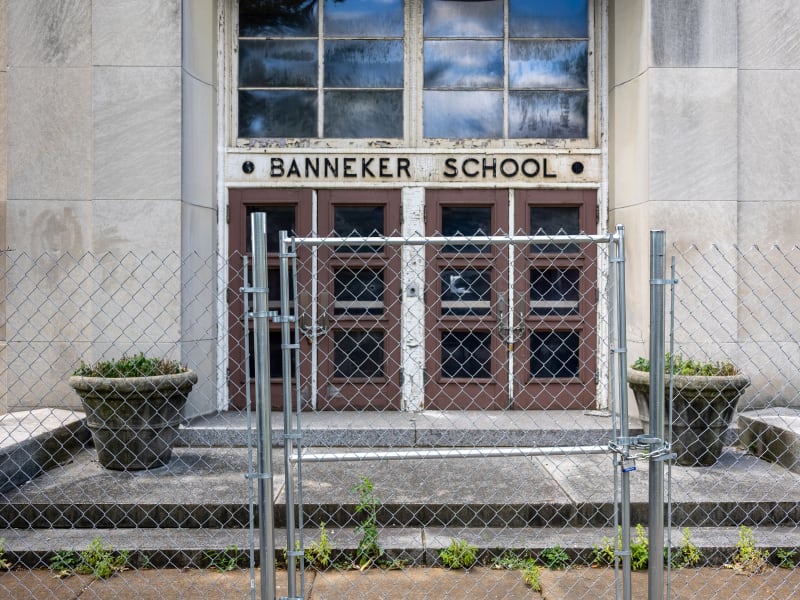
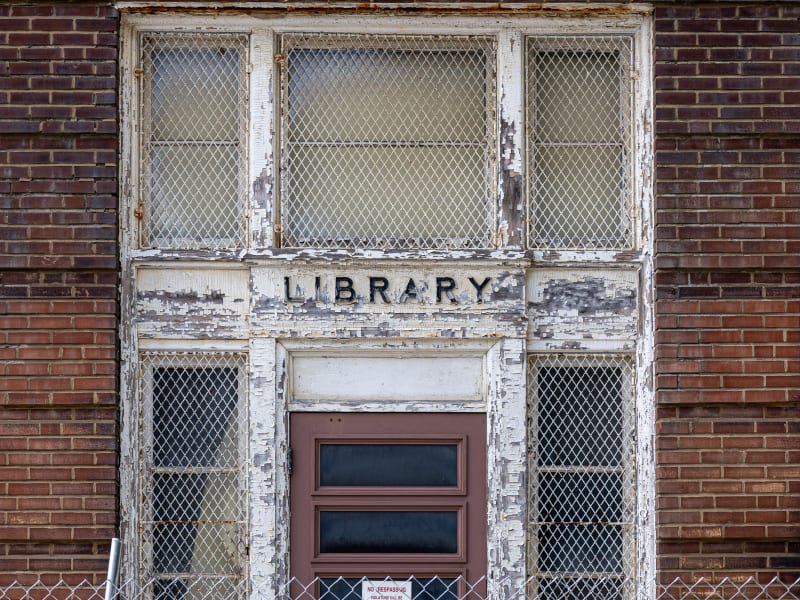
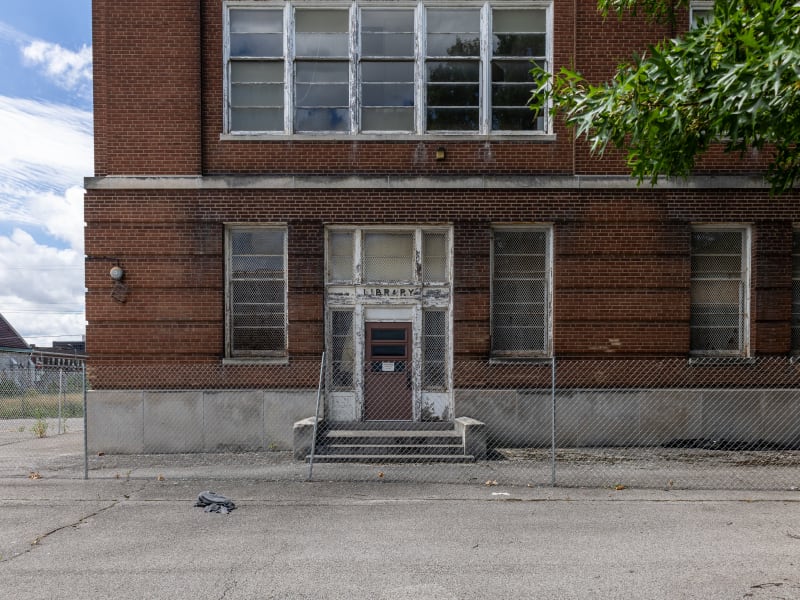
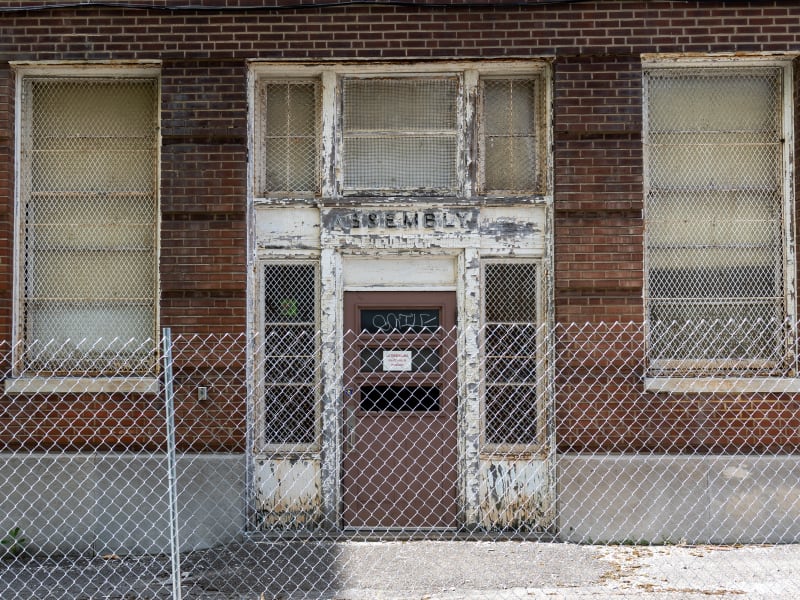
Banneker School is a handsome Art Deco educational building featuring the streamlined geometric forms and restrained ornamentation characteristic of Depression-era institutional architecture. The brick structure displays symmetrical massing with subtle decorative elements typical of George Sanger's school designs, presenting a dignified civic presence along Samuel Shepard Drive.
Banneker School was constructed in 1940 in Midtown, on the site of the former Stoddard School — a Victorian-era public school building that had occupied the same lot since 1867. Named for Benjamin Banneker, the renowned African American mathematician, astronomer, and surveyor who helped plan Washington, D.C., the new school was designed by George W. Sanger, chief architect of the St. Louis Public Schools, and built with funding from a Public Works Administration (PWA) grant and a 1934 bond fund. The school served Black children during the era of legally mandated segregation. By 1930 the predecessor Stoddard School building had been converted from a white school to an African American school — inheriting the Banneker name from Colored School No. 5 at Montgomery and Leffingwell Avenue, which had used the name since the 1890s. When the Victorian building became overcrowded and deteriorated, the Board of Education voted in May 1938 to replace it, serving some 1,477 students at the time. In 1957 educator Samuel T. Shepard Jr. became administrator of the Banneker District within the St. Louis Public Schools. Working from offices in this building, Shepard developed the Banneker Project — a nationally recognized program to improve educational outcomes for disadvantaged students — and rose to national prominence for his work. The Banneker District was dissolved in a 1970 reorganization of the school system; Shepard resigned in protest and later served as superintendent of schools in East Chicago Heights, Illinois. Following desegregation efforts after the Supreme Court's Brown v. Board of Education decision (1954), the school's role shifted as integration opened previously restricted areas of the city. Banneker remained a neighborhood school until it closed in 2005. The building was listed on the National Register of Historic Places in 2017, recognized for its contributions to education, social history, and African American heritage from 1957 to 1970. Samuel T. Shepard Drive — the street on which it stands — was renamed to honor the educator's legacy.