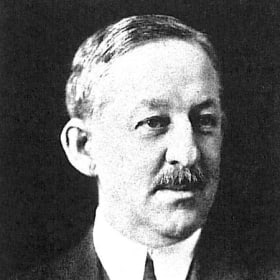
Frederick C. Bonsack
Frederick C. Bonsack remains a somewhat obscure figure in St. Louis architectural history, with limited biographical information surviving beyond his built work. His most significant documented project, the St. Louis Coliseum completed in 1908, demonstrated his capability in designing large-scale public assembly spaces. The Coliseum served as a major civic venue in the city, hosting conventions, sporting events, and public gatherings for decades before its eventual demolition. The St. Louis Coliseum represented the type of ambitious arena construction that characterized American cities in the early twentieth century, as urban centers competed to attract national conventions and large-scale entertainment. Bonsack's design contributed to St. Louis's infrastructure for public life during a period when the city was still basking in the afterglow of the 1904 World's Fair and positioning itself as a major American metropolis. The building's loss means that assessing his full architectural vocabulary and stylistic tendencies is difficult without additional surviving structures or archival drawings. Beyond the Coliseum, details about Bonsack's training, professional affiliations, and the broader scope of his practice remain elusive. Whether he maintained an extensive local practice or worked primarily on a smaller number of commissions is unclear from available records. His contribution to St. Louis architecture, while limited in what can currently be documented, includes at least one building that played a meaningful role in the city's civic and social life for much of the twentieth century.
